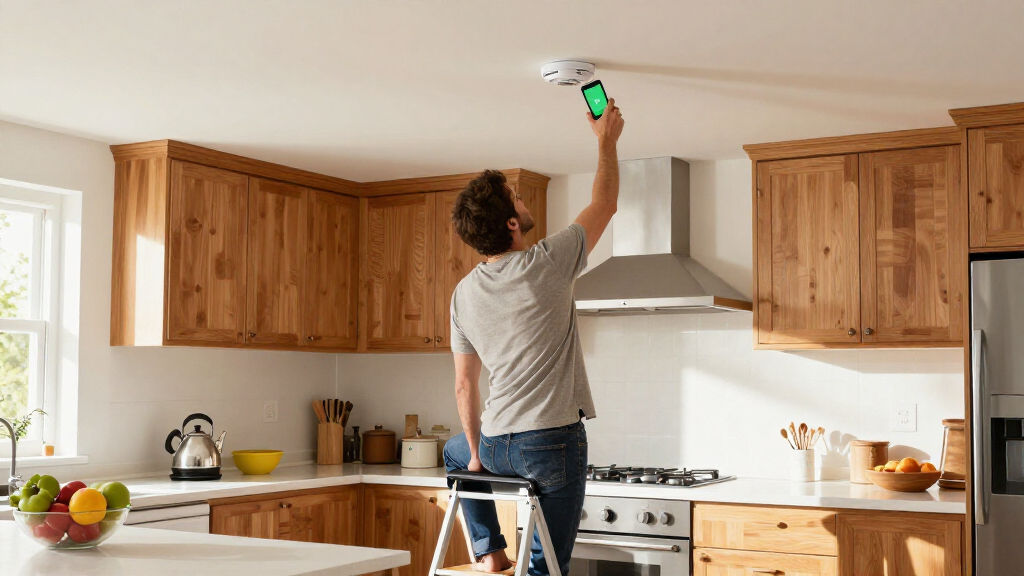
For most households, I’d start with the Kidde Hardwired Smart Smoke and Carbon Monoxide Detector with App Alerts and AA Battery Backup: it pairs app notifications with hardwired power and a battery backup. The First Alert SC5 Hardwired Smart Alarm is a strong alternative for buyers who want another hardwired smart combo, while the X-Sense SC07 5-Pack suits homes that need several alarms at once. The main tradeoffs are whether you need smoke and CO sensing in one unit or separate CO monitoring, and whether hardwired, battery, or plug-in power best fits your home. Interconnection, app and hub requirements, and the number of rooms you need to cover also affect the choice. Read on for the full comparison and guidance on matching a detector to your setup.

Get home appliances delivered free with Prime
- Fast, free delivery on millions of items
- Prime Video, Amazon Music and more included
- Member-only deals all year
Complete the kit


Key Takeaways
- The strongest all-round fit is a hardwired combo with battery backup. The Kidde smart hardwired model combines smoke and CO detection with app alerts, while its AA backup offers another power source if household electricity is interrupted.
- Not every smart pick detects both hazards. Several Kidde models focus on carbon monoxide and indoor air quality, so buyers replacing a smoke alarm should check the detection type before choosing.
- Multi-unit coverage changes the value equation. The X-Sense SC07 5-pack, Kidde 30CUDR 3-pack, and other kits may suit whole-home coverage better than buying single alarms, but buyers should verify each unit’s power and connectivity.
- Smart alerts depend on the surrounding system. Ring-compatible Kidde models, gateway-based HEIMAN detectors, and remote-linked X-Sense kits do not offer identical setup paths; app, hub, and network needs can shape the experience.
- Power format is a key ranking separator. Hardwired models fit existing alarm wiring, battery units avoid wiring work, and plug-in CO detectors are easiest to place near outlets—but each format limits placement or installation choices in a different way.
| Kidde Hardwired Smart Smoke and Carbon Monoxide Detector with App Alerts and AA Battery Backup |  | Best Hardwired Smart Pick | Brand: Kidde | Model: 30CUAR-W | Power: 120V AC hardwired | VIEW LATEST PRICE | See Our Full Breakdown |
| First Alert Hardwired Combination Smoke and Carbon Monoxide Alarm with LED Strobe |  | Best for Visual Alerts | Brand: First Alert | Model: SMCO110LED-AC | Power source: Corded electric | VIEW LATEST PRICE | See Our Full Breakdown |
| X-Sense SC07 Smoke and Carbon Monoxide Detector Combo, 5-Pack |  | Best for Simple Multi-Room Coverage | Brand and model: X-Sense SC07 | Pack count: 5 | Power source: Sealed lithium battery | VIEW LATEST PRICE | See Our Full Breakdown |
| Kidde Smart Smoke and Carbon Monoxide Detector with Ring, AA Battery, RGCUDR-RW |  | Best Wire-Free Smart Pick | Detection: Smoke and carbon monoxide | Power source: Two included AA alkaline batteries | Smart connectivity: Ring app notifications | VIEW LATEST PRICE | See Our Full Breakdown |
| Kidde Smart Plug-In Carbon Monoxide Detector and Indoor Air Quality Monitor |  | Best for CO and Indoor Air Monitoring | Brand: Kidde | Model: KN-COP-DP-10YL-AQ-WF | Power: 120V AC plug-in | VIEW LATEST PRICE | See Our Full Breakdown |
| First Alert SC5 Hardwired Smart Smoke and Carbon Monoxide Alarm |  | Best for Hardwired Smart Protection | Brand: First Alert | Model: SMCO600NV-AC | Alarm type: Combination smoke and carbon monoxide | VIEW LATEST PRICE | See Our Full Breakdown |
| Kidde Battery-Powered Smoke and Carbon Monoxide Detector with Voice Alerts |  | Best for Wireless Whole-Home Alerts | Brand: Kidde | Model: 30CUDR-VRF | Detection: Smoke and carbon monoxide | VIEW LATEST PRICE | See Our Full Breakdown |
| Kidde Smart Carbon Monoxide Detector with Indoor Air Quality Monitoring |  | Best for CO and Indoor Air Monitoring | Brand: Kidde | Model: COPDLQW | Power: 120V plug-in with two AA backup batteries | VIEW LATEST PRICE | See Our Full Breakdown |
| First Alert SC5 Battery Smart Smoke and Carbon Monoxide Alarm |  | Best for Smart Alerts Without Rewiring | Brand: First Alert | Model: SMCO600NV | Alarm type: Combination smoke and carbon monoxide | VIEW LATEST PRICE | See Our Full Breakdown |
| Kidde 30CUDR Smoke & Carbon Monoxide Detector, AA Battery-Powered, 3-Pack |  | Best Multi-Room Value Pack | Brand: Kidde | Model: 30CUDR | Unit count: 3 | VIEW LATEST PRICE | See Our Full Breakdown |
| Kidde Smart Smoke and CO Detector with Ring, Hardwired with AA Battery Backup |  | Best for Ring Households | Detection: Smoke and carbon monoxide | Power: Hardwired with AA battery backup | Connectivity: Ring app and Alexa-enabled devices | VIEW LATEST PRICE | See Our Full Breakdown |
| X-Sense Interconnected Smoke and Carbon Monoxide Detector Kit with Remote |  | Best for Whole-Home Wireless Coverage | Model: XP0H-WN | Included: Four combination alarms and one RC01 Pro remote control | Sensors: Photoelectric smoke sensor and electrochemical CO sensor | VIEW LATEST PRICE | See Our Full Breakdown |
| X-Sense Wireless Smoke and Carbon Monoxide Detector, XP0H-WN, 3-Pack |  | Best App-Free Interconnected Pick | Model: XP0H-WN | Quantity: Three alarms | Detection: Smoke and carbon monoxide | VIEW LATEST PRICE | See Our Full Breakdown |
| HEIMAN Smart Carbon Monoxide Detectors, 3-Pack with Interconnected Alarms and Gateway |  | Best Smart CO-Only System | Model: C1-R | Package contents: Three carbon monoxide detectors and one gateway | Sensor: FIGARO TGS5141 electrochemical sensor | VIEW LATEST PRICE | See Our Full Breakdown |
| Kidde Smart Carbon Monoxide Detector with Plug-In Power and AA Battery Backup |  | Best Plug-In CO Alert | Model: COPDW | Detection: Carbon monoxide | Power: 120V plug-in with two AA backup batteries | VIEW LATEST PRICE | See Our Full Breakdown |
| smart smoke and carbon monoxide detector | Model | Power | Connectivity | Brand |
|---|---|---|---|---|
| Kidde Hardwired Smart Smoke an | 30CUAR-W | 120V AC hardwired | 2.4 GHz Wi-Fi; Kidde app | Kidde |
| First Alert Hardwired Combinat | SMCO110LED-AC | — | — | First Alert |
| X-Sense SC07 Smoke and Carbon | — | — | Standalone; no Wi-Fi, wireless interconnection, or base station | — |
| Kidde Smart Smoke and Carbon M | — | — | — | — |
| Kidde Smart Plug-In Carbon Mon | KN-COP-DP-10YL-AQ-WF | 120V AC plug-in | Wi-Fi and Kidde app | Kidde |
| First Alert SC5 Hardwired Smar | SMCO600NV-AC | Corded electric | First Alert app alerts; compatible with Google Nest Protect | First Alert |
| Kidde Battery-Powered Smoke an | 30CUDR-VRF | Two included AA batteries | — | Kidde |
| Kidde Smart Carbon Monoxide De | COPDLQW | 120V plug-in with two AA backup batteries | 2.4 GHz Wi-Fi | Kidde |
| First Alert SC5 Battery Smart | SMCO600NV | Battery powered | First Alert app alerts | First Alert |
| Kidde 30CUDR Smoke & Carbon Mo | 30CUDR | Two included AA batteries per alarm | — | Kidde |
| Kidde Smart Smoke and CO Detec | — | Hardwired with AA battery backup | Ring app and Alexa-enabled devices | — |
| X-Sense Interconnected Smoke a | XP0H-WN | Sealed 10-year lithium battery | — | — |
| X-Sense Wireless Smoke and Car | XP0H-WN | Sealed lithium battery with 10-year battery life | RF wireless interconnection; no Wi-Fi | — |
| HEIMAN Smart Carbon Monoxide D | C1-R | Battery powered; batteries included | 2.4 GHz Wi-Fi gateway | — |
| Kidde Smart Carbon Monoxide De | COPDW | 120V plug-in with two AA backup batteries | 2.4 GHz Wi-Fi | — |
More Details on Our Top Picks
Kidde Hardwired Smart Smoke and Carbon Monoxide Detector with App Alerts and AA Battery Backup
For a home with existing hardwired alarms, this Kidde adds smoke and carbon monoxide detection plus app alerts without giving up a wired power connection. Its 2.4 GHz Wi-Fi link sends mobile notifications, and voice alerts name the hazard, which can make an alarm easier to interpret quickly. It can also receive alerts from compatible existing Kidde hardwired alarms, a useful advantage over the X-Sense SC07, which operates as a standalone unit.
The tradeoff is installation: this is not a renter-friendly, wire-free upgrade, and the app features depend on a compatible Wi-Fi network. Two included AA batteries provide backup during an outage, while the hush feature offers a way to quiet a non-emergency alarm. I would choose it for connected coverage in a hardwired Kidde setup, not for a home that needs simple battery installation.
Pros:- Detects both smoke and carbon monoxide in one alarm.
- Sends mobile notifications, including low-battery alerts.
- Voice alerts identify whether smoke or carbon monoxide was detected.
- Includes two AA backup batteries and a hush feature.
Cons:- Requires hardwired installation, limiting placement and renter suitability.
- App connectivity requires a 2.4 GHz Wi-Fi network.
Best for: Homeowners replacing a hardwired alarm who want app notifications and compatibility with existing Kidde hardwired alarms.
Not ideal for: Renters and buyers without a hardwired alarm connection or 2.4 GHz Wi-Fi, since installation and app-based features depend on both.
- Brand:Kidde
- Model:30CUAR-W
- Power:120V AC hardwired
- Battery backup:Two included AA batteries
- Connectivity:2.4 GHz Wi-Fi; Kidde app
- Detection:Smoke and carbon monoxide
- Alerts:Mobile notifications and voice alerts
- Certifications:UL 217, UL 2034, FCC
Our verdict“Choose this Kidde if you want app-connected smoke and CO protection on an existing hardwired Kidde system; skip it if you need a wire-free alarm.”
First Alert Hardwired Combination Smoke and Carbon Monoxide Alarm with LED Strobe
The LED strobe is this First Alert’s defining advantage: it gives residents who may not hear an audible alarm another way to receive a warning. It combines smoke and CO detection with a 10-year battery backup, and Precision Detection is designed to reduce cooking-related nuisance alarms. Compatible First Alert and BRK alarms can interconnect, so it fits better into those existing systems than into a Kidde setup.
Unlike the Kidde 30CUAR-W, this model does not list app notifications or voice alerts that identify the hazard. Its appeal is local, hardwired warning coverage rather than remote monitoring. The test/silence button can temporarily silence an alarm for up to eight hours, but that convenience does not make the fixed wiring requirement disappear. I would shortlist it for households that value a visual alert and already use compatible First Alert or BRK alarms.
Pros:- LED strobe adds a visual warning alongside the alarm.
- Detects smoke and carbon monoxide in one device.
- Designed to reduce nuisance alarms from cooking.
- Includes a 10-year battery backup and compatible-alarm interconnection.
Cons:- Requires a hardwired electrical connection.
- Interconnection is limited to compatible First Alert and BRK alarms.
- Product details do not list Wi-Fi or app notifications.
Best for: Households with residents who benefit from visual warnings and homeowners adding an alarm to a compatible First Alert or BRK interconnection system.
Not ideal for: Buyers seeking app alerts, voice identification of the hazard, or a battery-only detector that needs no wiring.
- Brand:First Alert
- Model:SMCO110LED-AC
- Power source:Corded electric
- Backup:10-year battery backup
- Detection:Smoke and carbon monoxide
- Visual alert:LED strobe light
- Interconnectivity:Compatible with most First Alert and BRK alarms
- Dimensions:7 × 3 × 7.5 in
Our verdict“Pick this First Alert for hardwired smoke and CO coverage with a visual strobe, especially in a compatible First Alert or BRK system.”
X-Sense SC07 Smoke and Carbon Monoxide Detector Combo, 5-Pack
This five-pack favors broad, simple coverage over app control: each X-Sense SC07 detects smoke and CO, shows information on an LCD, and mounts without rewiring. Its sealed lithium battery is designed for a 10-year life, so there is no routine battery swap to plan for. Compared with the app-connected Kidde 30CUAR-W, however, these alarms do not send remote notifications or link wirelessly to one another.
That difference matters across multiple rooms: each unit operates independently, so an alarm in one location will not trigger the others through a wireless network. The photoelectric smoke sensor and electrochemical CO sensor, along with UL 217 and UL 2034 certifications, make this a straightforward option for buyers prioritizing standalone detection. I would choose the pack for uncomplicated installation and several rooms, but not for a connected alarm system or phone alerts.
Pros:- Five alarms provide coverage for multiple rooms.
- Sealed battery is designed to last 10 years without replacement.
- Mounts on a wall or ceiling without rewiring.
- LCD display and separate smoke and CO sensor types.
Cons:- No Wi-Fi, app notifications, wireless interconnection, or base station support.
- Standalone alarms do not share alerts with one another.
Best for: Homeowners who need several easy-to-mount smoke and CO alarms with long-life sealed batteries and no wiring work.
Not ideal for: Buyers who want phone alerts or alarms that sound together across rooms, since this model has no Wi-Fi or wireless interconnection.
- Brand and model:X-Sense SC07
- Pack count:5
- Power source:Sealed lithium battery
- Battery life:Designed for 10 years
- Sensors:Photoelectric smoke sensor and electrochemical CO sensor
- Connectivity:Standalone; no Wi-Fi, wireless interconnection, or base station
- Display:LCD
- Certifications:UL 217 and UL 2034
- Dimensions:5.7 × 5.7 × 2 in (D × W × H)
Our verdict“Choose the X-Sense pack for independent, low-maintenance coverage in several rooms, but choose a connected model if you need shared alarms or phone alerts.”
Kidde Smart Smoke and Carbon Monoxide Detector with Ring, AA Battery, RGCUDR-RW
This is the wire-free choice for Ring households: it detects smoke and carbon monoxide, runs on two AA batteries, and sends notifications through the Ring app without requiring a subscription for basic alerts. Unlike the hardwired Kidde 30CUAR-W, it avoids wiring work, and it can wirelessly link with compatible Kidde alarms so they sound together. Alexa compatibility adds another route for receiving alerts.
The main tradeoff is that 24/7 monitoring requires an optional Ring subscription; app notifications alone are not the same service. It also depends on the Ring ecosystem for its smart features, so buyers using another smart-home platform may find the fit less convenient than the plug-in Kidde air-quality monitor, which works with Alexa and Google Home. I would pick this for Ring users who want battery-powered alerts and compatible-alarm interconnection, not for those seeking built-in professional monitoring.
Pros:- Battery-powered installation avoids hardwiring.
- Ring app provides alerts without a subscription.
- Wirelessly interconnects with compatible Kidde alarms.
- Works with Alexa-enabled devices.
Cons:- 24/7 monitoring requires an optional paid Ring subscription.
- Wireless interconnection is limited to compatible Kidde alarms.
Best for: Ring users who want a battery-powered smoke and CO alarm with app alerts and wireless links to compatible Kidde alarms.
Not ideal for: Buyers who need 24/7 monitoring without a subscription or want smart-home compatibility beyond the listed Ring and Alexa features.
- Detection:Smoke and carbon monoxide
- Power source:Two included AA alkaline batteries
- Smart connectivity:Ring app notifications
- Interconnectivity:Wire-free connection with compatible Kidde alarms
- Voice assistant:Alexa-enabled devices
- Certifications:UL 217 and FCC standards
- Optional monitoring:$5/month Ring subscription
Our verdict“Choose this Kidde if you use Ring and want wire-free app alerts with compatible-alarm links; skip it if you require subscription-free 24/7 monitoring.”
Kidde Smart Plug-In Carbon Monoxide Detector and Indoor Air Quality Monitor
This Kidde is the lineup’s specialist for broader indoor monitoring: alongside carbon monoxide, it tracks TVOCs, humidity, and temperature, with readings available on a digital display. Wi-Fi and the Kidde app add notifications, while Alexa and Google Home compatibility give it a wider smart-home fit than the Ring-focused Kidde RGCUDR-RW. Battery backup is designed to keep the alarm operating during a power outage.
The key limitation is scope: it detects carbon monoxide, not smoke, so it cannot replace a combination smoke and CO alarm such as the Kidde 30CUAR-W or First Alert SMCO110LED-AC. It also needs a standard outlet, and its lithium backup is not replaceable during the alarm’s 10-year life. I would add it where CO and air-quality readings are the priority, while keeping separate smoke alarms elsewhere in the home.
Pros:- Monitors carbon monoxide, TVOCs, humidity, and temperature.
- Connects to the Kidde app for notifications and voice alerts.
- Compatible with Amazon Alexa and Google Home.
- Includes a digital display and battery backup designed for the alarm’s 10-year life.
Cons:- Detects carbon monoxide but not smoke, so it cannot serve as a combination alarm.
- Requires a standard wall outlet.
- Backup battery is not replaceable during the alarm’s 10-year life.
Best for: Homeowners who want app-connected CO alerts and indoor readings for TVOCs, humidity, and temperature near an available outlet.
Not ideal for: Buyers seeking one device for both smoke and carbon monoxide, or those without a suitable wall outlet at the desired location.
- Brand:Kidde
- Model:KN-COP-DP-10YL-AQ-WF
- Power:120V AC plug-in
- Battery backup:Lithium battery designed to last the alarm’s 10-year life
- Monitors:Carbon monoxide, TVOCs, humidity, and temperature
- Alarm volume:85 dB
- Connectivity:Wi-Fi and Kidde app
- Smart-home compatibility:Amazon Alexa and Google Home
- Warranty:10-year limited warranty
Our verdict“Choose this plug-in Kidde for connected CO and indoor air-quality monitoring, but pair it with a separate smoke alarm.”
First Alert SC5 Hardwired Smart Smoke and Carbon Monoxide Alarm
For a home with compatible alarm wiring, the First Alert SC5 Hardwired pairs smoke and carbon monoxide detection with First Alert app alerts, so a phone can notify you when you are away. Its voice alerts name the hazard and location, while compatible alarms sound together to extend warnings across the home. The included battery backup adds coverage during a power outage, unlike a battery-only setup that depends on replacing its primary batteries.
The tradeoff is installation: this model needs a hardwired connection, so it is less flexible than the First Alert SC5 Battery or the battery-powered Kidde 30CUDR-VRF. It also only interconnects with compatible alarms, so existing equipment may affect whether it fits a whole-home system. I’d choose it when wiring is already available and connected alerts matter more than easy placement.
Pros:- Sends smoke and carbon monoxide alerts through the First Alert app
- Voice alerts identify the hazard and its location
- Compatible alarms can sound together
- Battery backup helps maintain protection during power outages
Cons:- Requires hardwired installation
- Interconnection depends on alarm compatibility
- Listed as a single unit rather than a multi-alarm pack
Best for: Homeowners replacing a hardwired combination alarm who want phone alerts, voice location alerts, and battery backup.
Not ideal for: Renters or buyers without compatible alarm wiring, since installation requires a hardwired connection.
- Brand:First Alert
- Model:SMCO600NV-AC
- Alarm type:Combination smoke and carbon monoxide
- Power:Corded electric
- Battery backup:3V lithium battery pack
- Connectivity:First Alert app alerts; compatible with Google Nest Protect
- Interconnect:Compatible alarms sound together
- Dimensions:5.75 x 1.6 x 5.75 inches
Our verdict“Choose this First Alert when your home has compatible wiring and you want app alerts plus backup power in one combination alarm.”
Kidde Battery-Powered Smoke and Carbon Monoxide Detector with Voice Alerts
The Kidde 30CUDR-VRF is a practical pick when you want a combination alarm without running wiring. It uses two included AA batteries and can wirelessly interconnect with up to 12 compatible Kidde alarms, allowing a warning to spread beyond the room where smoke or carbon monoxide is detected. Voice alerts name the hazard, and the 85 dB alarm and red LED provide audible and visual signals.
Compared with the First Alert SC5 Battery, this Kidde model emphasizes wireless interconnection and does not list phone app alerts. That makes it a better fit for a household building a compatible Kidde alarm network than for someone who wants remote notifications. Its interconnection requirements vary by model, so check compatibility before buying; it also relies on AA batteries rather than a hardwired power source with backup.
Pros:- Detects both smoke and carbon monoxide
- Voice alerts identify the detected hazard
- Battery-powered installation avoids alarm wiring
- Can wirelessly interconnect with up to 12 compatible Kidde alarms
Cons:- Wireless interconnection requirements vary by compatible model
- Requires two AA batteries
- Does not list app alerts for remote notifications
Best for: Buyers who need a no-wiring combination alarm and want to connect multiple compatible Kidde alarms wirelessly.
Not ideal for: People seeking phone notifications or a hardwired alarm with battery backup, since those features are not listed for this model.
- Brand:Kidde
- Model:30CUDR-VRF
- Detection:Smoke and carbon monoxide
- Power:Two included AA batteries
- Alarm volume:85 dB
- Alerts:Voice alerts and red LED
- Wireless interconnect:Up to 12 compatible Kidde alarms
- Warranty:10-year limited warranty
- Standards:UL 217 10th Edition, UL 2034 5th Edition, FCC; ETL Listed
Our verdict“Pick the 30CUDR-VRF for straightforward battery installation and wireless alerts across a compatible Kidde alarm network.”
Kidde Smart Carbon Monoxide Detector with Indoor Air Quality Monitoring
This Kidde plug-in unit is the distinct choice for buyers focused on carbon monoxide plus indoor air data, rather than a combined smoke-and-CO alarm. It monitors CO, temperature, humidity, and TVOCs, with app notifications over 2.4 GHz Wi-Fi and an 85 dB alarm. Low-level CO monitoring can give users information beyond an alarm that only signals at its set alarm thresholds, while Alexa and Google Home compatibility can fit an existing smart-home setup.
Unlike the First Alert SC5 Battery and Kidde 30CUDR-VRF, it does not detect smoke, so it cannot replace a smoke alarm. Its plug-in design also ties placement to an outlet, though AA backup batteries help during power outages. Basic app notifications do not require a subscription, but optional advanced air-quality insights do. I’d select it as a CO and air-monitoring addition, not as the home’s only fire-safety device.
Pros:- Monitors carbon monoxide, temperature, humidity, and TVOCs
- Sends app notifications without a required subscription
- Tracks low levels of carbon monoxide
- AA backup batteries provide coverage during power outages
Cons:- Does not detect smoke
- Advanced air-quality insights require a paid subscription
- Requires a 2.4 GHz Wi-Fi connection and an outlet
Best for: Smart-home owners who want plug-in CO monitoring, low-level readings, and temperature, humidity, and TVOC tracking.
Not ideal for: Buyers seeking one device to detect both smoke and carbon monoxide, or those without 2.4 GHz Wi-Fi.
- Brand:Kidde
- Model:COPDLQW
- Power:120V plug-in with two AA backup batteries
- Alarm volume:85 dB
- Connectivity:2.4 GHz Wi-Fi
- Monitors:Carbon monoxide, temperature, humidity, and TVOCs
- Smart-home compatibility:Amazon Alexa and Google Home
- Warranty:10-year limited warranty
- Certification:UL 2034, 5th Edition; ETL Listed
Our verdict“Choose this Kidde as a connected CO and air-monitoring supplement, while keeping separate smoke alarms in place.”
First Alert SC5 Battery Smart Smoke and Carbon Monoxide Alarm
The battery-powered First Alert SC5 brings the lineup’s phone and voice alerts to homes where hardwired installation is inconvenient. It detects both smoke and carbon monoxide, sends alerts through the First Alert app, and uses voice messages to identify the danger and its location. Compatible alarms can interconnect, while low-battery notifications help flag a maintenance need before the alarm loses power.
Compared with the First Alert SC5 Hardwired, this version is easier to place without an electrical connection, but it does not list hardwired power or battery backup. It also uses a specific 3V CR123A lithium battery, so buyers should account for replacement rather than assuming ordinary AA cells. Interconnection depends on compatible equipment, which makes it less of a plug-and-play choice for a mixed alarm system. For a smart combination alarm without rewiring, it is the more flexible First Alert option.
Pros:- Detects both smoke and carbon monoxide
- Sends alerts through the First Alert app
- Voice alerts identify the hazard and its location
- Low-battery notifications and compatible-alarm interconnection support ongoing use
Cons:- Uses a 3V CR123A lithium battery that will need replacement
- Interconnection requires compatible alarms
- Does not list hardwired power or a separate backup supply
Best for: Renters and homeowners who want First Alert app and voice alerts but cannot or do not want to connect a hardwired alarm.
Not ideal for: Buyers who need hardwired power with backup or want an alarm that interconnects with any existing system.
- Brand:First Alert
- Model:SMCO600NV
- Alarm type:Combination smoke and carbon monoxide
- Power:Battery powered
- Battery:3V CR123A lithium
- Connectivity:First Alert app alerts
- Interconnect:Compatible alarms
- Dimensions:5.75 x 1.6 x 5.75 inches
Our verdict“Choose the battery SC5 when smart phone alerts matter but hardwired installation is not practical.”
Kidde 30CUDR Smoke & Carbon Monoxide Detector, AA Battery-Powered, 3-Pack
This three-pack of Kidde 30CUDR alarms is aimed at buyers outfitting several rooms with battery-powered smoke and carbon monoxide detection at once. Each unit uses two included AA batteries and has an 85 dB alarm plus a red LED warning, giving households both sound and a visible signal. The listed advanced sensing technology is intended to reduce false alarms and detect smoke faster, while the 10-year limited warranty adds long-term product coverage.
Compared with the single-unit Kidde 30CUDR-VRF, this pack gives you three alarms, but the supplied details do not list voice alerts or wireless interconnection. It is also not a smart, app-connected detector, unlike either First Alert SC5. That makes it a straightforward multi-room safety purchase rather than a remote-monitoring system. Battery power avoids wiring, but requires periodic AA replacement, and there is no hardwired power option for continuous supply.
Pros:- Three combination alarms cover multiple rooms
- Battery-powered design does not require wiring
- 85 dB audible alarm is paired with a red LED warning
- Advanced sensing technology and a 10-year limited warranty
Cons:- Requires periodic replacement of two AA batteries per alarm
- No hardwired power option
- App alerts, voice alerts, and interconnection are not listed
Best for: Households adding smoke-and-CO coverage in multiple rooms who prefer battery installation over wiring or app features.
Not ideal for: Buyers who need phone alerts, voice hazard identification, wireless interconnection, or hardwired power.
- Brand:Kidde
- Model:30CUDR
- Unit count:3
- Power:Two included AA batteries per alarm
- Detection:Smoke and carbon monoxide
- Alarm volume:85 dB
- Warning indicator:Red LED
- Warranty:10-year limited warranty
- Certifications:UL 217 10th Edition and UL 2034 5th Edition
Our verdict“Choose this Kidde three-pack to outfit several rooms with basic battery-powered smoke and CO alarms, not for smart-home monitoring.”
Kidde Smart Smoke and CO Detector with Ring, Hardwired with AA Battery Backup
Ring app alerts make this hardwired combination alarm a good fit for buyers who want smoke and carbon monoxide warnings on their phone, not just at the detector. It also sends low-battery notifications, and can extend mobile alerts to other hardwired alarms when paired with a Kidde smart detector. Compared with the X-Sense XP0H-WN 3-Pack, this pick adds app connectivity and Alexa support, while X-Sense offers sealed 10-year batteries and wireless interconnection without a smart-home setup. Its hardwired power with AA backup suits homes already wired for alarms, and enhanced sensing is designed to reduce cooking-related nuisance alarms. The tradeoff is that 24/7 monitoring costs extra; app notifications alone are not a substitute for a monitoring service. The faster-detection claim is based on internal testing.
Pros:- Detects both smoke and carbon monoxide
- Sends real-time Ring app alerts, including low-battery warnings
- Can provide mobile alerts from other hardwired alarms when paired with a Kidde smart detector
- Enhanced sensing is designed to reduce cooking-related nuisance alarms
Cons:- Optional 24/7 monitoring requires a paid subscription
- Hardwired installation may not suit homes without compatible wiring
- Faster-detection claims rely on internal testing
Best for: Ring users with hardwired smoke alarms who want app alerts and battery backup for both smoke and carbon monoxide detection.
Not ideal for: Renters or homeowners without compatible hardwiring, and buyers who want professional monitoring included without an added subscription.
- Detection:Smoke and carbon monoxide
- Power:Hardwired with AA battery backup
- Connectivity:Ring app and Alexa-enabled devices
- Alerting:Real-time app alerts, including low-battery warnings
- Monitoring:Optional 24/7 monitoring subscription
- Standards:UL 217 and FCC
Our verdict“Choose this Kidde if you want a hardwired smoke-and-CO alarm with Ring alerts; choose the X-Sense XP0H-WN kit instead if sealed batteries and wireless interconnection matter more.”
X-Sense Interconnected Smoke and Carbon Monoxide Detector Kit with Remote
For buyers outfitting several rooms at once, this four-alarm kit prioritizes local whole-home warning over phone-based smart features. Its RF interconnection makes linked alarms sound together, while each unit combines photoelectric smoke and electrochemical CO sensors. The LCD shows CO levels, battery level, and operating status, and the included remote can test or silence alarms without reaching the ceiling. Compared with the Kidde Ring hardwired detector, this kit needs no existing alarm wiring and includes more detectors, but it does not offer the same Ring app alerts. Sealed 10-year batteries reduce routine battery changes, though mounting hardware is still needed. The five-year quality warranty is shorter than the battery’s stated life, a meaningful gap for buyers expecting coverage across the full battery period.
Pros:- Four combination alarms provide multi-room coverage
- RF interconnection makes linked alarms sound together
- LCD displays CO levels, battery level, and working status
- Sealed 10-year batteries and included remote support easier upkeep and testing
Cons:- Does not provide the app alerts offered by the Kidde Ring detector
- Alarms must be mounted using installation hardware
- Five-year quality warranty is shorter than the stated 10-year battery life
Best for: Homeowners who need several interconnected smoke-and-CO alarms, want visible CO readings, and prefer battery-powered installation over rewiring.
Not ideal for: Buyers who require smartphone notifications, want a plug-and-play unit with no mounting work, or expect the warranty to match the battery life.
- Model:XP0H-WN
- Included:Four combination alarms and one RC01 Pro remote control
- Sensors:Photoelectric smoke sensor and electrochemical CO sensor
- Power:Sealed 10-year lithium battery
- Interconnection:RF interconnected
- Display:LCD with real-time CO levels, battery level, and working status
- Standards:UL 217 and UL 2034; ETL listed
- Dimensions:5.7 x 5.7 x 2 inches
Our verdict“Pick this kit for interconnected, app-free coverage across several rooms; choose the Kidde Ring detector if remote phone alerts matter more than a multi-alarm package.”
X-Sense Wireless Smoke and Carbon Monoxide Detector, XP0H-WN, 3-Pack
This three-pack suits buyers who want alarms to sound together without adding Wi-Fi, a gateway, or hardwiring. Each unit detects smoke and carbon monoxide, and its sealed 10-year lithium battery limits routine battery replacement. The large 5.7-inch bracket can also cover existing screw holes or ceiling marks, which may make a replacement install look tidier. Unlike the HEIMAN C1-R 3-Pack, this X-Sense set detects both smoke and CO and does not depend on a gateway for local interconnection; HEIMAN adds app alerts but is CO-only. The tradeoff is equally clear: these alarms have no Wi-Fi or app notifications, and they are battery-powered rather than hardwired. A five-year quality warranty also falls short of the battery’s stated lifespan.
Pros:- Each alarm detects both smoke and carbon monoxide
- RF interconnection makes all linked alarms sound when one detects danger
- Sealed 10-year batteries reduce battery replacement tasks
- Large brackets can cover old screw holes and ceiling marks
Cons:- No Wi-Fi, app notifications, or base-station support
- Battery-powered design is not a hardwired replacement
- Five-year quality warranty is shorter than the stated battery life
Best for: Homeowners replacing several alarms who want smoke-and-CO detection, local wireless linking, and long-life sealed batteries without smart-home features.
Not ideal for: Buyers who need phone alerts, hardwired alarms, or a larger kit that covers more than three locations.
- Model:XP0H-WN
- Quantity:Three alarms
- Detection:Smoke and carbon monoxide
- Sensors:Photoelectric and electrochemical
- Power:Sealed lithium battery with 10-year battery life
- Connectivity:RF wireless interconnection; no Wi-Fi
- Mounting bracket:5.7 inches (145 mm)
- Standards:UL 217 and UL 2034
- Warranty:Five-year quality warranty; lifetime technical support
Our verdict“Choose this X-Sense set for straightforward, interconnected smoke-and-CO coverage without app dependence; select the HEIMAN kit only if CO monitoring with gateway-based alerts is your priority.”
HEIMAN Smart Carbon Monoxide Detectors, 3-Pack with Interconnected Alarms and Gateway
HEIMAN is the clearest fit here for buyers focused on connected carbon monoxide monitoring across multiple rooms. The three compact detectors link through a gateway, sound together, and send real-time app alerts with alarm logs. Its FIGARO electrochemical sensor and 10-year sensor accuracy life add useful longevity, while app-based testing and local silence make routine checks easier. Compared with the X-Sense XP0H-WN 3-Pack, HEIMAN adds gateway-based alerts and smart-home integrations, but it detects CO only; X-Sense also covers smoke and interconnects alarms without Wi-Fi. Home Assistant, IFTTT, Google Home, and SmartThings support can suit a connected home, though compatible setup is required. The stated interconnection range reaches 200 m in ideal conditions, but walls and layout can limit coverage.
Pros:- Three linked detectors can sound together across connected rooms
- Gateway supports real-time app alerts and alarm logs
- Battery-powered units need no detector wiring
- Compact detectors include app-based test and silence features
Cons:- Detects carbon monoxide only, unlike the X-Sense smoke-and-CO alarms
- Smart-home integrations require compatible platform setup
- Actual interconnection distance can be reduced by home layout
Best for: Smart-home users who already have compatible platforms and want app-connected CO alerts across several rooms without wiring.
Not ideal for: Buyers seeking smoke detection in the same device, a system without a gateway, or reliable coverage beyond what their home layout allows.
- Model:C1-R
- Package contents:Three carbon monoxide detectors and one gateway
- Sensor:FIGARO TGS5141 electrochemical sensor
- Power:Battery powered; batteries included
- Interconnect range:Up to 200 m / 656 ft
- Connectivity:2.4 GHz Wi-Fi gateway
- Smart home compatibility:Home Assistant, IFTTT, Google Home, and SmartThings; compatible setup required
- Certifications:UL 2034 5th Edition; CSFM approved
- Detector dimensions and weight:2.75 x 2.75 x 1.45 inches; 3.5 oz
Our verdict“Choose HEIMAN for gateway-connected CO alerts and smart-home integration, but pair it with separate smoke alarms because it does not detect smoke.”
Kidde Smart Carbon Monoxide Detector with Plug-In Power and AA Battery Backup
This Kidde makes sense for buyers who want smart carbon monoxide alerts without installing a smoke-and-CO combination alarm. It plugs into a standard outlet, keeps operating through outages with two AA backup batteries, and sends real-time alerts through the Kidde app over 2.4 GHz Wi-Fi. The backlit display gives a local readout, while the 85 dB alarm, Alexa and Google Home support, and no-subscription, no-hub setup keep the system relatively simple. Compared with the HEIMAN C1-R 3-Pack, this is a single plug-in detector rather than a multi-room gateway system; HEIMAN offers linked CO alarms, while Kidde adds a clear display and direct outlet power. Its main limits are the need for an available outlet and compatible Wi-Fi, plus the absence of smoke detection.
Pros:- Sends real-time CO alerts through the Kidde app
- Two AA backup batteries support operation during power outages
- Backlit digital display and 85 dB alarm provide local alerts
- Works with Alexa and Google Home without a subscription or hub
Cons:- Detects carbon monoxide only, unlike the smoke-and-CO X-Sense alarms
- Normal operation requires a standard outlet
- App connectivity requires a 2.4 GHz Wi-Fi connection
Best for: People who want one app-connected CO detector with a visible display, outlet power, and battery backup in a room with a suitable outlet.
Not ideal for: Buyers needing smoke detection, multi-room interconnected alarms, or a detector for a location without an available standard outlet or 2.4 GHz Wi-Fi.
- Model:COPDW
- Detection:Carbon monoxide
- Power:120V plug-in with two AA backup batteries
- Connectivity:2.4 GHz Wi-Fi
- Alarm volume:85 dB
- Display:Backlit digital display
- Smart home compatibility:Alexa-enabled devices and Google Home
- Certifications:UL 2034, 5th Edition; ETL listed
- Warranty:10-year limited warranty
Our verdict“Choose this Kidde for straightforward app-connected CO monitoring near an outlet; choose the HEIMAN kit for linked coverage across several rooms.”

How We Picked
I ranked these smart smoke and carbon monoxide detectors by how well their sensing, alerts, and power choices fit common home needs. I gave more weight to products that combine smoke and CO detection, provide a clear backup-power plan, and make it easier to cover more than one room. I also compared app or system connectivity, interconnection options, setup demands, and whether the product is a standalone alarm, a multi-unit package, or a CO-only monitor.
The order reflects tradeoffs rather than a claim that one design suits every home. A hardwired smart combo with battery backup ranks ahead for buyers seeking broad protection and fewer power compromises; multi-packs rank well for coverage value, while specialized plug-in and CO-only models fit narrower needs. I also treated compatibility and installation as real costs in time and complexity: a product that depends on a gateway or a particular smart-home system may be a weaker fit for someone who wants a straightforward replacement alarm.
| smart smoke and carbon monoxide detector | Brand | Detection |
|---|---|---|
| Kidde Hardwired Smart Smoke an | Kidde | Smoke and carbon monoxide |
| First Alert Hardwired Combinat | First Alert | Smoke and carbon monoxide |
| X-Sense SC07 Smoke and Carbon | — | — |
| Kidde Smart Smoke and Carbon M | — | Smoke and carbon monoxide |
| Kidde Smart Plug-In Carbon Mon | Kidde | — |
| First Alert SC5 Hardwired Smar | First Alert | — |
| Kidde Battery-Powered Smoke an | Kidde | Smoke and carbon monoxide |
| Kidde Smart Carbon Monoxide De | Kidde | — |
| First Alert SC5 Battery Smart | First Alert | — |
| Kidde 30CUDR Smoke & Carbon Mo | Kidde | Smoke and carbon monoxide |
| Kidde Smart Smoke and CO Detec | — | Smoke and carbon monoxide |
| X-Sense Interconnected Smoke a | — | — |
| X-Sense Wireless Smoke and Car | — | Smoke and carbon monoxide |
| HEIMAN Smart Carbon Monoxide D | — | — |
| Kidde Smart Carbon Monoxide De | — | Carbon monoxide |
Factors to Consider When Choosing Smart Smoke And Carbon Monoxide Detectors
Before choosing from this lineup, I’d match the detector to the hazards you need covered, the wiring already in place, and the way you want alerts delivered. These factors can prevent a common mismatch: buying a connected CO monitor when you need a smoke alarm, or choosing a smart feature set that depends on equipment you do not own.
Choose the sensing coverage before the smart features
Start by listing which locations need smoke detection, carbon monoxide detection, or both. A combination alarm can simplify replacement where one device can cover both hazards, but a CO-only monitor is not a substitute for a smoke alarm. Indoor air quality monitoring is an additional function, not a replacement for either listed safety function. Check the product’s exact sensing claims and installation instructions rather than inferring coverage from the word “smart.” If you are adding a monitor near a fuel-burning appliance, keep required smoke-alarm placement elsewhere in the home. This simple check can matter more than choosing between competing app features.
Match power to the home, not just the installation effort
Hardwired models make the most sense when compatible alarm wiring is already present, and battery backup can provide continued operation during a power interruption. A battery-powered unit can simplify installation in homes without wiring, but you take on battery checks and eventual replacement. Plug-in CO monitors need a suitable outlet, which can restrict placement and may leave outlets occupied. Do not assume that a hardwired detector will fit an existing mounting plate or wiring connector; confirm compatibility before removing the old alarm. Also check the backup battery type and replacement instructions. The right power format is the one that supports reliable placement and maintenance in your actual rooms.
Check what “smart” requires to send an alert
Connected alarms can use an app, a smart-home platform, a dedicated gateway, or a combination of these. Before buying, confirm whether alerts require Wi-Fi, a separate hub, an account, or a compatible ecosystem such as Ring. A detector may sound locally even when a network is down, but remote notifications can depend on working internet and system services. Think through who should receive alerts and whether they can respond when away from home. For a simpler setup, a model with fewer dependencies may be a better fit than one with more connected features. Read the setup requirements for the exact model and kit, since related products can use different connection methods.
Decide whether alarms must alert each other
Interconnection means an alarm in one area can trigger other linked alarms, helping a warning reach people farther away or behind closed doors. Do not treat app notifications, a remote control, and alarm interconnection as interchangeable features: they serve different purposes. Check whether the units connect directly or rely on a gateway, and confirm how many compatible alarms can join the system. If you are adding detectors to an existing network, verify that the new units can communicate with the alarms already installed. A multi-pack can simplify matching devices, but it does not automatically provide the same whole-home behavior as a compatible interconnected system. Follow the manufacturer’s placement and pairing directions for every unit.
Plan coverage by room and placement rules
Count the locations that need alarms before comparing single units with multi-packs. A bundle can reduce the hassle of buying matching detectors separately, but only if its sensing type, power, and connectivity suit each planned location. Follow the detector’s instructions and local code for required placement, including any guidance for sleeping areas, levels, and distances from cooking appliances. Poor placement can cause nuisance alarms or leave a part of the home less protected. Do not install a plug-in CO monitor wherever an outlet happens to be if the manufacturer specifies a different placement. When in doubt, use local fire-safety guidance or a qualified installer rather than improvising.
Look beyond the initial setup to maintenance and replacement
Every alarm needs ongoing attention, whether it sends app alerts or not. Check the instructions for test frequency, battery replacement, cleaning, end-of-life warnings, and the detector’s replacement interval. Smart notifications may help flag an event or device status, but they do not remove the need to test the local alarm. Consider whether the people in your home can hear and understand the alert, including voice prompts or visual signals where provided. Keep app access and any gateway working as part of the household’s safety routine. A detector that is easy to maintain is more useful over time than one whose connected features are rarely checked.
Frequently Asked Questions
Can I replace every existing smoke alarm with a smart combination detector?
Not automatically. A combination unit must match the alarm’s required sensing coverage, wiring, mounting arrangement, and applicable local requirements. Check whether the existing alarm is hardwired, battery-powered, interconnected, or part of a specific system before buying. Even a hardwired model may not connect to older alarms or fit existing wiring without changes. If the replacement involves wiring or uncertainty about code, ask a qualified electrician or local fire-safety authority.
Will I still hear an alarm if the Wi-Fi or internet goes down?
Connected features and local alarm functions are separate, but the exact behavior depends on the model. Many smart detectors can sound at the unit without an internet connection, while remote app notifications may stop if the network or required service is unavailable. Do not rely on a phone notification as your only warning method. Check the product manual for offline operation, power backup, and any gateway dependencies before purchase. Keep the alarm installed, powered, and tested according to its instructions.
Should I buy a multi-pack or start with one smart detector?
A multi-pack makes sense when you already know the required locations and want matching devices, especially if the package’s sensing and connection features suit every room. A single unit is a safer starting point when you are checking compatibility with an existing system or learning whether a gateway or app setup works for your household. Do not place extra units in unsuitable locations just to use the full pack. Map coverage first, then compare how many detectors the package supplies with the number and type your home needs. Local rules may call for alarms beyond the areas you initially planned.
Is a CO-only smart monitor enough if my home already has smoke alarms?
It can add connected carbon monoxide monitoring, but it does not provide smoke detection. First confirm that your existing smoke alarms are working, appropriately placed, and maintained; a CO-only model cannot replace them. Also check whether the CO monitor’s placement and power format fit the location where you need it. Some homes may benefit from a combination alarm, while others may prefer separate devices for placement flexibility. Choose based on the hazards and locations each device actually covers.
What should I check before buying a detector that connects to Ring or a gateway?
Confirm the exact model’s compatibility, not just the brand name or a similar-looking product listing. Check whether you need a separate hub, an existing Ring setup, a specific app, or a particular network connection, and review whether alerts work when that system is offline. Also find out whether the device can interconnect with other alarms or only send notifications to a phone. Make sure everyone who should receive alerts can access the relevant account. If you want a standalone replacement with minimal setup, a model with fewer ecosystem dependencies may fit better.
Conclusion
My best overall choice is the Kidde Hardwired Smart Smoke and Carbon Monoxide Detector with App Alerts and AA Battery Backup for buyers seeking a connected combo with a backup-power plan. For best value and broader coverage, I’d compare the X-Sense SC07 5-Pack with the Kidde 30CUDR 3-Pack, matching their sensing and power details to the rooms first. The best premium-style fit is a smart hardwired model such as the First Alert SC5 Hardwired when the home and buyer’s preferred system support its setup. For beginners, a battery-powered combo can avoid wiring work, while buyers who already use Ring may prefer one of the Ring-compatible Kidde options after checking system requirements. For specific CO monitoring needs, consider Kidde’s plug-in or indoor-air-quality models, and choose the HEIMAN or X-Sense interconnected kits when linked alarms are the priority. The best choice is the one that covers the right hazards in the right locations and remains dependable when the app or network is unavailable.
Halloween Picks
halloween
As an affiliate, we earn on qualifying purchases.