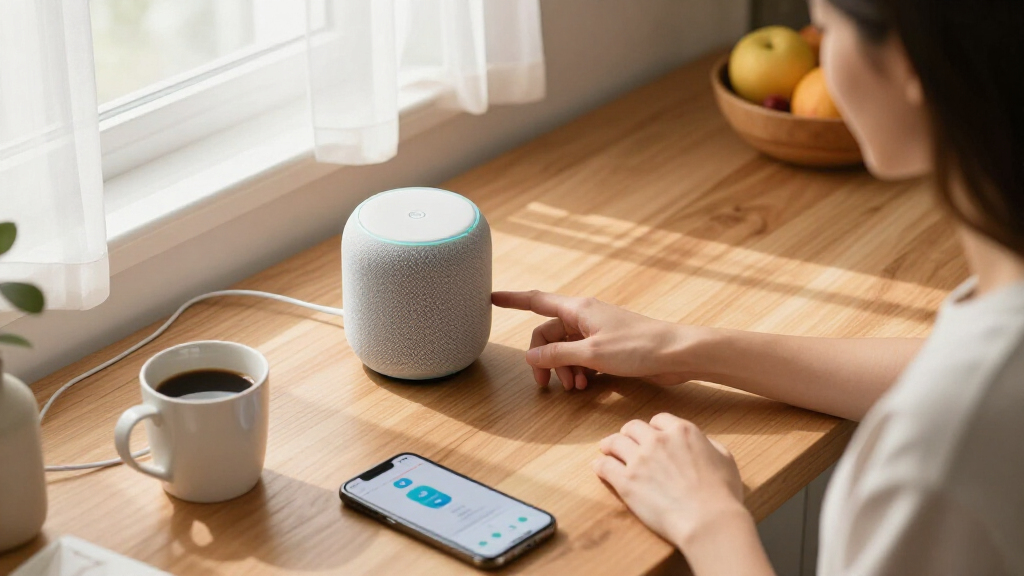

The Amazon Echo Studio (Newest Model) takes my top spot among the best smart speakers thanks to its Dolby Atmos spatial audio, room-adapting sound, and the deepest Alexa integration of any speaker in this lineup. If pure audio quality matters more than a screen, the Sonos Era 300 is a close rival with a more open music ecosystem, while the Amazon Echo Dot (5th Gen) remains the smartest cheap entry point into voice control. The main tradeoff in this category is between sound quality and assistant choice: the best-sounding speakers lock you into one ecosystem, and the most flexible speakers rarely sound this good. Screen-equipped models like the Echo Show 8 add visual utility but cost more and blur the line between speaker and display. Read on for the full breakdown of all 15 picks.

Get home appliances delivered free — and shop member deals
- Fast, free delivery on millions of items
- Access to Prime Big Deal Days deals on October 6–7
- Prime Video, Amazon Music and more included
Complete the kit


Key Takeaways
- The Echo Studio wins best overall because it is the only speaker here that combines true Dolby Atmos, automatic room tuning, and full Alexa+ features, while still costing far less than the premium amazon.com/dp/B0BFC7WQ6R?tag=theintellihome-20&ascsubtag=dc-1087588″ target=”_blank” rel=”nofollow sponsored noopener”>amazon.com/dp/B0D6SX8VLQ?tag=theintellihome-20&ascsubtag=dc-1087588″ target=”_blank” rel=”nofollow sponsored noopener”>amazon.com/dp/B09B2SBHQK?tag=theintellihome-20&ascsubtag=dc-1087588″ target=”_blank” rel=”nofollow sponsored noopener”>amazon.com/dp/B09B93ZDG4?tag=theintellihome-20&ascsubtag=dc-1087588″ target=”_blank” rel=”nofollow sponsored noopener”>amazon.com/dp/B0BW2LV57K?tag=theintellihome-20&ascsubtag=dc-1087588″ target=”_blank” rel=”nofollow sponsored noopener”>Sonos and Apple options.
- Assistant choice mattered more than raw specs: the Sonos Era 300 and Era 100 sound superb but handle voice control more loosely than Echo or Nest speakers, which matters if you rely heavily on smart home commands.
- The sub-$60 tier (Echo Dot 5th Gen and Echo Spot) is where most buyers should start; the Dot Max fills the gap between tiny Dots and full-size speakers without a big price jump.
- Apple’s HomePod (2nd Gen) only makes sense inside an all-Apple household — it is the best-sounding single assistant speaker for that ecosystem but the least flexible pick on this list for everyone else.
- Multi-assistant speakers like the JBL Authentics 200 and Denon Home 150 trade a little refinement for ecosystem freedom, which makes them the smart buys for mixed-device households.
| WiiM Sound Lite Smart Speaker, White |  | Best for Hi-Res Audio on a Budget | Audio output: Stereo | Amplifier: 100W peak | Audio resolution: Up to 24-bit/192 kHz | VIEW LATEST PRICE | See Our Full Breakdown |
| Amazon Echo Show 8 (Newest Model) Smart Display with 8.7-Inch HD Screen and Spatial Audio, Graphite |  | Best Smart Display | Display: 8.7-inch HD touchscreen, 800 x 1340 | Camera: 13 MP with auto framing | Audio: 2.8-inch woofer and 2 full-range drivers | VIEW LATEST PRICE | See Our Full Breakdown |
| Sonos Era 300 Wireless Smart Speaker with Dolby Atmos, Black |  | Best Premium Pick | Connectivity: Wi-Fi, Bluetooth, optional line-in adapter | Audio features: Dolby Atmos, six drivers, custom waveguides | Voice control: Sonos Voice Control | VIEW LATEST PRICE | See Our Full Breakdown |
| Bose Home Speaker 500 Smart Bluetooth Speaker with Alexa, Silver |  | Best for Wide Stereo Soundstage | Audio output: Stereo | Voice assistants: Amazon Alexa, Google Assistant | Connectivity: Wi-Fi, Bluetooth, Apple AirPlay 2 | VIEW LATEST PRICE | See Our Full Breakdown |
| Amazon Echo Dot (5th Gen) Smart Speaker with Alexa, Deep Sea Blue |  | Best Value for Everyday Alexa | Audio: 1.6-inch full-range driver, mono | Audio bandwidth: 62 Hz–19 kHz | Wi-Fi: Dual-band 802.11a/b/g/n/ac | VIEW LATEST PRICE | See Our Full Breakdown |
| Amazon Echo Show 5 (Newest Model), 5.5-Inch Smart Display with Alexa, Charcoal |  | Best Smart Display for Small Spaces | Display: 5.5-inch touchscreen | Camera: 2 MP with built-in shutter | Speaker: 1.75-inch full-range speaker | VIEW LATEST PRICE | See Our Full Breakdown |
| Amazon Echo Dot Max Smart Speaker with Alexa, Graphite |  | Best All-in-One Smart Home Hub | Smart assistant: Alexa; designed to support Alexa+ | Smart home hub: Built in | Sensors: Omnisense presence and temperature detection | VIEW LATEST PRICE | See Our Full Breakdown |
| Sonos Era 100 – Black – Wireless, Alexa Enabled Smart Speaker | 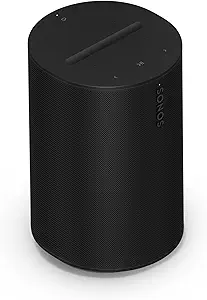 | Best Sound Quality for the Size | Color: Black | Processor: 47% faster than previous generation | Tweeters: Dual-tweeter acoustic architecture | VIEW LATEST PRICE | See Our Full Breakdown |
| WiiM Sound Smart Speaker with Hi-Res Audio, Wi-Fi, and Touchscreen, White |  | Best for Hi-Res Audio Streamers | Display: 1.8-inch round touchscreen | Maximum audio resolution: 24-bit/192 kHz | Amplifier: 100W peak | VIEW LATEST PRICE | See Our Full Breakdown |
| JBL Authentics 200 Retro-Style Smart Home Speaker with Wi-Fi, Bluetooth, Alexa and Google Assistant (White/Gold) |  | Best Design Statement | Tweeters: 25 mm | Woofer: 5 inches | Passive radiator: 6 inches | VIEW LATEST PRICE | See Our Full Breakdown |
| Amazon Echo Spot Smart Alarm Clock with Alexa, Black |  | Best Bedside Smart Speaker | Color: Black | Display: Customizable clock face with time, weather, and song information | Voice Assistant: Alexa | VIEW LATEST PRICE | See Our Full Breakdown |
| Google Nest Audio Smart Speakers (3-Pack) |  | Best Multi-Room Bundle | Quantity: 3 speakers | Voice Assistant: Google Assistant built-in | Connectivity: Wi-Fi, Bluetooth | VIEW LATEST PRICE | See Our Full Breakdown |
| Apple HomePod (2nd Generation) Smart Speaker with Siri, Midnight |  | Best Premium Audio | Color: Midnight | Woofer: 1 x 4-inch | Tweeters: 5 beamforming tweeters | VIEW LATEST PRICE | See Our Full Breakdown |
| Amazon Echo Studio (Newest Model) Smart Speaker with Dolby Atmos, Alexa+, Graphite |  | Best Overall | Model: Echo Studio (newest) | Color: Graphite | Size: 40% smaller than the original Echo Studio | VIEW LATEST PRICE | See Our Full Breakdown |
| Denon Home 150 Wireless Smart Speaker with Wi-Fi, Bluetooth, HEOS, Alexa, Siri, and AirPlay 2 |  | Best for Audio Flexibility | Tweeter: 1 inch | Woofer: 3.5 inches | Amplifiers: Two Class D | VIEW LATEST PRICE | See Our Full Breakdown |
More Details on Our Top Picks
WiiM Sound Lite Smart Speaker, White
The WiiM Sound Lite stands out for 24-bit/192 kHz hi-res streaming, something few smart speakers at this size attempt. Its 100W peak amp and 4-inch woofer produce a fuller low end than the mono Amazon Echo Dot (5th Gen), making it a clear step up for listeners who care about detail. RoomFit tuning adjusts output to your space, which helps compensate for awkward placement near walls or corners. Connectivity is unusually open: Google Cast, Spotify Connect, TIDAL and Qobuz Connect, DLNA, and Roon support mean it fits into almost any streaming ecosystem without locking you in. The tradeoffs are real, though — there’s no built-in voice assistant out of the box, no screen, and no included remote, so control leans heavily on the app. Compared with the Sonos Era 300, it’s less immersive but far more affordable as an entry into serious streaming.
Pros:- Hi-res audio streaming up to 24-bit/192 kHz
- RoomFit tuning adapts sound to room acoustics
- Broad codec and platform support including Roon and Qobuz
- Stereo pairing and expansion within the WiiM ecosystem
Cons:- Voice control requires separate compatible devices
- No water resistance limits placement options
Best for: Audiophiles and streaming enthusiasts who want hi-res playback and multi-room flexibility without a premium price
Not ideal for: Buyers who want hands-free voice control straight out of the box or a water-resistant speaker for kitchens and bathrooms
- Audio output:Stereo
- Amplifier:100W peak
- Audio resolution:Up to 24-bit/192 kHz
- Drivers:4-inch woofer, dual 1-inch silk-dome tweeters
- Connectivity:Google Cast, Spotify Connect, TIDAL, Qobuz, DLNA, Roon/LMS
- Dimensions:5.8 x 5.8 x 7.6 inches
- Weight:5.5 pounds
Our verdict“This pick makes the most sense for streamers who prioritize sound quality and format flexibility over built-in voice assistants.”
Amazon Echo Show 8 (Newest Model) Smart Display with 8.7-Inch HD Screen and Spatial Audio, Graphite
The Echo Show 8 earns its spot as the best smart display in this lineup because it turns a speaker into a command center. The 8.7-inch HD screen handles recipes, camera feeds, and video calls, with a 13 MP auto-framing camera that keeps you centered as you move — something no audio-only pick like the Bose Home Speaker 500 can match. Its built-in Zigbee, Matter, and Thread hub also eliminates the need for separate smart home bridges, which the smaller Echo Show 5 offers only in a less usable size. Sound quality is respectable for a display device with spatial audio processing, but it can’t compete with the six-driver spread of the Sonos Era 300 for music. One honest caveat: Amazon Sidewalk ships enabled by default, so privacy-minded buyers should switch it off during setup.
Pros:- 8.7-inch HD touchscreen for visual content and controls
- Built-in Zigbee, Matter, and Thread smart home hub
- 13 MP auto-framing camera for video calls
- Physical microphone and camera disable buttons
Cons:- Amazon Sidewalk enabled by default unless disabled
- Audio quality trails dedicated speakers at this price
Best for: Smart home owners who want a touchscreen hub for cameras, video calls, and visual Alexa controls in one device
Not ideal for: Music-first listeners who’d be better served by a dedicated audio speaker with fuller, room-filling sound
- Display:8.7-inch HD touchscreen, 800 x 1340
- Camera:13 MP with auto framing
- Audio:2.8-inch woofer and 2 full-range drivers
- Smart home hub:Zigbee, Matter, Thread Border Router
- Wi-Fi:Wi-Fi 6E
- Dimensions:8.2 x 5 x 5.9 inches
- Weight:37 oz (1049 g)
Our verdict“Choose this if you want a do-everything smart home command center with a screen; skip it if pure music quality is the goal.”
Sonos Era 300 Wireless Smart Speaker with Dolby Atmos, Black
At the top of this roundup sits the Sonos Era 300, the only option here engineered from the ground up for Dolby Atmos music. With six drivers aimed front, side, and upward, it fills a room in a way the forward-firing WiiM Sound Lite simply cannot replicate. This model is better suited to buyers building a long-term system: pair two with a Sonos Arc or Beam for true multichannel surround, a path no other speaker in this batch offers. Compared with the Bose Home Speaker 500, the Era 300 trades LCD displays and preset buttons for a more immersive soundstage — a fair swap for home theater fans, less so for tinkerers. The drawbacks are mostly financial: the optional Line-In Adapter is sold separately for turntable connections, and surround setups multiply the cost quickly.
Pros:- True Dolby Atmos playback with six drivers and waveguides
- Both Wi-Fi streaming and Bluetooth connectivity
- Pairs with Sonos Arc or Beam for multichannel surround
- Ongoing software updates and Sonos Radio access
Cons:- Turntable or line-in connection requires a separate adapter
- Full surround setup requires two units plus a compatible soundbar
Best for: Home theater enthusiasts and Sonos ecosystem owners willing to invest in immersive, expandable Atmos sound
Not ideal for: Budget-conscious buyers or anyone wanting wired line-in without buying extra adapters
- Connectivity:Wi-Fi, Bluetooth, optional line-in adapter
- Audio features:Dolby Atmos, six drivers, custom waveguides
- Voice control:Sonos Voice Control
- Color:Black
- Multi-room:Sonos ecosystem with stereo pairing
- Surround expansion:Pairs two units with Sonos Arc or Beam (Gen 2)
Our verdict“The premium choice for listeners who want Atmos immersion today and a path to full surround sound tomorrow.”
Bose Home Speaker 500 Smart Bluetooth Speaker with Alexa, Silver
The Bose Home Speaker 500 plays a specific angle brilliantly: two drivers bounce sound off your walls to create a wider stereo image from a single cabinet — a trick the mono Echo Dot (5th Gen) can’t attempt and the single-driver designs elsewhere in this roundup can’t match. Its aluminum enclosure feels more premium than most plastic competitors, and the color LCD display plus six preset buttons make it genuinely pleasant to operate without reaching for a phone. Flexibility is another strength: it runs both Alexa and Google Assistant, and supports Wi-Fi, Bluetooth, and Apple AirPlay 2, covering the bases the Sonos-only Era 300 leaves to adapters and ecosystems. Tradeoffs include a modest 9-meter Bluetooth range and no water resistance, so this is a living-room piece, not a poolside one.
Pros:- Wall-reflecting drivers create a wide stereo soundstage
- Supports both Alexa and Google Assistant
- Wi-Fi, Bluetooth, and Apple AirPlay 2 connectivity
- Six presets and a color LCD display for phone-free control
Cons:- Bluetooth range limited to about 9 meters
- Not waterproof or water resistant
Best for: Design-conscious listeners who want expansive stereo separation and dual voice assistants from one tabletop speaker
Not ideal for: Anyone planning to move the speaker around the house or use it outdoors, given the limited Bluetooth range and lack of waterproofing
- Audio output:Stereo
- Voice assistants:Amazon Alexa, Google Assistant
- Connectivity:Wi-Fi, Bluetooth, Apple AirPlay 2
- Microphones:8-microphone array
- Presets:Up to 6
- Enclosure:Aluminum
- Dimensions:4.31 x 6.68 x 8.01 inches
- Weight:4.7 pounds
Our verdict“The pick for buyers who value stereo width and hands-on controls over multi-room ecosystem expansion.”
Amazon Echo Dot (5th Gen) Smart Speaker with Alexa, Deep Sea Blue
No roundup of smart speakers is complete without the Echo Dot (5th Gen), and it claims the best value slot on sheer practicality. This compact puck handles timers, questions, routines, podcasts, and smart home control with the same Alexa experience as the pricier Echo Show 8 — minus the screen. Its 1.6-inch driver is a real upgrade over earlier Dots, but it remains mono only, so music lovers will notice the gap against the stereo WiiM Sound Lite or Bose Home Speaker 500. The bonus features punch above the price: a built-in temperature sensor, motion detection for routines, and eero Built-in mesh extension that adds up to 1,000 sq. ft. of Wi-Fi coverage — though that last perk requires an existing eero router and app setup. For bedrooms, desks, and first Alexa deployments, it’s hard to beat.
Pros:- Affordable entry into the full Alexa ecosystem
- Built-in motion and indoor temperature sensors
- eero Built-in extends mesh Wi-Fi coverage up to 1,000 sq. ft.
- Works with Matter and Bluetooth Low Energy devices
Cons:- Mono playback limits music quality
- eero Built-in requires a compatible router and account linking
Best for: First-time Alexa users and anyone wanting cheap, capable voice control for bedrooms, desks, or smart home routines
Not ideal for: Music-focused listeners who need stereo separation and fuller bass than a single mono driver can deliver
- Audio:1.6-inch full-range driver, mono
- Audio bandwidth:62 Hz–19 kHz
- Wi-Fi:Dual-band 802.11a/b/g/n/ac
- Smart home:Wi-Fi, BLE Mesh, Matter
- eero Built-in:Up to 1,000 sq. ft. added coverage
- Dimensions:3.9 x 3.9 x 3.5 inches
- Weight:10.7 oz (304 g)
Our verdict“The smartest low-cost way to put Alexa anywhere in the house — as long as music fidelity isn’t the priority.”
Amazon Echo Show 5 (Newest Model), 5.5-Inch Smart Display with Alexa, Charcoal
This model stands out as the rare smart speaker that shows as much as it says. Compared with the audio-first Echo Dot Max, the Echo Show 5 trades raw sound power for a 5.5-inch touchscreen that turns timers, weather, and video calls into glanceable visuals — a genuine benefit on a nightstand or kitchen counter. The 2 MP camera handles casual video calls and camera-based home monitoring, though buyers wanting a serious media screen will prefer the larger Echo Show 8 with its bigger display and spatial audio. The compact footprint is the real draw here: it disappears into spaces where bigger speakers dominate. Tradeoffs are real — the small full-range driver won’t fill a living room, and some skills and services carry subscription fees.
Pros:- Compact touchscreen makes timers, weather, and streaming content visible at a glance
- Video calls and compatible camera monitoring from a small device
- Physical camera shutter and mic/camera off button for privacy
- Controls compatible smart home devices through Alexa
Cons:- Small speaker driver delivers thin audio compared with dedicated smart speakers
- Some skills and services require subscriptions or fees
Best for: Bedside or desk users who want visual information, video calls, and smart home control in a compact footprint
Not ideal for: Music-first listeners — the 1.75-inch speaker is outclassed by dedicated audio options like the Sonos Era 100
- Display:5.5-inch touchscreen
- Camera:2 MP with built-in shutter
- Speaker:1.75-inch full-range speaker
- Dimensions:5.8 x 3.6 x 3.2 inches
- Wi-Fi:Dual-band 802.11a/b/g/n/ac
- Bluetooth:A2DP and AVRCP support
- Color:Charcoal
Our verdict“A smart display that earns its spot when visuals matter more than volume, especially in tight spaces like bedrooms and home offices.”
Amazon Echo Dot Max Smart Speaker with Alexa, Graphite
The Echo Dot Max is the most feature-dense Alexa speaker in this lineup, pairing nearly three times the bass of the 2022 Echo Dot with a built-in smart home hub, Omnisense presence and temperature detection, and eero Wi-Fi extension. That combination makes it a better fit for whole-home automation than the simpler Echo Show 5, because it can sense occupancy, trigger routines, and extend network coverage by up to 1,000 sq. ft. — eliminating dead zones without extra hardware. The catch: the Wi-Fi extension only works on an existing eero network, and features like Fire TV home theater pairing require compatible gear. Buyers who just want music fidelity may find the Sonos Era 100 sounds cleaner, but nothing else here consolidates hub, sensor, router-extender, and speaker into one device.
Pros:- Room-filling sound with nearly three times the bass of the 2022 Echo Dot
- Built-in smart home hub with Omnisense presence and temperature routines
- Extends an existing eero network by up to 1,000 sq. ft.
- Pairs with a second unit or Fire TV devices for multi-room and home theater audio
Cons:- Wi-Fi extension requires an existing eero network to function
- Pairing and hub features depend on owning compatible devices
Best for: Smart home builders who want a speaker, hub, presence sensor, and Wi-Fi extender in a single device
Not ideal for: Households without an eero network or Alexa-compatible devices — its headline features will sit unused
- Smart assistant:Alexa; designed to support Alexa+
- Smart home hub:Built in
- Sensors:Omnisense presence and temperature detection
- Wi-Fi extension:eero Built-in; adds up to 1,000 sq. ft. of coverage to an existing eero network
- Streaming services:Amazon Music, Apple Music, Spotify, SiriusXM
- Device pairing:Compatible Echo devices, a second Echo Dot Max, compatible Fire TV devices
- Privacy controls:Microphone enable/disable button and multiple privacy controls
- Color:Graphite
Our verdict“The obvious pick for Alexa-centric households that want one device to run automation, sensing, sound, and network coverage.”
Sonos Era 100 – Black – Wireless, Alexa Enabled Smart Speaker
This pick makes the most sense for buyers who care about audio fidelity first and voice control second. The Era 100’s dual-tweeter architecture delivers genuine stereo separation from a single compact cabinet — something the monophonic Amazon Echo Dot Max simply cannot match — while a midwoofer 25% larger than the previous generation adds satisfying low-end depth. Trueplay tuning analyzes the room and adjusts the EQ, so placement near walls or corners degrades sound less than it would on untuned speakers. Connectivity is unusually flexible for the category: WiFi, Bluetooth, and even auxiliary input, though the line-in port requires a separately sold adapter, which feels stingy at this tier. Setup also demands the Sonos app and WiFi, a higher barrier than plug-and-play Alexa devices.
Pros:- True stereo separation from dual tweeters in a single compact speaker
- Versatile connectivity: WiFi, Bluetooth, and optional auxiliary input
- Trueplay tuning adapts the sound to your room’s acoustics
- Compact footprint suits shelves, counters, desks, and nightstands
Cons:- Auxiliary input requires a separately sold Sonos Line-In Adapter
- Setup depends on the Sonos app and a WiFi connection
Best for: Listeners who prioritize rich, room-tuned stereo sound in a bookshelf-sized speaker with Alexa on board
Not ideal for: Buyers seeking an ecosystem hub — the Era 100 offers no smart home hub, sensors, or display, unlike the Echo Dot Max
- Color:Black
- Processor:47% faster than previous generation
- Tweeters:Dual-tweeter acoustic architecture
- Midwoofer:25% larger than previous generation
- Connectivity:WiFi, Bluetooth, Auxiliary (via Sonos Line-In Adapter)
- Voice assistant:Alexa enabled
- Setup:Sonos app, WiFi connection
Our verdict“A near-ideal blend of audiophile-leaning sound and smart assistant convenience for buyers who refuse to compromise on audio.”
WiiM Sound Smart Speaker with Hi-Res Audio, Wi-Fi, and Touchscreen, White
The WiiM Sound targets a niche the mainstream options overlook: listeners invested in lossless and hi-res streaming. Playback up to 24-bit/192 kHz, combined with native support for TIDAL Connect, Qobuz Connect, Roon, and DLNA, gives it streaming credibility that the Amazon-centric Echo Dot Max and the app-locked Sonos Era 100 can’t replicate. A 100W peak amplifier driving a 4-inch woofer and dual silk-dome tweeters produces surprisingly robust output for the size, and the 1.8-inch touchscreen surfaces track info without reaching for a phone. AI RoomFit calibration handles placement tuning automatically. Tradeoffs: voice control requires separate Alexa or Google hardware, and bass enthusiasts will need the optional WiiM Sub Pro — an added cost the spec sheet doesn’t advertise.
Pros:- Hi-res audio playback up to 24-bit/192 kHz
- Native support for TIDAL, Qobuz, Roon, DLNA, Google Cast, and Spotify Connect
- Touchscreen shows track information and controls without a phone
- AI RoomFit calibration optimizes sound for placement and space
Cons:- Voice controls require separately owned Alexa or Google devices
- Deep bass requires the optional WiiM Sub Pro
Best for: Audiophiles and lossless-streaming subscribers who want native hi-res playback without a component-sized system
Not ideal for: Voice-assistant-first buyers — standalone voice control requires adding compatible Alexa or Google devices
- Display:1.8-inch round touchscreen
- Maximum audio resolution:24-bit/192 kHz
- Amplifier:100W peak
- Woofer:4-inch paper-cone
- Tweeters:Dual 1-inch silk-dome
- Room calibration:AI RoomFit
- Streaming:Google Cast, Spotify Connect, TIDAL Connect, Qobuz Connect, Alexa Cast, DLNA, Roon, LMS
- Controls:Touchscreen, WiiM Home App, Alexa/Google devices, WiiM Voice Remote 2 Lite
- Color:White
Our verdict“The strongest pick here for hi-res streaming devotees, provided voice assistance is a secondary concern.”
JBL Authentics 200 Retro-Style Smart Home Speaker with Wi-Fi, Bluetooth, Alexa and Google Assistant (White/Gold)
Most smart speakers look like hockey pucks or plastic columns; the Authentics 200 looks like furniture. With its retro-inspired aluminum frame and Quadrex grille, this model doubles as decor in a way nothing else in this lineup attempts — the Echo Dot Max and WiiM Sound are function-first boxes by comparison. The audio hardware backs up the looks: 25 mm tweeters, a 5-inch woofer, and a 6-inch passive radiator produce fuller stereo sound than compact rivals. It’s also the rare speaker offering both Alexa and Google Assistant simultaneously, plus AirPlay, Chromecast built-in, and Spotify Connect — ideal for mixed-ecosystem households. The compromises are practical rather than sonic: no smart home hub or room-sensing features, and JBL’s multi-room ecosystem is smaller than Sonos’s, limiting expansion plans.
Pros:- Distinctive retro design with aluminum frame and Quadrex grille
- Runs Alexa and Google Assistant side by side
- Broad streaming support: AirPlay, Chromecast built-in, Spotify Connect, Alexa Multi-Room Music
- Full-range stereo output from tweeters, woofer, and passive radiator
Cons:- Lacks smart home hub features found in comparably priced rivals
- Smaller multi-room ecosystem than Sonos for whole-home expansion
Best for: Design-conscious buyers in mixed Alexa/Google households who want a speaker that looks as good as it sounds
Not ideal for: Smart home power users — there’s no built-in hub, presence detection, or Wi-Fi extension like the Echo Dot Max offers
- Tweeters:25 mm
- Woofer:5 inches
- Passive radiator:6 inches
- Connectivity:Wi-Fi, Bluetooth
- Streaming:AirPlay, Alexa Multi-Room Music, Chromecast built-in, Spotify Connect
- Voice assistants:Alexa, Google Assistant
- App:JBL One
- Color:White/Gold
Our verdict“A statement piece for buyers whose speaker sits in plain view and whose household spans both major voice assistants.”
Amazon Echo Spot Smart Alarm Clock with Alexa, Black
The Echo Spot earns its place as the best bedside pick by doing something the Echo Dot and Echo Show 5 can’t match in the same way: it pairs a glanceable, customizable clock display with genuinely listenable sound in a footprint small enough for a nightstand. Where the Echo Dot (5th Gen) is audio-only and forces you to ask Alexa for the time, the Spot shows time, weather, and now-playing info at a glance — useful at 3 a.m. when you don’t want to talk to anyone.
The tradeoff is honest: this is a convenience-first speaker, not a music-first one. Compared with the Denon Home 150, its audio is serviceable rather than detailed, and its Wi-Fi extender trick only helps households already running an eero mesh. For alarms, routines, and winding down with podcasts, though, it nails the brief.
Pros:- Customizable display shows time, weather, and song info at a glance
- Alexa routines, alarms, and smart home controls in a nightstand-friendly size
- Surprisingly rich sound for a bedside form factor
- Doubles as a 1,000 sq. ft. eero Wi-Fi extender
Cons:- Wi-Fi extender feature is useless without an existing eero network
- Smart home control limited to Alexa-compatible devices
Best for: Sleepers who want a voice-controlled alarm clock that also handles bedtime routines, weather, and quiet music without cluttering the nightstand
Not ideal for: Anyone shopping primarily for music quality — its small driver can’t compete with dedicated audio speakers like the Denon Home 150 or Sonos Era 100
- Color:Black
- Display:Customizable clock face with time, weather, and song information
- Voice Assistant:Alexa
- Audio:Rich sound with clear vocals and deep bass
- Wi-Fi Extender:Up to 1,000 sq. ft. on an existing eero network
- Recycled Materials:36%
Our verdict“Buy it if your smart speaker will live on a nightstand; skip it if it’s your main music system.”
Google Nest Audio Smart Speakers (3-Pack)
Most smart speakers are sold one at a time, which makes covering a home expensive and piecemeal. The Nest Audio 3-pack solves that in one purchase: three speakers that can blanket a kitchen, bedroom, and living room with synchronized playback, or pair two for stereo while the third works solo. That whole-home coverage out of the box is something no single-unit rival — not the HomePod, not the Echo Studio — can replicate at the same convenience level.
The catch is ecosystem lock-in. Google Assistant powers everything here, so households invested in Alexa (like Echo Dot or Echo Show owners) will find the experience fragmented, and Apple users lose AirPlay 2 convenience. Each speaker also needs a permanent power outlet, so unlike a portable option, there’s no moving one to the patio on a whim. Within a Google-centric home, though, this stands out as the easiest path to multi-room audio.
Pros:- Three speakers covering an entire home in a single purchase
- Built-in Google Assistant for hands-free music, info, and smart home control
- Flexible setup with stereo pairing or multi-room grouping
- Streams from Spotify, YouTube Music, and Chromecast-enabled apps
Cons:- Requires the Google ecosystem for full functionality
- No battery — every speaker needs constant power
Best for: Google-centric households that want synchronized music across three rooms without buying speakers one at a time
Not ideal for: Alexa- or Apple-first households — full functionality leans on the Google ecosystem, fragmenting the experience
- Quantity:3 speakers
- Voice Assistant:Google Assistant built-in
- Connectivity:Wi-Fi, Bluetooth
- Features:Multi-room playback, stereo pairing, smart home integration
- Compatible Services:Spotify, YouTube Music, Chromecast-enabled apps
- Device Compatibility:Android, iOS
Our verdict“This bundle makes the most sense for Google households that want multi-room sound solved in one order.”
Apple HomePod (2nd Generation) Smart Speaker with Siri, Midnight
Among voice-enabled speakers, the HomePod (2nd Gen) is the audio statement piece. A 4-inch woofer, five beamforming tweeters, and 38 watts of output produce a fullness the Nest Audio can’t approach, and room sensing adjusts the tuning to whatever space you place it in — a feature it shares in spirit with the Echo Studio, but with Apple’s typically heavier, more furniture-like build at 7.5 pounds.
The tradeoffs follow the usual Apple pattern. Siri remains less capable than Alexa for general queries and third-party skills, so anyone comparing it against the Echo Studio’s Alexa+ should expect a narrower assistant. It’s also tethered to Apple’s world: the payoff from stereo pairing and whole-home audio is largest for Apple Music and HomeKit households, and Matter/Thread support is great for a modern smart home but less relevant if your devices are older. For listeners who care about sound first and ecosystem second, this is the premium anchor of the lineup.
Pros:- High-fidelity audio with room sensing that adapts to your space
- Matter and Thread support for a modern smart home setup
- Stereo pairing and whole-home audio expansion
- Temperature and humidity sensors add ambient data
Cons:- Siri is less capable than Alexa or Google Assistant for third-party skills
- Heaviest speaker in this lineup at 7.5 pounds, with limited placement flexibility
Best for: Apple Music and HomeKit households that prioritize high-fidelity sound and want a future-proofed Matter/Thread hub
Not ideal for: Households built around Alexa or Google Assistant — Siri’s narrower skills and Apple ecosystem lock-in will frustrate daily use
- Color:Midnight
- Woofer:1 x 4-inch
- Tweeters:5 beamforming tweeters
- Microphones:4
- Maximum Output Power:38 watts
- Weight:7.5 pounds
- Smart Home Compatibility:Matter and Thread
- Sensors:Sound, temperature, and humidity
Our verdict“The strongest pick here for Apple loyalists who want audiophile-leaning sound with smart home chops built in.”
Amazon Echo Studio (Newest Model) Smart Speaker with Dolby Atmos, Alexa+, Graphite
The newest Echo Studio takes the top spot because it stacks capabilities no other single speaker here matches. Dolby Atmos spatial audio puts it in direct competition with the Sonos Era 300, but Amazon adds a built-in smart home hub and eero Wi-Fi extension on top — meaning one device can anchor your music, your Zigbee-style device control, and your mesh network. The redesign shrinks it by 40%, making it far more livable on a shelf than the original.
Real tradeoffs exist. The Wi-Fi extension only works on an existing eero network, so non-eero households get zero benefit from that feature, and the tight Alexa integration cuts both ways: unlike the Denon Home 150, which supports Alexa, Siri, AirPlay 2, and hi-res files, the Studio is Amazon-first in both voice and services. Alexa+ promises more natural conversation, but privacy-sensitive buyers should note that and rely on the mic-disable button. As a do-everything centerpiece, though, this option stands out as the most complete package.
Pros:- Immersive Dolby Atmos spatial audio with room adaptation
- Built-in smart home hub eliminates separate hardware
- eero Built-in extends mesh Wi-Fi by up to 1,000 sq. ft.
- 40% smaller redesign fits more easily on shelves
Cons:- Wi-Fi extender only functions with existing eero networks
- Locked to the Alexa ecosystem compared with flexible rivals like the Denon Home 150
Best for: Buyers who want one flagship speaker that handles immersive music, smart home control, and Wi-Fi extension without extra hardware
Not ideal for: Non-eero households and multi-ecosystem households — its best tricks assume an Amazon-and-eero setup
- Model:Echo Studio (newest)
- Color:Graphite
- Size:40% smaller than the original Echo Studio
- Audio:Spatial audio with Dolby Atmos
- Voice Assistant:Alexa+
- Smart Home Hub:Built-in
- Wi-Fi Extender:eero Built-in, up to 1,000 sq. ft. added coverage
- Room Adaptation:Yes
- Privacy:Microphone enable/disable button
Our verdict“The best all-around choice for Amazon households that want flagship sound plus hub and Wi-Fi duties in one device.”
Denon Home 150 Wireless Smart Speaker with Wi-Fi, Bluetooth, HEOS, Alexa, Siri, and AirPlay 2
Where most speakers in this roundup pick an ecosystem and defend it, the Denon Home 150 refuses to choose. It speaks Alexa, Siri, AirPlay 2, Bluetooth, HEOS, and USB, and plays files up to 192 kHz/24-bit and DSD 5.6 MHz — a level of format support that makes the Echo Studio and Nest Audio look locked-down by comparison. For households split between an iPhone owner and an Android owner, or listeners with a hi-res library, this flexibility is the whole point.
The compromises are about scale. A single 3.5-inch woofer can’t fill a large room the way the HomePod or Echo Studio can, and true stereo requires buying a second unit — at which point the total spend competes with bigger single-box options. There’s also no battery, so it lives where you plug it in. As a desk, den, or entry-point hi-res speaker that plays nicely with everything, though, this model is better suited to mixed-ecosystem homes than nearly anything else here.
Pros:- Works with Alexa, Siri, AirPlay 2, Bluetooth, and HEOS simultaneously
- Supports high-resolution audio up to 192 kHz/24-bit and DSD 5.6 MHz
- HEOS multi-room and stereo pairing expand the system over time
- Dedicated tweeter and woofer with two Class D amps for detailed sound
Cons:- Stereo sound requires purchasing a second Home 150
- Compact size limits bass depth and large-room coverage
Best for: Audio enthusiasts and mixed Apple/Android households who want hi-res playback without committing to one ecosystem
Not ideal for: Listeners wanting big-room, room-shaking sound from a single unit — the compact driver and optional second-speaker pairing add up fast
- Tweeter:1 inch
- Woofer:3.5 inches
- Amplifiers:Two Class D
- Connectivity:Wi-Fi, Bluetooth, AirPlay 2, USB, Aux
- Multi-room:HEOS
- Audio Formats:MP3, WAV, AAC, WMA, ALAC, FLAC, DSD
- Max Audio Resolution:192 kHz/24-bit; DSD 2.8 MHz and 5.6 MHz
- Voice Assistants:Alexa, Siri
Our verdict“The pick for buyers who value format and ecosystem flexibility over raw single-speaker power.”
How We Picked
I ranked these 15 speakers against four buyer-relevant criteria: sound quality for the price, voice assistant depth and ecosystem lock-in, smart home usefulness beyond music, and versatility (multiroom support, Bluetooth, AirPlay, and future-proofing). Speakers that sound great but limit you to one ecosystem were judged against how well they serve that ecosystem’s users, not against an abstract ideal. Screen-equipped devices were held to a higher bar, since a display has to justify its extra footprint and cost.
The ranking order reflects a simple question: which speaker would I tell the most people to buy first? That pushed the Echo Studio above pricier audiophile picks because it balances sound, features, and price better than anything else here, while niche picks like the Echo Spot and Nest Audio 3-Pack landed lower because they serve narrower needs, not because they are weaker products.
Factors to Consider When Choosing Best Smart Speakers
Before picking a specific model, it helps to understand the bigger decisions that shape smart speaker satisfaction — the ones reviewers rarely emphasize but buyers regret getting wrong.Pick Your Assistant Before You Pick Your Speaker
The single biggest mistake buyers make is choosing on sound alone, then discovering their speaker’s assistant does not control their thermostat, calendar, or TV. Alexa has the widest device compatibility, Google Assistant leads at answering questions and controlling Nest gear, and Siri is only worth it if you already live in Apple’s ecosystem. Once you commit, switching later usually means replacing every speaker, so decide based on the devices you already own, not on a demo. Multi-assistant speakers like the JBL Authentics 200 exist precisely to dodge this problem, though they add a layer of complexity.
Match Speaker Size to the Room, Not to Your Ambition
A common pattern in this roundup: buyers overbuy for small rooms and underbuy for open-plan spaces. A compact speaker like the Echo Dot or Era 100 fills a bedroom beautifully but gets lost in a living room, while an Echo Studio or HomePod in a tiny office is wasted headroom. One full-size speaker suits rooms up to roughly 200 square feet; beyond that, two smaller speakers in a stereo pair often beat one big one. That is exactly why the Nest Audio 3-Pack exists as a deliberate multiroom strategy rather than a bulk discount.
Screens Add Value Only If You Will Actually Look at Them
Smart displays like the Echo Show 8 and Show 5 cost meaningfully more than equivalent audio-only speakers, and many owners end up using the screen only as a clock. Displays genuinely earn their price for video doorbell feeds, recipe steps, and security camera views — less so for weather and timers. If your main use is music and voice commands, the same money buys noticeably better sound in an audio-only speaker. Be honest about your habits before paying the display premium.
Understand Multiroom and Streaming Ecosystems
Every speaker here supports some multiroom system, but they do not talk to each other: Alexa Groups, Sonos, HEOS, AirPlay 2, and Chromecast are separate islands. Mixing brands feels flexible at purchase but usually fragments your multiroom setup permanently. If you plan to grow from one speaker to a whole-home system, choose the platform first — Sonos and HEOS favor serious listeners, Alexa and Nest favor convenience and price. This is why the Denon Home 150 and Sonos entries are ranked with expansion in mind, not just solo performance.
Know When Paying More Actually Buys Something
Price jumps in this category are not linear. Below roughly the Echo Dot Max, you are paying for basic voice control and modest sound; between mid and premium tiers, you are paying for real stereo separation, room correction, and spatial audio; above that, you are paying for brand refinement and materials. The sweet spot for most buyers sits at the Echo Studio and Era 100 level, where each dollar clearly improves what you hear. Spending more only pays off if spatial audio or a specific ecosystem justifies it.
Do Not Overlook Placement and Privacy Controls
Where a speaker sits changes how it sounds more than most spec sheets suggest — corners boost bass artificially, and enclosed shelves muffle it. Many premium picks now include automatic room tuning that compensates for placement, which is a genuine reason to pay more if your room is acoustically awkward. Also check the physical mic mute button before buying if privacy matters to you; every speaker here has one, but toggling and camera shutters (on displays) vary in convenience. Small details like a line-in port, as on the Sonos Era models, can also extend a speaker’s useful life for years.
Frequently Asked Questions
Is the Echo Studio actually better than the Sonos Era 300, or just cheaper?
They win on different axes. The Echo Studio delivers bigger, more room-filling bass and tighter Alexa integration, plus support for Amazon’s newest Alexa+ features — which makes it the better all-rounder and my top overall pick. The Sonos Era 300 offers cleaner, more detailed sound, a superior multiroom platform in Sonos, AirPlay 2, and a line-in port, making it the stronger choice for music-first households that may expand to a Sonos system. If you see the speaker as a smart home hub that also plays music, choose the Studio; if you see it as a hi-fi component that also takes voice commands, choose the Era 300.
Can I mix Echo, Nest, and Sonos speakers in one home?
You can own them all, but you cannot group them into a single synchronized multiroom system. Alexa speakers, Google Nest devices, Sonos, HEOS, and AirPlay each live in separate ecosystems, so a whole-home setup built from mixed brands will need separate apps and separate voice commands. A practical compromise is using one ecosystem for whole-home audio and letting a lone outlier speaker serve a single room. Bluetooth can bridge gaps occasionally, but latency makes it a poor everyday solution for synchronized playback.
Are smart displays like the Echo Show 8 worth it over a regular smart speaker?
Only if the screen has a job. Displays prove their worth for doorbell and camera feeds, visual recipes, video calls, and glanceable calendars; if none of those fit your routine, the same budget buys clearly better sound in an audio-only speaker like the Echo Studio or Era 100. The Show 8 is the best-sized display in this lineup — big enough to be useful, small enough for a nightstand or kitchen corner — while the Show 5 works best as a smart alarm clock. Families with kids and smart cameras get the most value from screens; solo music listeners get the least.
Should I buy one expensive speaker or several cheaper ones?
Decide based on how you actually listen. If you sit and listen actively — music as the main activity — one strong speaker like the Echo Studio, Era 300, or HomePod beats three budget units. If music is background filler spread across rooms, the Nest Audio 3-Pack or a pair of Echo Dots delivers more total satisfaction, because coverage beats fidelity for casual listening. A hybrid approach works well too: one premium speaker in the living room, inexpensive Dots in bedrooms and the office.
Is the Apple HomePod worth it if I don’t use only Apple devices?
Generally, no. The HomePod (2nd Gen) is an excellent-sounding speaker with strong room correction, but nearly all of its smart features — intercom, handoff, personal requests, multiroom — assume an iPhone, Apple Music, and a HomeKit household. Android and Windows users lose most of what makes the HomePod special and are better served by the Era 100 or Denon Home 150, both of which support AirPlay anyway. Inside an all-Apple home, though, it is the most seamless assistant speaker on this list and justifies its premium.
Conclusion
After comparing all 15, the right choice comes down to your ecosystem and how you listen. For best overall, the Amazon Echo Studio is the pick I would point most buyers toward — spatial audio, room tuning, and full Alexa+ at a mid-tier price. For best value, the Amazon Echo Dot (5th Gen) covers the essentials for very little, and the Echo Dot Max is the smarter value if you want real bass. For best premium, the Sonos Era 300 rewards music-first households, with the Apple HomePod taking that crown for all-Apple homes. For beginners, the Google Nest Audio 3-Pack or a single Echo Dot makes the gentlest, lowest-risk entry into voice control. And for specific needs: the Echo Show 8 for camera feeds and visual commands, the Echo Spot for the nightstand, the JBL Authentics 200 for design lovers who want both Alexa and Google, and the Denon Home 150 for mixed-ecosystem households that refuse to be locked in. Pick the ecosystem first, then the speaker — that order rarely leads to regret.
NFL season / tailgating Picks
team gear
As an affiliate, we earn on qualifying purchases.