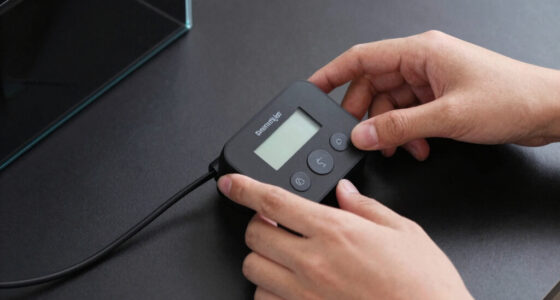

Smart home energy monitors provide real-time insights into your electricity consumption, helping you save money and reduce waste. The best options balance detailed data, ease of use, and compatibility with your existing smart home setup. The Emporia Vue 3 stands out as the top overall pick for its comprehensive features and user-friendly interface, while the Refoss Smart Home Energy Monitor with Open API is ideal for tech-savvy users who want custom integrations. However, these tools often require tradeoffs between detailed data and setup complexity or cost. Continue reading for a full breakdown of the best models and what to consider before buying.

Get home appliances delivered free — and shop member deals
- Fast, free delivery on millions of items
- Access to Prime Big Deal Days deals on October 6–7
- Prime Video, Amazon Music and more included
Complete the kit



Key Takeaways
- Most high-performance monitors offer extensive circuit coverage, but this often increases setup complexity and cost.
- Compatibility with smart home platforms like Home Assistant is key for users wanting automation, but not all monitors support this equally.
- Open API and local control features add flexibility for tech enthusiasts, yet may come with steeper learning curves.
- Price varies significantly; the most feature-rich options tend to be the most expensive, making value a critical factor.
- Ease of installation and calibration remains a common challenge, especially for models with multiple sensors.
| Meross Smart Home Energy Monitor |  | Best Overall for Privacy and Circuit-Level Detail | Certification: ETL, UL 61010 | Compatibility: Most US homes, single-phase 2-wire, 3-wire, 3-phase | Max Circuits: 2 main circuits (200A) + 16 branch circuits (60A) | VIEW LATEST PRICE | See Our Full Breakdown |
| WiFi Home Energy Monitor with 3 80A CT Clamps |  | Best for Multi-Circuit Monitoring with Remote Control | Supported Voltage: AC 100–240V | Number of CT Clamps: 3 | Clamp Current: 80A | VIEW LATEST PRICE | See Our Full Breakdown |
| Refoss Smart Home Energy Monitor with Open API, Home Assistant, No Cloud |  | Best for Privacy-Focused Solar Homes | Model: EM16P | Weight: 4.24 pounds | Dimensions: 4.5 x 3.5 x 1.1 inches | VIEW LATEST PRICE | See Our Full Breakdown |
| Emporia Vue 3 Home Energy Monitor |  | Best for Real-Time Monitoring with Solar and Net Metering | Certification: UL Listed | Installation: Circuit panel with clamp-on sensors | Supported Systems: Single phase, 3-phase, 2-wire, 3-wire | VIEW LATEST PRICE | See Our Full Breakdown |
| SIEMENS Inhab Smart Home Energy Monitor with Circuit Sensors |  | Best for Advanced Circuit-Level Monitoring and Management | Circuit Level Sensors: 16-50Amp | Main Sensors: 2 x 200Amp | Compatibility: USA and Canada | VIEW LATEST PRICE | See Our Full Breakdown |
| Refoss Smart Home Energy Monitor with 16 60A Circuit Sensors |  | Best for Advanced System Integration and Privacy | Circuit Sensors: 16 60A | Supported Systems: Single-phase, Split-phase, 3-phase 4-wire Wye | Data Storage Duration: 5 years | VIEW LATEST PRICE | See Our Full Breakdown |
| Smart Home Energy Monitor 2×80A, Dual-Channel WiFi Electricity Usage Tracker with App Control |  | Best for Simple Dual-Channel Monitoring and Solar Integration | Channels: 2 | Current per channel: 80A | Connectivity: WiFi | VIEW LATEST PRICE | See Our Full Breakdown |
| Smart Home Energy Monitor with 16 50A Circuit Sensors, Real-Time Power & Cost Tracking, Compatible with Home Assistant |  | Best for Rental Properties and Custom Billing | Sensors: 16 50A | Supported Voltages: Up to 415Y/240VAC | Connectivity: WiFi, MQTT LAN only | VIEW LATEST PRICE | See Our Full Breakdown |
| Emporia Vue 3 Home Energy Monitor – Smart Home Automation Module and Real-Time Electricity Usage Monitor |  | Best for Safety and Multi-System Compatibility | Certification: UL Listed, CE Listed | Installation: Circuit panel, supports various systems | Sensors: Sixteen 50A | VIEW LATEST PRICE | See Our Full Breakdown |
| smart home energy monitor | Connectivity | Dimensions |
|---|---|---|
| Meross Smart Home Energy Monit | WiFi, Open API, Web Control | 4.5 x 3.48 x 1.1 inches |
| WiFi Home Energy Monitor with | WiFi 2.4GHz | — |
| Refoss Smart Home Energy Monit | Web UI, Open API, MQTT | 4.5 x 3.5 x 1.1 inches |
| Emporia Vue 3 Home Energy Moni | 2.4 GHz Wi-Fi | — |
| SIEMENS Inhab Smart Home Energ | — | 1.1 x 5.71 x 2.76 inches |
| Refoss Smart Home Energy Monit | Wi-Fi, Open API, MQTT, WebSocket | 4.5 x 3.5 x 1.1 inches |
| Smart Home Energy Monitor 2×80 | WiFi | — |
| Smart Home Energy Monitor with | WiFi, MQTT LAN only | 3.1 x 1.2 x 4.18 inches |
| Emporia Vue 3 Home Energy Moni | 2.4 GHz Wi-Fi | 10 x 5 x 5 inches |
More Details on Our Top Picks
Meross Smart Home Energy Monitor
The Meross Smart Home Energy Monitor stands out for its detailed circuit-level tracking and local data storage, making it ideal for users prioritizing privacy and precision. Compared with the Refoss EM16P, it offers more circuits and supports integration with Home Assistant, giving it an edge for those seeking automation flexibility. However, its setup can be technical, and it lacks a built-in display, relying solely on the app for data access. This makes it less suitable for users who prefer plug-and-play solutions or non-technical installation. The device’s support for up to 2 main circuits and 16 branch circuits ensures comprehensive coverage for most US homes, but outside the US, compatibility drops off. Its privacy focus and local storage are key advantages for security-conscious buyers, though the absence of a built-in screen means ongoing app management is necessary.
Pros:- Accurate real-time energy monitoring with detailed charts
- Supports circuit-level tracking for precise insights
- Privacy-focused with local data storage and no subscriptions
Cons:- Requires some technical setup for integration
- Limited compatibility outside US electrical systems
Best for: Tech-savvy homeowners wanting detailed, circuit-level energy data with privacy controls.
Not ideal for: Users seeking a simple, plug-and-play monitor without technical setup or integration needs.
- Certification:ETL, UL 61010
- Compatibility:Most US homes, single-phase 2-wire, 3-wire, 3-phase
- Max Circuits:2 main circuits (200A) + 16 branch circuits (60A)
- Data Storage:Up to 5 years
- Connectivity:WiFi, Open API, Web Control
- Included Components:Wire Harness, Current Transformers, Insulation Plugs, Wire Nuts, Home Energy Monitor, WiFi Antenna
- Item Weight:3.19 pounds
- Dimensions:4.5 x 3.48 x 1.1 inches
- Color:Orange
Our verdict“This monitor fits well for users who prioritize detailed data and privacy over ease of installation.”
WiFi Home Energy Monitor with 3 80A CT Clamps
This WiFi-enabled monitor excels at tracking multiple high-power circuits like HVAC and water heaters via its three 80A CT clamps, making it a strong choice for households with several major loads. It supports real-time data through the Smart Life or Tuya apps, and offers temperature alerts plus remote circuit control. Compared to the Emporia Vue 3, it provides more circuit monitoring options and external temperature sensing, but it requires careful wiring and professional installation, which could be a barrier for non-technical users. Its focus on high-power circuits makes it less suitable for smaller or less complex homes. The ability to remotely control circuits and receive temperature alerts helps optimize energy use, but external sensors are necessary for temperature monitoring, adding complexity.
Pros:- Allows monitoring of multiple circuits simultaneously
- Real-time data access via smartphone apps
- Supports temperature alerts and remote circuit control
Cons:- Installation requires electrical wiring and possibly professional help
- Limited to circuits with high power loads
Best for: Homeowners with high-power appliances wanting remote control and temperature alerts for multiple circuits.
Not ideal for: Users seeking a simple plug-and-play monitor or those with low power loads, since installation can be complex.
- Supported Voltage:AC 100–240V
- Number of CT Clamps:3
- Clamp Current:80A
- Connectivity:WiFi 2.4GHz
- App Compatibility:Smart Life, Tuya
- Relay Current:15A
Our verdict“This pick suits users needing comprehensive circuit control and monitoring for high-load appliances, willing to handle complex installation.”
Refoss Smart Home Energy Monitor with Open API, Home Assistant, No Cloud
The Refoss EM16P offers a strong option for solar homeowners who want to keep their data local. Its real-time voltage, current, and power measurements support precise energy management, especially when integrated with Home Assistant and OpenClaw AI. Unlike cloud-based options like the Emporia Vue 3, this device emphasizes data privacy and security, making it ideal for users wary of cloud storage. However, its setup demands some technical skill, and it only supports two main and sixteen branch circuits, limiting scalability. Its open API and MQTT support enable flexible automation, but lacking cloud access means remote monitoring is less convenient for users without advanced home automation systems. It’s a tailored pick for those who prefer local control over cloud dependence.
Pros:- Local control ensures data privacy and security
- Seamless integration with Home Assistant and OpenClaw AI
- Accurate real-time energy monitoring with historical data storage
Cons:- Requires technical knowledge for setup
- Limited to specific circuit sensors (2 main, 16 branch)
Best for: Tech-savvy solar homeowners seeking secure, local energy data management with seamless automation integration.
Not ideal for: Less technical users or those wanting remote access without home automation setup complexity.
- Model:EM16P
- Weight:4.24 pounds
- Dimensions:4.5 x 3.5 x 1.1 inches
- Current Sensors:2 main (200A each), 16 branch (1–60A each)
- Connectivity:Web UI, Open API, MQTT
- Certifications:ETL, UL 61010
Our verdict“This monitor suits solar-focused users wanting privacy and local control over their energy data, with a willingness to handle technical setup.”
Emporia Vue 3 Home Energy Monitor
The Emporia Vue 3 is a well-rounded choice for households aiming to track energy use in real time while integrating solar and net metering. Its UL certification underlines safety and reliability, and its mobile app offers automation features that help cut costs. Compared to the SIEMENS Inhab, it’s more accessible for DIY installation and supports a broader range of home systems, but its data retention for live data is limited to just 3 hours, which may be a drawback for detailed trend analysis. While it requires Wi-Fi for full functionality, its straightforward setup makes it suitable for most non-technical users wanting renewable energy insights. Its ability to support solar and utilities integration makes it a versatile choice for energy-conscious households.
Pros:- UL-certified for safety and reliability
- Real-time energy monitoring with high accuracy
- Supports solar and net metering
Cons:- Data retention limited to 3 hours for live data
- Additional sensors needed for some 3-phase systems
Best for: Residential users wanting real-time energy data with solar and utility integration, ready for app-based automation.
Not ideal for: Those needing long-term data storage or advanced circuit-level monitoring without additional sensors.
- Certification:UL Listed
- Installation:Circuit panel with clamp-on sensors
- Supported Systems:Single phase, 3-phase, 2-wire, 3-wire
- Connectivity:2.4 GHz Wi-Fi
- Data Retention:7 days for 1-minute data, 3 hours for live data
- Warranty:1 year
Our verdict“This monitor suits households seeking accurate, real-time energy tracking with solar and utility compatibility, with some limits on historical data access.”
SIEMENS Inhab Smart Home Energy Monitor with Circuit Sensors
The SIEMENS Inhab is tailored for users wanting detailed, real-time circuit data with advanced features like peak demand control and solar management. Its support for 16–50Amp circuit sensors and two 200Amp main sensors allows for granular energy insight, which surpasses the capabilities of most consumer monitors like the Emporia Vue 3. Installation in existing panels requires electrical expertise, making it less suitable for DIY beginners. The mobile app, though limited to US and Canada, provides detailed energy management tools, but the lack of public pricing can be a barrier for comparison. This monitor excels for users prioritizing detailed circuit data and energy optimization features in a professional-grade setup.
Pros:- Provides real-time energy monitoring directly at the circuit level
- Supports advanced energy management features like peak demand and solar
- Easy installation in existing electrical panels
Cons:- Limited to US and Canadian mobile app support
- Requires electrical expertise for installation
Best for: Homeowners with complex energy setups and electrical knowledge seeking granular, circuit-level data and management tools.
Not ideal for: Casual users or those outside the US and Canada who need simple setup and remote monitoring via common apps.
- Circuit Level Sensors:16-50Amp
- Main Sensors:2 x 200Amp
- Compatibility:USA and Canada
- Item Weight:4.8 pounds
- Dimensions:1.1 x 5.71 x 2.76 inches
- Part Number:INHEM1216
Our verdict“This system is ideal for technically skilled homeowners who need detailed circuit data and advanced energy management features.”
Refoss Smart Home Energy Monitor with 16 60A Circuit Sensors
The Refoss Smart Home Energy Monitor stands out for its high-precision, multi-phase monitoring of up to 18 circuits, making it ideal for households with complex electrical setups. Compared with the Emporia Vue 3, it offers more detailed analytics and longer data retention (5 years), but it demands a higher level of technical knowledge for setup and integration. Its local control features, including a web UI and API, mean no cloud dependence, appealing to privacy-conscious users. However, its setup complexity and absence of battery backup mean it’s less suited for casual users or those wary of technical installation. This device is excellent for power users who want in-depth control and data privacy, but not for those seeking plug-and-play simplicity.
Pros:- High-precision monitoring across multiple circuits
- Local control with no cloud dependency enhances privacy
- Supports detailed long-term data analytics and smart alerts
- Supports multi-phase systems for versatile installations
Cons:- Requires technical knowledge for setup and integration
- No built-in battery backup for outages
Best for: Homeowners with complex electrical systems and technical expertise seeking detailed energy insights without cloud reliance
Not ideal for: Casual users or renters who prefer simple, plug-and-play solutions without technical setup
- Circuit Sensors:16 60A
- Supported Systems:Single-phase, Split-phase, 3-phase 4-wire Wye
- Data Storage Duration:5 years
- Connectivity:Wi-Fi, Open API, MQTT, WebSocket
- Warranty:2 years
- Dimensions:4.5 x 3.5 x 1.1 inches
Our verdict“This pick makes the most sense for power users who prioritize data privacy, detailed analytics, and complex system support.”
Smart Home Energy Monitor 2×80A, Dual-Channel WiFi Electricity Usage Tracker with App Control
The Smart Home Energy Monitor 2×80A offers a straightforward approach to tracking household energy use, especially suited for homes with major appliances or solar panels, thanks to its bi-directional energy tracking. Compared to the Refoss monitor, it simplifies installation with clamp sensors and emphasizes real-time data via app control, making it accessible for users comfortable with Wi-Fi setup. Its support for solar and backup systems makes it ideal for environmentally conscious households. However, its reliance on a 2.4GHz Wi-Fi network and limited compatibility mean it may not fit all homes, especially those with more complex or wired electrical systems. This monitor is best for homeowners wanting an easy, real-time energy snapshot for key circuits without complex integration.
Pros:- Provides real-time energy monitoring for major circuits
- Supports bi-directional energy tracking, ideal for solar homes
- Easy to install with clamp sensors, no wiring modifications
- App-based control makes data accessible remotely
Cons:- Dependent on 2.4GHz Wi-Fi, which can be limiting
- Limited to two channels, not suitable for complex systems
Best for: Homeowners with solar panels or major appliances who want simple, real-time energy tracking via app
Not ideal for: Users with complicated wiring or those needing multi-phase support, as it’s limited to two channels and basic setups
- Channels:2
- Current per channel:80A
- Connectivity:WiFi
- App Compatibility:Tuya/Smart Life
- Installation:Clamp-style sensors
- Monitoring Features:Real-time power, voltage, current, power factor
Our verdict“This model is better suited to homeowners seeking quick, straightforward insights into major appliances or solar energy flow without complex setup.”
Smart Home Energy Monitor with 16 50A Circuit Sensors, Real-Time Power & Cost Tracking, Compatible with Home Assistant
The Smart Home Energy Monitor with 16 50A Sensors targets users wanting detailed circuit-level insight with a focus on billing accuracy and privacy. Its compatibility with Home Assistant and LAN-only operation appeals to tech-savvy renters or shared living spaces aiming for customizable cost management. Compared to the Emporia Vue 3, it offers more flexible wiring options for different electrical configurations but has a shorter warranty period and requires more technical setup. Its reliance on 2.4GHz Wi-Fi and MQTT means it might be less user-friendly for non-technical buyers. This monitor makes sense for those managing multiple tenants, rental units, or shared apartments needing precise, customizable billing—less so for casual DIYers or those preferring cloud-based solutions.
Pros:- Supports real-time energy and cost tracking at circuit level
- Compatible with Home Assistant and LAN-only operation for privacy
- Supports customizable electricity rate templates for accurate billing
- Ideal for shared or rental properties with multiple circuits
Cons:- Requires technical installation in circuit panels
- Limited to 2.4GHz Wi-Fi, no dual-band support
- Some features need familiarity with MQTT or home automation systems
Best for: Landlords, property managers, or tech-savvy renters needing circuit-level monitoring and custom billing options
Not ideal for: Homeowners seeking plug-and-play or less technically demanding solutions, or those without MQTT experience
- Sensors:16 50A
- Supported Voltages:Up to 415Y/240VAC
- Connectivity:WiFi, MQTT LAN only
- Warranty:1 year
- Dimensions:3.1 x 1.2 x 4.18 inches
- First Available:June 12, 2024
Our verdict“This device is best for property managers or tech-savvy renters needing precise billing and circuit-level monitoring in shared spaces.”
Emporia Vue 3 Home Energy Monitor – Smart Home Automation Module and Real-Time Electricity Usage Monitor
The Emporia Vue 3 offers a reliable, UL-certified solution for homeowners who want detailed real-time energy data across a variety of electrical systems. It supports single-phase, split-phase, and three-phase systems, making it versatile for different homes, much like the Refoss but with added safety credentials. Its app integration enables cost management and solar monitoring, appealing to users with renewable energy setups. The main tradeoff is its dependency on Wi-Fi and internet access, along with some sensors potentially needing to be purchased separately. Its certified safety makes it a better choice for those prioritizing reliability and safety, but it may be less suitable for users who prefer a simple, plug-and-play device or lack internet access.
Pros:- UL and CE certified for dependable safety and reliability
- Supports multiple electrical system configurations
- Provides detailed real-time energy and solar monitoring
- Includes sixteen sensors for critical load measurement
Cons:- Requires Wi-Fi and internet connection for full features
- Some sensors may need to be purchased separately for complete coverage
- Data access limited if app isn’t actively used
Best for: Homeowners with diverse electrical systems, solar panels, or who prioritize safety certifications and reliable data
Not ideal for: Users seeking a simple, Wi-Fi-free setup or those with limited internet access
- Certification:UL Listed, CE Listed
- Installation:Circuit panel, supports various systems
- Sensors:Sixteen 50A
- Connectivity:2.4 GHz Wi-Fi
- Data Retention:7 days (minute), indefinite (hourly)
- Dimensions:10 x 5 x 5 inches
Our verdict“This model is ideal for safety-conscious homeowners needing flexible, multi-system support and detailed monitoring with reliable certifications.”
How We Picked
To determine the best smart home energy monitors, I evaluated each product based on performance, ease of installation, build quality, compatibility with popular smart home platforms, and value for money. I prioritized models that provide accurate real-time data, straightforward setup, and the ability to integrate with existing automation systems. Cost was also a key factor, especially when comparing features against price. The ranking reflects a balance between these criteria, favoring options that serve a broad range of users—from beginners to tech-savvy enthusiasts—while highlighting those with specialized features for advanced users.Factors to Consider When Choosing Smart Home Energy Monitors
Choosing the right smart home energy monitor involves balancing features, ease of use, and your specific needs. Not all monitors provide the same level of detail or integration options, so understanding what matters most can help prevent costly mistakes. Consider your familiarity with smart home systems, the number of circuits you want to monitor, and your budget when making a decision. Here are key factors to guide your selection:Compatibility with Smart Home Platforms
Ensuring your energy monitor integrates seamlessly with your existing smart home ecosystem can save you time and effort. Some models work directly with popular platforms like Google Home, Amazon Alexa, or Apple HomeKit, while others support open protocols like MQTT or have open APIs for custom integrations. Assess your current setup and future automation goals to choose a monitor that can grow with your smart home system. Remember, incompatible devices can lead to frustration and limit automation possibilities.
Number of Circuits and Sensors
The amount of circuit coverage determines how much of your energy consumption you can track accurately. Monitors with multiple sensors are better suited for larger homes or complex setups, but they often come with higher costs and installation complexity. For smaller residences, a model with fewer sensors may suffice and be easier to set up. Consider your home’s size, number of appliances, and whether you want detailed per-circuit data or a general overview.
Data Privacy and Local Control
Some users prioritize data privacy and prefer monitors that operate without uploading information to the cloud. Devices with open APIs or local control features allow for secure, on-premises data management and customization. However, these options might require more technical knowledge to set up. If you value privacy or want to avoid ongoing subscription fees, look for models emphasizing local data storage and open access.
Ease of Installation and Use
Installation difficulty varies widely among models. Monitors with clamp-based sensors are generally easier for DIY installation, while those requiring wiring into your circuit panel demand more technical skill and safety precautions. Additionally, user-friendly apps and clear interfaces can significantly enhance your experience. Consider your comfort level with electrical work and your willingness to troubleshoot setup issues.
Cost and Value
Price ranges from budget-friendly models to premium devices with advanced features. Higher costs often correlate with better accuracy, more sensors, or enhanced integration options. However, paying more isn’t always necessary if your needs are simple. Evaluate whether the extra features justify the price, and prioritize models that offer the best balance of performance and affordability for your specific use case.
Frequently Asked Questions
Do I need professional installation for a smart home energy monitor?
Most clamp-based energy monitors are designed for DIY setup and can be installed safely with basic electrical knowledge. However, models that require wiring into your circuit panel or multiple sensors might necessitate professional installation to ensure safety and proper operation. Consider your comfort with electrical work and local safety regulations before attempting complex installations. When in doubt, consulting a licensed electrician can prevent potential hazards and ensure accurate readings.
Can I monitor individual appliances with these energy monitors?
Some models with multiple sensors can measure the energy consumption of specific circuits, which often correspond to groups of appliances. However, monitoring individual devices usually requires plug-in smart meters or specialized sensors attached directly to the appliance. For detailed appliance-level data, consider a combination of circuit monitors and smart plugs. Keep in mind that the level of detail depends on your home’s wiring and the monitor’s capabilities.
How accurate are these energy monitors for real-time tracking?
Most high-quality monitors provide reasonably accurate real-time data, typically within a few percentage points of the actual consumption. Accuracy depends on sensor calibration, installation quality, and the number of sensors used. Devices with dedicated circuit sensors tend to be more precise than simple clamp-on models. Accurate data is essential if you want to make meaningful adjustments to your energy habits or assess the impact of new appliances.
Do these monitors support automation or integration with smart home routines?
Many monitors support integration with popular smart home platforms like Home Assistant, SmartThings, or IFTTT, enabling automation based on energy usage. Features vary—some offer direct app control, while others require additional hubs or software. If automation is a priority, verify the specific compatibility and API support before purchasing. This can enhance your ability to optimize energy use through automated controls or alerts.
What is the typical lifespan of a smart home energy monitor?
Most energy monitors are built to last several years, often around 5 to 10 years, depending on build quality and usage conditions. Sensors and electronic components may degrade over time, affecting accuracy. Regular calibration and firmware updates can extend lifespan and maintain performance. Investing in a well-reviewed, durable model can ensure continued reliability and value over the long term.
Conclusion
For most users seeking a reliable, all-around solution, the Emporia Vue 3 offers an excellent balance of features, ease of use, and compatibility. Those prioritizing privacy and customization benefit from models like the Refoss Smart Home Energy Monitor with Open API. For beginners, simpler clamp-on monitors provide straightforward installation with decent accuracy. Budget-conscious buyers should consider basic models with essential features, while advanced users aiming for automation and detailed data might choose multi-sensor, open-platform options. Ultimately, your choice should match your technical comfort level, budget, and specific monitoring needs.
As an affiliate, we earn on qualifying purchases.NFL season / tailgating Picks
team gear