📊 Full opportunity report: Phone-photo Gauge Reading To Replace Clipboard Rounds on IdeaNavigator AI — validation score, market gap, and execution plan.

Get home appliances delivered free with Prime
- Fast, free delivery on millions of items
- Prime Video, Amazon Music and more included
- Member-only deals all year
TL;DR
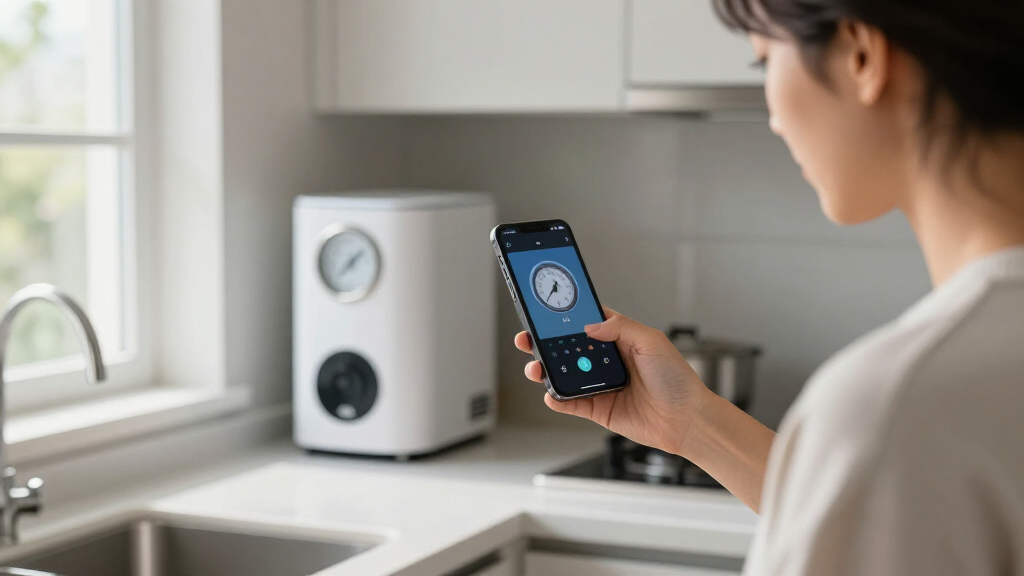
A pilot program is testing the use of phone photos and AI to read analog gauges during facility rounds, aiming to replace manual transcription and improve data accuracy. The approach could modernize legacy equipment monitoring.
A pilot program is testing the use of phone photos combined with AI to read analog gauges during routine facility inspections, aiming to replace manual clipboard rounds. This development could significantly improve data accuracy, reduce errors, and enable continuous trend analysis for legacy equipment, which traditionally relies on manual transcription.
According to sources familiar with the initiative, plant and facilities managers are exploring a workflow where technicians photograph each gauge during their daily rounds using standard smartphones. An AI-powered app then reads the gauge value directly from the photo, compares it against expected ranges, logs the reading with a timestamp and location, and flags any anomalies immediately.
This approach is designed to address longstanding issues with manual transcription, which often results in errors that obscure early signs of equipment failure. Additionally, retrofitting legacy gauges with sensors is costly and complex, making a sensorless digital reading solution highly attractive.
The pilot involves three facilities running parallel gauge readings via phone photos and traditional clipboard methods for about a month. The goal is to compare error rates, anomaly detection efficiency, and overall data quality between the two approaches before considering wider adoption.
Potential Impact on Industrial Data Collection
This innovation could transform how industrial facilities monitor equipment, especially legacy systems without digital interfaces. By leveraging existing hardware—analog gauges—and smartphones, facilities can gain more reliable, real-time data without the expense of sensor installation.
Improved data accuracy and early anomaly detection could reduce unplanned downtime, lower maintenance costs, and enhance safety. The approach also offers a scalable, low-cost way to modernize industrial operations, aligning with broader Industry 4.0 initiatives.
As an affiliate, we earn on qualifying purchases.
Legacy Equipment and the Need for Better Monitoring
Many industrial facilities still rely on analog gauges and manual transcription for equipment monitoring. This process is prone to errors, delays, and incomplete data, which can lead to missed early warnings of failures. Retrofitting legacy systems with IoT sensors is often prohibitively expensive, especially for older equipment.
Recent advances in AI and computer vision have demonstrated reliable reading of analog dials from standard phone photos, opening new pathways for digital data collection without hardware upgrades. The current pilot aims to validate this approach in real-world settings, building on these technological developments.
AI gauge reader for industrial gauges
As an affiliate, we earn on qualifying purchases.
As an affiliate, we earn on qualifying purchases.
Unconfirmed Aspects and Implementation Challenges
While initial tests are promising, it remains unclear how well the phone-photo gauge reading system will perform across diverse gauge types, lighting conditions, and operational environments. The long-term reliability, integration with existing maintenance systems, and user acceptance are still being evaluated.
Additionally, the effectiveness of anomaly detection and trend building over extended periods needs further validation before full deployment can be recommended.
As an affiliate, we earn on qualifying purchases.
Next Steps for Broader Validation and Deployment
The pilot will run for about a month, with detailed comparisons of error rates and anomaly detection capabilities. If results are favorable, the developers plan to expand testing to more facilities and refine the app’s features based on user feedback.
Further validation will focus on integrating the system into existing maintenance workflows and assessing its impact on operational efficiency and maintenance costs. A decision on wider rollout is expected within the next six months.
As an affiliate, we earn on qualifying purchases.
Key Questions
How accurate are phone photos for reading gauges?
Initial testing indicates high reliability in controlled conditions, with AI models accurately reading from standard phone photos. Real-world performance across different environments is still being evaluated.
Will this replace all manual rounds?
Initially, the approach is being tested as a supplement or replacement for clipboard rounds on legacy gauges. Broader adoption will depend on pilot results and operational needs.
What are the cost implications?
The system leverages existing smartphones and AI software, which could reduce costs compared to installing new sensors or hardware upgrades.
Are there privacy or security concerns?
The system logs gauge readings with timestamps and locations, raising potential data security considerations. These will be addressed during further development and deployment planning.
When will this system be commercially available?
Wider deployment depends on pilot success and subsequent validation, with a potential rollout within the next year if results are positive.
Source: IdeaNavigator AI
Fall Picks
fall essentials
As an affiliate, we earn on qualifying purchases.