TL;DR

Get home appliances delivered free with Prime
- Fast, free delivery on millions of items
- Prime Video, Amazon Music and more included
- Member-only deals all year
Hunker’s review of Roborock’s Saros 20 Flow found that its roller mop cleaned dried tonic-water residue from tile with little visible trace under UV light, while its vacuum handled routine debris and test materials. The reviewer also tested carpet lifting, app setup and a 2.5-inch threshold; the supplied report does not include full results for every feature or pricing and availability details.
Hunker has published a hands-on review of Roborock’s Saros 20 Flow, a 2026 flagship robot vacuum that pairs high-powered suction with a continuously rinsed roller mop. Reviewer Ron Baker reported that the mop removed most detectable residue from a dried tonic-water test on tile and left the floor without a sticky feel, offering readers practical test results beyond the device’s feature list.
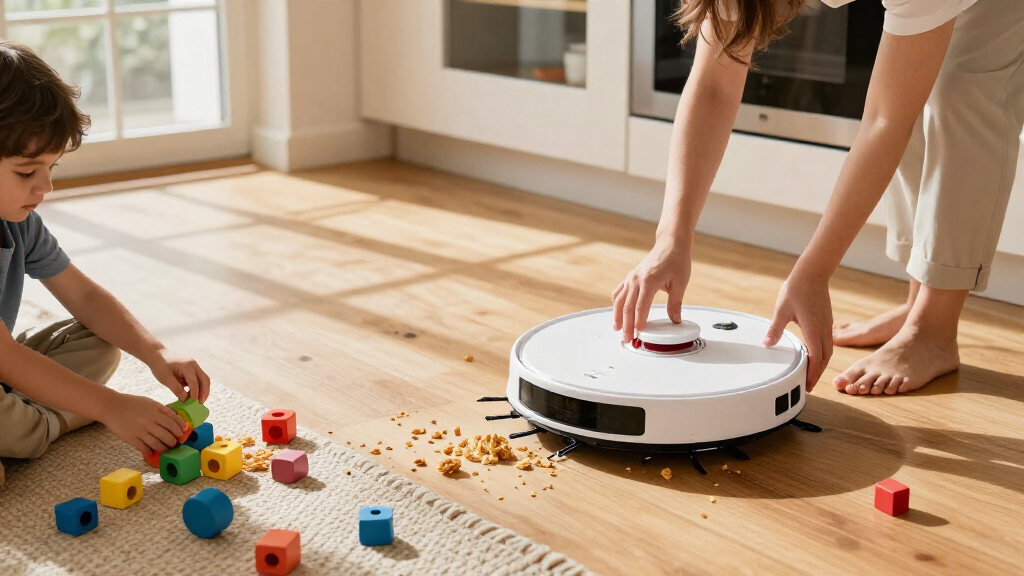
Baker said setup involved attaching a ramp, filling the water tank, connecting the dock and letting the robot map the downstairs through Roborock’s app. The review tested the machine in a cluttered home and used rice, ketchup and small Lego bricks as household-style challenges. Baker also described routine use, periodically checking whether the vacuum had become stuck or damaged anything.
The headline cleaning feature is SpiraFlow 2.0, which wets a 10-inch roller, spins it at 240 rotations per minute and uses a scraper to remove dirty water from the roller. The reviewer used plain water on vinyl, hardwood and tile because Roborock’s recommended cleaning solution was out of stock and using another cleaner was not recommended. He said the dock washed the roller frequently during the first days, then less often after the floors had been cleaned repeatedly.
For a stain check, Baker sprayed tonic water on tile and let it dry. Quinine in tonic water fluoresces under UV light; after the robot mopped, he saw only a few traces under UV and reported no sticky residue by touch. He also observed the roller extending to clean along edges and lifting away from carpet. The report says the floor was left nearly dry, but does not provide instrument-based moisture measurements.
The vacuum’s listed maximum suction is 36,000 pascals, available in Turbo mode, and the dock empties its relatively small dustbin automatically. Baker said routine automated vacuuming and most debris tests went well. He also tried the AdaptLift chassis on a homemade 2.5-inch obstacle made from a pine board and a 2-by-4. The supplied review material does not state the outcome of that test, so the robot’s performance on that obstacle cannot be confirmed from the available account.
What the Cleaning Tests Show
The review gives prospective buyers evidence about how the Saros 20 Flow performs on particular messes, rather than relying only on advertised specifications. Its roller is designed to rinse as it mops and collect dirty water, addressing a common concern with robot mops: whether they remove grime or simply spread it around. Baker’s UV test suggests the system removed most of the dried tonic-water residue from the tested tile, though it was a single household test, not an independent laboratory assessment.
The combination of vacuuming, mopping and automatic dock maintenance could matter to households managing mixed flooring and frequent spills. The carpet-lifting roller and nearly dry finish described by the reviewer may be relevant for homes with rugs or moisture-sensitive floors. Those observations do not establish performance across all floor finishes, stains or cleaning solutions, and the review does not report long-term durability or repair costs.
Products Worth Considering

Samsung Galaxy Tab A11+ 8GB RAM, 256GB Storage, Gray

Apple AirPods Pro 3 Wireless Earbuds with Active Noise Cancellation

Apple MacBook Air 13.6-inch Laptop with M5 Chip, 16GB Memory, 512GB SSD, Midnight
As an affiliate, we earn on qualifying purchases.
Roborock’s 2026 Flagship Launch
According to Hunker, Roborock previewed the Saros 20 Flow at IFA 2026 and launched it on September 14, 2026. The review describes it as one of the company’s flagship models and lists additional features including live video streaming, remote steering, a built-in voice assistant and smart-assistant support. These are product capabilities described in the source; the reported cleaning tests focused chiefly on mopping and vacuuming.
Baker brought experience with older, less expensive robot vacuums and vacuum repairs to his evaluation, then combined informal household use with selected tests. He said his home lacked a suitable threshold for the chassis test, so he constructed a 2.5-inch obstacle. The source mentions possible effects of a recent U.S. ban and import restrictions on future vacuum availability, but does not identify the regulation or establish how it affects this model.
“I cleaned vinyl, hardwood, and two tile floors with plain water without a hitch.”
— Ron Baker, Hunker reviewer
Limits of the Published Tests
The available report does not give a complete result for every test it describes. In particular, it says Baker tested the 2.5-inch threshold but does not state whether the robot crossed it. The supplied text also ends during the vacuuming section, leaving details about any additional debris trials, limitations or final overall assessment unavailable.
The tonic-water test was conducted on tile in one home, using plain water rather than the recommended cleaning solution. It does not establish how the mop handles other dried stains, different flooring, repeated use or varied water conditions. The source also provides no price, warranty information, independent comparative results or long-term reliability data. Its reference to U.S. import restrictions is not sufficiently detailed to establish a specific availability effect.
Availability and Further Testing
Roborock launched the Saros 20 Flow on September 14, 2026, according to Hunker. The source material does not provide current pricing, retailer availability or details of any import restrictions affecting sales, so buyers will need to check the company and retailers for those specifics. Further reviews could clarify performance on additional messes and flooring, threshold climbing, maintenance needs and long-term reliability.
For now, the reported results support a limited conclusion: Baker found the roller mop effective in his tile test and said everyday vacuuming went well, but the available account does not establish how the device compares with competing models or performs across all household conditions.
Key Questions
What did Hunker test on the Roborock Saros 20 Flow?
The reviewer used the robot in a cluttered home and tested cleaning with materials including rice, ketchup and small Lego bricks. He also tested the mop on vinyl, hardwood and tile, used dried tonic water for a UV check, and constructed a 2.5-inch threshold obstacle.
Did the Saros 20 Flow remove the tonic-water residue?
Baker reported that UV light showed only a few traces after mopping and said the tile did not feel sticky. This was a single test on tile, not a broad or laboratory comparison.
How does the SpiraFlow mop work?
Roborock’s system wets and spins a 10-inch roller at 240 rotations per minute, while a scraper removes dirty water. The dock periodically washes the roller, according to the review.
How powerful is the Saros 20 Flow’s suction?
The review lists maximum suction at 36,000 pascals in Turbo mode. Baker said routine automated vacuuming and most of his test materials went well, but the supplied account does not include a full comparative test.
Did it climb the 2.5-inch threshold?
The reviewer said he tested the AdaptLift chassis on a homemade 2.5-inch obstacle, but the available source text does not report whether the robot crossed it.
Source: hunker.com