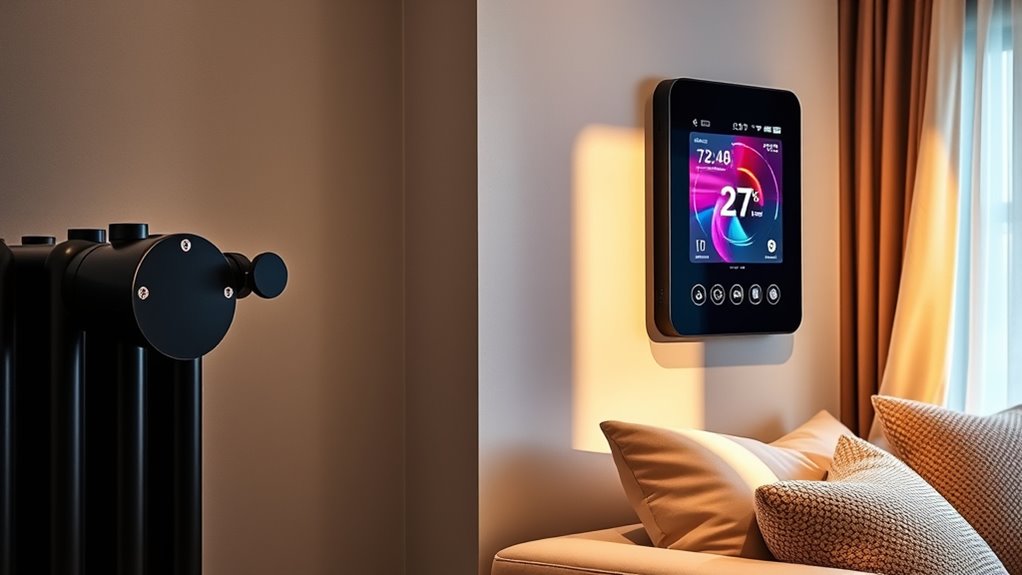

When choosing between smart radiator valves and a central AI thermostat, consider your preferred control level. Valves let you adjust individual rooms and upgrade gradually, offering precise comfort and savings. AI thermostats provide seamless, automated climate management across your home, learning your routines to optimize energy use. Both have benefits, but understanding your priorities helps decide which suits your lifestyle best. Keep going to discover which option might work best for you.
Key Takeaways
- Smart radiator valves offer localized control for individual rooms, while central AI thermostats manage overall home climate seamlessly.
- Valves are easier to install and upgrade incrementally, whereas AI thermostats often require professional setup.
- Central AI thermostats optimize energy use by learning routines and adjusting temperatures automatically.
- Valves provide detailed, room-specific adjustments; AI thermostats simplify management with automation.
- Choice depends on whether you prioritize granular control (valves) or overall convenience and automation (AI thermostats).

As smart home technology continues to evolve, homeowners now face a key choice: should they rely on smart radiator valves or a central AI thermostat to control their indoor climate? Both options aim to optimize comfort and save energy, but they approach this goal differently. Smart radiator valves are installed directly onto individual radiators, allowing you to control each room’s temperature independently. This setup gives you precise, localized control, meaning you can keep your bedroom warmer while keeping the living room cooler. It’s especially useful if you want to avoid heating unused spaces or tailor comfort to specific needs. On the other hand, a central AI thermostat acts as the brain of your entire heating system. It learns your routines, adjusts temperatures dynamically, and manages your heating from a single device or app. This option simplifies control, as you only need to interact with one system, which then coordinates your entire home’s climate based on your preferences, occupancy patterns, and real-time weather data.
Choose smart radiator valves for precise, room-by-room control or a central AI thermostat for seamless, automated home climate management.
When it comes to installation, smart radiator valves are straightforward. You attach them to each radiator and connect them to your Wi-Fi network, often with minimal effort. You can then set different schedules or temperatures for each room via an app. This modular approach allows you to upgrade gradually, adding more valves as needed. Conversely, installing a central AI thermostat might require replacing your existing thermostat or installing a new, integrated system. While it’s a more centralized process, it often involves a professional setup, especially if your home has a complex heating system. Once installed, however, it offers seamless management for the entire house. Additionally, the integration of smart technology enables both options to learn and adapt to your preferences over time.
In terms of energy efficiency, smart radiator valves excel in targeting specific spaces, reducing unnecessary heating in empty rooms or areas you don’t use often. This precision can lead to significant savings, especially if you’re diligent about programing your settings. A central AI thermostat, however, optimizes overall energy use by learning your habits and adjusting the entire system accordingly. It can preheat your home before you wake up or return from work, providing comfort without wasting energy. The AI approach offers convenience, but it might not have the same granular control as individual valves.
Ultimately, your choice depends on your priorities. If you want detailed control over each room and prefer incremental upgrades, smart radiator valves are a great fit. If you seek a more streamlined, all-in-one solution that adapts automatically, a central AI thermostat likely suits you better. Both options harness smart technology to improve comfort and save energy—your decision hinges on how much control you want and how you prefer to manage your home’s climate.
Frequently Asked Questions
Which System Is More Energy-Efficient Overall?
You’ll find the central AI thermostat generally more energy-efficient overall because it optimizes heating across your entire home, reducing waste. It learns your habits and adjusts settings automatically, saving energy in the long run. Smart radiator valves are great for individual room control, but they might not match the efficiency of a well-programmed central system. For maximum savings, a central AI thermostat usually takes the edge.
Can Both Systems Be Used Together?
Yes, you can definitely use both systems together. Integrating smart radiator valves with a central AI thermostat allows for more precise heating control, enhancing energy efficiency and comfort. You can set the AI thermostat to manage overall temperature, while the radiator valves fine-tune individual room settings. This combination helps you save energy, reduce costs, and enjoy customized heating in different areas of your home effortlessly.
What Is the Typical Installation Cost Difference?
You’ll find that smart radiator valves generally cost less to install, usually between $50 and $150 per valve, depending on your home’s size and complexity. Central AI thermostats tend to be more expensive upfront, often ranging from $200 to $500, plus installation fees. While the initial cost difference is noticeable, consider long-term savings on energy bills and convenience when choosing the right system for your home.
How Do These Systems Impact Indoor Air Quality?
These systems can positively impact your indoor air quality by better managing temperature and humidity levels. Smart radiator valves allow precise control, reducing excess moisture and preventing mold growth, while central AI thermostats optimize heating patterns for consistent air circulation. As a result, you’ll experience fewer drafts and stagnant air, creating a healthier, more comfortable environment. Properly maintained, both systems contribute to cleaner, more balanced indoor air quality.
Are There Compatibility Issues With Existing Heating Systems?
Yes, compatibility issues can arise with your existing heating system. You might find that some smart radiator valves won’t fit your radiators, or your central AI thermostat may not support certain wiring configurations. You’ll want to check the product specifications carefully, verify your system is compatible, and consider professional installation if needed. By doing this, you’ll avoid surprises and ensure smooth integration of your new smart heating controls.
Conclusion
Ultimately, choosing between smart radiator valves and a central AI thermostat depends on your needs. Did you know that smart radiator valves can reduce energy bills by up to 30%? Imagine saving that much every year while keeping your home perfectly cozy. Whether you prefer targeted control or a centralized system, embracing smart tech can make your life easier and more efficient. The future of home heating is here—are you ready to join the smarter side?