You’ve seen how early robot vacuums just bumped into furniture and zigzagged aimlessly, making cleaning inefficient. Over time, they gained infrared sensors and boundary markers to avoid obstacles but still lacked real understanding of your space. Today’s smart vacuums use advanced SLAM technology, detailed mapping, and sensors to navigate precisely and adapt to your home’s layout. If you want to explore how these innovations evolved and continue to improve, keep exploring further.
Key Takeaways
- Early robot vacuums relied on simple algorithms, causing random movement and incomplete cleaning.
- Introduction of obstacle detection sensors improved collision avoidance but lacked environmental mapping.
- SLAM technology enabled robots to build digital maps, facilitating efficient route planning and thorough cleaning.
- Enhanced sensors allowed for better obstacle avoidance, surface detection, and fall prevention.
- Modern robot vacuums incorporate smart features like app control and voice commands for seamless, adaptive cleaning.
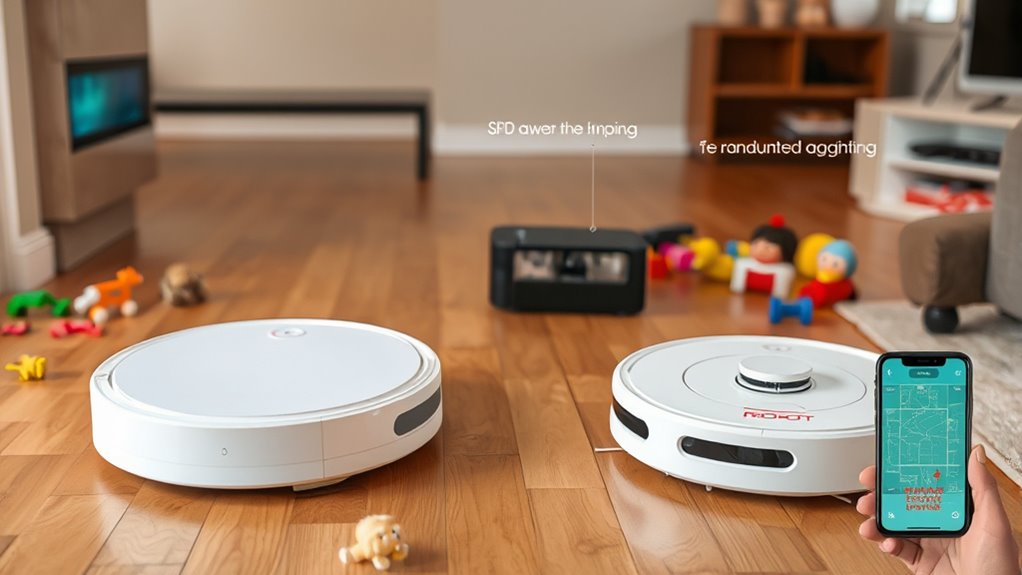
Robot vacuums have come a long way from simple, random-moving devices to sophisticated tools that can map your entire home and navigate around obstacles with ease. When these devices first hit the market, they operated on basic algorithms that caused them to bump into furniture, walls, and other objects repeatedly. You might have noticed how they zigzagged aimlessly, often missing areas or getting stuck in tight spots. These early models lacked the intelligence to plan their routes, so you had to manually intervene or accept incomplete cleaning. Over time, however, manufacturers recognized the need for smarter navigation and began integrating more advanced technology.
The first major upgrade came with the addition of infrared sensors and bumpers, which helped robots detect obstacles and avoid collisions. This was a step forward, but it still didn’t enable the robot to create a map of your home. Instead, it simply reacted to obstacles in real-time, often causing inefficient cleaning patterns. As technology progressed, developers introduced simple boundary markers, like magnetic strips, to prevent robots from entering certain areas. While useful, this approach still relied heavily on physical barriers and didn’t improve the robot’s understanding of space.
The real revolution happened when SLAM (Simultaneous Localization and Mapping) technology entered the scene. With SLAM, robot vacuums could build a digital map of your home while simultaneously tracking their position within it. This meant they could develop a layout of rooms, furniture placement, and even identify high-traffic zones. You no longer needed to manually guide or restrict the robot; it could now plan the most efficient route, cover every inch, and adapt to changes in the environment. This shift allowed for much more thorough cleaning and reduced the time it took to finish a job. Additionally, the integration of advanced sensors further enhanced obstacle detection and surface recognition, making these devices even smarter.
As sensors and processors improved, robots gained additional capabilities like obstacle avoidance for small items, cliff detection to prevent falls, and the ability to recognize different surfaces. Some models even learned from their cleaning patterns, optimizing routes over time. This evolution transformed robot vacuums from simple gadgets into intelligent cleaning assistants that understand your space and work seamlessly around your daily life. Now, with features like app control, voice commands, and customizable cleaning schedules, you have a device that not only cleans but adapts to your needs, making the entire process more efficient and less intrusive. The journey from bump-and-go models to smart, map-making machines exemplifies how technology continuously pushes boundaries, making home cleaning smarter, easier, and more effective.

MONSGA Robot Vacuum and Mop Combo, 90 Days Self-Emptying with 8000Pa Suction, LiDAR Smart Mapping, Dual Anti-Tangle for Pet Hair, Carpet and Hard Floor
8000Pa Max Suction Meets Dual Anti-Tangle Design: From scattered crumbs to fluffy pet fur, this robot vacuum handles…
As an affiliate, we earn on qualifying purchases.
As an affiliate, we earn on qualifying purchases.
Frequently Asked Questions
How Long Do Robot Vacuums Typically Last Before Replacement?
Robot vacuums typically last between 3 to 6 years before needing replacement, depending on usage and maintenance. If you keep the brushes clean, replace the filters regularly, and avoid overworking the device, it can extend its lifespan. High-end models with better build quality and advanced features often last longer. However, eventually, wear and tear on batteries and motors will require you to contemplate a new vacuum for ideal cleaning performance.
Are Robot Vacuums Effective on All Floor Types?
Think of your floor as a vast, varied landscape. Robot vacuums are quite effective across most surfaces, from hardwood to tile and low-pile carpets. However, their performance might falter on high-pile carpets or uneven terrains. You’ll find they excel at daily cleaning, but for deep-cleaning thick carpets or delicate rugs, manual vacuuming or specialized equipment could be better. Adapt your expectations based on your floor types for maximum results.
What Maintenance Is Required for Robot Vacuums?
You need to regularly empty the dustbin, clean the brushes and filters, and check for tangled hair or debris. Battery maintenance is essential; recharge it as needed and replace it when it no longer holds a charge. Keep sensors clean with a soft cloth, and periodically update the firmware for peak performance. Inspect wheels and brushes for wear, ensuring your robot vacuum works efficiently on all floor types.
Can Robot Vacuums Be Used to Clean Outdoor Areas?
Yes, you can use robot vacuums outdoors, but not all models are suited for it. If you want to clean patios or decks, choose a rugged, weather-resistant robot designed for outdoor use. Keep in mind that many indoor models may struggle with uneven surfaces or dirt types outside. So, pick a model specifically made for outdoor cleaning to guarantee efficient, hassle-free maintenance of your outdoor spaces.
How Do Robot Vacuums Handle Pet Hair and Allergens?
Robot vacuums handle pet hair and allergens effectively with powerful suction and specialized brushes designed to pick up hair without tangling. Many models include HEPA filters that trap allergens, improving air quality. You should regularly empty the dustbin and clean the filters to maintain performance. Opt for a robot vacuum with strong suction and allergen filters to keep your home cleaner and healthier, especially if you have pets or allergies.

Kilgone Robot Vacuum and Mop Combo for Pet Hair & Homes – App/Voice Control, Tangle-Free Suction & Smart 3D Avoidance, Ultra-Slim & Quiet, Self-Charging for Hard Floors and Low-Pile Carpet
SMART HOME COMMAND CENTER ✨ "Hey Google, clean my living room!" Control via Tuya Smart App or voice…
As an affiliate, we earn on qualifying purchases.
As an affiliate, we earn on qualifying purchases.
Conclusion
As you see, robot vacuums have come a long way, transforming from simple bump-and-turn models to intelligent devices with advanced navigation. Did you know that over 50% of households now own a robot vacuum? This shift highlights how technology makes cleaning more effortless and efficient. As they continue to evolve, expect even smarter features that save you time and energy, making maintaining a clean home easier than ever before.

Shark Ion Robot Vacuum Cliff Sensor Set, Drop Infrared Sensor Set – 750R01US 761R01US Model
Shark Ion Robot Vacuum Cliff Sensor Set – Infrared Drop Sensors
As an affiliate, we earn on qualifying purchases.
As an affiliate, we earn on qualifying purchases.

Boundary Strips for Neato Shark ION IQ Robot Vacuum 750 871 761R85, Magnetic Botboundary Strips Tape Markers for RoboVac 30 xiaomi Roborock S5, Not Compatible with APP/AI/LIDAR Robot, 13 Feet
Please check your vacuum model instruction carefully before purchasing. Compatible with some older / classic models only. Not…
As an affiliate, we earn on qualifying purchases.
As an affiliate, we earn on qualifying purchases.