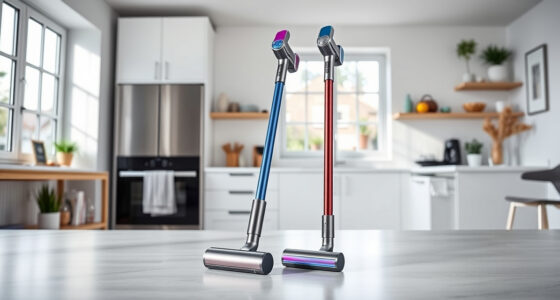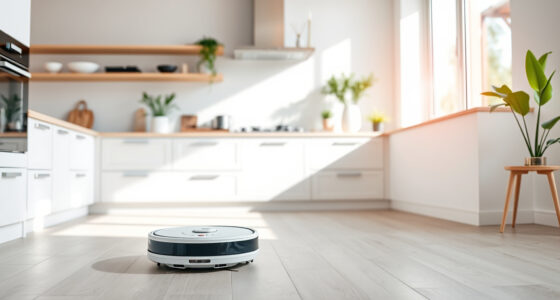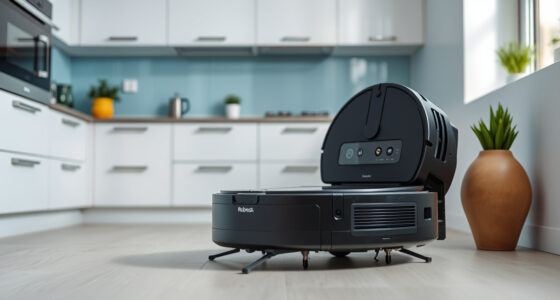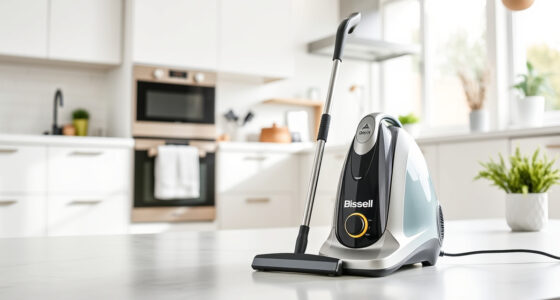
If you suffer from allergies, robot vacuums with HEPA filters and AI can really help. HEPA filters trap tiny allergens like pet dander, pollen, and dust mites, improving your indoor air quality. AI and smart navigation guarantee thorough cleaning by covering all areas and avoiding missed spots. This combination decreases allergen buildup and can lessen allergy symptoms over time. Keep exploring to discover more ways these smart devices make your home healthier.
Listen free for 30 days with Audible
Thousands of audiobooks and originals — cancel anytime.
As an affiliate, we earn on qualifying purchases.
Key Takeaways
- HEPA filters in robot vacuums effectively trap microscopic allergens like dust, pollen, and pet dander, improving indoor air quality.
- AI-powered navigation ensures thorough cleaning, targeting allergen hotspots and avoiding missed areas.
- Automated, scheduled cleaning maintains a consistently allergen-free environment, reducing allergy symptoms.
- Quiet operation and smart features allow convenient, unobtrusive cleaning during sleep or work hours.
- Overall, HEPA filters combined with AI enhance cleaning efficiency, helping allergy sufferers breathe easier at home.
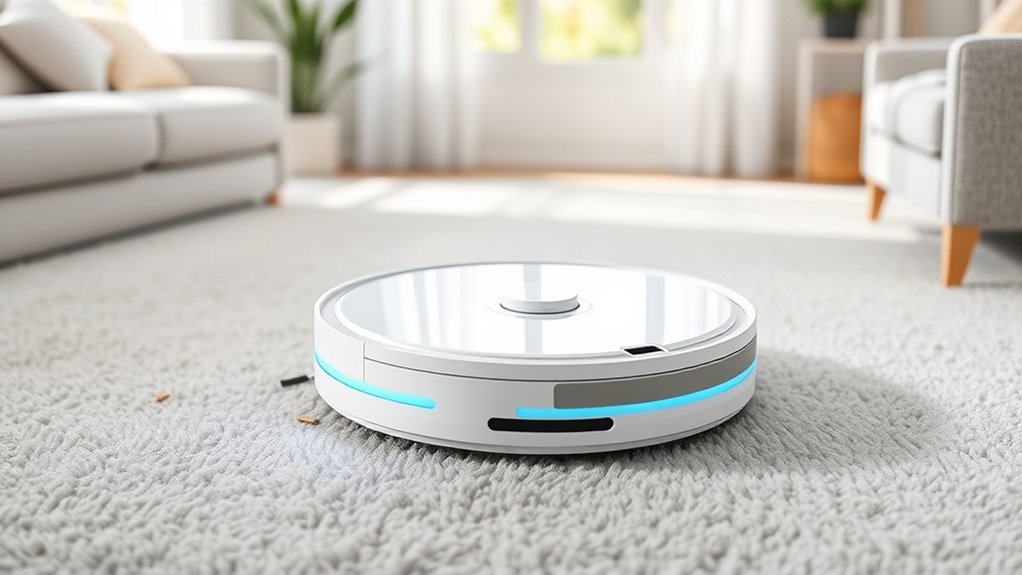
Are robot vacuums a game-changer for allergy sufferers? If you deal with dust, pet dander, or other allergens, you probably spend a lot of time worrying about keeping your home clean and allergen-free. Traditional vacuums can help, but they often fall short in removing microscopic particles that trigger your symptoms. That’s where robot vacuums equipped with HEPA filters and artificial intelligence come into play, offering a promising solution to improve indoor air quality and reduce allergy symptoms.
Robot vacuums with HEPA filters and AI help allergy sufferers maintain a cleaner, healthier home effortlessly.
You might wonder how a small robot can make such a difference. The key lies in the filters and smart technology built into these devices. HEPA filters, which stand for High-Efficiency Particulate Air filters, are designed to trap tiny particles as small as 0.3 microns—dander, pollen, mold spores, and dust mites—much more effectively than regular filters. When a robot vacuum with a HEPA filter cleans, it captures these allergens and prevents them from being recirculated into the air. This means fewer allergens floating around in your living space, which can notably lessen allergy flare-ups.
But a HEPA filter alone isn’t enough. That’s where AI and smart navigation come into the picture. Many robot vacuums now use advanced sensors and algorithms to map your home, allowing them to clean more thoroughly without missing spots. They can adapt to furniture, navigate around obstacles, and even prioritize heavily trafficked areas where allergens tend to settle. Because they operate autonomously and frequently, they help maintain a cleaner environment on a daily basis, reducing the buildup of dust and dander over time.
You’ll also appreciate how these vacuums are designed for convenience. You don’t have to lift a finger; they work around your schedule, cleaning when you’re out or asleep. Some models allow you to set cleaning routines or control them via smartphone apps, so you can start or schedule sessions remotely. This consistent cleaning cycle minimizes the accumulation of allergens, making your home a healthier space. Plus, many come with features like quiet operation and edge-cleaning capabilities, ensuring thoroughness without disturbing your daily activities. Incorporating energy-efficient technology can also help reduce overall power consumption, aligning with sustainable living goals.
As an affiliate, we earn on qualifying purchases.
Frequently Asked Questions
Can Robot Vacuums Detect and Avoid Allergen-Rich Areas?
Yes, many robot vacuums can detect and avoid allergen-rich areas. They use advanced sensors and AI technology to identify dirt, dust, and debris, including allergen hotspots. When they detect these areas, they often adjust their cleaning path or avoid overly dusty spots to minimize allergen disturbance. This targeted approach helps reduce allergens in your home, making it easier for allergy sufferers to breathe comfortably.
How Often Should HEPA Filters Be Replaced for Optimal Performance?
You should replace HEPA filters every 6 to 12 months for ideal performance. Imagine a family with allergies noticing increased dust and pollen in the air after a year; replacing the filter improved air quality markedly. Regularly changing filters prevents buildup of allergens, ensuring your robot vacuum continues to trap tiny particles effectively. Keep an eye on your vacuum’s indicator light or check the manufacturer’s recommendations for specific guidance.
Do AI Features Improve Allergen Removal Efficiency?
Yes, AI features can improve allergen removal efficiency. They help your robot vacuum adapt to your home’s unique layout, navigate more effectively, and target high-traffic or allergen-prone areas. With smart sensors and learning algorithms, AI enables the vacuum to optimize cleaning paths, avoid obstacles, and focus on areas needing more attention. This results in a more thorough clean, reducing allergens and improving air quality for allergy sufferers like you.
Are Robot Vacuums Safe for People With Severe Allergies?
Like a shield guarding your home, robot vacuums with HEPA filters are generally safe for those with severe allergies. They trap tiny particles, reducing airborne allergens, and modern AI helps target dust more efficiently. Just guarantee you choose models with proven filtration systems and regularly maintain them. With proper use, these vacuums can be your allies in creating a cleaner, healthier living space.
Can Robot Vacuums Be Programmed for Allergy-Friendly Cleaning Schedules?
Yes, you can program robot vacuums to follow allergy-friendly cleaning schedules. You simply set specific times and areas for the vacuum to clean, ensuring your space stays allergen-free regularly. Many models allow customization, so you can prioritize bedrooms or filter-intensive zones. This helps you maintain a cleaner environment, reduces allergens, and fits seamlessly into your routine, giving you peace of mind and healthier living conditions.
As an affiliate, we earn on qualifying purchases.
Conclusion
If you’re allergy-prone, choosing a robot vacuum with HEPA filters and smart tech is like giving your home a gentle, vigilant guardian. These features work together to trap allergens and adapt to your cleaning needs, making your space a refreshing gust. Remember, the right robot vacuum isn’t just a tool—it’s your loyal ally in the battle against sneezing fits and dust bunnies, turning your home into a sanctuary of clean, allergy-free comfort.
smart robot vacuum with allergen filtration
As an affiliate, we earn on qualifying purchases.
As an affiliate, we earn on qualifying purchases.
quiet robot vacuum for pet dander
As an affiliate, we earn on qualifying purchases.
As an affiliate, we earn on qualifying purchases.
Fall Picks
fall essentials
As an affiliate, we earn on qualifying purchases.