When choosing high-tech kitchen gadgets, focus on compatibility with your smart home system, ensuring seamless integration with platforms like Alexa or Google Assistant. Look for reliable connectivity options such as Wi-Fi or Zigbee for consistent control. Opt for user-friendly apps or interfaces with features like scheduling and notifications. Prioritize energy-efficient models with good durability and safety features, like child locks or alerts. Keep these points in mind, and you’ll discover more tips for a smarter kitchen.
Key Takeaways
- Ensure compatibility with your existing smart home ecosystem for seamless integration and voice control.
- Check for reliable Wi-Fi or Zigbee/Bluetooth connectivity for stable remote operation.
- Look for intuitive controls, scheduling, and energy monitoring features for user-friendly management.
- Prioritize energy efficiency ratings and usage reports to reduce utility costs and promote sustainability.
- Confirm built-in safety features like auto shut-offs, child locks, and secure data encryption for added security.
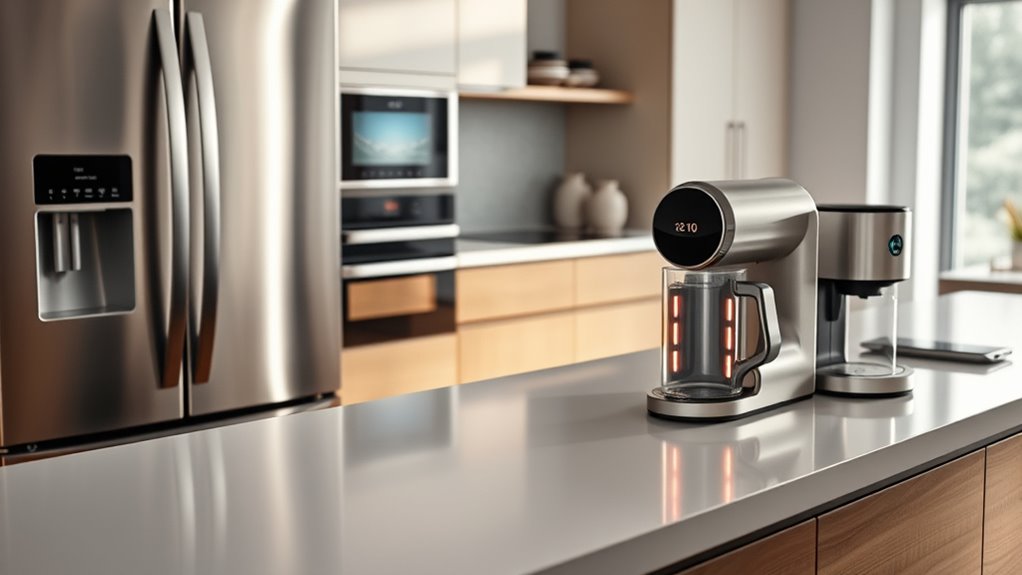
In today’s connected world, smart appliances offer convenience, energy efficiency, and enhanced control over your home. When you’re shopping for high-tech kitchen gadgets, it’s essential to understand what features matter most to ensure you get the best value and performance. First, consider compatibility. Your smart appliances should seamlessly integrate with your existing smart home ecosystem, whether that’s through a hub like Amazon Alexa, Google Assistant, or Apple HomeKit. Compatibility guarantees smooth operation and allows you to control your devices with voice commands or through unified apps, saving you time and effort.
Smart appliances should seamlessly integrate with your home ecosystem for smooth operation and easy control.
Next, focus on connectivity options. Wi-Fi is the standard, but some appliances also support Bluetooth or Zigbee protocols. Wi-Fi-enabled devices tend to offer more robust remote control features, letting you monitor and manage your appliances from anywhere. Look for appliances with reliable connectivity and straightforward setup processes, as these make integration into your smart home easier. A device that frequently loses connection can become frustrating, so reading reviews about connectivity stability is a smart move.
Another critical factor is user interface and control options. The best smart appliances feature intuitive apps that are easy to navigate, offering you complete control at your fingertips. Some appliances even include touchscreen interfaces or physical controls, which can be useful if you prefer quick manual adjustments without opening an app. Check whether the app provides useful features like scheduling, real-time notifications, or energy consumption reports—these can help you optimize usage and save money over time.
Energy efficiency should also be on your radar. Many smart appliances come with energy-saving modes or detailed usage statistics. Look for models with good energy ratings and features that allow you to monitor and reduce power consumption. This not only benefits the environment but also lowers your utility bills. Additionally, consider the appliance’s overall build quality and durability. Investing in a well-made device ensures it will withstand daily use and provide reliable performance for years to come.
Finally, don’t overlook safety and security features. Ensure the appliance has built-in protections like automatic shut-offs, child locks, or alerts for malfunctions. Since these devices are connected to the internet, security protocols such as encrypted data transmission and frequent firmware updates are vital to protect your personal information. Being aware of smart security features can help you better safeguard your connected home environment. By paying attention to these aspects—compatibility, connectivity, control options, energy efficiency, durability, and security—you’ll be better equipped to choose smart kitchen gadgets that genuinely enhance your home’s convenience and functionality.

Smart RGB Dimmable Table Lamp Compatible with Alexa&APP&Remote Control, Gray
- Control Options: Voice, Alexa, APP, Remote control
- Color & Brightness: 16 million colors, 0-100% dimming
- Color Temperature: 2700K to 6500K adjustable
As an affiliate, we earn on qualifying purchases.
As an affiliate, we earn on qualifying purchases.
Frequently Asked Questions
How Secure Are Smart Appliances From Hacking Threats?
Smart appliances can be vulnerable to hacking, but you can protect yourself by keeping software up to date and using strong, unique passwords. Make sure your Wi-Fi network has a solid security setup, like WPA3 encryption, and disable remote access if you don’t need it. Regularly monitor device activity and consider setting up a separate network for your smart gadgets to minimize risks.
Do Smart Kitchen Gadgets Work During Power Outages?
During a power outage, most smart kitchen gadgets won’t work because they rely on electricity. Imagine you’re baking bread, and your smart oven loses power—your progress halts. Some appliances have backup batteries or manual controls, but these are rare. To stay prepared, keep essential gadgets like a manual can opener and a flashlight nearby. This way, you can still complete basic kitchen tasks even without power.
Are Smart Appliances Compatible With All Smart Home Systems?
Smart appliances aren’t compatible with all smart home systems. You need to check the product specifications to see if it works with your existing setup, like Alexa, Google Assistant, or Apple HomeKit. Some gadgets are more versatile and support multiple platforms, while others are exclusive. To avoid issues, choose appliances that specify compatibility with your preferred smart home ecosystem, ensuring seamless integration and easy control.
What Is the Average Lifespan of High-Tech Kitchen Gadgets?
On average, high-tech kitchen gadgets last about 5 to 10 years. For example, a smart refrigerator might serve you well for around 8 years before needing replacement or major repairs. You can extend their lifespan by following manufacturer maintenance tips and avoiding overuse. Keep in mind, investing in quality brands often results in longer durability, ensuring your smart kitchen stays functional and efficient for many years to come.
How Energy-Efficient Are the Latest Smart Appliances?
The latest smart appliances are highly energy-efficient, often using 20-30% less power than traditional models. They automatically adjust settings based on usage, helping you save on energy bills. Features like smart sensors and adaptive modes optimize performance while minimizing waste. By choosing these appliances, you not only enhance your kitchen’s functionality but also contribute to a greener environment, all while enjoying lower energy costs and smarter living.
Wi-Fi enabled smart refrigerator with energy monitoring
As an affiliate, we earn on qualifying purchases.
As an affiliate, we earn on qualifying purchases.
Conclusion
As you embrace the world of smart appliances, remember that you’re stepping into a future where your kitchen becomes a sanctuary of innovation. Just like Da Vinci’s visionary creations, these gadgets can transform your daily routines into seamless experiences. Trust your instincts, choose wisely, and let technology elevate your culinary adventures. With every smart choice, you’re not just buying appliances—you’re shaping a smarter, more connected home that reflects your unique style and aspirations.
Zigbee smart oven with scheduling features
As an affiliate, we earn on qualifying purchases.
As an affiliate, we earn on qualifying purchases.
smart home compatible microwave with safety features
As an affiliate, we earn on qualifying purchases.
As an affiliate, we earn on qualifying purchases.