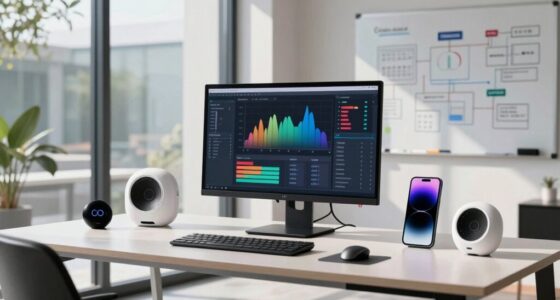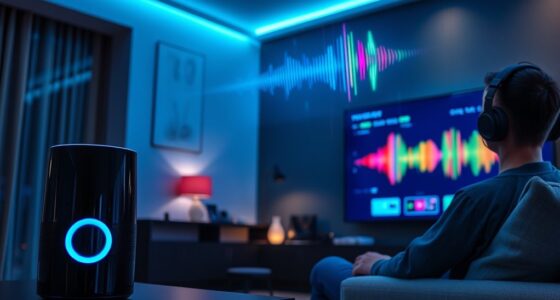
Voice deepfakes can convincingly mimic your voice, making it possible for impersonators to trick your smart home devices into accepting malicious commands. Cybercriminals could gain access to doors, disable security systems, or access sensitive information by using fake audio. As technology advances, your devices may struggle to tell apart real voices from deepfakes. To stay protected, you’ll want to learn about effective countermeasures that can help keep your home safe from these threats.
Key Takeaways
- Deepfake technology can convincingly mimic voices, potentially fooling smart home devices into executing malicious commands.
- Voice recognition systems may struggle to differentiate between genuine voices and deepfake audio.
- Impersonators could unlock doors, disable alarms, or access sensitive information through fake voice commands.
- Implementing multi-factor authentication and biometric verification enhances security against voice impersonation.
- Staying updated on deepfake detection tools and security practices is vital for protecting smart home systems.

As smart homes become more integrated into our daily lives, voice deepfakes pose a growing security threat. These synthetic audio recordings can mimic your voice so convincingly that an impersonator could potentially trick your devices into unblocking doors, disabling alarms, or accessing sensitive information. As voice commands become the primary way to control your smart home, cybercriminals are finding new ways to exploit this technology for their gain. It’s no longer just about hacking into accounts; it’s about convincing your devices that they’re talking to you, using artificial voice manipulation.
You might think that voice recognition systems are enough to prevent unauthorized access, but deepfakes challenge that assumption. They can replicate your tone, cadence, and speech patterns with startling accuracy, often bypassing traditional security measures. If a criminal manages to produce a convincing audio clip of your voice, they could issue commands that your devices accept without question. For example, they might instruct your smart lock to open, disable security cameras, or even make financial transactions if your home automation is linked to banking services. This creates a serious vulnerability, especially if you rely heavily on voice commands for convenience.
The risk multiplies if you have multiple devices connected to a centralized voice assistant. A single successful impersonation can cascade across your entire smart home ecosystem, granting unauthorized access to various functions. Criminals could also use deepfakes to manipulate voice-controlled virtual assistants, making them perform tasks that benefit the attacker, like turning off security systems or unlocking doors. The danger isn’t hypothetical; as deepfake technology improves, the line between real and fabricated voices blurs, making it more difficult to detect deception. Additionally, voice recognition systems may not be fully equipped to distinguish between genuine voices and sophisticated deepfakes, further complicating security.
To protect yourself, you need to be aware of these risks and adopt measures to guarantee them. Using multi-factor authentication adds a layer of security that’s harder for impersonators to bypass. For example, requiring a PIN or biometric verification before executing sensitive commands can prevent unauthorized access. Regularly updating your devices and voice recognition software ensures you have the latest security patches against emerging threats. It’s also wise to stay informed about deepfake detection tools, which are advancing rapidly and can help identify suspicious audio.
Ultimately, as much as voice-controlled smart homes offer convenience, they also demand vigilance. Recognizing the threat of deepfakes isn’t enough—you need to actively implement safeguards. Only then can you enjoy the benefits of a connected home without falling prey to sophisticated impersonation schemes.
smart home voice recognition security devices
As an affiliate, we earn on qualifying purchases.
As an affiliate, we earn on qualifying purchases.
Frequently Asked Questions
How Can I Detect if My Voice Command Is a Deepfake?
You can detect a deepfake voice command by paying attention to inconsistencies, like unnatural pauses, odd pronunciation, or background noises. Use multi-factor authentication, such as voice PINs or passphrases, to verify commands. Keep your device’s software updated for the latest security features. If something sounds off or unfamiliar, verify the request through another method before acting. Trust your instincts and stay cautious with unexpected or unusual voice commands.
What Are the Legal Implications of Voice Impersonation?
You could face legal trouble if you impersonate someone’s voice without permission, especially if it causes harm or financial loss. Laws vary by jurisdiction, but generally, voice impersonation can be considered fraud, identity theft, or defamation. You might be sued for damages or face criminal charges. Always respect others’ rights and avoid using voice technology for deception, as legal consequences could be severe and long-lasting.
Are There Specific Devices More Vulnerable to Voice Deepfakes?
Like a knight vulnerable to a Trojan horse, your smart speaker and voice-activated devices are most at risk of voice deepfakes. These gadgets rely on voice recognition, making them easier targets for impersonators. Devices with weaker security or limited authentication, such as simple smart speakers, are especially susceptible. To stay safe, enable multi-factor authentication and stay alert for unusual commands, just like a vigilant guardian protecting your digital castle.
How Frequently Are Voice Deepfake Attacks Occurring?
Voice deepfake attacks are becoming more common, happening weekly or even daily in some cases. Hackers use advanced AI to mimic voices and trick devices into revealing sensitive information or granting access. You might not notice some attacks right away, but as technology advances, the risk increases. Stay vigilant by enabling multi-factor authentication and regularly updating your device security settings to protect yourself from these evolving threats.
Can Voice Deepfake Technology Be Used for Legitimate Security Purposes?
Imagine a master key that can unseal doors with a whisper—voice deepfake tech can be used for security, yes. You can authenticate identities or grant access through voice commands, making security more seamless. When used responsibly, it becomes a digital gatekeeper, catching intruders before they reach your digital doorstep. But beware; if misused, it’s a double-edged sword that can turn your own voice against you.
As an affiliate, we earn on qualifying purchases.
Conclusion
So, next time you proudly speak your secret commands to your smart home, remember—it might not just be your voice that listens. As voice deepfakes become more convincing, impersonators could easily trick your devices, blurring the line between real and fake. Ironically, in a world obsessed with security, your own voice might become the biggest vulnerability. Stay cautious, because sometimes, the true threat isn’t the device itself, but the voice you trust most.
multi-factor authentication for smart home
As an affiliate, we earn on qualifying purchases.
As an affiliate, we earn on qualifying purchases.
As an affiliate, we earn on qualifying purchases.