If you’re looking for the best smart garage door tilt sensors, I recommend considering options like the ThirdReality Zigbee Sensor, YoLink’s Long-Range model, and Chamberlain’s WiFi-enabled devices for reliable security and easy integration. These sensors offer precise detection, seamless compatibility with popular smart home platforms, and long battery life for hassle-free use. Keep in mind factors like compatibility and installation. Stay with me to explore each one and find your perfect match for ultimate peace of mind.
Key Takeaways
- Compatibility with major smart home platforms like Alexa, Google Assistant, SmartThings, and HomeKit ensures seamless integration.
- Features include precise open/close detection, vibration, tilt, and external contact inputs for comprehensive security.
- Long-range wireless options like YoLink provide reliable monitoring across large properties or outdoor areas.
- Easy installation with waterproof designs and flexible mounting options suits both indoor and outdoor setups.
- Reliable alerts and automation capabilities improve security, convenience, and remote garage door management.

THIRDREALITY Zigbee Smart Garage Door Tilt Sensor, Adjustable Sensitivity Levels, 2-Year Battery Life, Zigbee Hub Required
- Security Alert: Notifies when garage door opens or closes
- Connectivity: Zigbee 3.0 compatible for smart home integration
- Smart Assistant Support: Works with Alexa, Google, Apple HomeKit, and more
As an affiliate, we earn on qualifying purchases.
ThirdReality Zigbee Smart Garage Door Tilt Sensor
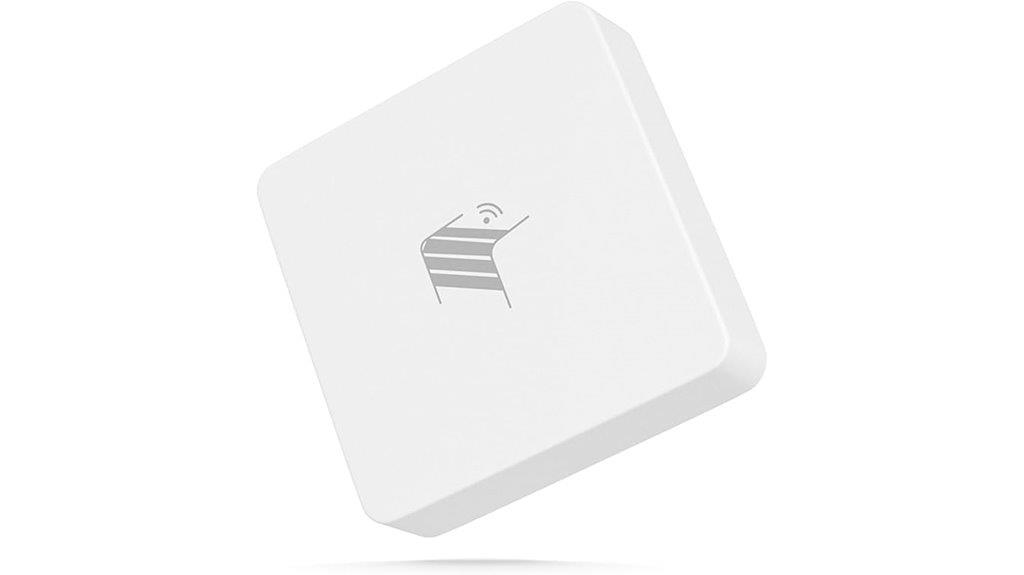
If you’re looking for a reliable sensor to enhance your home security, the ThirdReality Zigbee Smart Garage Door Tilt Sensor is an excellent choice. It precisely detects when your garage door opens or closes, providing instant alerts to keep you informed. Its Zigbee 3.0 connectivity ensures seamless integration with Amazon Echo, Samsung SmartThings, and other smart platforms. With four adjustable sensitivity levels, I can customize its responsiveness to suit my needs. The sensor is easy to install and powered by two AAA batteries, lasting up to two years. Plus, firmware updates keep it functioning efficiently, making it a smart, dependable addition to any home security setup.
Best For: homeowners seeking a reliable, easy-to-install garage door sensor to enhance home security and automation.
Pros:
- Precise detection of garage door movements for accurate alerts
- Seamless Zigbee 3.0 connectivity compatible with major smart home platforms
- Long-lasting battery life of up to two years with simple replacement
Cons:
- Requires Zigbee hub or compatible smart home system for operation
- Firmware updates may need manual initiation or specific app support
- Sensitivity adjustments might require fine-tuning for optimal performance
YoLink Smart Garage Door Sensor, Home Assistant Compatible
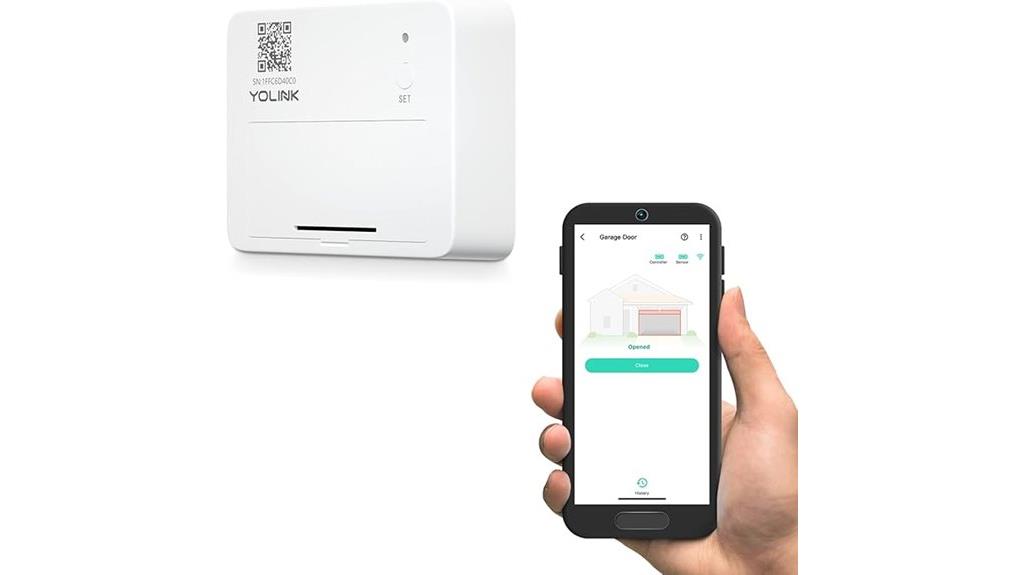
The YoLink Smart Garage Door Sensor stands out for its seamless integration with Home Assistant, making it an ideal choice for homeowners seeking a flexible and reliable security solution. It monitors your garage door remotely, providing real-time status updates. The sensor requires a YoLink hub, which can connect to Alexa, Google Assistant, IFTTT, and Home Assistant, enabling diverse automation options. It alerts you if the door stays open too long, with customizable open durations and notifications. You can set scheduled arming or scene-based activation for added security. Easy to install and scalable, this sensor combines security with convenience, enhancing your smart home ecosystem effortlessly.
Best For: homeowners seeking a reliable, customizable, and easily integrated smart garage door monitoring solution compatible with Home Assistant and other smart home platforms.
Pros:
- Seamless integration with Home Assistant, Alexa, Google Assistant, and IFTTT for versatile automation
- Customizable alerts and scheduled arming enhance security and convenience
- Scalable design allows starting with basic monitoring and upgrading to full control
Cons:
- Requires a YoLink hub for full functionality, adding an initial setup step
- May involve additional costs for hub upgrades or other YoLink products
- Installation and setup might be complex for users unfamiliar with smart home systems
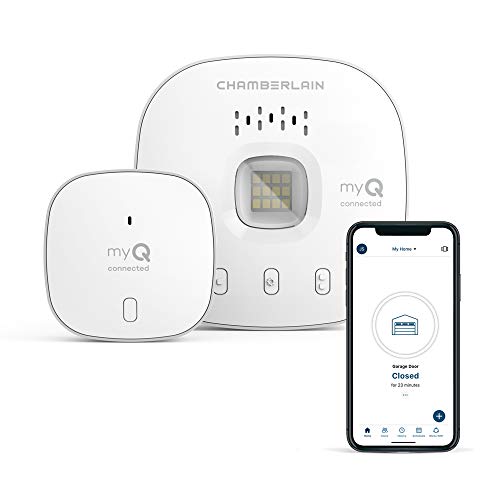
CHAMBERLAIN Smart Garage Control - Wireless Garage Hub and Sensor with Wifi & Bluetooth - Smartphone Controlled, myQ-G0401-ES, White
- Remote Garage Control: Open or close from anywhere
- App Compatibility: Uses free myQ app for iPhone and Android
- Package Security: Supports Amazon Key In-Garage Delivery
As an affiliate, we earn on qualifying purchases.
Chamberlain Smart Garage Control with WiFi & Bluetooth
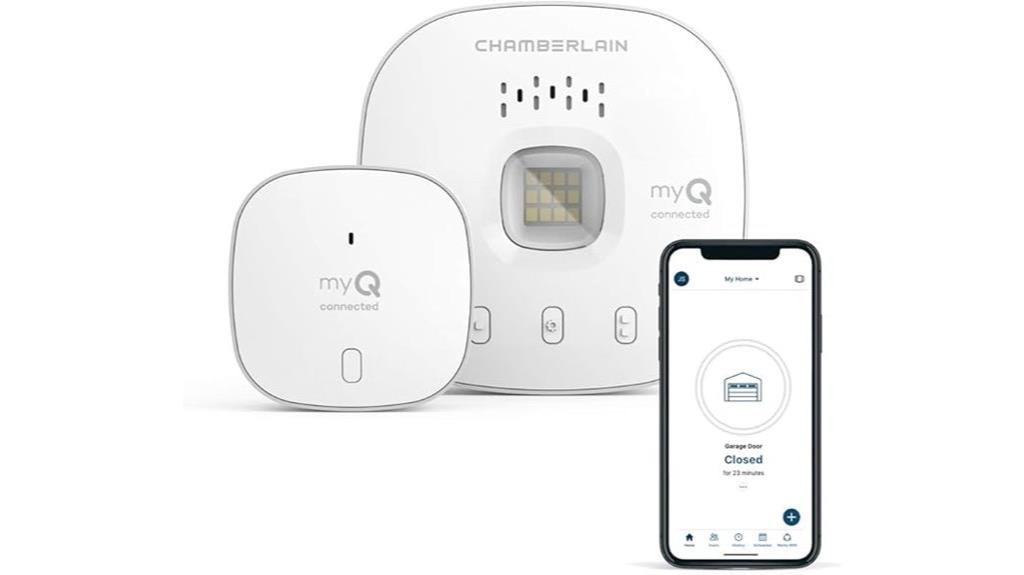
Looking for a smart garage door solution that offers seamless control and security? The Chamberlain Smart Garage Control with WiFi and Bluetooth is a great choice. It includes a wireless hub and sensor, letting you open, close, and monitor your garage from anywhere using the myQ app. Compatible with most garage openers made after 1993, it supports features like Amazon Key In-Garage Delivery and scheduled closures. Setup is straightforward with Bluetooth, and you can share access with family or friends. It’s perfect for added convenience and peace of mind, ensuring your garage is secure and accessible at all times.
Best For: homeowners seeking a reliable, easy-to-install smart garage control system with remote access and security features.
Pros:
- Easy Bluetooth setup with compatible smartphones, simplifying installation.
- Supports Amazon Key In-Garage Delivery for added convenience.
- Allows sharing access with family or friends and scheduling automatic closures.
Cons:
- Not compatible with garage openers that have sensors near the bottom changing power mode or Linear openers.
- Requires a sectional garage door and US-only certification.
- Needs a 2.4 GHz Wi-Fi network within 50 feet, which may limit placement options.
Smart Garage Door Sensor with YoLink Hub

For homeowners seeking reliable long-range monitoring, the Smart Garage Door Sensor with YoLink Hub stands out as an excellent choice. Its LoRa technology provides an unmatched wireless range of up to a quarter mile, ideal for large properties, basements, or outbuildings. Compatible with Alexa, IFTTT, and other smart home platforms, it offers flexible integration options. The kit includes a YoLink Hub, which is essential for connectivity, notifications, and automation. The sensor sends real-time alerts via smartphone, email, or SMS, keeping you informed without loud alarms. With a battery life of over five years, it’s a low-maintenance, efficient, and dependable security addition.
Best For: homeowners with large properties, basements, or outbuildings seeking long-range, reliable garage door monitoring with smart home integration.
Pros:
- Industry-leading wireless range of up to 1/4 mile using LoRa technology
- Compatible with popular smart home platforms like Alexa, IFTTT, and Home Assistant
- Low power consumption offers over five years of battery life with standard AAA batteries
Cons:
- Requires the YoLink Hub for operation; no standalone connectivity
- Does not include audible alarms or chimes, only notifications
- Setup and automation depend on third-party integrations, which may require additional configuration
Chamberlain MYQ-G0402 Garage-Door-Sensors, White
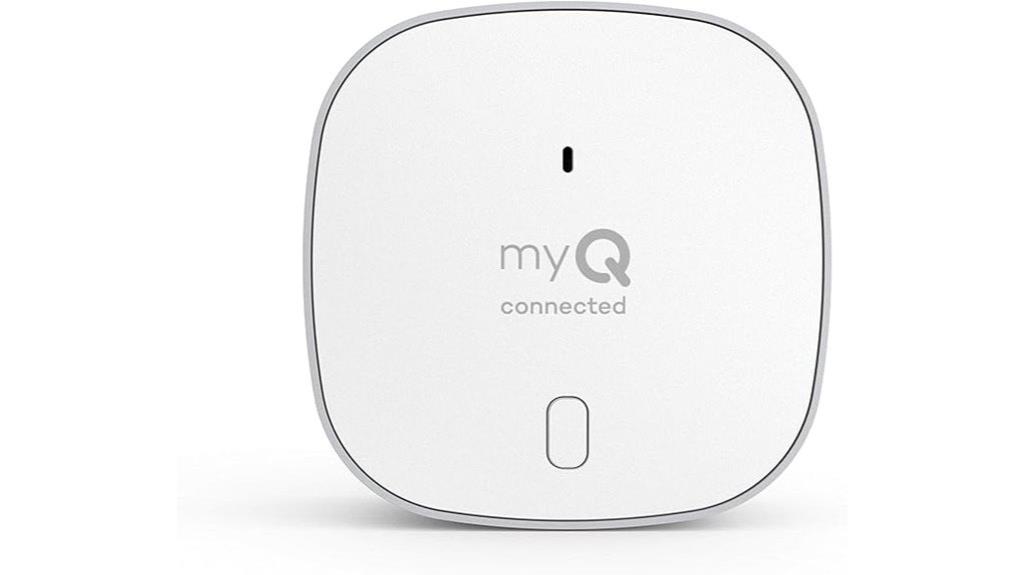
If you’re managing multiple garage doors and want reliable monitoring and control, the Chamberlain MYQ-G0402 Garage-Door-Sensors in white stands out. This sensor allows you to monitor, open, and close a second garage door using the Smart Garage Control system. It’s compatible with various MYQ and Smart Garage models, making it versatile for different setups. Installation is straightforward—just mount it inside the top panel of your garage door. The sensor also provides low battery notifications via the myQ app, ensuring you stay informed. With its simple setup and dependable performance, it’s an excellent choice for adding remote control and security to your second garage door.
Best For: homeowners with multiple garage doors seeking reliable monitoring, remote control, and security integration through a user-friendly sensor system.
Pros:
- Easy installation and programming inside the top garage door panel
- Compatible with a wide range of MYQ and Smart Garage models for versatile use
- Sends low battery notifications via the myQ app to keep you informed
Cons:
- Each sensor and component sold separately, potentially increasing overall cost
- Only compatible with specific Smart Garage and MYQ systems, limiting use with other brands
- Designed primarily for second garage doors, may not be suitable for single-door setups
meross Smart Garage Door Opener Remote, Compatible with Apple HomeKit, Amazon Alexa, Google Assistant, SmartThings, Siri, CarPlay and Android
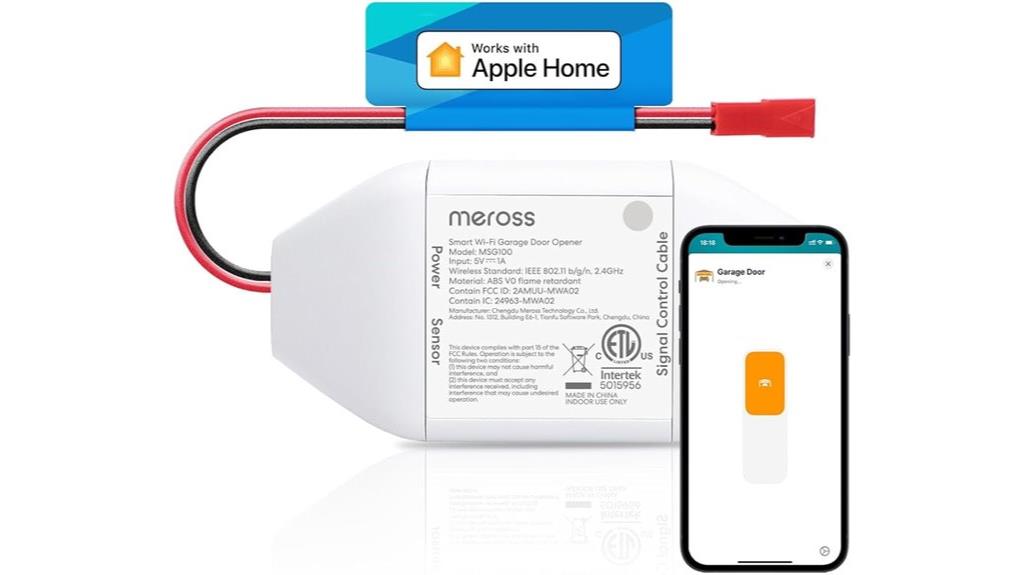
The meross Smart Garage Door Opener Remote stands out for homeowners seeking seamless integration with their existing smart home systems. It supports over 200 brands and more than 1600 models, making it versatile for many setups. With the meross app, I can control my garage door remotely from anywhere, no subscriptions needed. It’s compatible with Apple HomeKit, Alexa, Google Assistant, and SmartThings, allowing voice commands and automation. The device features sensitive wired sensors for accurate status updates, and I receive instant notifications for any changes or security alerts. Installation is straightforward, and meross support is readily available if I need assistance.
Best For: homeowners seeking a versatile, easy-to-install smart garage door opener that integrates seamlessly with popular voice assistants and smart home platforms.
Pros:
- Supports over 200 brands and 1600 models, offering broad compatibility.
- No subscription fees required for remote control and notifications.
- Easy installation with comprehensive guides and reliable app control.
Cons:
- Requires verification of garage door model compatibility prior to purchase.
- Stable WiFi connection needed for optimal operation.
- May need additional accessories for certain door models, requiring support contact.
Ecolink Z-Wave Long Range Garage Door Controller
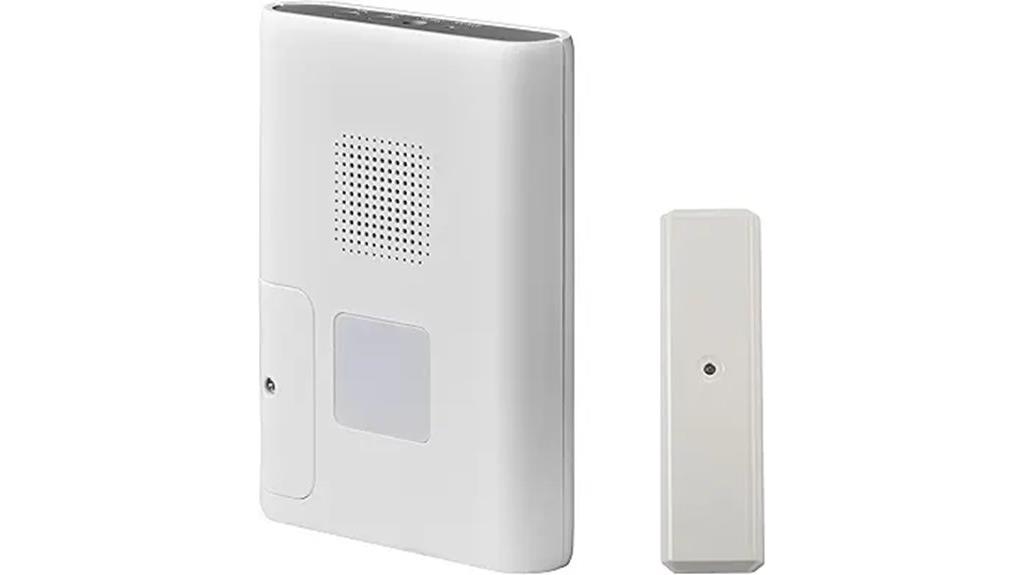
The Ecolink Z-Wave Long Range Garage Door Controller stands out for homeowners seeking reliable remote access and enhanced security. It’s compatible with most garage door openers and features Z-Wave communication at 908.42/916MHz, with long-range frequencies of 912/920MHz, ensuring a strong connection even over distances. The kit includes a pre-installed UL-certified bellwire and a wireless tilt sensor for extra security. Easy to install and UL-325 certified for safety, it offers seamless control via your smart home system. With glowing customer reviews and a straightforward setup, this controller provides peace of mind, making your garage smarter and more secure.
Best For: homeowners seeking reliable, long-range remote access and enhanced security for their garage doors with easy installation and smart home integration.
Pros:
- Long-range Z-Wave communication ensures strong connectivity over distances
- Includes pre-installed UL-certified bellwire and wireless tilt sensor for added security
- UL-325 certification guarantees compliance with safety standards
Cons:
- No manufacturer warranty specified, relying on Amazon’s return policy
- Batteries are not included, requiring additional purchase for remote operation
- Compatibility may vary with certain garage door openers; installation may require some technical skill
Smart Garage Door Opener with WiFi Remote Control

Looking for a smart garage door opener that offers seamless WiFi remote control? I recommend models with universal adapters that connect to most openers—just check compatibility first. These openers let you monitor and control your garage from anywhere using your phone or voice assistants like Alexa, Google Home, Siri, and even smartwatches. You can open, close, schedule, and get alerts if your door is left open. Plus, they integrate with security systems for added safety. Best of all, core features don’t have monthly fees, making them a convenient, cost-effective solution for ultimate home security and convenience.
Best For: homeowners seeking a versatile, WiFi-enabled garage door opener with voice control and security integration without ongoing monthly fees.
Pros:
- Compatible with most garage openers using a universal adapter (additional adapters may be required).
- Allows remote control, scheduling, and alerts via smartphone and voice assistants like Alexa, Google Home, and Siri.
- No monthly fees for core features, offering a cost-effective solution for home security and convenience.
Cons:
- May require an adapter for certain garage door models, and compatibility should be verified beforehand.
- Not compatible with RYOBI or eKyro openers without an additional adapter.
- Additional alert services, such as SMS or calls, could incur extra charges.
Ecolink Z-Wave Security Sensor (TILT-ZWAVE2-ECO)

If you want a reliable and discreet tilt sensor that seamlessly integrates with your existing security system, the Ecolink Z-Wave Security Sensor (TILT-ZWAVE2-ECO) is an excellent choice. Its unobtrusive design blends into your environment, while easy installation with the included flush mount bracket makes setup a breeze. Built with gold-plated tilt components, it offers industry-leading reliability. The sensor begins learning immediately after batteries are installed and works with most Z-Wave hubs. With a five-year battery life, it minimizes maintenance, making it a smart, durable addition for enhanced security and automation in your home.
Best For: homeowners and security system users seeking a discreet, reliable tilt sensor that easily integrates with existing Z-Wave security setups.
Pros:
- Discreet and unobtrusive design blends seamlessly into any environment
- Industry-leading reliability with gold-plated tilt components
- Long-lasting battery life of up to five years reduces maintenance
Cons:
- Requires a compatible Z-Wave hub for operation
- External contact input may need additional configuration for external triggers
- Installation may be challenging in non-standard mounting locations
Aeotec SmartThings Multipurpose Sensor
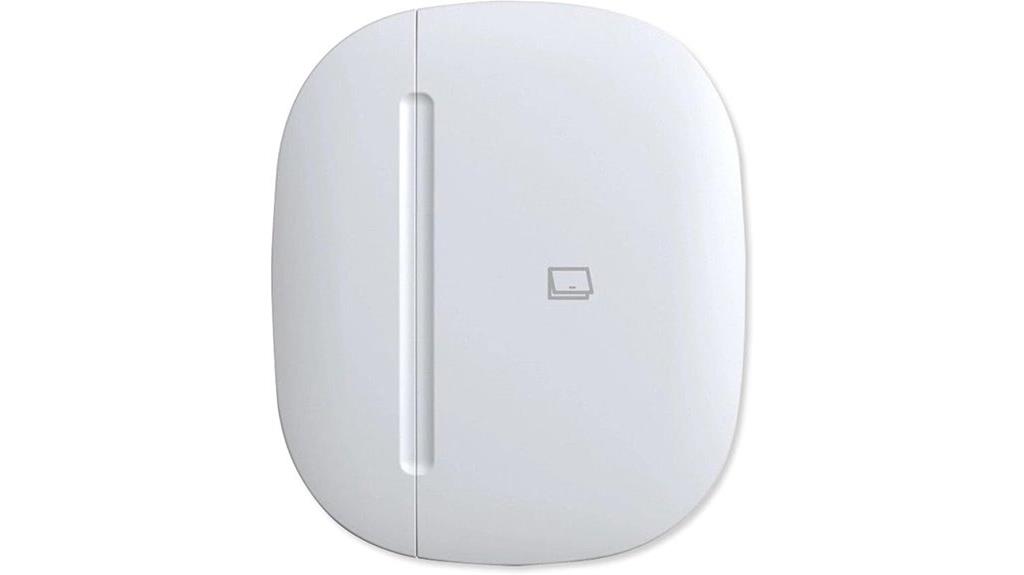
For homeowners seeking all-encompassing home monitoring, the Aeotec SmartThings Multipurpose Sensor stands out due to its versatile detection capabilities. It combines open/close detection, vibration, orientation, tilt, and temperature sensing in a single device, offering extensive protection. With 24/7 monitoring, it instantly alerts your phone if doors, windows, cabinets, or drawers open unexpectedly. Compatible with Zigbee hubs like Samsung SmartThings and Aeotec Smart Home Hub, it integrates seamlessly into existing setups. Designed for easy use with the SmartThings app, it helps you keep tabs on your home’s security, automation, and environment, providing peace of mind through smart alerts.
Best For: homeowners seeking comprehensive, versatile home monitoring and security solutions with real-time alerts and easy smart home integration.
Pros:
- Combines multiple sensing functions (open/close, vibration, tilt, temperature) in a single device for extensive protection
- Compatible with popular Zigbee hubs like SmartThings and Aeotec, enabling seamless integration
- Provides 24/7 monitoring with instant notifications to keep your home secure and environment controlled
Cons:
- Requires a Zigbee hub for operation, adding to setup complexity and cost
- Connected devices and sensors are sold separately, which may increase overall expense
- Limited to Zigbee-compatible platforms, restricting use with non-Zigbee smart home systems
meross Smart Garage Door Opener Remote Sensor
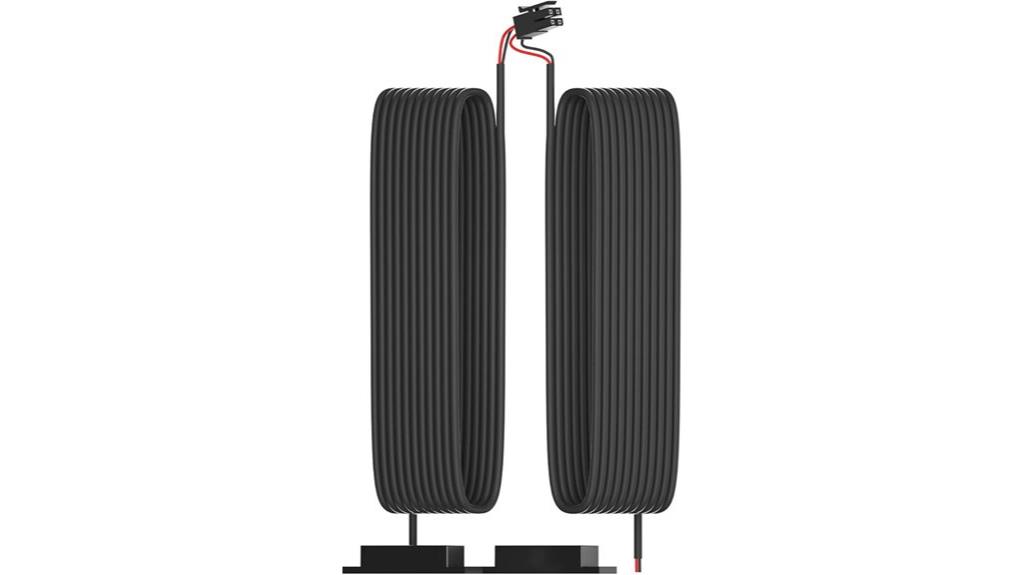
The meross Smart Garage Door Opener Remote Sensor is an ideal choice for homeowners who already have compatible smart garage door openers and want to enhance their monitoring capabilities. Designed specifically for MSG200 and MSG200HK models, it allows you to control a third garage door remotely. Keep in mind, it’s not a standalone device; you must pair it with the smart garage door opener remote. The package includes one sensor with a 23-foot cable, making installation flexible. When used together with the compatible remote, it offers reliable monitoring and control, giving you peace of mind and added convenience.
Best For: homeowners with compatible meross smart garage door openers (MSG200/MSG200HK) seeking to monitor and control an additional garage door remotely.
Pros:
- Enables remote control and monitoring of a third garage door when paired with compatible openers
- Flexible installation with a 23-foot cable for versatile placement
- Enhances existing smart garage door system without the need for additional standalone devices
Cons:
- Not compatible as a standalone device; requires pairing with a compatible smart garage door opener remote
- Limited to MSG200 and MSG200HK models; not compatible with other brands or models
- Does not include the smart garage door opener remote; sold separately
ismartgate Wireless Waterproof Tilt Sensor for Garage Doors
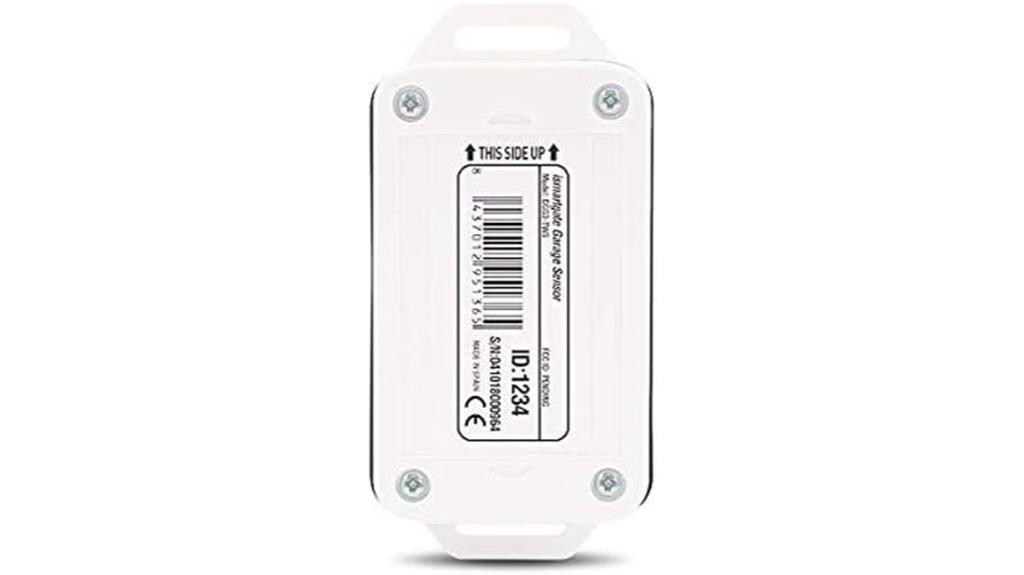
Designed specifically for homeowners with sectional or tilt garage doors, the ismartgate Wireless Waterproof Tilt Sensor offers reliable monitoring that integrates seamlessly with intelligent home systems. It requires an ismartgate PRO or LITE hub to operate and isn’t standalone. Easy to install—just insert the batteries and attach the sensor to the door’s top panel—no cables needed. It tracks the door’s status, outside temperature, and battery levels, sending real-time alerts via phone or email through the ismartgate app, HomeKit, or Google Home. Its waterproof design and 2.4GHz wireless operation ensure durability and interference-free performance up to 30 feet.
Best For: homeowners with sectional or tilt garage doors seeking reliable, wireless monitoring integrated with smart home systems.
Pros:
- Easy to install without cables, simply insert batteries and attach to the door
- Waterproof design suitable for garages exposed to weather conditions
- Compatible with HomeKit, Google Home, and ismartgate apps for real-time alerts
Cons:
- Requires an ismartgate PRO or LITE hub; not a standalone device
- Limited to 2.4GHz wireless range of approximately 30 feet
- Only compatible with specific ismartgate controllers, restricting flexibility
YoLink Garage Door Controller and Wireless Sensor
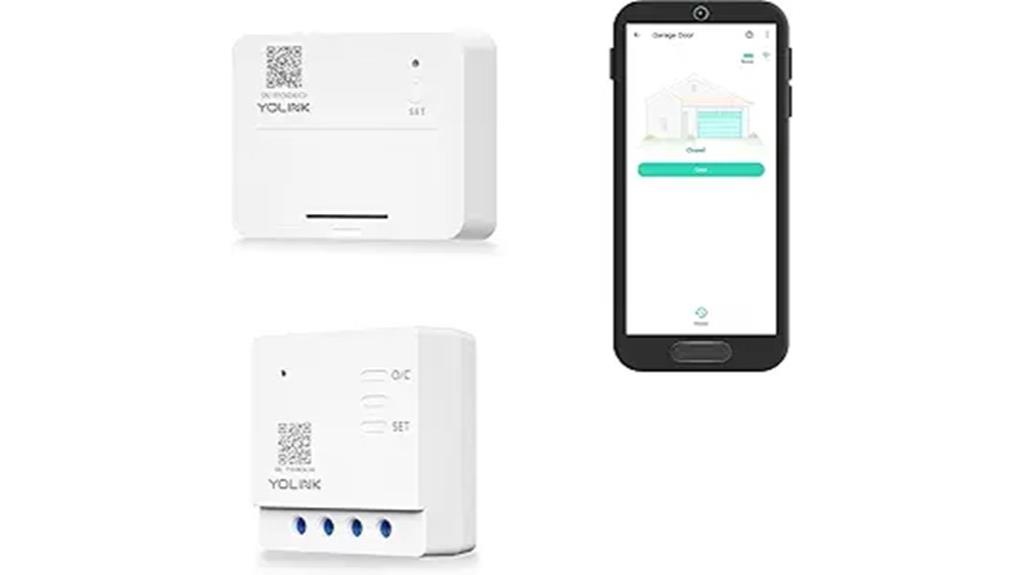
If you’re looking to upgrade your existing garage door for smarter control, the YoLink Garage Door Controller and Wireless Sensor offers a reliable solution with its long-range LoRa technology. It seamlessly integrates with garage doors made after 1993, supporting popular smart home platforms like Alexa and IFTTT. With an impressive 1/4 mile wireless range, it works well in basements, sheds, or remote areas, eliminating Wi-Fi limitations. The system’s low-power design guarantees over five years of battery life, reducing maintenance. Plus, you get real-time alerts about your door’s status through your phone, providing peace of mind without relying on loud alarms.
Best For: homeowners seeking a long-range, reliable, and smart upgrade for their existing garage doors compatible with openers made after 1993.
Pros:
- Industry-leading 1/4 mile wireless range for versatile placement options
- Over 5 years of battery life with standard AAA batteries, reducing maintenance
- Supports popular smart home platforms like Alexa and IFTTT for seamless automation
Cons:
- Requires the YoLink Hub for operation and smart integrations, adding an extra component
- No built-in audible alarm; alerts are only visual and via notifications
- Compatible only with garage doors that use photoelectric sensors and are manufactured after 1993
Factors to Consider When Choosing a Smart Garage Door Tilt Sensor

When selecting a smart garage door tilt sensor, I look at how well it works with my existing garage door system and the connectivity options it offers. I also consider features like sensitivity adjustment, power sources, and how easy it is to install and place. These factors guarantee I get a reliable, seamless, and hassle-free security upgrade.
Compatibility With Garage Door
Choosing a smart garage door tilt sensor requires guaranteeing it’s compatible with your specific door type and existing smart home setup. First, check if the sensor works with your garage door’s mechanism, whether it’s sectional, tilt, or another type. Next, verify that it supports your current smart home hub or protocol, like Zigbee, Z-Wave, or Wi-Fi, to ensure seamless integration. Confirm that the sensor can connect with your preferred smart platform, such as Alexa, Google Home, or Home Assistant. Additionally, examine the mounting method and size to make sure it fits your garage door’s top panel without obstructing operation. Finally, consider the wireless communication range to ensure reliable coverage between the sensor and your hub or controller. Compatibility is key to reliable, hassle-free security.
Connectivity Options and Integration
Selecting a smart garage door tilt sensor that seamlessly integrates with your existing smart home system guarantees smooth operation and reliable monitoring. To guarantee this, check that the sensor supports your current hub protocol, whether Zigbee, Z-Wave, or Wi-Fi. Compatibility with voice assistants like Amazon Alexa, Google Assistant, or Apple HomeKit is also vital for effortless voice control. Additionally, consider if the sensor works with third-party automation platforms such as SmartThings or IFTTT, allowing for customized routines. The connectivity range must suit your property’s size and layout, especially if you’re installing outdoors or in a large area. In conclusion, opt for sensors that support over-the-air firmware updates to keep your device secure and compatible with evolving smart home ecosystems.
Sensitivity Adjustment Features
Adjustable sensitivity levels in smart garage door tilt sensors are essential because they let you customize how responsive the device is to door movements. With different sensitivity settings, you can fine-tune the sensor to detect even minor tilts or vibrations, which helps reduce false alarms caused by environmental factors like wind or small door adjustments. Higher sensitivity settings ensure that slight movements are caught, providing more accurate detection of door open or close states, enhancing automation precision. Conversely, lower sensitivity levels prevent false alerts from minor vibrations, making the system more reliable. This flexibility is especially important because garage doors vary in type and installation environment, so being able to adjust sensitivity guarantees better performance and peace of mind.
Power Source and Battery Life
When evaluating smart garage door tilt sensors, considering the power source and battery life can make a big difference in how hassle-free and reliable your setup is. I look for sensors with a power source that matches my maintenance preferences—whether that’s replaceable batteries or rechargeable options. High-quality sensors can last up to two years on standard batteries, which minimizes replacements. It’s also smart to check if the sensor supports over-the-air firmware updates, so I can enhance functionality and security without changing hardware. Low power consumption features are a bonus, extending battery life and ensuring consistent operation. Finally, I consider whether the power source requires wired connections or batteries, especially in hard-to-reach spots, to select the most suitable option for my installation site.
Installation Ease and Placement
Choosing a smart garage door tilt sensor is much easier when I pick one that installs quickly and doesn’t require complex tools or technical skills. I look for sensors with straightforward mounting methods, like adhesive strips, screws, or brackets, that suit my garage door material. It’s essential to select a device that fits well on the top panel or tilt area without obstructing door movement. The size and shape should allow secure placement, especially in tight spaces. I also prefer sensors with adjustable sensitivity and flexible placement options, so I can customize the setup for different door types and environments. An easy installation process saves time and frustration, making it simpler to enjoy the security and convenience these sensors provide.
Security and Alert Capabilities
Security and alert features are key factors to contemplate when selecting a smart garage door tilt sensor. I look for sensors that deliver real-time notifications whenever the door opens or closes unexpectedly, so I can respond instantly. Customizable alerts are essential, like setting notifications if the door stays open too long, offering peace of mind. High detection accuracy and adjustable sensitivity help minimize false alarms, ensuring I only get meaningful alerts. Seamless integration with my smart home system allows for automation and remote monitoring, adding an extra layer of security. Finally, long battery life and reliable wireless connectivity are critical—so I don’t worry about constant maintenance or missed alerts. These features collectively make a tilt sensor a dependable safeguard for my garage.
Frequently Asked Questions
How Do Tilt Sensors Detect Garage Door Movement Accurately?
Tilt sensors detect garage door movement accurately by sensing changes in their angle or position when the door moves. I’ve found that they use a small, built-in accelerometer or magnetic switch that triggers when the door tilts beyond a set threshold. Once triggered, the sensor sends an alert to my phone, letting me know if the door is open or closed. This simple yet effective technology keeps my garage secure and provides peace of mind.
Can These Sensors Operate During Power Outages?
Yes, many smart garage door tilt sensors can operate during power outages. They typically rely on batteries, so even if your power goes out, these sensors stay active and keep you informed about your garage door’s status. I recommend choosing sensors with long-lasting batteries and low power consumption. This way, you can guarantee continuous security and convenience, no matter what happens to your main power supply.
Are Installation and Setup Procedures User-Friendly?
Absolutely, installation and setup are straightforward. I found the instructions clear and easy to follow, even if you’re not tech-savvy. Most sensors come with detailed guides and often include step-by-step videos. I appreciated how quick it was to get everything connected and tested. With just a few simple tools and basic understanding, you can have your tilt sensor up and running in no time, enhancing your garage security effortlessly.
What Is the Typical Battery Lifespan of These Sensors?
The typical battery lifespan of these sensors usually ranges from one to two years, depending on usage and the specific model. I’ve found that most sensors alert you when batteries are running low, so you can replace them before any security issues arise. I recommend checking the manufacturer’s guidelines for precise details, as some advanced models might have longer-lasting batteries, giving you peace of mind without frequent replacements.
Do Sensors Support Integration With Existing Smart Home Systems?
Imagine your smart home as a symphony, with each device playing in harmony. Many garage door tilt sensors seamlessly support integration with popular systems like Alexa, Google Home, or Apple HomeKit. This means you can control and monitor your garage with just your voice or smartphone. I’ve found that most sensors are designed to blend effortlessly into existing setups, making your home smarter and your life easier.
Conclusion
I get it—choosing the right smart garage door tilt sensor can feel overwhelming. But trust me, with options like the ThirdReality or YoLink, you’ll find something that fits your needs and budget. Don’t worry about tech complexity; most are easy to install and use. Plus, the added security and convenience are totally worth it. Once you set it up, you’ll wonder how you ever managed without it!