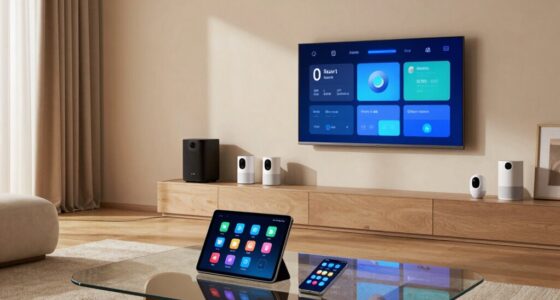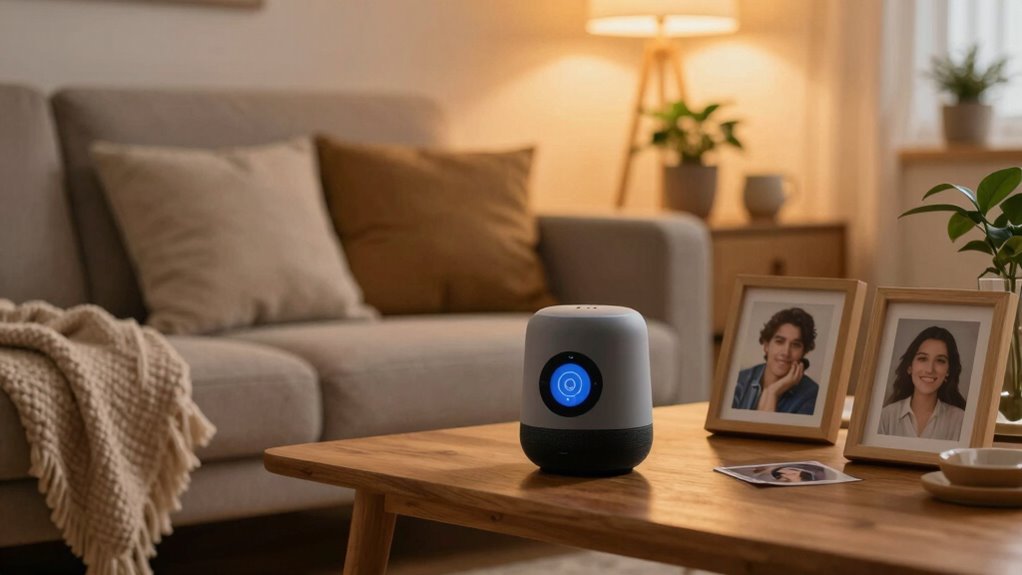

Voice profiles help your shared home feel more personal by recognizing each person’s voice and delivering customized responses. This means your devices can control your playlists, adjust the thermostat, or share relevant information just for you. It reduces misunderstandings and keeps others’ settings private, making everyone’s experience smoother and more comfortable. Knowing how voice profiles work and the privacy measures involved can give you peace of mind—exploring these details reveals even more about creating a trusted smart home environment.
Key Takeaways
- Voice profiles enable personalized device responses tailored to each user’s preferences in shared spaces.
- They help reduce accidental activation of others’ settings, ensuring individual control.
- Customization creates a more welcoming and comfortable atmosphere for all housemates.
- Accurate recognition minimizes repeated commands, improving efficiency and user experience.
- Transparent data management and privacy controls build trust among shared home users.
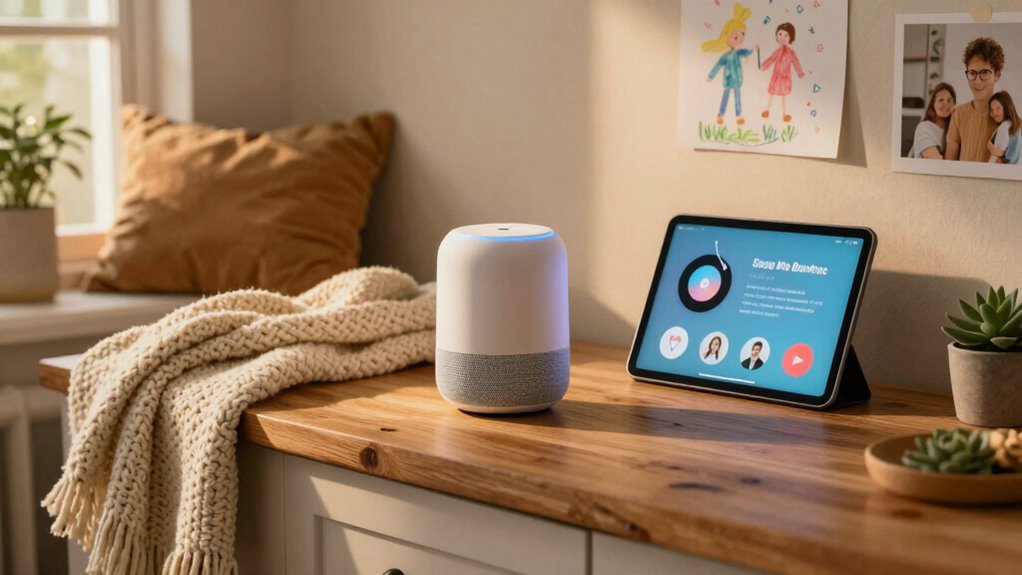
With these personalization features, you gain more control over how your smart devices respond. For example, asking your smart speaker to play your favorite playlist or adjust the thermostat triggers actions specific to you. This level of customization helps make the home feel less impersonal and more welcoming. It also minimizes the frustration of unintentionally activating someone else’s settings. Over time, voice profiles learn and adapt, making interactions smoother and more accurate. You don’t have to repeat commands or correct misinterpretations as often, which enhances your overall comfort and efficiency. Additionally, privacy policies are evolving to better address user concerns, emphasizing transparency and data protection. However, with these benefits come privacy concerns that you shouldn’t overlook. Voice recognition systems require sensitive data to identify individual users, raising questions about how that data is stored, used, and shared. You might worry about whether your voice data is kept secure or if it could be accessed by unauthorized parties. In shared homes, this concern is amplified because multiple residents may have different comfort levels regarding their voice data. It’s important to understand how voice data management is handled by device manufacturers to ensure your privacy is maintained. Moreover, understanding the data encryption methods used can help you assess the security of your voice profiles. It’s essential to understand the privacy policies of your smart home devices and ensure that your voice profiles are protected with strong encryption and access controls. Open communication among housemates about privacy expectations can also help prevent misunderstandings and build trust. Additionally, knowing how user consent is obtained and managed can further enhance your confidence in using these systems responsibly. Despite these concerns, many manufacturers now prioritize privacy, offering options to delete or deactivate voice profiles at any time. You can also choose which features to enable, giving you more control over your data. As voice profiles become more sophisticated, the balance between personalization and privacy remains critical. Ultimately, embracing these features can make your shared home more responsive, efficient, and personalized—if you’re mindful of the privacy implications. By understanding how your voice data is used and taking steps to secure it, you can enjoy a smarter, more customized living space without sacrificing your privacy. Additionally, awareness of cybersecurity risks related to voice data can help you better protect your personal information.
As an affiliate, we earn on qualifying purchases.
Frequently Asked Questions
How Secure Are Voice Profiles in Shared Home Environments?
Voice profiles in shared homes are quite secure because of voice training and data encryption. Voice training helps devices recognize individual voices, reducing accidental access. Data encryption protects your voice data as it’s stored and transmitted, preventing unauthorized access. While no system is entirely foolproof, these measures greatly enhance security, making it safer to use voice profiles in shared environments. Just guarantee you keep your devices updated for maximum protection.
Can Voice Profiles Be Customized for Different Household Members?
Did you know that voice recognition accuracy improves with personalized voice profiles? You can absolutely customize voice profiles for different household members, enhancing personalization options. This means each person’s commands are recognized more accurately, making interactions smoother. By setting up individual profiles, everyone in your home gets a tailored experience, and the system can better distinguish voices, ensuring your smart devices respond precisely to each person’s voice commands.
How Do Voice Profiles Handle Multiple Users With Similar Voices?
Voice profiles use advanced voice recognition and voice differentiation technology to handle multiple users with similar voices. When you speak, the system analyzes subtle differences in pitch, tone, and speech patterns to accurately identify each person. This way, even if your voices sound alike, the device can distinguish who’s talking, ensuring personalized responses and settings. It’s a smart way to keep shared homes organized and tailored to everyone’s preferences.
Are Voice Profiles Compatible With All Smart Home Devices?
Did you know over 75% of smart home devices now support voice recognition? Voice profiles generally work with most modern smart home devices, but compatibility varies. For seamless user personalization, check each device’s specifications. Many brands integrate voice recognition technology, ensuring your personalized commands work effortlessly. However, some older or less common devices might not support voice profiles, so verifying compatibility before setup is essential for a smooth experience.
What Privacy Measures Protect Voice Data in Shared Homes?
Privacy measures protect your voice data in shared homes through voice data encryption, which secures your recordings from unauthorized access. Additionally, user consent protocols guarantee you’re aware of and approve how your voice information is used. These safeguards help maintain your privacy, giving you control over your voice profile. Always review your device’s privacy settings and permissions to stay informed and protected in a shared environment.
As an affiliate, we earn on qualifying purchases.
Conclusion
With voice profiles, shared homes become more personal, more intuitive, more connected. They recognize your voice, respect your preferences, and adapt to your routines. You feel understood, valued, and at ease. As technology learns your voice, your space transforms into a place that’s truly yours—seamless, simple, and secure. Embrace the future of shared living where your voice shapes your environment, making every day more personalized, more comfortable, more you.
personalized smart home assistant
As an affiliate, we earn on qualifying purchases.
As an affiliate, we earn on qualifying purchases.
As an affiliate, we earn on qualifying purchases.