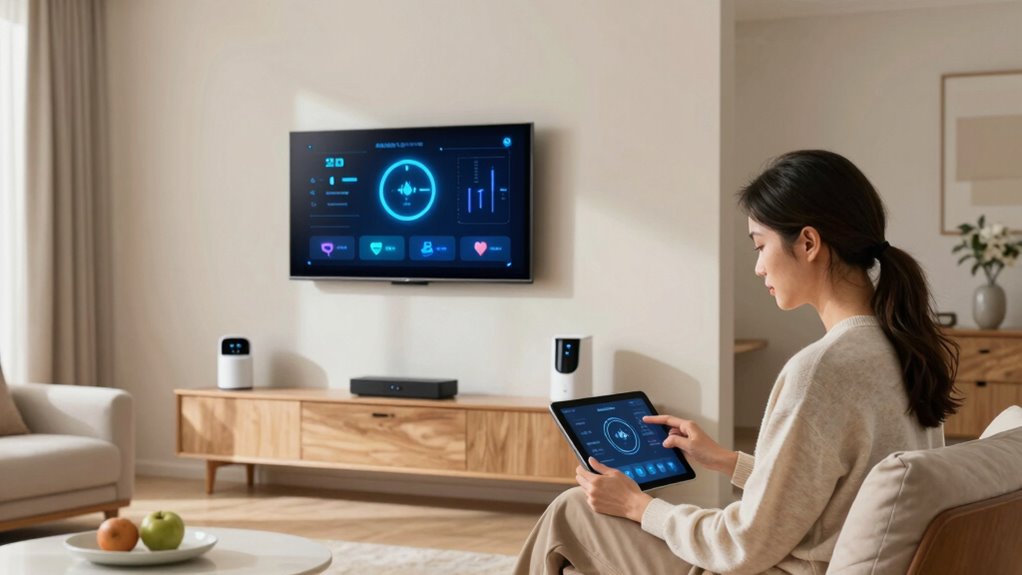

AI makes homes more responsive to your health needs by learning your routines and monitoring environmental factors in real time. It detects issues like poor air quality, allergens, or hazards, automatically adjusting settings to keep you safe and comfortable. AI can also support your well-being by personalizing climate and air conditions based on your health status. If you want to discover how these smart features can enhance your everyday life, keep exploring.

Get home appliances delivered free with Prime
- Fast, free delivery on millions of items
- Prime Video, Amazon Music and more included
- Member-only deals all year
Key Takeaways
- AI learns individual routines to optimize home settings, supporting health and comfort proactively.
- Continuous air quality monitoring and adjustments improve indoor environments and reduce health risks.
- Personalized health data integration enables early detection and tailored environmental responses.
- Smart security features ensure safety and prompt emergency responses, reducing stress and health hazards.
- AI-driven home management creates a adaptable, health-focused environment for vulnerable populations.

As technology advances, AI is transforming the way we interact with our living spaces, making homes smarter and more responsive to our needs. One of the most significant shifts is how AI enhances home security and energy efficiency, both of which can directly impact your health and well-being. With smart security systems, AI doesn’t just monitor for break-ins; it learns your routines, detects unusual activity, and can alert you immediately if something seems off. This real-time responsiveness reduces your stress about safety, especially when you’re away or asleep, allowing you to focus more on your health and daily activities.
AI-powered security systems also help prevent potential health hazards. For example, advanced cameras and sensors can detect smoke, gas leaks, or even unusual movement that might indicate an emergency. When integrated with your smart home, these systems can automatically notify emergency services or activate safety protocols, guaranteeing swift action that minimizes risk. This proactive approach means your home becomes not just a shelter but a vigilant companion that keeps you safe, particularly essential if you have health concerns or mobility issues.
Energy efficiency is another fundamental aspect where AI makes a difference in your home’s responsiveness to health needs. By optimizing heating, cooling, and lighting, AI helps maintain a comfortable environment that supports your well-being. For instance, smart thermostats learn your schedule and preferences, adjusting temperatures to promote better sleep, reduce stress, and even manage conditions like allergies by controlling air quality. Less energy waste means fewer pollutants and allergens circulating indoors, which benefits respiratory health and creates a cleaner living space. This energy management also involves optimizing resource use to minimize environmental impact, further supporting your overall health. Additionally, integrating indoor environmental quality monitoring helps identify and address sources of indoor pollutants, enhancing your home’s safety and comfort.
Furthermore, AI-driven energy management systems can monitor air quality in real-time, automatically activating air purifiers or ventilators when needed. This responsiveness ensures that you’re breathing cleaner air, reducing exposure to airborne irritants. Smart lighting systems also adapt to your circadian rhythms, helping regulate sleep patterns and boost mood, which are indispensable for overall health. As your home learns your habits, it becomes more than just a passive environment; it actively supports your physical and mental health by creating a healthier, more comfortable space. Recognizing the importance of personalized health care, AI can also integrate health data to tailor your home environment to your specific needs.
AI also facilitates health monitoring, allowing for more personalized care and early detection of health issues, which further emphasizes its role in promoting well-being at home. The integration of various home automation technologies means that your environment can respond dynamically to changes in your health status or daily routine. In essence, AI’s ability to make your home smarter and more responsive isn’t just about convenience — it’s about creating an environment that actively promotes your health and safety. From smart security that guards you around the clock to energy systems that foster a healthier indoor climate, AI transforms your living space into a proactive partner in your well-being. As these technologies evolve, they’ll continue to adapt to your needs, assuring your home remains a safe, healthy, and supportive environment every day.
Products Worth Considering

LG UltraGear 34-Inch Curved QHD Gaming Monitor, 160Hz, FreeSync Premium

Logitech MX Master 4 Ergonomic Wireless Mouse with Haptics – Graphite

Bose QuietComfort Wireless Noise Cancelling Headphones – Petal Pink Limited Edition
As an affiliate, we earn on qualifying purchases.
Frequently Asked Questions
How Does AI Personalize Health Monitoring in Homes?
AI personalizes health monitoring in homes by tracking your habits and essential signs continuously. It analyzes this data to send personalized alerts if it detects any irregularities. Additionally, AI adapts routines based on your health trends, ensuring your environment supports your well-being. This technology creates a responsive living space that actively responds to your health needs, helping you stay safer and healthier every day.
What Privacy Measures Protect Health Data in Smart Homes?
Did you know that over 80% of people worry about their health data privacy? In smart homes, your health data is protected through strong data encryption, making it unreadable to unauthorized access. Additionally, user consent is prioritized; you’re asked to approve data collection and sharing. These measures guarantee your sensitive health information stays private, giving you peace of mind while benefiting from AI-powered health monitoring.
Can AI Detect Mental Health Issues at Home?
Yes, AI can detect mental health issues at home through emotional recognition and behavioral analysis. By monitoring voice tone, facial expressions, and activity patterns, AI identifies signs of stress, anxiety, or depression. It analyzes changes over time, alerting you or healthcare providers if intervention is needed. This proactive approach helps create a supportive environment, enabling timely support while respecting your privacy and ensuring sensitive data is protected.
How Affordable Are Ai-Powered Health Responsive Home Systems?
AI-powered health responsive home systems are becoming more affordable, but cost barriers and accessibility challenges still exist for many. You might find basic setups reasonably priced, yet advanced features can be costly. To make these systems more accessible, look for options that fit your budget and consider community programs or subsidies. As technology advances, expect prices to decrease, making it easier for more people to benefit from responsive home health solutions.
What Are the Potential Risks of AI in Health-Responsive Homes?
Imagine a gentle breeze stirring your home’s senses, but beneath that, ethical concerns whisper of potential missteps. You face risks like data inaccuracies that could lead to wrong health insights, while privacy issues threaten your peace of mind. If AI’s guidance isn’t carefully managed, it might make decisions that aren’t truly in your best interest. Staying vigilant and ensuring ethical standards can help keep your health-responsive home safe and trustworthy.
Conclusion
Imagine a home that listens like Athena, wise and ever-attentive, adjusting itself to keep you healthy and safe. As AI continues to evolve, your living space can become a guardian, anticipating your needs before you even realize them. Just like Icarus aimed for the sky, we’re reaching for a future where homes are more responsive—and more caring—than ever. Embrace this change, and let your house become your personal sanctuary in the age of AI.