
TL;DR
Maryland’s state-backed organizations are investing $2.7 million to fund solar and storage projects at 25 affordable housing sites. The initiative aims to reduce energy costs and increase grid resilience for low-income residents. The funding is part of Maryland’s Strategic Revolving Fund and supports the state’s clean energy goals.
Maryland’s Clean Energy Center (MCEC) and Maryland Energy Administration (MEA) have announced a $2.7 million investment to fund solar and storage projects at 25 affordable housing properties across the state, benefiting 2,422 households. This initiative aims to lower energy costs and enhance grid resilience for low-income residents, marking a significant step in Maryland’s clean energy efforts.

Get home appliances delivered free with Prime
- Fast, free delivery on millions of items
- Prime Video, Amazon Music and more included
- Member-only deals all year
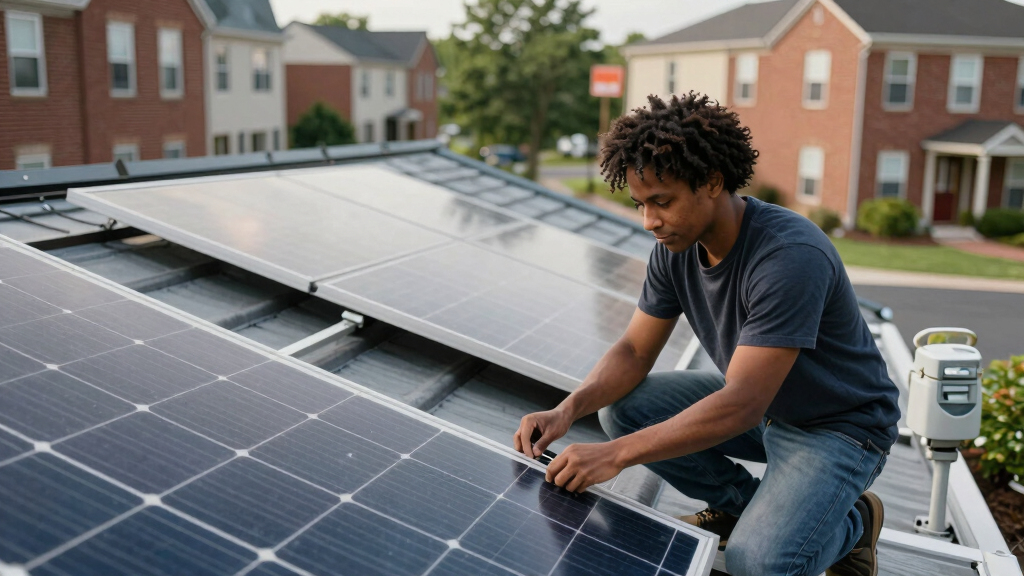
The funding, allocated through Maryland’s Strategic Revolving Fund (SRF), will support the installation of rooftop solar and energy storage systems at 25 affordable housing sites. Previous SRF-funded projects in Maryland resulted in approximately 2.72 MW of rooftop solar capacity, generating an estimated 3,267 MWh of renewable energy. The latest round of funding is expected to reduce energy costs for residents by about 20%, while also improving grid stability through energy storage.
According to Kathy Magruder, executive director of the MCEC, the revolving fund model allows for the reinvestment of repaid capital into new projects, creating a sustainable cycle of clean energy deployment. Kelly Speakes-Backman, director of the MEA, emphasized that renewables are the most accessible and affordable energy source today, and that these investments strengthen community resilience and affordability in Maryland.
Impact on Low-Income Maryland Communities
This funding directly benefits low-income households by reducing their energy bills and increasing energy reliability through solar and storage systems. It also demonstrates Maryland’s commitment to expanding renewable energy access in underserved communities and supports broader state goals for clean energy adoption and climate resilience. The initiative could serve as a model for other states aiming to integrate renewable solutions into affordable housing programs, potentially accelerating the transition to a cleaner energy grid.
Products Worth Considering

Jackery Solar Generator 1000 V2 with 200W Solar Panel, 1,070Wh, 1,500W, Dune White

Anker SOLIX C300 DC Portable Power Station, 288Wh, 300W

Jackery HomePower 3600 Plus Portable Power Station, 3584 Wh, 3600 W
As an affiliate, we earn on qualifying purchases.
Maryland’s Renewable Energy Investment History
Maryland has previously allocated funds through the SRF to support solar projects on multi-family housing in various counties, including Anne Arundel, Baltimore, Harford, Howard, and Prince George’s. These efforts have resulted in significant renewable energy production and cost savings for residents. The current funding round continues this trend, emphasizing the state’s focus on expanding clean energy infrastructure in low-income communities as part of its broader climate and energy policies.
“The success of these initial draws demonstrates the essential role of revolving capital in the clean energy transition.”
— an anonymous researcher
Unconfirmed Details and Future Funding Plans
It is not yet clear how many additional projects may be funded through future SRF rounds or how the long-term impacts on energy costs will be measured. Details about the specific locations and project timelines are still emerging, and the full scope of community benefits remains to be assessed over time.
Next Steps for Project Implementation and Monitoring
The projects are expected to move into the design and construction phases over the coming months. Maryland agencies will monitor project performance and cost savings, with updates on community impacts and renewable energy generation anticipated later this year. Further funding rounds may be announced based on project outcomes and available resources.
Key Questions
How will these solar projects benefit residents?
They will reduce energy costs by approximately 20% and improve grid resilience through energy storage, providing more reliable and affordable power for low-income households.
What is the Strategic Revolving Fund?
The SRF is a Maryland program that provides financing support for renewable energy projects, with repaid funds recycled into new projects to sustain ongoing investment.
Who is funding these projects?
The projects are funded through a partnership between the Maryland Clean Energy Center and the Maryland Energy Administration, using $2.7 million allocated from the SRF.
When will the projects be completed?
Project timelines are still being finalized, but construction is expected to begin within the next few months, with completion likely by the end of 2026.
Will this initiative expand to other communities?
Future funding rounds may support additional projects, depending on the success of current efforts and available resources.
Source: Solar Power World