
TL;DR
France is experiencing its hottest days on record, with temperatures exceeding 105°F in Paris. The country’s limited air conditioning infrastructure is struggling to meet demand, highlighting challenges in climate adaptation efforts.
France is currently enduring its hottest days in recorded history, with temperatures surpassing 105 degrees Fahrenheit in Paris. This extreme heat has overwhelmed the country’s limited air conditioning infrastructure, resulting in widespread discomfort and raising urgent concerns about climate adaptation and public safety.

Get home appliances delivered free with Prime
- Fast, free delivery on millions of items
- Prime Video, Amazon Music and more included
- Member-only deals all year
Over the past ten days, Paris has experienced consecutive days with temperatures exceeding 96°F, peaking at 105°F this week, the highest on record. Despite some offices and public spaces being air-conditioned, many residential buildings lack sufficient cooling systems, forcing residents to rely on makeshift solutions such as open windows, fans, and DIY reflective barriers.
French authorities and experts acknowledge that the country’s historical skepticism toward air conditioning—rooted in environmental and energy efficiency policies—has left many buildings poorly equipped for such extreme heat. The government’s stance considers AC a ‘maladaptation,’ but the current conditions are challenging this position. Many residents are suffering from heat-related discomfort, and hospitals are reporting increased admissions related to heat stress.
Impacts of France’s Limited Cooling Infrastructure
This situation underscores the critical need for France to reevaluate its approach to climate resilience. The inability to adequately cool buildings during record-breaking heat waves poses direct health risks, especially for vulnerable populations such as the elderly and those with pre-existing health conditions. It also highlights the broader challenge of balancing environmental policies with practical adaptation measures in a warming climate.
Products Worth Considering

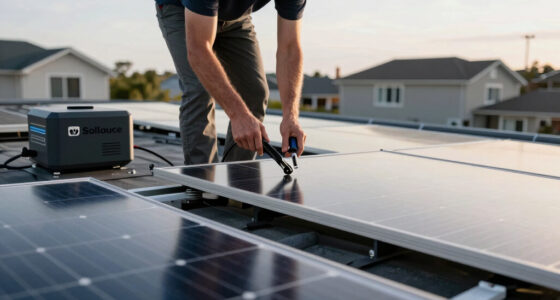
Anker SOLIX C1000 Gen 2 Portable Power Station with 200W Solar Panel

Jackery Explorer 300 Portable Power Station, 292Wh

Apple MacBook Air 13-inch Laptop with M5 Chip, 16GB Memory, 512GB SSD, Liquid Retina Display, and 12MP Center Stage Camera (Midnight)
As an affiliate, we earn on qualifying purchases.
France’s Climate Policies and Building Standards
France has historically prioritized energy efficiency and environmental sustainability, leading to restrictions on installing air conditioning in new buildings outside heat pumps. The country’s architectural standards favor passive cooling techniques like cross-ventilation, balconies, and shading, which are effective during moderate heat but less so during prolonged, extreme conditions. The current heat wave has exposed the limitations of these measures as nighttime temperatures remain high, rendering DIY cooling efforts ineffective.
Previous heat waves in Europe have prompted discussions about the need for more resilient infrastructure, but France’s policies have maintained a cautious stance toward AC, viewing it as environmentally harmful and energy-intensive. The ongoing crisis is prompting debate about whether these policies need revision to better protect public health.
“Well-insulated buildings aren’t necessarily better in the heat. The current situation shows the need for more adaptive design strategies.”
— Emmanuel Bozonnet, building-physics expert at La Rochelle Université
Unclear Future of France’s Climate Adaptation Policies
It is not yet clear whether the French government will relax restrictions on air conditioning or implement new measures to improve cooling infrastructure as the heat wave continues. Details on policy changes are still emerging.
Next Steps in Addressing France’s Heat and Cooling Shortages
Authorities are expected to assess the impact of the ongoing heat wave and may consider revising building codes or increasing public cooling centers. Experts suggest that France will need to balance environmental goals with practical climate resilience strategies, potentially including more widespread use of efficient cooling technologies. The situation remains dynamic as the heat wave persists.
Key Questions
Why does France have limited air conditioning compared to other countries?
France’s building standards and environmental policies have historically prioritized energy efficiency and passive cooling, discouraging widespread use of air conditioning to reduce energy consumption and emissions.
Is the French government taking action to address the cooling crisis?
Officials have acknowledged the challenges posed by the heat wave but have yet to announce significant policy shifts. Discussions about updating building standards and increasing cooling options are ongoing.
How are residents coping with the heat without sufficient AC?
Many residents rely on DIY methods such as hanging sheets for shade, using fans, and keeping windows closed during the day. Nighttime cooling is limited due to persistently high temperatures.
Could this situation worsen with future heat waves?
Yes, as climate change increases the frequency and intensity of heat waves, France’s current infrastructure and policies may prove inadequate, necessitating urgent adaptation measures.
Source: The Atlantic