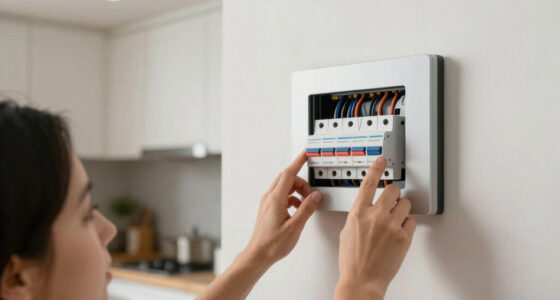
Room sensors are more important than thermostat placement because they provide accurate data about your actual indoor conditions. Properly placed sensors guarantee your HVAC responds correctly, maintaining consistent comfort and saving energy. Poor sensor accuracy or placement can lead to unnecessary heating or cooling, increasing bills and discomfort. By focusing on quality sensors and strategic positioning, you get a more reliable climate control system. Keep exploring to discover how optimizing sensor use can improve your home’s efficiency and comfort.

Get home appliances delivered free — and shop member deals
- Fast, free delivery on millions of items
- Access to Prime Big Deal Days deals on October 6–7
- Prime Video, Amazon Music and more included
Key Takeaways
- Room sensors provide real-time, localized data, ensuring HVAC responds accurately to actual conditions rather than thermostat location.
- Properly placed sensors prevent false readings caused by drafts, sunlight, or heat sources, unlike thermostat placement.
- Multiple sensors across different zones improve overall climate control, whereas a single thermostat may not reflect entire space.
- Accurate sensors positioned correctly optimize energy efficiency by preventing over-heating or cooling due to misreading.
- Sensor calibration and strategic placement enhance system responsiveness and long-term performance beyond thermostat location benefits.
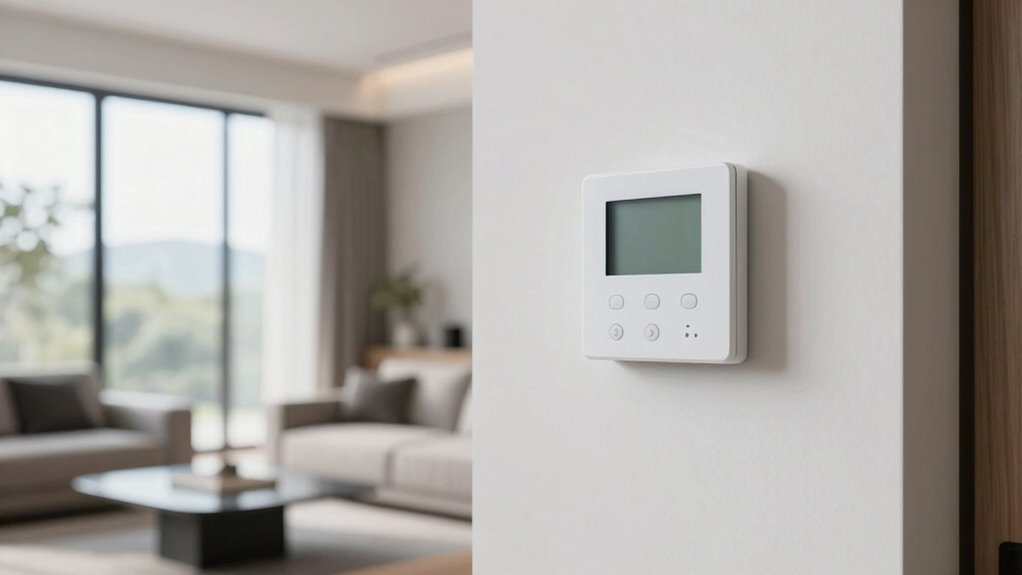
When it comes to maintaining a comfortable and energy-efficient home, the placement of your thermostat isn’t the only factor that matters—room sensors play an essential role. These sensors provide real-time data about the temperature in different parts of your home, ensuring your heating and cooling systems respond accurately. The key to maximizing their effectiveness lies in understanding sensor accuracy and implementing proper placement strategies. If your sensors aren’t accurate or aren’t situated correctly, your system might misread the room’s needs, causing uneven heating or cooling and wasting energy.
Sensor accuracy is crucial because it directly impacts how well your system responds to the actual conditions of each space. A highly accurate sensor provides precise temperature readings, helping your HVAC system make better decisions. If a sensor is faulty or poorly calibrated, it can send misleading information, leading to unnecessary energy consumption or discomfort. You want sensors that maintain their accuracy over time, especially in areas prone to temperature fluctuations, like near windows or vents. Regularly checking and recalibrating sensors ensures they continue to deliver reliable data, so your system works optimally. Additionally, choosing sensors with long-term stability can enhance their performance and reduce maintenance needs.
Accurate, well-maintained sensors ensure your HVAC responds precisely, optimizing comfort and energy efficiency throughout your home.
Placement strategies are equally important. You might think that placing sensors near vents or windows is a good idea, but this can skew readings. Instead, position sensors in central locations away from direct sunlight, drafts, or heat sources that could distort the temperature measurement. For example, avoid placing sensors next to appliances, behind furniture, or near external walls where temperature swings are common. The goal is to find spots that accurately reflect the average room temperature, giving your system a true picture of the environment. When sensors are strategically placed, they help prevent hot or cold spots and reduce energy waste, making your home more comfortable and efficient.
In addition to choosing the right locations, consider the number of sensors you use. More sensors mean better coverage, especially in larger or multi-zone homes. Each sensor should be installed in a spot that captures the typical temperature of its zone without interference. When you combine sensor accuracy with smart placement strategies, your HVAC system becomes more responsive, adjusting quickly to changes and maintaining a consistent temperature throughout your home. This not only boosts comfort but also lowers your energy bills by preventing your system from overworking. Proper sensor calibration and maintenance are essential components of energy efficiency and long-term system performance.
Ultimately, investing in accurate sensors and thoughtful placement is a smarter way to control your home’s climate. It ensures your thermostat isn’t just reacting to a single point of measurement but is guided by comprehensive, reliable data. This approach leads to a more comfortable living environment and more efficient energy use, proving that sensors truly matter more than just the thermostat’s location. Paying attention to sensor calibration can significantly improve your system’s performance and longevity.
As an affiliate, we earn on qualifying purchases.
Frequently Asked Questions
How Do Room Sensors Improve Energy Efficiency?
Room sensors improve energy efficiency by providing accurate temperature readings, ensuring your HVAC system responds precisely to actual conditions. Proper sensor calibration is essential for peak performance, preventing unnecessary heating or cooling. When sensors accurately detect room temperatures, your system adjusts more effectively, leading to significant energy savings. This targeted approach reduces waste, lowers utility bills, and keeps your space comfortable without overworking your HVAC system.
Can Multiple Sensors Be Used in Large Homes?
Absolutely, you can use multiple sensors in large homes—it’s like giving your HVAC system a superpower! Proper sensor placement guarantees they capture accurate temperature data, especially in different rooms, while a strong signal range keeps them connected. Using multiple sensors helps your system react quickly to changing conditions across vast spaces, optimizing comfort and energy efficiency. So, don’t hold back—spread those sensors around for the best results!
Are Room Sensors Compatible With All HVAC Systems?
Room sensors aren’t compatible with all HVAC systems, but many modern systems support smart integration and sensor compatibility. You should check your HVAC model or consult a professional to confirm if your setup can work with these sensors. When compatible, sensors can communicate seamlessly with your thermostat, enhancing temperature control and efficiency. If your system lacks compatibility, upgrading or adding a compatible controller might be necessary for maximum smart home performance.
How Often Should Room Sensors Be Recalibrated?
Think of your room sensors like a finely tuned instrument—regular sensor calibration keeps it playing perfectly. You should recalibrate them at least once a year, or after major changes to your HVAC system. During calibration, you adjust the frequency to guarantee accurate readings. This process maintains ideal comfort and efficiency, preventing unnecessary energy use. Staying proactive with sensor calibration guarantees your system responds precisely to your home’s needs.
Do Room Sensors Require Professional Installation?
You don’t necessarily need a professional for sensor placement, but it’s often recommended to guarantee ideal performance. Proper installation can reduce installation costs and improve accuracy. If your sensor placement involves complex wiring or integration with existing systems, hiring a professional helps avoid errors. Otherwise, with clear instructions, you might handle it yourself, but keep in mind that correct placement directly impacts sensor effectiveness and energy efficiency.
temperature sensors for home climate control
As an affiliate, we earn on qualifying purchases.
As an affiliate, we earn on qualifying purchases.
Conclusion
Think of room sensors as the guiding stars in your home’s climate, lighting the way to comfort. While thermostat placement is like choosing a seat at the table, sensors are the attentive hosts ensuring every guest feels just right. By trusting these tiny guardians, you turn your space into a symphony of perfect temperature, harmonizing your comfort with smart, precise control. Embrace the sensors, and watch your home’s coziness bloom like a well-tended garden.
multi-zone room sensors for smart thermostats
As an affiliate, we earn on qualifying purchases.
As an affiliate, we earn on qualifying purchases.
wireless temperature sensors for home
As an affiliate, we earn on qualifying purchases.
As an affiliate, we earn on qualifying purchases.
NFL season / tailgating Picks
team gear
As an affiliate, we earn on qualifying purchases.