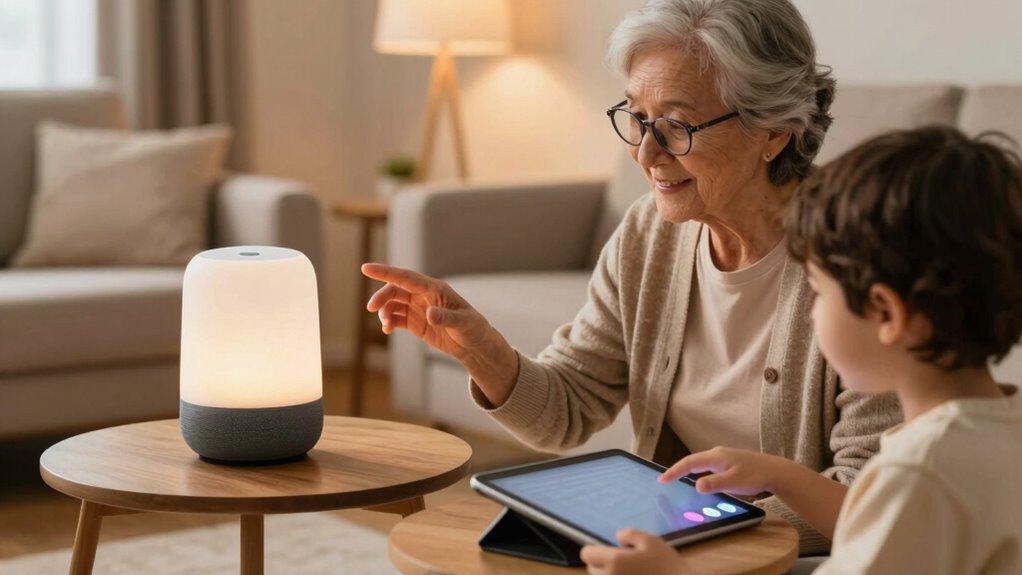

Home assistants support your accessibility in daily life by allowing you to control your smart devices with just your voice. You can turn on lights, adjust the thermostat, or play music effortlessly, which is especially helpful if you have mobility or coordination challenges. They work with many devices, making your routines simpler and more efficient. As technology advances, they become even better at providing independence and convenience. Keep exploring to discover how these tools can transform your everyday experience.

Get home appliances delivered free with Prime
- Fast, free delivery on millions of items
- Prime Video, Amazon Music and more included
- Member-only deals all year
Key Takeaways
- Voice recognition allows users to control devices hands-free, aiding those with mobility or dexterity challenges.
- Integrates with smart home devices to simplify routine tasks and enhance independence.
- Reduces reliance on physical buttons and remotes, making technology more accessible.
- Supports customization to meet individual needs and preferences for better usability.
- Continually advances to improve accuracy, accommodating diverse speech patterns and communication challenges.
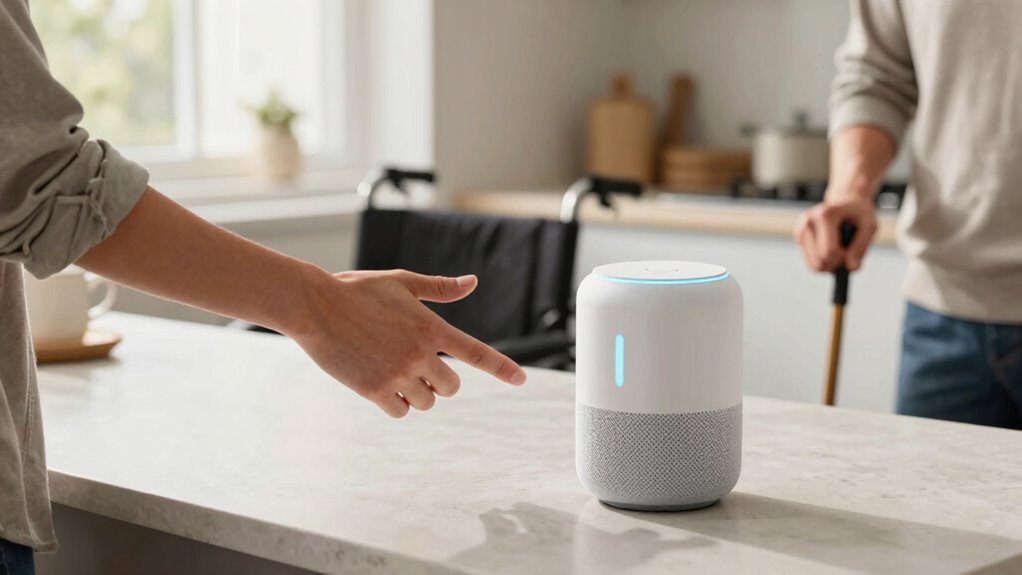
Have you ever wondered how home assistants can make daily life easier for people with disabilities? These devices have become invaluable tools for enhancing independence and improving quality of life. One of the most significant features that support accessibility is voice recognition. With voice recognition technology, you can control your home assistant simply by speaking. This means you don’t need to reach for a device or struggle with tiny buttons; instead, you can give commands naturally and effortlessly. Whether it’s turning on the lights, adjusting the thermostat, or playing your favorite music, voice commands make everyday tasks quicker and less physically demanding. This is especially helpful for individuals with mobility challenges or conditions that limit fine motor skills, giving them more control over their environment without needing assistance. Additionally, voice recognition technology continues to improve, making it more accurate and reliable for users with diverse speech patterns and accents. As accessibility features become more advanced, they further support a broader range of users in overcoming physical barriers. Incorporating adaptive technology can further personalize the experience for users with unique needs, enhancing overall accessibility. Moreover, ongoing advancements in assistive tech ensure that these devices remain adaptable to evolving needs and preferences, further promoting independence. As the technology behind voice recognition advances, it offers even greater potential to support those with speech or communication challenges.
Voice recognition allows effortless control of home devices, helping those with mobility challenges manage their environment independently.
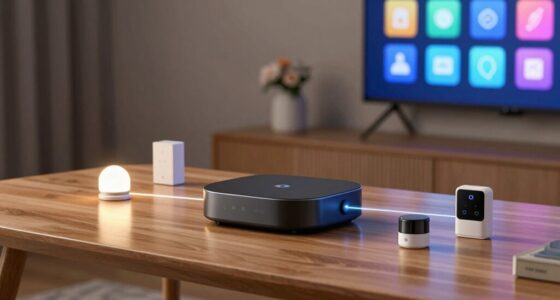
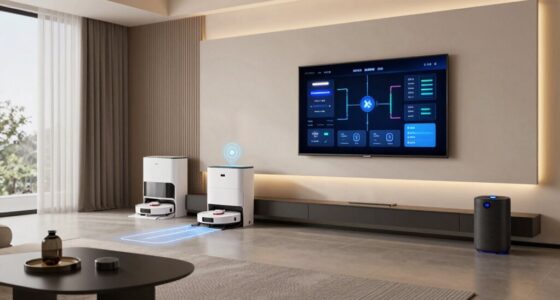
Another key aspect that makes home assistants accessible is device compatibility. These smart devices are designed to work seamlessly with a wide range of smart home products and services. When your home assistant is compatible with your smart lights, door locks, or security cameras, you can manage all these devices through a single interface. This integration simplifies daily routines and reduces the need for multiple remote controls or apps, which can be confusing or overwhelming for some users. Compatibility also means your home assistant can connect with various platforms, ensuring that you can customize your setup to fit your specific needs. For example, if you use a particular brand of smart bulbs or a specific security system, choosing a home assistant that supports those devices ensures smooth operation and reliable performance.
Furthermore, voice recognition and device compatibility work together to create a more inclusive environment. When your voice commands are accurately recognized and your devices respond reliably, you gain independence. You’re not limited by physical constraints or technological barriers—they’re minimized. This combination allows you to perform everyday tasks more efficiently, whether you’re managing household chores, setting reminders, or seeking emergency assistance. It also encourages more social interaction, as you can ask your home assistant questions or for help without feeling overwhelmed.
In essence, these features empower you to take greater control of your environment. Voice recognition turns spoken words into actions, while device compatibility ensures that your home assistant can connect with all the gadgets you need. Together, they transform a simple device into a powerful tool for accessibility, making your daily life more manageable, comfortable, and independent.
voice controlled smart home assistant for accessibility
As an affiliate, we earn on qualifying purchases.
As an affiliate, we earn on qualifying purchases.
Frequently Asked Questions
Can Home Assistants Recognize Voice Commands in Noisy Environments?
Home assistants can often recognize voice commands even in noisy environments, thanks to advanced noise-cancellation technology. They are designed to focus on your voice amidst ambient noise, improving voice clarity. When you speak clearly and directly toward the device, it’s more likely to understand your commands accurately. While high ambient noise can sometimes cause issues, most modern assistants excel at filtering out background sounds to respond effectively.
Are Home Assistants Customizable for Specific Disabilities?
You’ll find that many home assistants are highly customizable for specific disabilities, with features like voice customization making communication easier. Imagine speaking naturally, and your device responding seamlessly, tailored precisely to your needs. These assistants are compatible with various devices, ensuring you can integrate them into your daily routine effortlessly. This flexibility helps create an accessible environment, empowering you to control your home easily and independently, regardless of your unique challenges.
How Secure Is My Personal Data With Home Assistants?
Your personal data with home assistants is generally secure thanks to data encryption and privacy settings. These devices use encryption to protect your information during transmission and storage, reducing unauthorized access risks. You can also customize privacy settings to control what data is shared or stored. However, stay vigilant—regularly update your device software and review privacy options to guarantee your data remains protected.
Do Home Assistants Work Offline for Accessibility Features?
Did you know that around 60% of users want offline functionality in smart devices? Home assistants can support accessibility customization even when offline, but their core features often rely on internet access. Some devices offer limited offline capabilities like voice commands or basic controls, enhancing usability for those with limited connectivity. However, for full accessibility features, a stable internet connection usually remains essential.
Can Home Assistants Read Aloud Text From Images?
Yes, many home assistants can read aloud text from images using features like image to speech and visual recognition. You simply show the device an image, and it analyzes the visual content to extract text. Then, it reads the text aloud for you, helping those with visual impairments or reading difficulties access information more easily. This capability enhances daily life by making visual content more accessible and understandable.
smart home devices compatible with voice control
As an affiliate, we earn on qualifying purchases.
As an affiliate, we earn on qualifying purchases.
Conclusion
Home assistants are like a trusty sidekick, silently making everyday tasks smoother and more manageable. They adapt to your needs, breaking down barriers and opening doors to independence. With just a simple command, you turn obstacles into stepping stones, transforming your living space into a more inclusive sanctuary. As your digital helper, they weave accessibility into the fabric of daily life, ensuring you’re supported every step of the way—your trusted ally in steering the world with ease.
assistive technology home automation devices
As an affiliate, we earn on qualifying purchases.
As an affiliate, we earn on qualifying purchases.
smart lights and thermostats for disabled users
As an affiliate, we earn on qualifying purchases.
As an affiliate, we earn on qualifying purchases.
NFL season / tailgating Picks
team gear
As an affiliate, we earn on qualifying purchases.