TL;DR

Get home appliances delivered free — and shop member deals
- Fast, free delivery on millions of items
- Access to Prime Big Deal Days deals on October 6–7
- Prime Video, Amazon Music and more included
A CNET writer tested Amazon Alexa Plus, Google Gemini for Home and Apple Siri over a couple of months and found Gemini’s temperature estimates were generally closest to observed conditions. Alexa gave the most detail but sometimes overestimated temperatures or forecast rain that did not arrive; Siri had occasional large temperature discrepancies. The test was conducted in one high-desert location, so it does not establish how the assistants perform elsewhere.
A CNET writer’s couple of months of weather checks found that Google Gemini for Home gave the most accurate forecasts among the three voice assistants tested, while Amazon Alexa Plus offered more detail and Apple Siri produced occasional larger temperature errors. The results are a single-location test, not a broad measure of accuracy across regions or weather conditions.
The writer compared Alexa Plus, Gemini for Home and Siri in a high-desert city beneath the Cascade Mountains, where the report says varied local microclimates made forecasting challenging. All three assistants retrieve weather information online, but the writer observed differences in their reported highs and lows, the amount of detail they volunteered and the way they presented forecasts.
Gemini’s high and low estimates were typically within one or two degrees of the temperatures that occurred, according to the report. It sometimes appeared to forecast for the writer’s neighborhood rather than the city overall. The writer said Gemini could undershoot daytime highs, but generally found its concise reports most reliable; its hourly forecast graphics on a Nest Hub were also preferred.
Alexa Plus provided the most information, including details such as wind, air quality and rain chances, but its responses varied and sometimes included inaccurate claims. The writer reported occasional overestimates of highs and lows, a rain forecast that did not come true, and one reading of 99% humidity that appeared inconsistent with the local climate. Siri’s reports were brief, and its estimates usually fell between the other two services, but the writer observed some highs or lows about five degrees off. The report does not identify a precise test count or publish a numerical accuracy score.
Choosing a Useful Forecast at Home
Voice assistants can shape everyday decisions about clothing, commuting and outdoor plans, so differences in temperature accuracy and forecast detail can affect how useful a quick spoken update is. In this test, Gemini’s comparatively close estimates favored users who want a short, dependable summary, while Alexa’s fuller reports may suit people who want more weather details and are willing to check them.
The findings do not establish that one assistant is best for every user or location. Weather forecasts vary by place, forecast provider and conditions, and the test was based on one writer’s observations. The comparison is best read as a practical account of performance in one area, rather than a controlled ranking of the assistants’ overall forecasting systems.
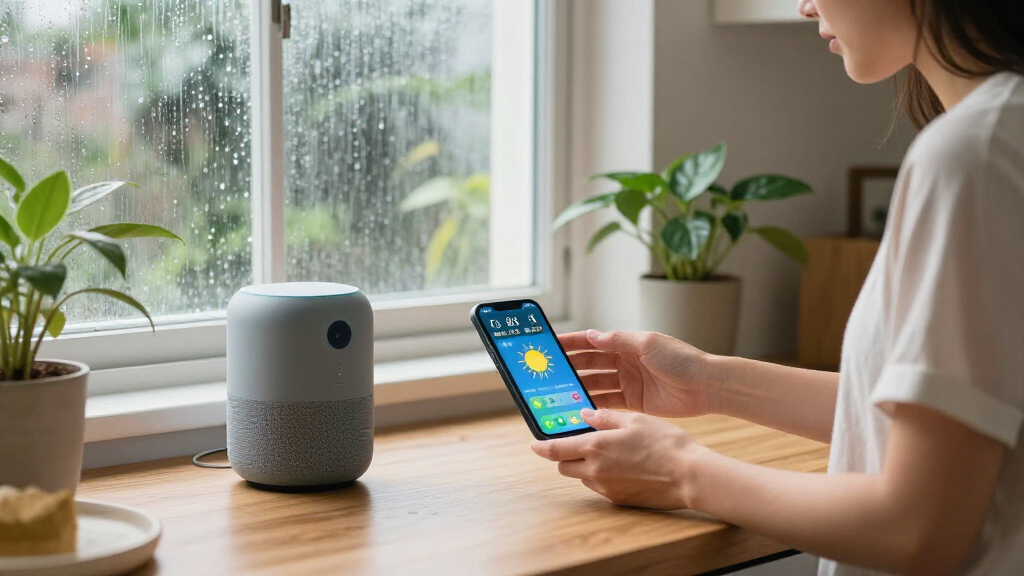
Amazon Alexa weather smart speaker
As an affiliate, we earn on qualifying purchases.
As an affiliate, we earn on qualifying purchases.
A Local Test Across Three Assistants
The CNET report describes daily weather checks over a couple of months in a high-desert community near the Cascade Mountains. The writer chose the area because it has multiple microclimates and said changes to weather stations and forecast funding made it a demanding setting. The source does not provide the city name, exact dates or a full testing protocol.
The services tested were Amazon’s Alexa Plus, Google Gemini for Home, which the report describes as replacing Google Assistant, and Apple’s Siri AI. The comparison considered spoken forecasts and, for Gemini, smart-display visuals. The source says Alexa Plus is included with Amazon Prime or costs around $20 a month without it; subscription terms may vary, and readers should check current pricing with Amazon.
“Gemini proved the most accurate out of the voice assistants.”
— CNET test writer
As an affiliate, we earn on qualifying purchases.
Limits of the Weather Comparison
The report does not state how many forecasts were logged, how accuracy was calculated, which weather-data providers each assistant used, or whether the same location settings were applied consistently. It also does not provide a table of forecast and observed temperatures or a numerical score for each assistant.
Because the results come from one high-desert location, it remains unclear whether Gemini would lead in other climates or during different kinds of weather. The writer also said they could not explain Siri’s occasional temperature readings that differed from the other assistants by about five degrees. The source material does not include a response from Amazon, Google or Apple about those observations.
As an affiliate, we earn on qualifying purchases.
What Users Can Check Locally
The report does not announce a follow-up test or a company response. Readers deciding which assistant to use can compare forecasts against local conditions over time, check the forecast’s location and ask follow-up questions when details such as rain timing matter. The CNET findings may be useful as a starting point, but they do not replace checking a local weather service for time-sensitive plans.
voice assistant weather forecast device
As an affiliate, we earn on qualifying purchases.
As an affiliate, we earn on qualifying purchases.
Key Questions
Which voice assistant was most accurate in the CNET test?
Gemini for Home was the writer’s top pick for accuracy. Its high and low estimates were generally within one or two degrees of observed temperatures in the test location.
Which assistant gave the most weather details?
Alexa Plus provided the most extra information, including items such as wind, air quality and rain chances. The writer also found its reports variable and occasionally inaccurate.
How did Siri perform?
Siri usually gave brief forecasts and estimates that fell between Alexa’s and Gemini’s approaches. The writer reported occasional highs or lows about five degrees off, but did not establish why.
Does the test prove Gemini is most accurate everywhere?
No. The comparison took place in one high-desert location, and the report does not provide a large sample, formal scoring method or results from other regions.
Source: rss
Halloween Picks
halloween
As an affiliate, we earn on qualifying purchases.