The best voice assistant speakers balance reliable voice control, sound quality, and compatibility with the smart-home devices you already own. My best overall pick is the Amazon Echo Dot Max for its room-filling sound and Alexa features, while the Apple HomePod (2025) is a stronger fit for Apple households and the Google Nest Audio suits people who rely on Google Assistant. The main tradeoff is choosing between a platform that works with your devices and a speaker that sounds good in the room where you’ll use it. Compact models save space, but generally give up audio presence and screen-based controls. Read on for the full breakdown and help matching a speaker to your routines.

Get home appliances delivered free — and shop member deals
- Fast, free delivery on millions of items
- Access to Prime Big Deal Days deals on October 6–7
- Prime Video, Amazon Music and more included
Complete the kit
![[Genuine] Waterdrop PF-01A Water Filter Replacement for W...](https://m.media-amazon.com/images/I/41+5tl9EiKL._SX342_SY445_QL70_FMwebp_.jpg)


Key Takeaways
- The Echo Dot Max leads this lineup for all-around use by combining room-filling sound with Alexa, while the smaller Echo Dot is a more space-conscious choice.
- Platform compatibility matters more than a long feature list: amazon.com/dp/B0BFC7WQ6R?tag=theintellihome-20&ascsubtag=dc-1120975″ target=”_blank” rel=”nofollow sponsored noopener”>amazon.com/dp/B0GW4FVR9D?tag=theintellihome-20&ascsubtag=dc-1120975″ target=”_blank” rel=”nofollow sponsored noopener”>Apple HomePod models fit Apple-centered homes, Google Nest speakers suit Google Assistant users, and Echo models are built around Alexa.
- Premium sound and smart-home control are separate buying priorities. The HomePod and larger Google and Amazon speakers suit listening in a main room; compact models are easier to place around the home.
- The Echo Spot offers a distinct bedside role with its clock display, while the other picks focus mainly on speaker-based voice control.
- Home Assistant buyers should compare the Third Reality Dev Edition on purpose, since its preloaded Home Assistant Voice and Music Assistants offer a more hands-on alternative to mainstream Alexa, Siri, and Google setups.
| Third Reality Voice/Music Assistant Dev Edition |  | Best for Home Assistant Tinkerers | Connectivity: Wi-Fi | Compatible device: Home Assistant | Operating system: Linux | VIEW LATEST PRICE | See Our Full Breakdown |
| Amazon Echo Dot Max (newest model), Graphite |  | Best Alexa Speaker for Smart-Home Features | Sound: Room-filling, with nearly 3x the bass of Echo Dot (2022) | Smart-home feature: Built-in smart-home hub | Wi-Fi feature: Extender coverage up to 1,000 sq. ft. | VIEW LATEST PRICE | See Our Full Breakdown |
| Apple HomePod (2nd Generation) Smart Speaker with Siri – Midnight |  | Best Premium Siri Speaker | Mounting type: Tabletop | Color: Midnight | Microphones: 4 | VIEW LATEST PRICE | See Our Full Breakdown |
| Google Nest Mini 2nd Gen Bluetooth Speaker, Brazilian Model, Chalk |  | Best Compact Google Assistant Speaker | Generation: 2nd Gen | Mounting type: Tabletop | Audio output mode: Stereo | VIEW LATEST PRICE | See Our Full Breakdown |
| Apple HomePod (2025) – White |  | Best for Apple-Centered Smart Homes | Color: White | Audio output mode: Stereo | Mounting type: Tabletop | VIEW LATEST PRICE | See Our Full Breakdown |
| Google Nest Mini 2nd Gen Bluetooth Speaker – Charcoal (Renewed) |  | Best Compact Google Assistant Pick | Model: Google Nest Mini 2nd Gen | Color: Charcoal | Connectivity: Bluetooth | VIEW LATEST PRICE | See Our Full Breakdown |
| Amazon Echo Spot (Newest Model), Smart Alarm Clock with Alexa, Black |  | Best Voice Assistant Alarm Clock | Color: Black | Built-in Wi-Fi: Yes | Smart-home control: Yes, for compatible devices | VIEW LATEST PRICE | See Our Full Breakdown |
| Amazon Echo Dot (5th Gen) – Charcoal |  | Best Alexa Value and Smart-Home Utility | Dimensions: 3.9 × 3.9 × 3.5 in. (100 × 100 × 89 mm) | Weight: 10.7 oz (304 g) | Speaker driver: 1.6-inch full-range driver | VIEW LATEST PRICE | See Our Full Breakdown |
| Apple HomePod mini – Space Gray |  | Best Compact Speaker for Apple Households | Color: Space Gray | Audio output mode: Mono | Maximum output power: 20 watts | VIEW LATEST PRICE | See Our Full Breakdown |
| Google Nest Audio Bluetooth Speaker – Chalk |  | Best for Room-Filling Google Assistant Sound | Color: Chalk | Audio output mode: Stereo | Maximum output power: 30 watts | VIEW LATEST PRICE | See Our Full Breakdown |
| Google Audio Bluetooth Speaker – Wireless Music Streaming, Powerful Sound, Assistant Built-in, Wi-Fi and Bluetooth Connectivity, Smart Home Control, Stereo Pairing (Charcoal) | 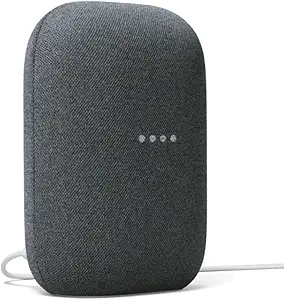 | Best for Room-Filling Google Assistant Audio | Speaker type: Smart speaker | Assistant: Google Assistant | Connectivity: Wi-Fi and Bluetooth | VIEW LATEST PRICE | See Our Full Breakdown |
| voice assistant speaker | Connectivity | Color |
|---|---|---|
| Third Reality Voice/Music Assi | Wi-Fi | — |
| Amazon Echo Dot Max | — | — |
| Apple HomePod | Wireless | Midnight |
| Google Nest Mini 2nd Gen Bluet | — | — |
| Apple HomePod | Bluetooth | White |
| Google Nest Mini 2nd Gen Bluet | Bluetooth | Charcoal |
| Amazon Echo Spot | — | Black |
| Amazon Echo Dot | — | — |
| Apple HomePod mini | Bluetooth and Wi-Fi | Space Gray |
| Google Nest Audio Bluetooth Sp | Bluetooth and Wi-Fi | Chalk |
| Google Audio Bluetooth Speaker | Wi-Fi and Bluetooth | Charcoal |
More Details on Our Top Picks
Third Reality Voice/Music Assistant Dev Edition
I’d pick the Third Reality Dev Edition for a different reason than I’d choose a mainstream Alexa or Siri speaker: it is a small, Linux-based endpoint for people building a Home Assistant voice setup. Its assistants are preloaded, and firmware flashing and on-device debugging give hobbyists room to adapt the device rather than treat it as a sealed appliance. That makes it more flexible for distributed smart-home projects than the Echo Dot Max, which puts more emphasis on ready-made features and room-filling sound.
The tradeoff is that this is not the strongest choice for casual music listening. The 3W speaker suits voice responses and smaller spaces, but is unlikely to fill a large room. Wi-Fi is its only listed connection, and setup calls for comfort with Linux and smart-home systems. I’d skip it if I wanted a polished, plug-and-play assistant.
Pros:- Preloaded Home Assistant voice and music assistants reduce initial setup work
- Compact cube design suits distributed voice endpoints around the home
- Firmware flashing and on-device debugging support custom development
Cons:- The 3W built-in speaker is limited for music and larger rooms
- Linux and smart-home familiarity may be needed to configure and maintain it
- Wi-Fi-only connectivity excludes Bluetooth pairing
Best for: Home Assistant enthusiasts who want a compact, hackable voice and audio endpoint for a connected home
Not ideal for: People who want a simple, polished speaker for room-filling music or who are not comfortable configuring Linux-based smart-home devices
- Connectivity:Wi-Fi
- Compatible device:Home Assistant
- Operating system:Linux
- Memory:256MB RAM
- Storage:512MB
- Dimensions:2.56 x 2.56 x 2.56 inches
- Control method:Voice control
Our verdict“Choose this compact dev-focused speaker for a customizable Home Assistant setup, not as your main room-filling music speaker.”
Amazon Echo Dot Max (newest model), Graphite
The Echo Dot Max is the strongest all-round Alexa pick here for buyers who want their speaker to do more than answer questions. Its room-filling sound and nearly 3x the bass of the Echo Dot (2022) give music more weight, while the built-in smart-home hub and Wi-Fi extender can reduce the need for separate equipment. Compared with the Third Reality Dev Edition, it is much more focused on everyday convenience than customization or firmware development.
That feature set comes with a larger footprint, so I’d be less inclined to choose it for a cramped nightstand or shelf. It also relies on Wi-Fi for its full feature set, and buyers who only need basic Alexa voice control may find the standard Echo Dot a better fit. The microphone-disable button and privacy controls add welcome control, but this remains a connected speaker built around Amazon’s ecosystem.
Pros:- Room-filling sound with nearly 3x the bass of the Echo Dot (2022)
- Built-in smart-home hub supports compatible connected devices
- Wi-Fi extender can extend coverage by up to 1,000 square feet
- Microphone-disable button and additional privacy controls
Cons:- Bulkier than compact options such as the Google Nest Mini
- Full functionality depends on a Wi-Fi connection
- Extra hub and extender features may be unnecessary for buyers seeking a basic assistant speaker
Best for: Alexa households that want stronger bass, built-in smart-home control, and extra Wi-Fi coverage from one speaker
Not ideal for: Buyers with very limited shelf space or anyone who only needs basic voice commands without the extra connected-home features
- Sound:Room-filling, with nearly 3x the bass of Echo Dot (2022)
- Smart-home feature:Built-in smart-home hub
- Wi-Fi feature:Extender coverage up to 1,000 sq. ft.
- Technology:Omnisense
- Assistant support:Alexa+ support
- Compatible services:Amazon Music, Apple Music, Spotify, SiriusXM, and Fire TV
- Privacy:Microphone enable/disable button and multiple privacy controls
Our verdict“Pick the Echo Dot Max if you want an Alexa speaker that combines fuller sound with smart-home and Wi-Fi features.”
Apple HomePod (2nd Generation) Smart Speaker with Siri – Midnight
For Apple households that put music quality first, the HomePod (2nd Generation) is the premium Siri option in this group. Its 4-inch woofer, five beamforming tweeters, and room sensing are geared toward fuller, more tailored playback than the compact Google Nest Mini. It also supports stereo pairing, which gives Apple users a way to build a more substantial listening setup without replacing their voice-assistant platform.
The tradeoff is ecosystem reach: this pick makes more sense when Apple devices and services already anchor the home. The Echo Dot Max offers a built-in smart-home hub and Wi-Fi extender, features not listed for this HomePod, while the HomePod’s appeal centers on audio and Siri integration. At 7.5 pounds, it is also better treated as a stationary tabletop speaker than a portable one. I’d skip it if cross-platform compatibility is a priority.
Pros:- 4-inch woofer and five beamforming tweeters target detailed, full-bodied sound
- Room sensing adapts playback to the speaker’s surroundings
- Siri voice control and smart-home integration suit Apple-centered homes
- Multiple HomePods can be linked for stereo sound
Cons:- Apple ecosystem focus limits its appeal in mixed-platform smart homes
- At 7.5 pounds, it is heavy for frequent repositioning
- The listed battery requirement may complicate ownership; confirm power details before purchase
Best for: Apple households seeking a premium Siri speaker for music, smart-home control, and stereo pairing
Not ideal for: People who want broad compatibility across smart-home platforms or a lightweight speaker they can move around often
- Mounting type:Tabletop
- Color:Midnight
- Microphones:4
- Maximum output power:38 watts
- Weight:7.5 pounds
- Connectivity:Wireless
- Warranty:Limited
Our verdict“Choose this HomePod for premium sound and Siri in an Apple-led home, and look elsewhere if you need broad platform flexibility.”
Google Nest Mini 2nd Gen Bluetooth Speaker, Brazilian Model, Chalk
The Google Nest Mini 2nd Gen is the compact pick for people who want Google Assistant close at hand without giving a shelf much space. Its small design and deeper bass than the earlier Mini make it a practical fit for a desk, bedside table, or secondary room, while voice personalization and multi-language support help it work for households with different preferences. Compared with the Echo Dot Max, it gives up room-filling output and extra hub features in exchange for a simpler, smaller presence.
I’d choose it for voice requests, smart-home routines, and casual listening rather than as the main speaker for a large room. It needs a power outlet, and its listed Bluetooth feature does not make it a standalone portable option. The product data also lists this as a Brazilian model, so I’d check regional language and service compatibility before buying. It is not waterproof, which rules out exposed outdoor use.
Pros:- Compact footprint fits small rooms and crowded surfaces
- Deeper bass improves casual listening over the earlier Nest Mini
- Google Assistant supports smart-home automation and personalized updates
- Multi-language support can suit households with varied language preferences
Cons:- Corded power means it is not a portable speaker
- Not waterproof, so it is unsuitable for exposed outdoor placement
- A Brazilian model may require buyers to verify regional language and service compatibility
Best for: Google Assistant users who need a small, corded speaker for a desk, bedside table, or secondary room
Not ideal for: Listeners seeking powerful room-filling audio, a battery-powered speaker, or an option for outdoor or wet areas
- Generation:2nd Gen
- Mounting type:Tabletop
- Audio output mode:Stereo
- Connectivity feature:Bluetooth
- Control method:Voice
- Power source:Corded electric
- Waterproof:No
- Color listed in specifications:Charcoal
Our verdict“Choose the Nest Mini for compact Google Assistant access in a small indoor space, not for powerful or portable listening.”
Apple HomePod (2025) – White
The Apple HomePod (2025) is a strong match for buyers who want Siri and high-fidelity sound in the same tabletop speaker. Its listed 32.7 Hz frequency response points to deep bass, while the product description highlights clear vocals and privacy protections. Like the HomePod (2nd Generation), it is aimed at Apple households rather than people seeking an assistant that works equally well across ecosystems; this model’s listing also emphasizes the Siri and smart-home experience without supplying the earlier HomePod’s woofer and tweeter details.
At 7.5 pounds and more than five inches wide, it is not a portable pick despite the product data calling it a portable speaker. The listing names Bluetooth, but does not specify broader compatibility or battery operation, so I would treat it as a fixed tabletop speaker unless those details are confirmed. Compared with the Google Nest Mini, it favors richer audio and Apple integration over a compact, easy-to-place design.
Pros:- High-fidelity sound is described with deep bass and clear vocals
- Siri voice control fits naturally into Apple-centered homes
- Smart-home integration and privacy protections are highlighted
- Listed frequency response reaches 32.7 Hz
Cons:- Apple ecosystem focus can limit usefulness in mixed-platform homes
- At 7.5 pounds, it is cumbersome to move regularly
- The listing does not specify battery operation despite describing it as portable
Best for: Apple users who want a substantial tabletop speaker for Siri, music playback, and connected-home control
Not ideal for: Shoppers outside the Apple ecosystem or anyone seeking a lightweight, battery-powered speaker for portable use
- Color:White
- Audio output mode:Stereo
- Mounting type:Tabletop
- Power:38 watts
- Frequency response:32.7 Hz
- Dimensions:5.6 x 5.6 x 6.6 inches
- Weight:7.5 pounds
- Connectivity:Bluetooth
Our verdict“Choose this HomePod for Siri and full-bodied sound in an Apple home, but not if portability or cross-platform flexibility matters most.”
Google Nest Mini 2nd Gen Bluetooth Speaker – Charcoal (Renewed)
The Google Nest Mini 2nd Gen suits buyers who want Google Assistant and basic smart-home control in a speaker that takes up very little room. Its Voice Match support can tailor some responses to the person speaking, while the compact design fits naturally on a desk or bedside table. Compared with the larger Google Nest Audio, it gives up fuller, room-filling sound; its advantage is a smaller footprint for voice commands, updates, and casual listening. The renewed condition adds another tradeoff: cosmetic wear may be present, and the listed warranty is limited to 90 days. It also needs a nearby outlet and is not waterproof, so it is a home speaker rather than a portable or outdoor option. I’d choose it for assistant convenience over music performance.
Pros:- Compact design fits easily on small surfaces.
- Voice Match enables personalized interactions.
- Voice control supports smart-home commands and daily updates.
- Deeper bass is an improvement over a purely voice-focused mini speaker.
Cons:- Needs a power outlet and is not portable.
- Not waterproof, limiting placement to indoor spaces.
- Renewed unit may have cosmetic imperfections and has a 90-day limited warranty.
Best for: Google Assistant users furnishing a desk, bedside table, or small room who prioritize voice control over powerful music playback.
Not ideal for: Listeners seeking fuller sound for a large room, outdoor use, or a new product with a longer warranty.
- Model:Google Nest Mini 2nd Gen
- Color:Charcoal
- Connectivity:Bluetooth
- Maximum output power:15 watts
- Weight:0.45 kg
- Power source:Corded electric
- Waterproof:No
- Warranty:90-day limited
Our verdict“Choose this renewed Nest Mini for compact Google Assistant access in a small indoor space, but pick the Nest Audio if music quality matters more.”
Amazon Echo Spot (Newest Model), Smart Alarm Clock with Alexa, Black
The Amazon Echo Spot is the most schedule-focused choice here: its customizable clock display puts alarms and routines where you can see them, while Alexa handles voice requests and compatible smart-home controls. Its reported clear vocals and deep bass make it more capable for bedside listening than a basic clock speaker. Unlike the screen-free Echo Dot (5th Gen), the Spot gives you a visual interface, but its small display is less suited to viewing information from across a room. It also adds an eero Wi-Fi extender feature with coverage listed up to 1,000 square feet; that extra function is useful only for compatible setups and should not be the main reason to buy it. Full functionality depends on Wi-Fi, and smart-home control is limited to compatible devices.
Pros:- Customizable clock faces and display make it useful as a bedside alarm clock.
- Clear vocals and deep bass suit casual music and spoken audio.
- Alexa supports routines, music, and compatible smart-home devices.
- Includes a microphone-off button and in-app privacy controls.
Cons:- Small screen may be hard to read from farther away.
- Full functionality requires Wi-Fi.
- Smart-home controls work only with compatible devices.
Best for: Alexa users who want a bedside clock with visible time, customizable display options, alarms, and voice-controlled routines.
Not ideal for: Buyers who want a larger screen, offline voice features, or a speaker focused purely on music rather than clock functions.
- Color:Black
- Built-in Wi-Fi:Yes
- Smart-home control:Yes, for compatible devices
- Speaker description:Big, vibrant sound with clear vocals and deep bass
- Materials:36% recycled materials
- Privacy features:Microphone-off button and in-app privacy controls
- eero built-in coverage:Up to 1,000 sq. ft.
Our verdict“Pick the Echo Spot if you want Alexa and a visible bedside clock in one device; choose the Echo Dot if you prefer a screen-free speaker.”
Amazon Echo Dot (5th Gen) – Charcoal
The Echo Dot (5th Gen) is the practical Alexa pick for buyers who want a compact speaker that can do more than answer questions. Its built-in motion and temperature sensors can support routines, giving it an automation advantage over the screen-free Google Nest Mini, whose listed features center more on voice interaction. Multi-room pairing is available, and eero built-in can extend compatible home networks, though the listed coverage and speed depend on the environment. The 1.6-inch full-range driver and compact body make it better suited to everyday listening than demanding room-filling playback. Unlike the Echo Spot, it has no display, so it is less helpful if you want a visible clock or glanceable information. Bluetooth remote-control compatibility also has limits.
Pros:- Compact dimensions suit desks, shelves, and bedside tables.
- Motion and temperature sensors can trigger smart-home routines.
- Supports multi-room audio pairing.
- Includes Alexa privacy controls and an eero built-in feature.
Cons:- No display for clock faces or glanceable information, unlike the Echo Spot.
- eero performance can vary with the home environment.
- Bluetooth remote control requires PIN support that some devices lack.
Best for: Alexa households wanting a small everyday speaker with sensors for routines, multi-room audio support, and an optional eero extension feature.
Not ideal for: Buyers who want a display, dependable Wi-Fi extension regardless of home layout, or Bluetooth remote control with any device.
- Dimensions:3.9 × 3.9 × 3.5 in. (100 × 100 × 89 mm)
- Weight:10.7 oz (304 g)
- Speaker driver:1.6-inch full-range driver
- Audio bandwidth:62 Hz–19 kHz
- Wi-Fi:Dual-band 802.11a/b/g/n/ac, 2.4 and 5 GHz
- Bluetooth:Low Energy Mesh, Matter, A2DP, AVRCP
- eero built-in:Up to 1,000 sq. ft.; speeds up to 100 Mbps
- Privacy features:Microphone-off button and multiple privacy controls
Our verdict“Choose the Echo Dot for compact Alexa control and sensor-based routines, but opt for the Echo Spot if a visible bedside display is a priority.”
Apple HomePod mini – Space Gray
The Apple HomePod mini makes the most sense for people already using Apple devices who want Siri and music playback in a small speaker. Its rich, compact sound gives it a stronger music-first case than the Nest Mini, while Siri voice control and Apple integration keep common requests and compatible smart-home tasks close at hand. That ecosystem fit is also its main limitation: buyers outside Apple’s world may find the Echo Dot (5th Gen) a more flexible match for Alexa routines and its listed sensors. The HomePod mini is not water resistant, so it belongs indoors, and the supplied data lists battery power as required without clarifying the battery arrangement. I’d favor it for an Apple-centered room, not as a universal assistant speaker.
Pros:- Rich sound in a compact form.
- Siri provides hands-free voice control.
- Integrates closely with Apple devices.
- Privacy and security features are part of its appeal.
Cons:- Less compelling for households that do not use Apple devices.
- Not water resistant.
- Provided product data lists batteries as required but does not clarify the power arrangement.
Best for: Apple-device owners who want a compact Siri speaker for music, hands-free requests, and compatible smart-home control.
Not ideal for: Households centered on Android or Alexa, or anyone who needs a water-resistant or clearly portable speaker.
- Color:Space Gray
- Audio output mode:Mono
- Maximum output power:20 watts
- Connectivity:Bluetooth and Wi-Fi
- Weight:1.4 lb
- Water resistance:Not water resistant
- Voice assistant:Siri
Our verdict“Choose the HomePod mini for a compact Siri speaker in an Apple household, while Alexa users will likely find the Echo Dot a better ecosystem fit.”
Google Nest Audio Bluetooth Speaker – Chalk
The Google Nest Audio is the sound-first Google Assistant choice in this group. Its listed 30-watt output and woofer-and-tweeter setup give it a better fit for filling a room with music than the compact Nest Mini, which is more about convenient voice access in tight spaces. Google Assistant handles hands-free requests and smart-home control, while Wi-Fi and Bluetooth offer more than one way to stream. The tradeoff is size and placement: this is a shelf speaker, not a pocketable device, and it is not waterproof. Its plastic enclosure may also be less appealing to buyers seeking premium-looking materials. Compared with the Apple HomePod mini, the Nest Audio takes up more room but is positioned around a larger speaker format and Google’s assistant ecosystem.
Pros:- 30-watt output and woofer-and-tweeter design suit room-filling listening.
- Google Assistant enables hands-free control of music and smart-home devices.
- Wi-Fi and Bluetooth support streaming from compatible devices.
- Can pair with other Nest speakers for stereo or multi-room audio.
Cons:- Larger shelf-focused format is less suited to small surfaces than the Nest Mini.
- Not waterproof, so it is intended for indoor use.
- Plastic enclosure may not suit buyers seeking more premium materials.
Best for: Google Assistant users who want a shelf speaker for stronger music playback, voice control, and compatible multi-room or stereo setups.
Not ideal for: People with very limited shelf space, outdoor listening needs, or a preference for a compact speaker with a non-plastic enclosure.
- Color:Chalk
- Audio output mode:Stereo
- Maximum output power:30 watts
- Speaker type:Woofer
- Connectivity:Bluetooth and Wi-Fi
- Mounting type:Shelf
- Dimensions:3.07 × 4.89 × 6.89 in.
- Waterproof:No
Our verdict“Choose the Nest Audio if stronger Google Assistant speaker sound matters more than compact size; the Nest Mini is the better fit for tight spaces.”
Google Audio Bluetooth Speaker – Wireless Music Streaming, Powerful Sound, Assistant Built-in, Wi-Fi and Bluetooth Connectivity, Smart Home Control, Stereo Pairing (Charcoal)
I’d choose the Google Audio when voice control needs to share the room with music, rather than merely handle quick questions from a bedside table. Its 3-inch woofer and 0.7-inch tweeter are a stronger fit for fuller playback than the compact Google Nest Mini, while built-in Google Assistant and Wi-Fi and Bluetooth streaming cover smart-home commands and flexible listening. Stereo pairing can broaden the sound further with a second compatible speaker. The tradeoff is size and placement: this is a corded indoor speaker, not a portable or weather-ready option, and the product information gives no battery-powered listening option. Compared with the Google Nest Audio, this model’s appeal is its stated stereo pairing and Bluetooth connectivity; buyers should still weigh both against their preferred room setup and sound needs.
Pros:- 3-inch woofer and 0.7-inch tweeter are designed for deeper bass and clear highs than a small voice-first speaker.
- Built-in Google Assistant supports voice control and smart-home commands.
- Wi-Fi and Bluetooth provide two wireless streaming options.
- Stereo pairing can expand playback across a room.
Cons:- No waterproof rating, so it is not suited to outdoor or wet-room use.
- Corded power limits placement and rules out battery-powered listening.
- Its larger sound-focused format may be more than buyers need for basic voice commands.
Best for: Google Assistant users who want a shelf speaker for indoor music, smart-home voice control, and the option to pair a second speaker for wider stereo sound.
Not ideal for: People who need a portable speaker for patios, bathrooms, or travel, or buyers seeking a compact speaker for a tight bedside space.
- Speaker type:Smart speaker
- Assistant:Google Assistant
- Connectivity:Wi-Fi and Bluetooth
- Woofer:3 inches
- Tweeter:0.7 inches
- Audio output mode:Stereo
- Power source:Corded electric
- Mounting type:Shelf
- Color:Charcoal
Our verdict“Choose the Google Audio if you want a Google Assistant speaker geared toward indoor music and stereo pairing, but skip it if portability or water resistance matters.”
How We Picked
I compared these speakers around the decisions that shape daily use: voice-assistant platform, sound for the intended room, physical format, and setup expectations. I also looked at whether a model offers a clear purpose beyond basic voice commands, such as the Echo Spot’s clock display or the Third Reality speaker’s Home Assistant focus. These differences matter because a speaker can be capable on paper yet a poor match for a household’s phones, services, or smart-home devices.
The ranking favors versatile picks with a clear fit for many buyers, then places more specialized, compact, or platform-dependent options where their tradeoffs are easier to judge. A strong sound profile does not automatically make a device the right choice if its assistant is not the one a buyer wants. I also accounted for listing-specific details: the Google Nest Mini offered as a Brazilian model and the renewed Charcoal version are not interchangeable listings, so buyers should check model and condition details before choosing.
| voice assistant speaker | Connectivity | Color |
|---|---|---|
| Third Reality Voice/Music Assi | Wi-Fi | — |
| Amazon Echo Dot Max | — | — |
| Apple HomePod | Wireless | Midnight |
| Google Nest Mini 2nd Gen Bluet | — | — |
| Apple HomePod | Bluetooth | White |
| Google Nest Mini 2nd Gen Bluet | Bluetooth | Charcoal |
| Amazon Echo Spot | — | Black |
| Amazon Echo Dot | — | — |
| Apple HomePod mini | Bluetooth and Wi-Fi | Space Gray |
| Google Nest Audio Bluetooth Sp | Bluetooth and Wi-Fi | Chalk |
| Google Audio Bluetooth Speaker | Wi-Fi and Bluetooth | Charcoal |
Factors to Consider When Choosing Best Voice Assistant Speakers
Before choosing a speaker, I’d start with the routines and devices it needs to serve. The following factors can prevent common mismatches that product features alone do not make obvious.
Match the assistant to your existing devices
Choose the voice assistant you already use on your phone or in your home where possible. That can make everyday requests, shared household controls, and device setup feel more consistent. Before buying, check whether the specific smart plugs, lights, thermostats, and music services you use support that assistant. A speaker with excellent sound may still be inconvenient if it cannot control a key device in your home. If household members use different phone platforms, prioritize the services and controls everyone needs rather than assuming one ecosystem will suit all.
Choose sound for the room, not just the spec sheet
Think about where the speaker will sit and what you expect it to do there. A bedroom speaker used for alarms and short voice commands has different demands from a living-room device expected to fill a larger space with music. Compact speakers are easier to position, but a smaller footprint can mean less presence when playing music across a room. A larger model may make more sense as a main listening speaker, though it takes up more space. Avoid buying solely on a claim about bass or loudness; room size, placement, and listening habits all affect whether the difference will matter to you.
Decide whether a display helps your routine
A screen can make time, alarms, and glanceable information easier to check without asking aloud. That advantage is especially relevant for bedside use, where a clock display can replace a separate device. A screen also adds another element to consider when choosing where the speaker belongs and how you prefer to interact. If you mostly use voice commands or stream audio, a display may add little to your routine. Choose the form factor around actual tasks, not the assumption that more interfaces always mean a better speaker.
Check setup demands and maintenance before buying
Most mainstream speakers are designed around an app-based setup, but the account and ecosystem they require can shape the experience. A specialist option built around Home Assistant may appeal to people who want more control, yet it can call for more familiarity than a plug-in-and-ask setup. Confirm whether you are comfortable managing the relevant app, network connection, and account permissions. If you are buying a renewed or region-specific listing, check condition, model generation, and compatibility details rather than relying on the product family name alone. Those checks can prevent a speaker from arriving as the wrong fit for your setup.
Spend more only when the difference solves a real problem
A larger or more premium speaker earns its place when you will use its stronger audio in a main room or want it to serve as a central household device. For an alarm, occasional timer, or basic voice command, a compact model may cover the job without taking up as much space. Consider how often the speaker will play music and whether sound quality is a priority for more than one person in the home. Do not pay for capabilities tied to an assistant you do not plan to use. The right choice is the one whose advantages match your daily use, not simply the model with the broadest feature set.
Plan for household placement and privacy
One speaker rarely serves every room equally well, so think about where people will ask questions, set timers, or listen to audio. A compact model can be easier to place in a kitchen or bedroom, while a larger speaker may suit a shared living area. Voice assistants rely on microphones, so review the device’s available microphone controls and household settings before putting one in a private space. If multiple people will use it, check how the platform handles voice profiles, shared services, and personal requests. These choices affect comfort and day-to-day usefulness as much as speaker performance does.
Frequently Asked Questions
Should I choose Alexa, Siri, or Google Assistant if I use more than one phone platform?
Start with the assistant connected to the smart-home devices and services you use most often, rather than the phone you happen to use for setup. Check support for your key devices and music services before committing, since ecosystem compatibility varies. If the household is split, list the tasks everyone needs—such as timers, music, and lighting—and compare how each assistant handles those tasks. The Echo models center on Alexa, the HomePod models on Siri, and the Nest speakers on Google Assistant. A mixed-platform home may need to accept some differences in controls instead of expecting one speaker to work identically for everyone.
Is a compact speaker enough for music, or should I choose a larger model?
A compact speaker can be a sensible music choice for a bedroom, desk, or kitchen where listening is usually casual. A larger speaker is a better match when you want sound to carry through a shared room or expect music to be a central use. Think about room size, listening distance, and how often you play music before prioritizing footprint. If voice control and alarms matter more than room-filling playback, a small model may be the better fit. For a main listening space, compare the larger options in this roundup rather than assuming every speaker will sound equally substantial.
Does the Echo Spot make sense if I already own a bedside clock?
The Echo Spot is most appealing when you want Alexa and a visible clock in one bedside device. If your current clock already handles time and alarms well, its display may not add enough to justify choosing it over a speaker focused on audio. Consider whether you will use voice requests from bed, such as setting timers or controlling compatible smart-home devices. Also think about whether a visible display suits your bedroom routine. Buyers who mainly want music may prefer a speaker whose design and sound are the priority rather than its clock function.
What should I check before buying a renewed or regional Google Nest Mini listing?
Confirm the exact model generation, listing condition, and region details before ordering. A renewed unit is not the same listing as a standard new product, so check the seller’s stated condition and what is included. For the Brazilian-model Nest Mini, verify that the language, services, and setup options suit your location and household. Also confirm that it is the Google Assistant speaker you want, rather than assuming similar product names imply identical listings. If you prefer to avoid those variables, compare the other Google speakers in this lineup.
Is the Third Reality Home Assistant speaker a good first voice assistant speaker?
It can suit a buyer who specifically wants to explore Home Assistant Voice and Music Assistants, but it is a less straightforward pick for someone seeking a familiar mainstream setup. Its preloaded software and dual microphones give it a distinct purpose, yet that focus may ask more of a buyer than a typical Alexa, Siri, or Google speaker. Before choosing it, check that its Home Assistant approach fits your existing devices and comfort with setup. If your priority is simple everyday voice control, a mainstream model is the safer starting point. If you want a speaker aligned with a Home Assistant setup, this option deserves a closer look.
Conclusion
For most households, I’d start with the Amazon Echo Dot Max as the best overall: it pairs Alexa with room-filling sound, making it a flexible main-room choice. The Amazon Echo Dot (5th Gen) is my value-minded pick for buyers who want a smaller Alexa speaker for everyday voice tasks, while the Apple HomePod (2025) is the best premium fit for Apple-centered homes. For beginners, I’d point to the Google Nest Mini if Google Assistant is already part of the household’s routine; check the listing carefully, since this roundup includes both a Brazilian model and a renewed version. For specific needs, choose the Echo Spot for bedside clock functionality, the Third Reality Dev Edition for Home Assistant users, or a HomePod mini for compact Apple smart-home control. The best choice is the one that fits your assistant ecosystem and room before you weigh extra features.
Fall yard work Picks
leaf blowers
As an affiliate, we earn on qualifying purchases.