Choosing the best cell culture plates involves balancing quality, size options, and cost. The 4E’s USA 6 Well Cell Culture Plate stands out as the overall top pick due to its reliable tissue culture treatment and sterility, ideal for most research needs. For those seeking affordability without sacrificing performance, the 96 Well Culture Plate with Lid offers excellent value for high-throughput experiments. Meanwhile, the Diamond SureGro 6-Well Plate provides a sterile, individually wrapped option for added convenience and contamination control. Buyers face tradeoffs between well size, treatment type, and packaging—more premium options often deliver greater durability and treatment consistency but come at a higher price. Keep reading for a detailed breakdown of each option to help find your best fit.




More Details on Our Top Picks
4E’s USA 6 Well Cell Culture Plate with Lid, Tissue Culture Treated, Sterile, Pack of 5
This 6-well plate set stands out for its combination of sterility, tissue culture treatment, and high clarity, making it a reliable choice for a variety of cell culture experiments. Compared with larger well plates like the 24-well options, these are better suited for smaller-scale studies or when precise observation of cell morphology is needed. While the limited well count per plate means you may need multiple plates for larger experiments, the pack of five offers notable cost savings. The non-pyrogenic, RNase/DNase-free surface ensures cell integrity, but the absence of specific material or brand details leaves some questions about long-term durability. This pick makes the most sense for labs seeking a balance of safety, clarity, and affordability in small to medium-scale research.
Pros:- Sterile and free from RNase/DNase contamination
- High clarity plastic for easy cell observation
- Tissue culture-treated surface promotes cell adhesion
- Pack of 5 plates offers good value
Cons:- Limited to 6 wells per plate, may require multiple plates for larger studies
- Lack of detailed material specifications or brand quality info
Best for: Researchers who need a reliable, sterile, and affordable option for small-scale cell culture experiments
Not ideal for: Large-scale experiments requiring many wells, or labs needing detailed material specifications for regulatory compliance
- Number of Plates:5
- Well Count:6 wells per plate
- Sterility:Sterile
- Treatment:Tissue Culture Treated
- Material:High clarity plastic
- Pyrogenic:Non-Pyrogenic
- RNase/DNase Free:Yes
Bottom line: This plate is ideal for small to medium labs prioritizing safety, clarity, and value in cell culture work.
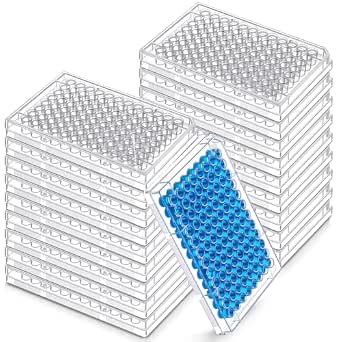
96 Well Culture Plate with Lid – Flat Bottom, Individual Pack (Pack of 10)
This 96-well plate is designed for high-throughput assays, with a focus on clarity and convenience. Its transparent PS material provides excellent observation conditions, similar to the 24-well plates like the SOLUSTRE 24 Well Plates, but with far greater sample capacity. The individual packaging with lids enhances ease of use and minimizes contamination risks. Although specific well dimensions aren’t provided, its design supports tissue adhesion and compatibility with automated systems. The absence of detailed compatibility info and cost per plate makes it less ideal for budget-conscious labs. Overall, this plate makes the most sense for labs performing large numbers of small-volume experiments requiring precise optical clarity and individual handling.
Pros:- High-quality transparent PS for clear observation
- Designed for effective tissue adhesion and compatibility
- Individually packaged for convenience and contamination prevention
- Ventilation features help reduce evaporation
Cons:- Lack of specific well dimension info
- Price per plate not specified, affecting budget planning
Best for: High-throughput laboratories needing multiple small-volume experiments with clear visualization
Not ideal for: Labs requiring detailed specifications for specialized instruments or clinical-grade applications
- Material:High-quality PS
- Number of Wells:96
- Bottom Type:Flat
- Packaging:Individual pack with lid
- Gamma Irradiated:Yes
- Pack Size:10
Bottom line: This plate is best suited for high-throughput screening where observation and individual sample handling are priorities.
SOLUSTRE 2 Pack 24 Well Cell Culture Plates with Lid, Clear Polystyrene Tissue Culture Trays for Laboratory Research
Compared with the 24-well plates like the Celltreat 24 Well Plates, the SOLUSTRE 24 Well Plates excel in optical clarity and chemical resistance, making them ideal for detailed microscopic analysis. The inclusion of two plates and lids facilitates efficient workflow, but the relatively limited well capacity and potential for deep wells may restrict certain applications. These plates are suited for precise cell assays, tissue culture, and biological sample analysis where optical transparency matters most. However, they lack explicit sterilization features and may not meet clinical standards. This choice makes the most sense for researchers needing consistent, clear imaging in a compact format.
Pros:- High optical clarity for easy observation
- Chemical resistant and durable material
- Includes two plates for efficient workflows
- Compact design maximizes space
Cons:- Limited to laboratory use, not clinical
- No explicit sterilization info
- Deep wells may complicate some procedures
Best for: Laboratories focused on microscopy and detailed biological analysis requiring high optical clarity
Not ideal for: Clinical laboratories or large-scale production environments needing sterilization or regulatory compliance
- Number of wells:24 per plate
- Material:Polystyrene
- Dimensions:4.92 x 3.34 inches
- Item weight:4.5 ounces
- Package:2 plates
- Lid included:Yes
Bottom line: This plate is ideal for research settings where optical clarity and reproducibility are essential for detailed cell imaging.
12-Well Tissue Culture Plate – Pack of 10 with Lid, Flat Bottom Wells
Designed for medium-scale experiments, this 12-well set emphasizes evaporation control with condensation rings and vent holes, similar to the 24-well plates but with fewer wells. The flat bottom wells and marked wells aid in sample identification and microscopic observation, making it suitable for routine cell culture and biological assays. The gamma irradiation ensures sterility, but the limited well volume (6.9 ml) and capacity restrict larger or more complex experiments. Customer feedback suggests mixed satisfaction, partly due to compatibility issues with some lab devices. This plate is most appropriate for labs needing reliable, sterile 12-well plates for repetitive, consistent experiments.
Pros:- High transparency for clear observation
- Includes lids to prevent contamination
- Designed to reduce evaporation and condensation
- Marked wells for easy identification
Cons:- Limited capacity for larger experiments
- Customer reviews indicate inconsistent satisfaction
- Only compatible with specific lab devices
Best for: Labs conducting medium-scale cell culture with a focus on evaporation control and easy identification
Not ideal for: Large-scale or high-volume experiments where well capacity is insufficient or for labs requiring specific device compatibility
- Material:Polystyrene
- Number of Pieces:10
- Well Capacity:6.9 ml per well
- Plate Size:12.5cm x 8.5cm x 23cm
- Gamma Irradiated:Yes
- Design Features:Condensation ring, vent hole, marked wells
Bottom line: This plate suits medium-scale cell culture where evaporation control and identification are priorities, but may not fit all experimental setups.
24-Well Cell Culture Plates with Lids, Sterile, TC Treated, Clear Flat Bottom, Pack of 10
These sterile, TC-treated 24-well plates prioritize cell adhesion and microscopic examination, similar to the 24-well plates like the SOLUSTRE but with an emphasis on sterile handling. Their flat bottom design allows for detailed imaging, and individual wrapping facilitates sterile handling. While they excel in promoting cell growth and observing morphological changes, their limited capacity and lack of detailed compatibility specifications may make them less suitable for large-scale or automated workflows. The absence of explicit sterilization validation details could be a concern for highly regulated environments. This product makes the most sense for laboratories focused on detailed cellular studies requiring sterile conditions and flat imaging surfaces.
Pros:- Promotes cell adhesion due to TC treatment
- Clear flat bottom for excellent microscopic observation
- Individually wrapped and sterile for safety
- Designed to prevent evaporation with raised rims
Cons:- Limited for large-scale experiments
- No detailed info on reusability or automation compatibility
- Bulk pack may be more than small labs need
Best for: Research labs needing sterile, flat-bottom plates for cell adhesion and microscopy
Not ideal for: High-throughput or automated systems that require specific well dimensions or reusability
- Number of Wells:24
- Material:Virgin polystyrene
- Treatment:TC-treated
- Bottom Type:Flat
- Sterility:Sterile
- Pack Size:10
Bottom line: This plate is best for detailed cellular work where sterile conditions and clear imaging are critical, but less suited for large or automated workflows.
48 Well Non-Treated Sterile Flat Tissue Culture Plate with Lid (50/Case)
This 48-well plate stands out for its suitability in suspension cell culture, thanks to its non-treated polystyrene surface that promotes growth without adherence. Compared with the treated plates like the CellTreat 229105, which are better for adherent cells, this plate is ideal for suspension experiments requiring high well density. Its gamma sterilization ensures immediate usability, but the non-treated surface limits it to specific applications, making it less versatile for adherent cell work. The inclusion of a retention ring maximizes surface contact and cell proliferation, while the large well capacity supports larger sample volumes. However, the bulk packaging may be inconvenient for small labs with limited space. This pick makes the most sense for researchers focused on suspension cell growth who need high throughput and sterile conditions.Pros:- Sterile and ready for immediate use
- Ideal for suspension cell culture growth
- Includes retention ring for maximum cell proliferation
- High-quality manufacturing under ISO9001 standards
Cons:- Limited to non-treated applications; not suitable for adherent cells
- Bulk packaging may not suit small or space-constrained labs
Best for: Labs conducting suspension cell culture experiments requiring high well density and immediate sterile setup.
Not ideal for: Small laboratories or those working primarily with adherent cells, since the non-treated surface isn’t optimized for attachment.
- Number of Wells:48
- Material:Polystyrene
- Sterilization Method:Gamma radiation
- Well Type:Flat bottom
- Capacity per Well:1.55 ml
- Package Quantity:50 plates per case
- Dimensions:22.75 x 11.54 x 7.95 inches
- Item Weight:10.14 pounds
Bottom line: This plate is best for suspension cell researchers needing high density wells and sterile, ready-to-use plates.
CellTreat 229105 6 Well Tissue Culture Treated Multiple Plate with Lid, Sterile, 9.60 cm2 Cell Growth Area, Pack of 50
This 6-well plate excels for adherent cell experiments, offering a treated surface that promotes attachment and growth. Compared with the non-treated 48-well plate, its tissue-treated surface is better suited for experiments requiring cell adherence, but it limits its use for suspension cultures. The raised rim and nesting lid minimize evaporation and cross-contamination, making it reliable for longer-term studies. While the larger cell growth area of 9.60 cm² provides ample space for cell proliferation, the smaller number of wells means you’ll need multiple plates for larger samples. Its gamma sterilization and high-quality virgin polystyrene ensure contamination-free experiments, but it is single-use only, adding recurring costs. This product makes the most sense for researchers focusing on adherent cell growth who value contamination control and ease of identification.Pros:- Sterile and gamma irradiated for contamination-free work
- Treated surface promotes cell attachment
- Labeled wells for easy sample identification
- Nesting lid reduces evaporation and cross-contamination
Cons:- Limited to 6 wells per plate, requiring multiple plates for large studies
- Single-use design increases ongoing costs
Best for: Scientists working on adherent cell cultures requiring sterile, treated plates with clear labeling.
Not ideal for: Researchers conducting suspension cell experiments, as the treated surface isn’t optimized for non-adherent cells.
- Number of Wells:6
- Cell Growth Area:9.60 cm²
- Max Well Volume:17 mL
- Material:Virgin polystyrene
- Sterility:Sterile (gamma irradiated)
- Dimensions:5.03 x 3.36 x 0.8 inches
- Item Weight:1.99 ounces
Bottom line: This plate is ideal for adherent cell experiments demanding sterile, treated surfaces and precise sample management.
Celltreat 229111 12-Well Polystyrene Tissue Culture Plate with Lid, Sterile, 3.85 cm² Cell Growth Area (Pack of 50)
This 12-well plate offers a balanced option for moderate cell culture experiments, providing a smaller footprint than larger plates while maintaining a decent growth area per well. Compared with the 6-well options, it offers more wells to increase throughput, but with less individual surface area, making it suitable for experiments where space and sample size are balanced. The alpha-numeric well labels facilitate organization, and the stacking rings on the lid reduce evaporation risks. Its gamma sterilization ensures a contamination-free environment, but like other plates in this range, it is single-use, which might increase long-term costs. The high-quality virgin polystyrene offers durability and reliability. This choice makes the most sense for labs needing flexible well counts and reliable labeling for medium-scale projects.Pros:- Sterile and gamma irradiated for safety
- Labeled wells for easy identification
- Stacking ring lid minimizes evaporation
- Made from high-quality virgin polystyrene
Cons:- Limited to 12 wells, less suitable for large-scale studies
- Single-use only, with recurring costs
Best for: Researchers conducting medium-scale cell culture experiments requiring manageable well numbers and reliable labeling.
Not ideal for: High-throughput screens or large-volume experiments, where more wells or larger well capacity would be more efficient.
- Number of Wells:12
- Cell Growth Area:3.85 cm²
- Material:Virgin polystyrene
- Sterility:Sterile (gamma irradiated)
- Pack Size:50
Bottom line: This plate suits labs needing a moderate number of wells with clear labeling and reliable sterile conditions.
6 Well Non-Treated Sterile Flat Tissue Culture Plate with Lid (50/Case)
This 6-well plate is designed specifically for suspension cell culture, with a non-treated surface that supports cell growth in suspension rather than attachment. Compared with treated plates like CellTreat 229105, it offers less surface area per well but excels in experiments where adherence isn’t required. The inclusion of a retention ring and lid with a sealing feature simplifies handling and maintains sterility, though the non-treated surface limits its use for adherent cell work. Its gamma sterilization guarantees contamination control, but the bulk packaging may not be ideal for small labs. This plate makes sense for laboratories focusing on suspension culture and needing reliable, sterile plates at a moderate throughput.Pros:- Sterile and ready for immediate use
- Designed for suspension cell growth
- Includes retention ring for maximum cell proliferation
- High throughput with serrated gripping panels
Cons:- Non-treated surface unsuitable for adherent cell experiments
- Bulk packaging may not suit small or individual labs
Best for: Labs working on suspension cell cultures that require sterile, non-treated plates with straightforward handling.
Not ideal for: Studies involving adherent cells, as the non-treated surface won’t promote attachment.
- Number of Wells:6
- Material:Polystyrene
- Well Volume:17 mL
- Sterility:Gamma radiation sterilized
- Dimensions:22.6 x 11.2 x 8 inches
- Item Weight:8.78 pounds
Bottom line: This plate is well-suited for suspension cell researchers needing sterile, non-treated wells with ease of handling.
iplusmile 24-Well Cell Culture Plate with Raised Rim and Stable Lid, Clear Plastic Tissue Culture Plate for Laboratory Use
This 24-well plate offers an excellent balance between well count and sample observation, thanks to its clear plastic design. The raised rims and secure lid help minimize evaporation and contamination, making it suitable for experiments that benefit from easy visual monitoring. Compared with the 12- and 6-well plates, this product provides more wells for moderate throughput without sacrificing observation clarity. Its medical-grade plastic ensures sterility, but it’s limited to lab environments and lacks additional features like labeling or special coatings. The stable lid makes handling easier, but the plate isn’t designed for high-volume or large-scale production. This choice makes the most sense for labs prioritizing sample observation and gentle handling over high throughput or specialized surfaces.Pros:- Clear plastic for easy sample monitoring
- Raised rims and stable lid reduce evaporation and contamination
- Made from sterile, medical-grade plastic
- Compact and lightweight for handling convenience
Cons:- Limited to laboratory use, not suitable for large-scale production
- Lacks specialized coatings or labeling features
Best for: Laboratories focusing on experiments needing clear visualization and secure sample handling.
Not ideal for: High-throughput screening or adherent cell studies requiring specialized surface treatments.
- Number of Wells:24
- Dimensions:4.92 x 3.34 x 0.78 inches
- Material:Medical-grade plastic
- Design Features:Raised rims, integrated lid ring
- Weight:2.08 ounces
Bottom line: This plate is ideal for observation-driven experiments requiring secure handling and visual sample access in a lab setting.
48-Well Tissue Culture Plate with Lids, Polystyrene, Flat Bottom, Pack of 5
This 48-well plate stands out for its combination of high transparency and individual packaging, making it highly suitable for varied cell culture experiments where visibility and sample integrity are priorities. Compared with the 96-well plates like Weysat, it offers larger well sizes, which can support larger sample volumes but at the expense of lower well density. Its flat bottom design ensures compatibility with most lab equipment, and the lids help minimize evaporation—an essential feature for longer experiments. However, the lack of detailed compatibility information or sterilization specifics can be a drawback for highly sensitive assays. Its moderate size and pack of five make it a flexible choice for labs needing multiple plates without overcommitting.
Pros:- High transparency allows easy cell observation
- Individual packaging maintains sterility and convenience
- Flat bottom suits various lab equipment
Cons:- Limited details on sterilization method
- No specific compatibility info with automated systems
Best for: Researchers requiring clear observation and flexible sample handling in medium-throughput setups.
Not ideal for: High-throughput screening labs that need maximum well density and automation compatibility.
- Size:4.92 x 3.35 x 0.78 inches
- Well Diameter:0.4 inches (1.1 mm)
- Well Depth:0.65 inches (16.9 mm)
- Material:Polystyrene
- Quantity:Pack of 5
- First Available:May 29, 2025
Bottom line: This plate is ideal for labs needing versatile, observation-friendly options with reduced evaporation risk.
Weysat 20 Pcs 96 Well Tissue Culture Plates with Lid, Flat Bottom, Transparent Polystyrene
Compared with the 48-well product, Weysat’s 96-well plates excel in high-throughput applications, offering a much higher sample capacity for screening and large-scale experiments. The high clarity and smooth surface enhance observation accuracy, while the lids with condensation rings help control evaporation during intensive testing. The stackable design improves space efficiency—an advantage over bulkier options. However, the manual measurement process may introduce slight size inconsistencies, and the slightly varied color tones might affect color-coded experiments. These plates are best suited for research settings where maximizing well count and organization outweigh the need for larger individual well volumes.
Pros:- High clarity ensures precise observation
- Lids with condensation rings prevent evaporation
- Stackable for efficient storage
Cons:- Possible slight size variations due to manual measurement
- Color may vary slightly between batches
Best for: Labs conducting high-throughput screening or educational labs needing multiple plates with clear observation.
Not ideal for: Experiments requiring large well volumes or specialized surface treatments that are not standard on this model.
- Material:Polystyrene
- Number of Plates:20
- Well Count:96
- Dimensions:4.92 x 3.34 x 0.63 inches
- Weight:2.64 pounds
- Color:Transparent
Bottom line: This plate set is perfect for high-density screening needs where space and observation clarity are priorities.
Celltreat 229106 6 Well Tissue Culture Plate with Lid, Sterile, 9.60cm² Cell Growth Area, Pack of 100
This sterile 6-well plate emphasizes reliability in cell culture, with labeled wells and raised rims to reduce evaporation and contamination. It surpasses smaller or non-sterile options like iplusmile’s 24-well plates by providing a more controlled environment for cell growth experiments. The gamma-irradiated sterility ensures minimal contamination risk, making it suitable for sensitive research. Nonetheless, its limited well number per plate makes it less suitable for large-scale studies, and the higher cost might deter budget-conscious labs. This product is ideal when reproducibility and contamination control are critical, despite the smaller well count.
Pros:- Labeled wells facilitate sample identification
- Raised rims reduce evaporation and contamination
- Gamma irradiated sterility ensures minimal contamination
Cons:- Limited to 6 wells per plate
- More expensive than non-sterile options
Best for: Cell culture labs that prioritize sterile conditions and clear well labeling for reliable results.
Not ideal for: High-throughput or large-volume experiments that need more wells per plate or lower cost per sample.
- Number of Wells:6
- Cell Growth Area:9.60 cm²
- Sterility:Gamma irradiated
- Pack Size:100 plates
Bottom line: This plate offers dependable sterility and labeling, ideal for precise, contamination-sensitive cell cultures.
Diamond SureGro 6-Well Flat Bottom Tissue Culture Plate, Sterile, Individually Wrapped, 50/Box
Designed specifically for adherent cells, this sterile, tissue culture treated 6-well plate promotes effective cell attachment and growth. Its sterilization to SAL 10-6 and individual packaging offer high sterility and traceability, surpassing non-treated or bulk options like the 229106 for experiments where surface quality matters. The molded rings and raised rims help prevent evaporation and contamination during extended cultures. On the downside, its limited well number means multiple plates are necessary for larger experiments, and compatibility with automated systems isn’t specified, which may limit its use in high-throughput settings. Overall, it’s well-suited for precise adherent cell work requiring surface treatment and sterile handling.
Pros:- Optimized for adherent cell attachment
- Sterile, individually wrapped for traceability
- Reduces evaporation with molded rings
Cons:- Limited to 6 wells per plate
- No info on automation compatibility
Best for: Laboratories focusing on adherent cell culture with strict sterility and surface treatment needs.
Not ideal for: High-throughput or suspension cell experiments where surface treatment is less critical.
- Number of Wells:6
- Well Shape:Flat Bottom
- Sterility:Sterile
- Material:Virgin USP Class VI Polystyrene
- Individual Packaging:Yes
- Sterilization Method:SAL 10-6
Bottom line: This plate makes sense for labs needing well-treated surfaces and strict sterility for adherent cell experiments.

How We Picked
Our selection process focused on key factors that matter most to researchers and lab technicians. We evaluated each product based on build quality, sterility, well treatment (whether tissue culture treated or non-treated), size options, packaging, and overall value. Durability, ease of handling, and contamination control were also critical criteria. Products were ranked to reflect a mix of affordability, performance, and versatility, ensuring both budget-conscious buyers and those needing premium features find suitable options. This approach guarantees that each pick addresses specific needs while maintaining high standards of quality and usability.Factors to Consider When Choosing Best Cell Culture Plates
When selecting the best cell culture plates, consider several factors that impact usability and experiment success. While price is often a primary concern, features like well treatment and size can significantly affect cell growth and experimental outcomes. Understanding these broader considerations helps avoid common pitfalls, such as choosing plates that are incompatible with your cell lines or that lack proper sterility features. Balancing these factors ensures you get a product that supports reliable results without unnecessary expense.Well Treatment and Surface Quality
Choosing plates with tissue culture treatment enhances cell attachment and growth, which is essential for most research applications. Non-treated plates may be suitable for specific assays or suspension cultures but generally offer less support for adherent cells. Be mindful that lower-quality surfaces can lead to inconsistent results or increased contamination risk, so investing in well-treated plates often pays off in reliability and data quality.
Size and Well Format
The number of wells and their size directly influence experimental throughput and cell yield. 6- and 12-well plates provide larger surface areas for experiments requiring more cells, whereas 96-well plates are ideal for high-throughput screening. Always match plate format to your specific research needs, but also consider future scalability; buying slightly larger plates can provide flexibility for growing experiments.
Sterility and Packaging
Sterile packaging and individually wrapped plates reduce contamination risks, especially in sensitive experiments. While bulk packs may be economical, they often require additional sterilization steps before use. Individually wrapped sterile plates are more convenient and safer for quick setup, but they come at a higher cost. Evaluate your lab’s contamination control standards to choose the right packaging option.
Material and Durability
Materials like polystyrene are standard for cell culture plates, offering good transparency and chemical resistance. However, some plates are designed for single use, while others might withstand certain cleaning protocols for reuse. If you need reusable options, verify durability and compatibility with cleaning agents, but remember most plates are intended for one-time use to maintain sterility.
Price and Value
Cost varies significantly based on size, treatment, and packaging. Higher-priced premium plates often feature more consistent surface treatments and better manufacturing quality, which can improve cell attachment and experiment reliability. Conversely, budget options may suffice for preliminary testing or less critical applications. Balance your budget against the needs of your experiments to avoid overpaying or compromising quality.
Frequently Asked Questions
Are tissue culture treated plates necessary for all cell types?
Not all cell types require tissue culture treated plates. Adherent cells generally benefit from treatment that promotes attachment, whereas suspension cells do not depend on surface treatment. Knowing your cell line’s attachment needs helps determine whether investing in treated plates is worthwhile. Using untreated plates for attachment-dependent cells can lead to poor growth and unreliable results.
Can I reuse cell culture plates?
Most cell culture plates are designed for single use to prevent contamination and ensure experimental consistency. Reusing plates is generally not recommended unless they are specifically labeled as reusable and can withstand proper cleaning and sterilization. Reusing plates without proper sterilization risks contamination, which can compromise the integrity of your results.
What size plate should I choose for high-throughput screening?
96-well plates are the standard choice for high-throughput screening due to their compact size and compatibility with automated systems. They enable rapid testing of many samples simultaneously. However, if your assays require larger cell yields or more surface area per sample, consider 24-well or 12-well formats. Match the plate size to your throughput needs and equipment compatibility.
Are individually wrapped plates worth the extra cost?
Individually wrapped plates provide added protection against contamination, which can be critical for sensitive or long-term experiments. They are especially valuable in sterile environments or when shipping plates over long distances. Though they cost more upfront, the reduction in contamination risk can save time and resources in the long run.
How do I choose between non-treated and treated plates?
Choose tissue culture treated plates if your cells require a coated surface for attachment and growth, which is common for adherent cell lines. Non-treated plates are suitable for suspension cultures or specific assays that do not depend on cell attachment. Selecting the right type depends on your cell line, experimental goals, and whether surface treatment impacts your results.
Conclusion
For most research labs seeking reliable, versatile options, the 4E’s USA 6 Well Cell Culture Plate offers a balanced mix of quality and affordability as the best overall choice. Those prioritizing cost-effectiveness for high-throughput experiments may find the 96 Well Culture Plate with Lid to be the best value. For laboratories requiring premium features, the Diamond SureGro 6-Well Plate provides excellent sterility and convenience. Beginners or smaller labs should consider simpler, budget-friendly options, while advanced users with stringent contamination controls will benefit from individually wrapped or specialized plates. Matching your specific needs to these options will maximize your research outcomes.