
TL;DR

Get home appliances delivered free with Prime
- Fast, free delivery on millions of items
- Prime Video, Amazon Music and more included
- Member-only deals all year
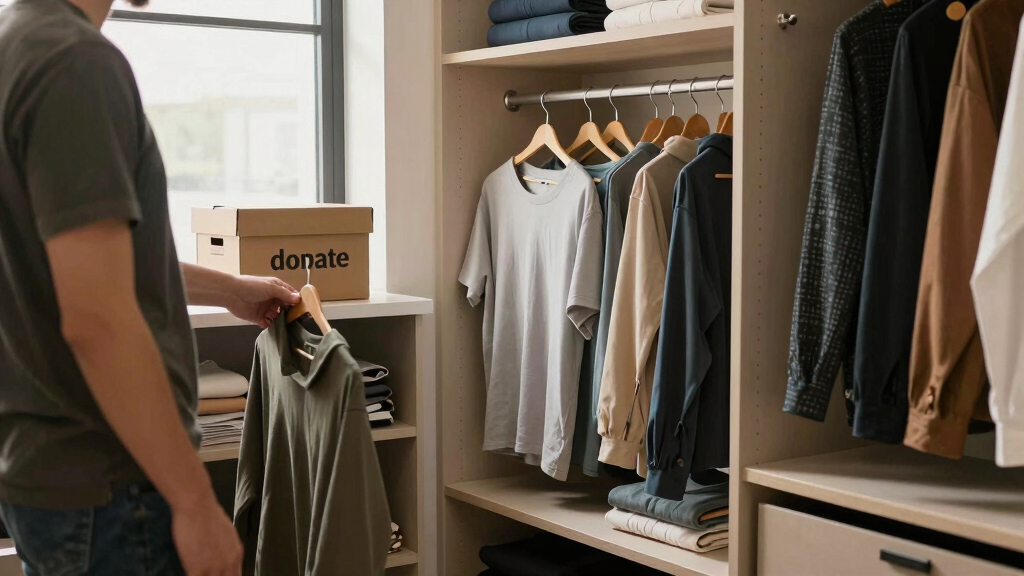
An individual employed ChatGPT to help decide which clothes to keep or donate, resulting in the removal of 23 items. The AI provided rational input, easing emotional decision-making. This approach highlights AI’s potential in personal organization.
A person used ChatGPT to help decide which clothing items to keep or donate, successfully removing 23 items from their closet, demonstrating AI’s practical role in personal decluttering efforts.
The individual described their closet as an overflowing mess and sought a way to make decluttering less stressful. They turned to ChatGPT, asking it targeted questions about each item, such as whether they would buy it today or if they’d wear it again after a period of non-use. This process helped them detach emotional attachments and focus on practicality.
Over time, by describing each item and seeking rational input, they found it easier to let go of items they had been mentally circling for months. Notably, they removed a black blazer and an expensive dress, both items they had delayed donating despite limited use. The process was not about creating a perfect wardrobe but about making clearer, less emotionally driven decisions.
AI as a Neutral Decluttering Assistant
This story illustrates how AI can serve as an unbiased, logical voice in personal decision-making, helping individuals overcome emotional hurdles in decluttering. It suggests a new, accessible tool for simplifying organization and reducing decision fatigue in personal spaces, which may influence future approaches to home management and mental clarity.
Products Worth Considering

Bose QuietComfort Headphones (2nd Gen), Wireless Over-Ear Noise-Cancelling Headphones, Black

Samsung Galaxy Tab A11 Wi-Fi Tablet, 8.7-Inch, 64GB, 4GB RAM, Gray (SM-X133, International Version)

Samsung Galaxy Tab A11 8.7-Inch Wi-Fi Tablet, 64GB, 4GB RAM, Silver
As an affiliate, we earn on qualifying purchases.
The Rise of AI in Personal Organization
Decluttering has traditionally relied on personal judgment and external advice, often leading to emotional indecision. Recent experiments, including this one, show that AI can provide objective feedback, helping users detach from emotional attachments. While AI’s role in personal spaces is still emerging, this case exemplifies its potential to aid in practical, everyday decisions, especially in managing clutter and mental load.
“AI can serve as an unbiased, logical voice that helps individuals make clearer decisions about their belongings.”
— an anonymous researcher
Limitations of AI-Assisted Decluttering
It is not yet clear how universally effective AI tools are for decluttering across different personalities or types of belongings. The long-term impact on emotional attachment and clutter management remains to be studied. Additionally, the process relies on honest descriptions and questions, which may vary in effectiveness among users.
Future Applications of AI in Personal Organization
Further exploration is needed to determine how AI can be integrated into regular decluttering routines. Developers may create dedicated apps or features that guide users through decluttering systematically. Researchers may also study the long-term effects of AI-assisted decision-making on mental well-being and clutter reduction.
Key Questions
Can AI replace professional organizers?
AI can assist with decision-making and provide objective input, but it does not replace the personalized guidance and hands-on support of professional organizers.
Is AI effective for decluttering all types of belongings?
AI is most effective for items where emotional attachment is a barrier to decision-making. Its effectiveness may vary with different possessions and individual preferences.
How much time does using AI to declutter take?
The process depends on the size of the wardrobe and the individual’s decision pace. In this case, it involved describing each item and asking targeted questions, which can be adapted to fit personal schedules.
Are there privacy concerns when using AI for personal decluttering?
Users should be aware of data privacy policies of AI platforms. Descriptions of personal belongings are typically stored securely, but it’s advisable to review privacy terms before use.
Source: Apartment Therapy