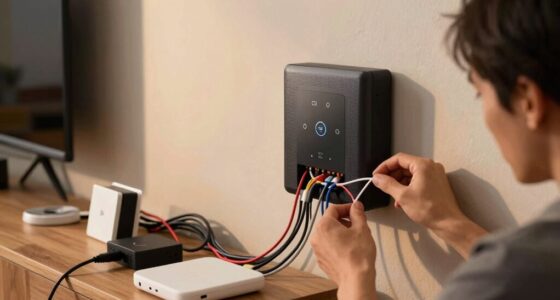
As your home becomes smarter, a seamless product ecosystem becomes more essential. It connects all your devices—like thermostats, security cameras, and locks—so they work together smoothly, making your life easier and more efficient. A unified setup reduces frustrations, enhances security, and boosts user control through voice or apps. As technology evolves, maintaining compatibility guarantees your system stays reliable. Keep exploring to discover how building a strong ecosystem can truly transform your smart home experience.
Listen free for 30 days with Audible
Thousands of audiobooks and originals — cancel anytime.
As an affiliate, we earn on qualifying purchases.
Key Takeaways
- Ecosystems enable seamless communication among smart devices, enhancing user experience and automation efficiency.
- Compatibility within ecosystems prevents device conflicts and ensures smooth, synchronized home operations.
- Unified control through ecosystems simplifies management, reducing complexity and improving responsiveness.
- Interoperability standards future-proof smart homes against evolving technology and device upgrades.
- Integrated ecosystems improve security, reliability, and overall quality of life in smarter homes.
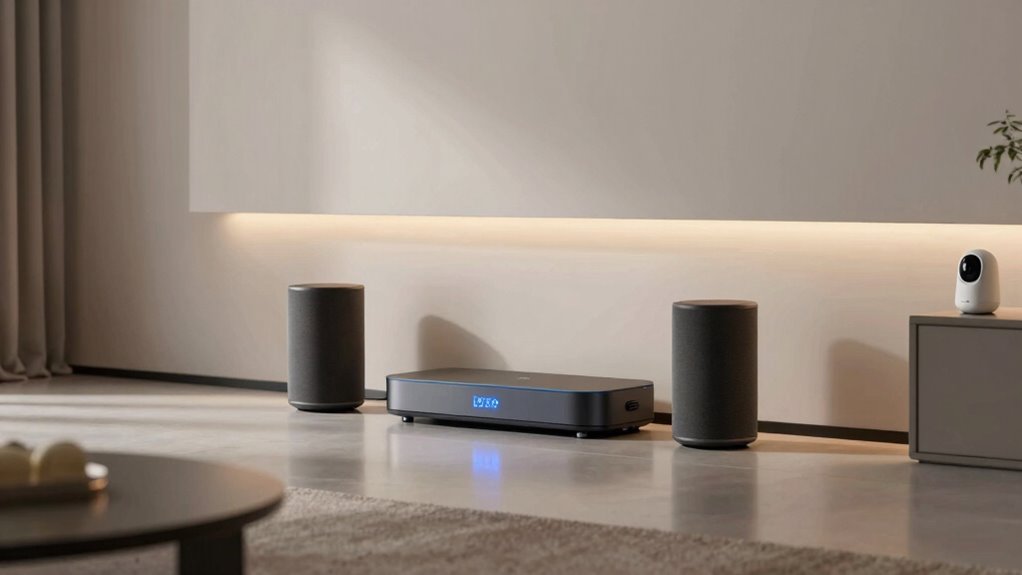
As homes become smarter, the importance of product ecosystems grows exponentially. You’re probably noticing how more devices around your house are connected, from smart thermostats to security cameras, all designed to work seamlessly together. This interconnected setup is what makes a product ecosystem so powerful; it’s about creating a unified environment where devices communicate effortlessly. When device integration is smooth, your user experience improves dramatically. Instead of juggling multiple apps or manual controls, you get to enjoy a streamlined, intuitive system that responds instantly to your commands.
Think about how frustrating it would be if your smart lights didn’t sync with your voice assistant or your smart locks required separate interfaces. A well-designed ecosystem eliminates these headaches by offering compatibility across products, so everything functions in harmony. This level of device integration isn’t just about convenience—it’s about making your daily routines more efficient and enjoyable. When your smart home devices are integrated properly, they anticipate your needs, adjusting settings based on your habits, or reacting automatically to changes in your environment. That’s the true power of a product ecosystem: it transforms a collection of gadgets into a cohesive, intelligent network that enhances your lifestyle.
A seamless ecosystem makes smart devices work together, enhancing daily routines and transforming your home into an intelligent, responsive environment.
Your user experience hinges on how seamlessly these devices work together. If you’ve ever experienced delays in commands or disjointed responses, you’ve felt the drawbacks of poor integration. But when everything is connected properly, you’ll notice how intuitive it feels to control your home. A unified ecosystem minimizes complexity, so you don’t have to learn multiple systems or toggle between different apps. Instead, you enjoy a simple interface—perhaps voice commands or a single app—that controls everything effortlessly. This consistency across devices makes using your smart home more natural and satisfying. Moreover, device interoperability is essential to future-proof your setup as technology continues to evolve rapidly. Staying aware of interoperability standards helps ensure your ecosystem remains compatible as new devices and protocols emerge, creating a more resilient and adaptable setup. Additionally, embracing open standards can facilitate smoother integration across diverse brands and technologies.
As technology advances, product ecosystems will only grow more critical. They’re what turn a bunch of smart devices into a cohesive environment that genuinely improves your quality of life. You’ll find that good device integration leads to a superior user experience—one where your home becomes smarter, more responsive, and easier to manage. In addition, a well-designed ecosystem can help reduce security vulnerabilities by providing unified control and consistent updates across devices. In the end, the strength of your smart home depends on how well your devices work together, and building a robust ecosystem ensures that you get the most out of your technology investments. It’s about making your home smarter, simpler, and more aligned with your needs every day. Product ecosystems are fundamental to achieving this seamless integration and maximizing the benefits of your smart home setup.
As an affiliate, we earn on qualifying purchases.
Frequently Asked Questions
How Do Product Ecosystems Adapt to Future Smart Home Technology?
You see product ecosystems adapting to future smart home technology by enhancing device integration, making all your gadgets work seamlessly together. As new devices emerge, ecosystems evolve to support compatibility, ensuring a smooth user experience. You’ll benefit from intuitive control, fewer glitches, and smarter automation. This ongoing adaptation keeps your smart home efficient and user-friendly, letting you enjoy the latest innovations without hassle, all while maintaining harmony across your connected devices.
What Are the Security Risks Associated With Interconnected Smart Devices?
You face security risks like unauthorized access and data privacy breaches with interconnected smart devices. Hackers can exploit vulnerabilities to control your devices or steal personal information. To protect yourself, use strong, unique passwords, enable two-factor authentication, and keep firmware updated. Regularly review device permissions and network settings. Staying vigilant helps safeguard your data privacy and prevents unauthorized access, ensuring your smart home remains secure and trustworthy.
Can Product Ecosystems Increase Energy Efficiency in Smart Homes?
Yes, product ecosystems can increase energy efficiency in smart homes. By enabling seamless device coordination, they optimize energy savings through smarter scheduling and automation. When your devices communicate effectively, they adjust settings based on your habits and environmental factors, reducing unnecessary power use. This integrated approach guarantees your home conserves energy without sacrificing comfort, making your smart home more sustainable and cost-effective over time.
How Do Brand Compatibility Issues Affect Smart Home Ecosystems?
Brand compatibility issues can substantially hinder your smart home ecosystem by limiting device integration. When brands don’t support each other, you might find it difficult to create a seamless experience, forcing you to use multiple apps or manually control devices. These incompatibilities can cause frustration, reduce efficiency, and prevent your smart home from functioning cohesively. Ensuring brand compatibility helps you achieve smooth device integration and a truly connected, effortless living environment.
What Funding or Incentives Are Available for Building Smart Home Ecosystems?
You can tap into financing programs and government grants that act like a treasure map guiding you toward smarter homes. These incentives can help cover costs for building integrated smart home ecosystems, making your dream setup more affordable. Keep an eye on local and federal initiatives, as many offer funding opportunities to support innovative, energy-efficient, and connected home projects. With these resources, transforming your house into a seamless smart ecosystem becomes within reach.
As an affiliate, we earn on qualifying purchases.
Conclusion
As your home becomes smarter, embracing product ecosystems is like planting a thriving garden—you nurture interconnected devices that grow and flourish together. By creating seamless integrations, you’re not just adding gadgets; you’re weaving a symphony of convenience and control. The more harmonious your ecosystem, the easier it is to manage your smart home. So, invest wisely in these digital neighborhoods, and watch your smart living experience blossom into something truly extraordinary.
interoperable smart home devices
As an affiliate, we earn on qualifying purchases.
As an affiliate, we earn on qualifying purchases.
voice controlled smart home system
As an affiliate, we earn on qualifying purchases.
As an affiliate, we earn on qualifying purchases.
Fall Picks
fall essentials
As an affiliate, we earn on qualifying purchases.