
TL;DR

Get home appliances delivered free — and shop member deals
- Fast, free delivery on millions of items
- Access to Prime Big Deal Days deals on October 6–7
- Prime Video, Amazon Music and more included
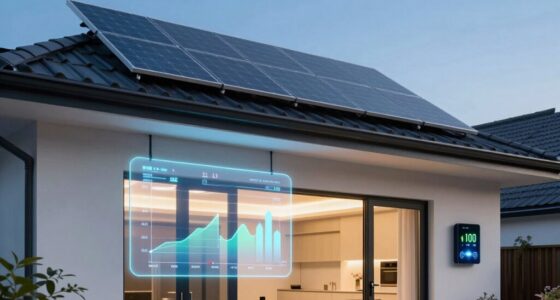
A research team from India has designed a home cooling panel combining photovoltaic power, thermoelectric cooling, and waste cooking oil as a bio-based phase change material. Simulations suggest each panel can deliver 6–15 kWh/day of cooling, reducing indoor temperatures and carbon emissions. The system offers a low-cost, eco-friendly cooling solution with a potential payback period of 2–4 years.
A team of researchers from India has developed a prototype cooling panel that combines photovoltaic power generation, thermoelectric cooling, and waste cooking oil as a phase change material, showing potential for sustainable residential cooling solutions.
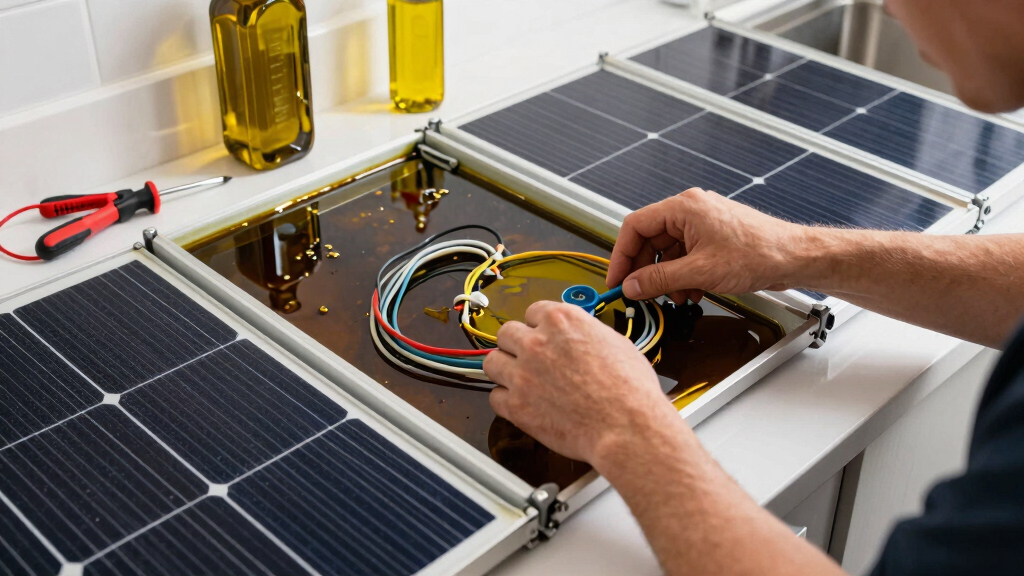
The system features a PV module that converts sunlight into electricity, which then powers a thermoelectric (TE) device. The TE module is thermally coupled to a waste palm oil PCM, which stores and releases thermal energy to cool indoor spaces. During daylight hours, the PV supplies power to remove heat from the PCM, effectively cooling it and storing latent heat. At night, the PCM releases stored heat, helping maintain lower indoor temperatures. Simulations indicate each panel can provide between 6 and 15 kWh of cooling per day, reduce peak indoor temperatures by up to 3°C, and shift cooling loads by about 3 hours.
The research team employed a multi-fidelity modeling framework, including zero-dimensional and finite element models, to optimize performance and predict economic viability. The techno-economic analysis estimates a payback period of 3 to 4 years, potentially reducing to around 2 with incentives. Life cycle assessments suggest the system can avoid approximately 1.2 tons of CO₂ emissions annually, utilizing 40 kg of waste cooking oil per panel. The study highlights the environmental and economic benefits of converting waste cooking oil into a bio-based PCM for cooling applications.
Potential Impact of Waste Cooking Oil-Based Cooling Panels
This development offers a sustainable alternative to conventional cooling methods by utilizing waste cooking oil as a low-cost, environmentally friendly phase change material. The system could significantly reduce energy consumption and indoor heat during hot seasons, decreasing reliance on traditional air conditioning. Additionally, the use of waste resources supports circular economy principles and reduces greenhouse gas emissions, making it relevant for climate mitigation efforts.
solar-powered thermoelectric cooling panel
As an affiliate, we earn on qualifying purchases.
As an affiliate, we earn on qualifying purchases.
Advances in Solar-Driven Indoor Cooling Technologies
Recent years have seen increased interest in integrating renewable energy with thermal management systems for residential use. Prior approaches include circulating water-based cooling and phase change materials, but cost and sustainability remain challenges. The current research builds on these efforts by combining PV, thermoelectric modules, and bio-based PCMs, specifically waste cooking oil, as an innovative solution. The concept aligns with broader trends toward green building technologies and energy-efficient home systems, with the recent publication marking a significant step in this direction.
“Our study introduces a multi-fidelity modeling approach for solar-driven hybrid cooling panels using waste cooking oil as a phase change material.”
— an anonymous researcher
waste cooking oil phase change material
As an affiliate, we earn on qualifying purchases.
As an affiliate, we earn on qualifying purchases.
Long-Term Performance and Practical Deployment Challenges
It is not yet clear how the system will perform under real climatic conditions over extended periods. The durability of waste cooking oil PCM, potential degradation of thermoelectric modules, and manufacturing scalability are still under investigation. Further real-world testing is needed to validate simulation results and assess economic and environmental benefits in diverse settings.
PV thermoelectric cooling system
As an affiliate, we earn on qualifying purchases.
As an affiliate, we earn on qualifying purchases.
Moving Toward Real-World Testing and Commercialization
The research team plans to conduct long-term field trials to evaluate the durability and performance of the cooling panels in different climates. They also aim to develop scalable manufacturing processes, explore AI-driven control systems for optimizing operation, and improve PCM formulations for better stability and thermal properties. These steps are essential before considering commercial deployment and broader adoption in residential buildings.
eco-friendly indoor cooling device
As an affiliate, we earn on qualifying purchases.
As an affiliate, we earn on qualifying purchases.
Key Questions
How does the cooling panel work?
The panel uses a PV module to generate electricity, which powers a thermoelectric device. This device removes heat from a waste cooking oil PCM, storing cooling capacity. At night, the PCM releases heat, helping to cool indoor spaces without active cooling systems.
What are the environmental benefits?
The system reuses waste cooking oil, reducing waste and utilizing a bio-based PCM. It can cut CO₂ emissions by about 1.2 tons annually per panel, and decrease energy consumption for cooling, contributing to climate change mitigation.
When might this technology be available for consumers?
While promising, the technology is still in the simulation and prototype stage. Further testing, development, and scaling are required before commercial deployment, which could take several years.
What are the main challenges to adoption?
Key challenges include ensuring long-term durability of the PCM, manufacturing scalability, and integration with existing building systems. Economic incentives and further technological improvements are also needed to make it commercially viable.
Source: PV Magazine
Fall yard work Picks
leaf blowers
As an affiliate, we earn on qualifying purchases.