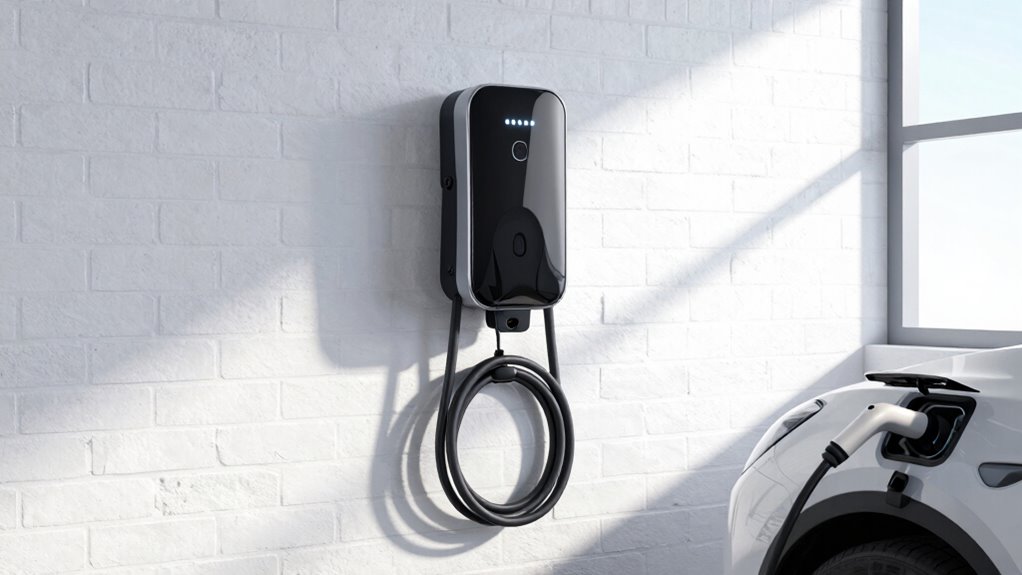

When considering a smart EV charger for your home, you should know it connects wirelessly to your Wi-Fi, allowing you to control and monitor charging via your smartphone. It helps you save energy and money by scheduling charging during off-peak hours or integrating with solar panels. Safety features detect faults and shut off if needed, while firmware updates keep the device up-to-date. Proper installation guarantees safety and peak performance. Keep exploring to discover how these features can benefit you even more.

Get home appliances delivered free — and shop member deals
- Fast, free delivery on millions of items
- Access to Prime Big Deal Days deals on October 6–7
- Prime Video, Amazon Music and more included
Key Takeaways
- Ensure proper installation by professionals to maximize safety, performance, and adherence to standards.
- Confirm compatibility with your home energy system and renewable sources like solar panels.
- Leverage remote monitoring, scheduling, and alerts for convenient and efficient charging routines.
- Choose chargers with safety features and firmware updates to maintain reliability and security.
- Consider energy management capabilities to optimize cost savings and reduce grid strain.
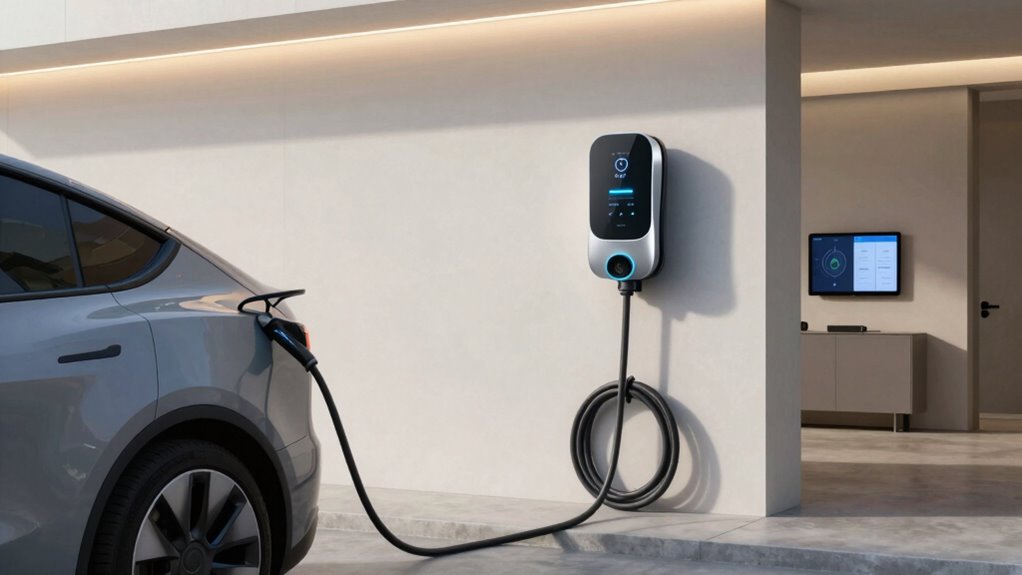
As electric vehicles become more common, installing a smart EV charger at home can make charging more convenient and efficient. These chargers connect seamlessly to your home Wi-Fi network, giving you wireless connectivity that simplifies monitoring and control from your smartphone or tablet. With a smart charger, you’re not limited to charging only when you’re home; instead, you can schedule charging sessions, check the status remotely, and even receive alerts if issues arise. This level of control makes your EV charging experience more flexible and user-friendly, fitting easily into your daily routine.
One of the key benefits of a smart EV charger is its ability to enhance energy management. When you connect your charger to your home’s Wi-Fi, it can communicate with your energy system, providing real-time data on energy consumption and costs. This integration allows you to optimize charging times, such as scheduling charges during off-peak hours when electricity rates are lower. By doing so, you not only save money but also reduce the strain on your local power grid, making your charging process more sustainable. Many smart chargers also include features that enable you to set charging limits or prioritize energy use from renewable sources like solar panels, further boosting your energy efficiency.
In addition to saving money and improving energy management, smart EV chargers often come with advanced safety features. Wireless connectivity allows the charger to automatically detect faults or abnormal conditions and shut off if necessary, preventing potential hazards. Some models even offer firmware updates over the air, ensuring your device stays current with the latest safety and efficiency improvements without needing a technician to come to your home. Understanding smart connectivity is essential, as it plays a crucial role in the functionality and safety of these chargers. Moreover, proper installation is vital to ensure safety and optimal performance, which may require professional assistance or electrical upgrades. Recognizing installation requirements can help you avoid potential issues and maximize your charger’s lifespan and effectiveness. Additionally, understanding energy management strategies can help you make the most of your smart charger’s capabilities.
As an affiliate, we earn on qualifying purchases.
Frequently Asked Questions
How Secure Are Smart EV Chargers From Hacking Threats?
Smart EV chargers can be vulnerable to cybersecurity risks, but manufacturers prioritize security to protect your data privacy. To stay safe, guarantee your charger has strong encryption, regular firmware updates, and secure Wi-Fi connections. You should also change default passwords and use a dedicated network for your charger. While no device is completely invulnerable, taking these precautions minimizes hacking threats and keeps your information secure.
Can Smart Chargers Be Used for Renewable Energy Integration?
Yes, smart EV chargers can be used for renewable energy integration. They offer renewable compatibility, allowing you to charge your vehicle using solar or wind power when available. Plus, their advanced energy management features help optimize energy use, reducing costs and supporting your green energy goals. By automating charging schedules and balancing energy loads, these chargers make it easier to incorporate renewable sources into your home’s energy system effectively.
What Is the Lifespan of a Typical Smart EV Charger?
You might worry about durability, but a typical smart EV charger lasts around 10 to 15 years with proper maintenance. Its lifespan depends on build quality and usage, yet most require minimal upkeep—just occasional inspections and software updates. Investing in a reputable brand guarantees charger durability, giving you peace of mind. Regular maintenance keeps it functioning efficiently, so you can enjoy hassle-free charging for years to come.
Are There Government Incentives for Installing Smart EV Chargers?
Yes, there are government incentives for installing smart EV chargers at home. These incentives can substantially reduce your upfront costs during home installation, making smart chargers more affordable. By taking advantage of these programs, you not only save money initially but also enjoy ongoing cost benefits through smarter energy use and potential rebates. Check local and federal programs to maximize these incentives and make your smart EV charger investment more economical.
How Do Smart Chargers Affect Home Electrical System Warranties?
Think of smart chargers as the modern-day Pandora’s box—powerful but requiring careful handling. They generally don’t void your home’s electrical system warranty if installed correctly, but poor installation or incompatible devices could. While they boost energy efficiency, consider the installation costs and make sure your system can handle the upgrade. Properly integrated, they enhance your home’s tech and sustainability without risking warranty issues.
Wi-Fi enabled EV charging station
As an affiliate, we earn on qualifying purchases.
As an affiliate, we earn on qualifying purchases.
Conclusion
In the end, choosing a smart EV charger for your home means embracing convenience, efficiency, and future-proofing your vehicle charging needs. With features like remote control and energy management, you gain more control over your charging habits. But are you ready to make a smarter, more connected choice that could save you time and money in the long run? Investing in a smart charger isn’t just a purchase—it’s a step toward a more sustainable and intelligent lifestyle.
smart electric vehicle charger with scheduling
As an affiliate, we earn on qualifying purchases.
As an affiliate, we earn on qualifying purchases.
As an affiliate, we earn on qualifying purchases.
Fall Picks
fall essentials
As an affiliate, we earn on qualifying purchases.