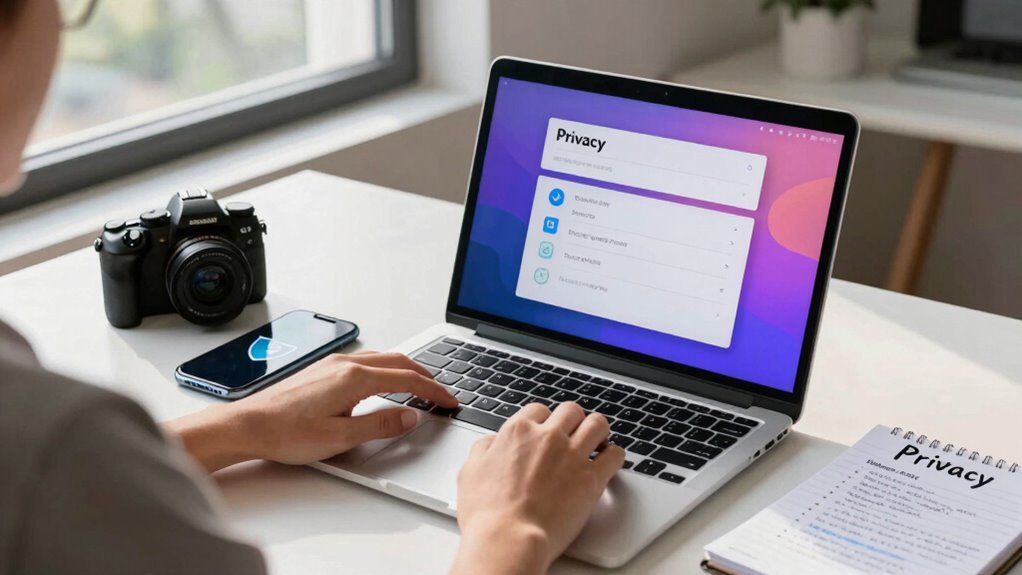

Your privacy preferences guide you to choose devices that prioritize transparency, security, and control. By setting clear privacy options and insisting on encryption, you guarantee your data stays safe and private. Devices with customizable privacy features, like disabling location or managing app permissions, help align choices with your comfort level. Prioritizing these factors means making smarter decisions that protect your digital footprint. Keep exploring to discover how you can further enhance your privacy and device decisions.
Key Takeaways
- Clear privacy preferences guide consumers to choose devices with strong encryption and transparent data practices.
- Customizable privacy settings empower users to control data sharing and reduce unnecessary information exposure.
- Awareness of privacy policies influences decisions towards devices prioritizing privacy-by-design features.
- Active management of digital footprints ensures alignment with personal privacy values and reduces risk.
- Prioritizing encryption and user consent leads to more secure, trustworthy device choices.
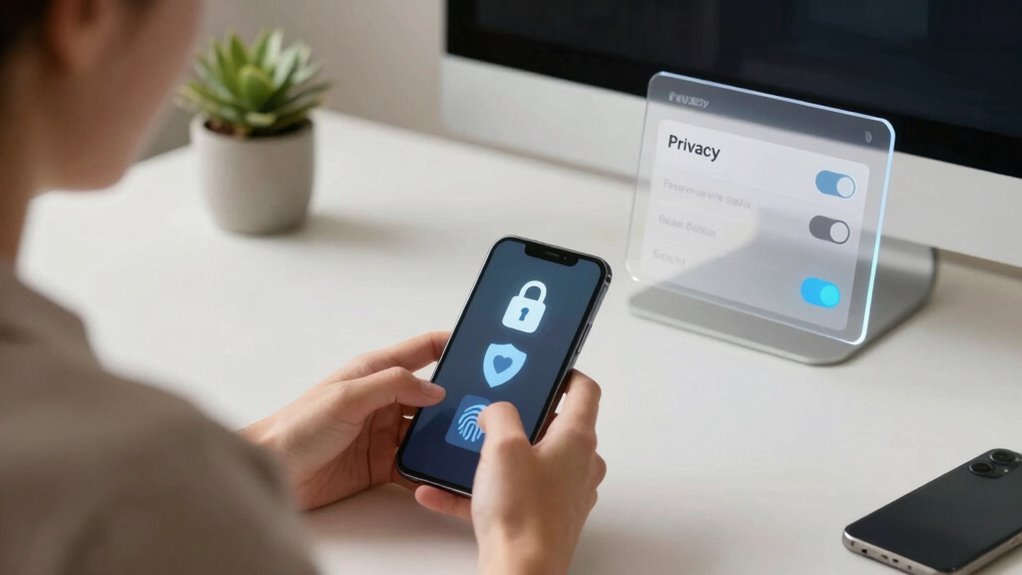
In today’s digital landscape, your privacy preferences heavily influence the devices you choose and how you use them. You want technology that respects your boundaries, keeps your information secure, and gives you control over what data is shared. When selecting devices, you look beyond features and performance; you prioritize those that implement strong data encryption and prioritize user consent. Data encryption acts as a digital shield, scrambling your information so that unauthorized parties can’t access it, even if they intercept your data. Devices that incorporate advanced encryption protocols provide peace of mind, knowing your conversations, passwords, and personal details stay protected. You also pay attention to whether the device manufacturer emphasizes transparency about how your data is handled, which ties directly into user consent. You want to be asked before your data is collected, shared, or used for targeted advertising. Devices that seek your permission and clearly explain what they collect show respect for your privacy and give you the power to make informed choices. Additionally, understanding the role of privacy policies helps you better navigate your rights and options as a user.
Your privacy preferences influence not only the device features you pick but also how you set up and manage them. For instance, you may disable certain location services or limit app permissions to prevent unnecessary data sharing. When you choose devices that allow you to customize privacy settings easily, you feel more confident in your control over your personal information. Additionally, you prefer hardware and software that make privacy a priority by default, rather than an afterthought. This includes built-in security measures like secure boot, encrypted storage, and privacy dashboards that give you quick access to your data sharing permissions. Recognizing the importance of encryption protocols helps you understand how your data remains secure during transmission and storage. It’s also valuable to consider whether the device manufacturer is committed to privacy by design, ensuring privacy features are integrated from the outset. Moreover, staying informed about data security practices can help you identify devices that truly prioritize your safety.
The importance of user consent becomes even clearer when considering cloud storage solutions and app ecosystems. You want to trust that you’re not giving blanket permissions but are instead actively agreeing to specific data uses. Devices that prompt you for consent at critical moments help you stay aware of your digital footprint. This way, you’re not just passively accepting terms but actively managing your privacy. Your choices reflect your values—whether you’re a privacy advocate or someone who wants a seamless experience with minimal fuss. Recognizing the use of privacy controls enables you to tailor your privacy settings to match your comfort level. Ultimately, by prioritizing devices that emphasize data encryption and user consent, you craft a digital environment that aligns with your privacy preferences, empowering you to enjoy technology without sacrificing security or control.

Punkt. MC02 Smartphone – Unlocked Cell Phone with Built-in VPN for Digital Security & Data Privacy Software, 4K Video & 64 MP Camera, 5G & 4G LTE, 128GB, WiFi, Bluetooth – Black
- Privacy-Focused Smartphone: Protects your personal data and privacy
- Built-in VPN Security: Secure connectivity on public networks
- Secure Communication Ecosystem: Access email, calendar, contacts, notes securely
As an affiliate, we earn on qualifying purchases.
As an affiliate, we earn on qualifying purchases.
Frequently Asked Questions
How Do Privacy Preferences Vary Across Different Age Groups?
Generational differences profoundly influence privacy attitudes across age groups. Younger users often prioritize convenience and are more willing to share personal data, while older individuals tend to be more cautious, valuing privacy and data security. You may notice that older generations set stricter privacy preferences, whereas younger ones accept broader data sharing. Understanding these differences helps you tailor device settings and privacy options suited to each age group’s comfort levels and expectations.
Can Privacy Settings Be Easily Changed After Device Purchase?
Changing privacy settings after purchasing your device is like turning a ship’s rudder—you can easily steer it in a new direction. Most devices offer straightforward options for privacy customization, giving you control over your data. You can access these settings through the device’s menu or app, making adjustments whenever you feel the need. So, yes, user control is built-in, allowing you to adapt your privacy preferences whenever your needs change.
What Are the Long-Term Impacts of Ignoring Privacy Preferences?
Ignoring privacy preferences can jeopardize your data security and reduce your control over personal information. Over time, this may lead to increased exposure to data breaches, identity theft, or targeted advertising. You might find it harder to manage what information is shared and with whom, weakening your overall user control. Prioritizing your privacy preferences helps protect your data security and guarantees you retain authority over your personal information long-term.
Do Privacy Preferences Influence Device Resale Value?
Privacy preferences can substantially boost your device’s resale value. When you embrace data anonymization, you’re cleaning your device of personal info, making it more appealing to buyers. In the resale market, devices with clear privacy measures stand out like a lighthouse in a foggy night. Protecting your privacy not only preserves your data but also ensures your device remains attractive, possibly fetching a higher price when you decide to sell.
How Do Privacy Preferences Differ Between Personal and Professional Devices?
Your privacy preferences differ between personal and professional devices mainly in data encryption and user authentication. On personal devices, you prioritize strong data encryption and simple user authentication like biometrics to protect your data. In professional devices, you often require advanced encryption and multi-factor authentication to guarantee corporate security. These preferences influence device choices, helping you balance convenience with security based on the device’s use context.

Hidden Camera Detector Travel, Bug & Spy Camera Detector,GPS Tracker Car
- Detects Hidden Cameras: Infrared technology for quick detection
- Wide Frequency Range: 1MHz to 6.5GHz coverage
- Multi-Device Detection: WiFi, Bluetooth, GPS, SIM signals
As an affiliate, we earn on qualifying purchases.
As an affiliate, we earn on qualifying purchases.
Conclusion
By understanding your privacy preferences, you can make smarter device choices that truly suit your needs. Some might worry that prioritizing privacy limits functionality, but that’s not the case. When you select devices aligned with your comfort level, you get better control and peace of mind without sacrificing performance. Embracing your preferences means you’re actively shaping a digital environment that respects your boundaries—making your tech experience more secure, personalized, and satisfying.

MFi Certified 512GB Flash Drives 3ni1 USB Stick External Storage Compatible for iPhone/PC/iPad/Android/More 3.0 High Speed Devices for Photos and Videos Transfer Storage Backup(Black)
- Wide Compatibility: Works with iPhone, iPad, Android, PC
- High-Speed Transfer: USB 3.0 for fast file transfers
- Secure Backup: Encrypt files on iOS devices easily
As an affiliate, we earn on qualifying purchases.
As an affiliate, we earn on qualifying purchases.

XIZAKEE Cell Phone Sun Shade, Air Vent Phone Holder Umbrella Cover, Center Console Dashboard Navigation Mount Sunscreen Protector, Heat Insulation Anti-glare Portable for All Smartphones, Most Cars
- Durable Waterproof Material: Made of high-quality, moisture-resistant fabric
- Heat and Sun Protection: Blocks glare and insulates heat effectively
- Universal Compatibility: Fits all smartphones and most vehicles
As an affiliate, we earn on qualifying purchases.
As an affiliate, we earn on qualifying purchases.