A smart alarm feels truly intelligent when it uses your sleep cycle to wake you gently within a personalized window, minimizing disruption. It combines soothing, customizable sounds or vibrations, and adapts based on your sleep patterns for an ideal wake-up. Plus, it considers your environment, like lighting or temperature, to improve your overall sleep quality. When these features work together, your mornings become less stressful and more natural—if you want to know how to make this happen, keep exploring.

Get home appliances delivered free with Prime
- Fast, free delivery on millions of items
- Prime Video, Amazon Music and more included
- Member-only deals all year
Key Takeaways
- Uses sleep cycle data to wake users during optimal light sleep phases, reducing grogginess.
- Offers personalized, gradually increasing wake-up tones tailored to individual preferences.
- Incorporates alternative alert methods like vibrations or visual cues for less intrusive wake-ups.
- Syncs with sleep environment data to optimize wake-up timing and improve sleep quality.
- Integrates multiple factors—timing, sound, environment—for a natural, stress-free waking experience.

A truly smart alarm considers your sleep cycle as its foundation. It doesn’t just set a fixed wake-up time; instead, it creates a window—say, 30 minutes—within which it will wake you. During this window, it tracks your sleep patterns and triggers the alarm when your body is most prepared. This personalized timing makes a significant difference in how you feel when you get up. Instead of dragging yourself out of bed feeling tired or disoriented, you wake up gradually, with your body ready for the day.
The wake-up tone also plays a crucial role in making a smart alarm feel genuinely intelligent. Rather than a jarring buzz, it uses soothing sounds, nature noises, or gentle melodies that gradually increase in volume. This gradual escalation helps you transition from sleep to wakefulness more smoothly. Some alarms even allow you to customize the tone, so you select something pleasant that motivates you to get up without startling you. The combination of an appropriate wake-up tone and timing aligned with your sleep cycle creates a more natural and less stressful awakening process.
Additionally, smart alarms often incorporate features like vibration alerts or visual cues for those who prefer alternatives to sound. These options add to the sense that the alarm is tailored to your preferences, making it feel more intuitive and less intrusive. Many apps and devices also sync with your sleep data over time, refining their accuracy and adjusting wake-up times to improve your morning routine. Sleep tracking plays an essential role in optimizing wake-up times and enhancing the overall effectiveness of a smart alarm. Understanding how air quality impacts sleep quality can further help in creating an environment conducive to restful sleep and effective waking. Moreover, the integration of sleep environment factors such as temperature and lighting can also enhance the quality of your sleep and the responsiveness of your alarm. Incorporating personalized sleep insights can help you better understand your sleep patterns and improve your overall sleep hygiene for a more consistent wake-up experience. Recognizing the importance of sleep cycle awareness can lead to smarter, more effective alarm designs that support your health and well-being.
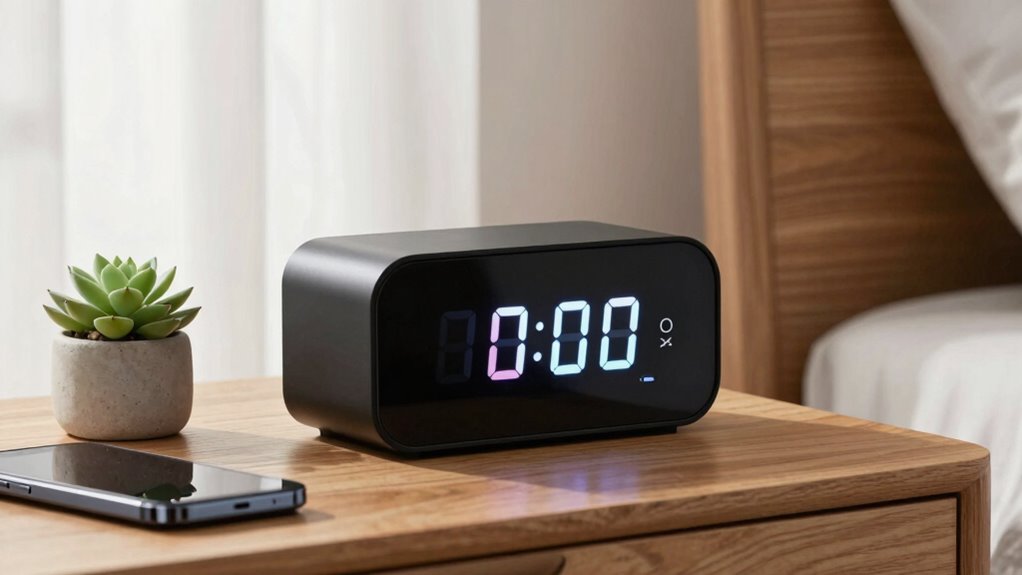
smart alarm clock with sleep cycle tracking
As an affiliate, we earn on qualifying purchases.
As an affiliate, we earn on qualifying purchases.
Frequently Asked Questions
How Do Smart Alarms Differentiate Between Sleep Stages?
Smart alarms differentiate between sleep stages through sleep cycle and phase detection. They use sensors, like accelerometers or heart rate monitors, to track your movements and physiological signals. By analyzing this data, they identify when you’re in light, deep, or REM sleep. When your sleep cycle reaches a light or REM phase, the alarm gently wakes you, ensuring you feel more refreshed and less groggy.
Can Smart Alarms Adapt to Daily Schedule Changes Automatically?
Yes, smart alarms can adapt to daily schedule changes automatically. They analyze your sleep cycle patterns and learn your typical routines, adjusting wake-up times accordingly. Many devices offer compatibility with calendar apps or health trackers, which help sync your schedule. This guarantees you wake up at the best moment within your sleep cycle, promoting better refreshment and aligning with your daily commitments.
Do Smart Alarms Require Specific Smartphone Compatibility?
Smart alarms do require specific smartphone compatibility, mainly because of device compatibility and app integration. You need to confirm your phone’s operating system supports the alarm’s app, whether it’s iOS or Android. Some alarms work seamlessly with certain devices, so check compatibility before purchasing. This guarantees smooth setup, reliable alerts, and access to advanced features like custom sound options or sleep tracking, making your smart alarm genuinely work for you.
Are Smart Alarms Effective Without Internet Connectivity?
Smart alarms can be effective without internet connectivity if they offer manual setup and offline functionality. You can set alarms directly on the device, and it will still wake you up without needing online access. However, features like weather updates or remote control won’t work offline. So, while basic alarm functions remain reliable, some smart features depend on internet, making offline use more limited but still functional for wake-up purposes.
How Secure Is the Data Collected by Smart Alarm Devices?
The data collected by your smart alarm is generally secure if it uses data encryption and follows strict privacy policies. Encryption protects your information from unauthorized access, while privacy policies clarify how your data is stored and used. To stay safe, you should review the security features of your device and choose brands that prioritize user privacy, ensuring your data remains protected against potential breaches.
alarm clock with customizable wake-up sounds
As an affiliate, we earn on qualifying purchases.
As an affiliate, we earn on qualifying purchases.
Conclusion
So, when choosing a smart alarm, think of it as your gentle morning companion rather than just a device. It’s about finding that perfect balance—one that softly nudges you awake, fitting seamlessly into your routine, and making mornings feel just a little brighter. A truly smart alarm isn’t about complexity; it’s about whispering sweetly to your senses and easing you into the day, all while feeling like a thoughtful friend by your side.
vibration alarm clock for gentle wake-up
As an affiliate, we earn on qualifying purchases.
As an affiliate, we earn on qualifying purchases.
As an affiliate, we earn on qualifying purchases.
Halloween Picks
halloween
As an affiliate, we earn on qualifying purchases.