TL;DR

Get home appliances delivered free with Prime
- Fast, free delivery on millions of items
- Prime Video, Amazon Music and more included
- Member-only deals all year
A Chinese firm, Photon Matrix Lab, announced a laser-based mosquito elimination system, claiming it can target and kill mosquitoes mid-flight. The U.S. has not yet adopted this technology, which could significantly reduce mosquito-borne illnesses.
A Chinese company, Photon Matrix Lab, has claimed to develop a laser-based system capable of detecting and killing mosquitoes mid-flight, a technology that could revolutionize mosquito control. The announcement raises questions about why the United States has not pursued similar innovations, given the potential public health benefits.
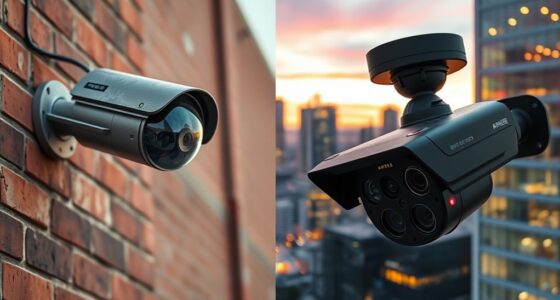
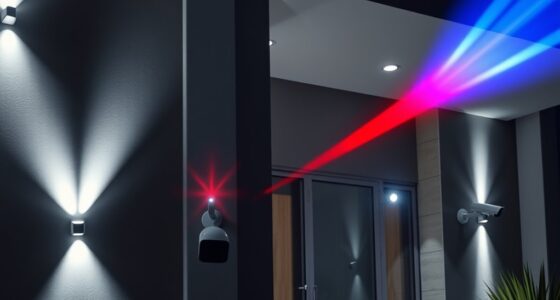
Photon Matrix Lab, based in Changzhou, announced its development of a laser system designed to target and eliminate mosquitoes in flight. The company showcased a video demonstrating the device firing a blue-violet lightning bolt at a mosquito, causing it to tumble and fall. This system is purportedly capable of neutralizing mosquitoes without harming nearby humans or animals, due to their small size and low biomass.
The concept of using laser technology for mosquito control was initially proposed in 2006 by astrophysicist Lowell Wood, who collaborated with inventor Nathan Myhrvold. Myhrvold’s company, Intellectual Ventures, built a prototype laser turret in 2010, aiming initially at applications in luxury resorts, stadiums, and even for locust control. Despite interest and some investment discussions, the project did not reach commercial deployment in the U.S. and remained largely experimental.
Meanwhile, mosquito-borne diseases such as dengue and chikungunya have surged in China, prompting local efforts to explore advanced control methods, including aerial drones and biological agents. Chinese scientists are increasingly interested in laser technology as a potential solution, given the global rise in mosquito populations and disease transmission risk.
Why It Matters
This development is significant because mosquito-borne illnesses cause more deaths annually than many other hazards, including snakes and sharks. An effective laser-based system could provide a targeted, chemical-free method to reduce mosquito populations, potentially saving millions of lives and reducing disease outbreaks worldwide. The fact that the U.S. has not yet adopted or developed similar technology raises questions about regulatory, technical, or funding barriers that could delay its deployment.
Products Worth Considering

Sonos Era 100 SL Compact Microphone-Free Speaker, Black

Jackery Explorer 1000 v2 Portable Power Station, 1070Wh, 1500W

Kindle Paperwhite Kids (2024), 16 GB, 7-inch Display, Cyber City Cover
As an affiliate, we earn on qualifying purchases.
Background
The idea of using laser technology for mosquito control has been around for nearly two decades, with initial prototypes and conceptual designs emerging in the early 2010s. While China appears to be actively pursuing this technology following recent disease outbreaks, the U.S. has largely remained on the sidelines, focusing on traditional methods like insecticides and biological controls. The global mosquito problem has worsened, partly due to climate change and international trade, making innovative solutions increasingly urgent.
“The laser system could be safe enough to fire around people and pets because mosquitoes are so tiny and lightweight.”
— Nathan Myhrvold
“The idea of using lasers to target mosquitoes has been around for years, but it’s only now gaining traction in China amid rising disease threats.”
— Lowell Wood
What Remains Unclear
It is not yet clear whether the Chinese device is ready for widespread deployment or if it has been tested extensively in real-world conditions. The effectiveness, safety, and cost of scaling this technology remain unconfirmed. Additionally, it is unclear whether the U.S. government or private sector plans to pursue similar research or adoption in the near future.
What’s Next
Further testing and validation of the Chinese laser system are expected to determine its efficacy and safety. International interest may grow, prompting research investments in the U.S. and elsewhere. Policymakers and public health officials will need to evaluate the technology’s potential for integration into existing mosquito control programs.
Key Questions
How does the laser mosquito-killing system work?
The system detects mosquitoes in flight and fires a laser beam that kills them mid-air, causing their bodies to tumble and fall. The laser is designed to target mosquitoes specifically, minimizing harm to humans and animals nearby.
Why has the U.S. not adopted this technology yet?
It is unclear; potential reasons include regulatory hurdles, technical challenges, lack of funding, or prioritization of traditional control methods. The technology is still largely experimental outside China.
Could this technology eliminate mosquito-borne diseases?
If proven effective and scalable, laser control could significantly reduce mosquito populations and transmission of diseases like dengue and chikungunya, potentially saving millions of lives annually.
What are the challenges to deploying such lasers widely?
Challenges include ensuring safety in populated areas, developing cost-effective systems, and overcoming regulatory approval processes. Extensive field testing is also needed to confirm effectiveness.
Source: The Atlantic