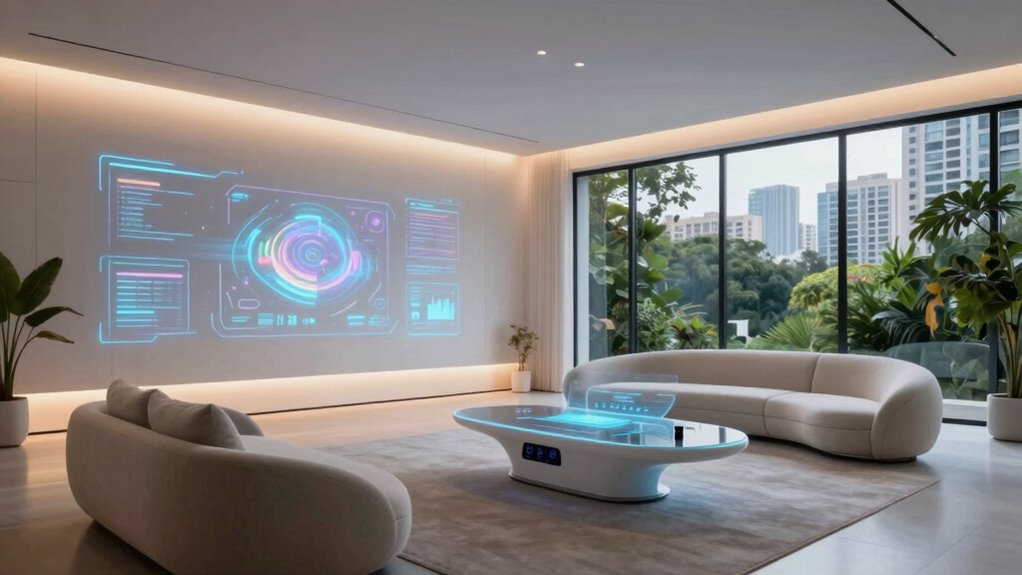
AI could transform your future home by making it smarter, more adaptable, and energy-efficient. It can analyze your habits and environment to automatically adjust heating, lighting, and insulation for maximum comfort. AI-driven systems enable your home to self-repair, predict maintenance needs, and even customize layouts over time. With automated construction, homes will be built faster and more precisely. Keep exploring to discover how these innovations will shape the homes of tomorrow.

Get home appliances delivered free — and shop member deals
- Fast, free delivery on millions of items
- Access to Prime Big Deal Days deals on October 6–7
- Prime Video, Amazon Music and more included
Key Takeaways
- AI enables adaptive, environmentally responsive materials that optimize home comfort and efficiency automatically.
- Real-time data analysis allows homes to dynamically adjust layouts and systems to changing needs.
- Predictive maintenance powered by AI reduces repairs and ensures optimal environmental conditions proactively.
- AI-driven construction robots streamline building processes, allowing faster, precise, and customizable home designs.
- Personalized home design evolves through AI insights, creating highly tailored, resilient, and interactive living spaces.
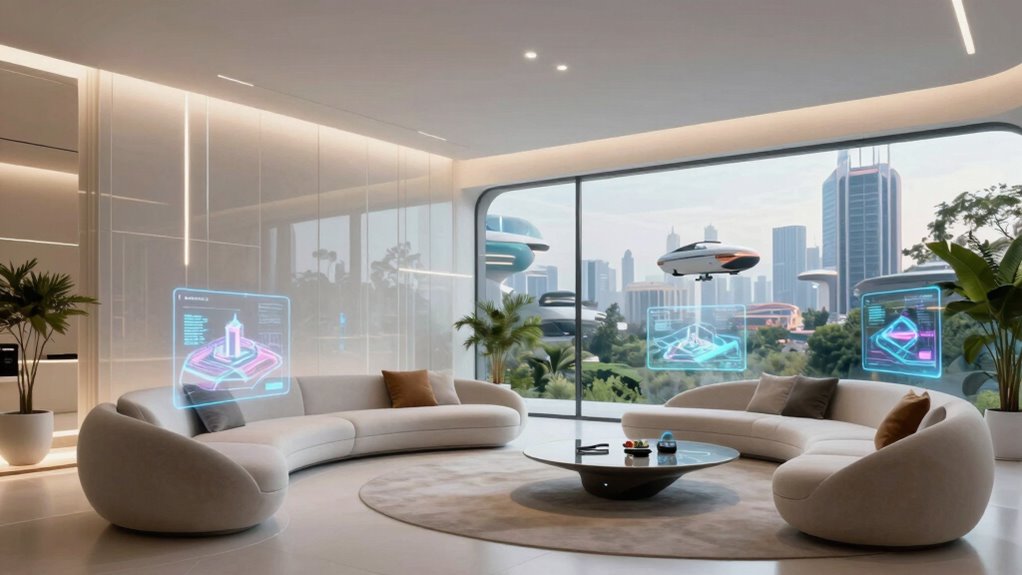
Have you ever wondered how artificial intelligence will transform the way we design and live in our homes? The future of home design is rapidly evolving, driven by advancements in AI that can seamlessly integrate technology into every aspect of our living spaces. One exciting development is the emergence of smart materials—substances that can respond to environmental changes, adapt to your needs, or even repair themselves. With AI guiding their development, these materials will make homes more energy-efficient, sustainable, and comfortable. Imagine walls that can adjust their insulation based on the weather or windows that tint automatically to block out harsh sunlight. These smart materials will work in tandem with AI systems that analyze data in real-time, ensuring your home constantly adapts to your lifestyle and surroundings. As these intelligent systems become more advanced, they will also enable adaptive design that evolves with your changing needs over time. Additionally, the integration of AI with smart materials will foster the development of homes that can self-regulate and optimize their environment, reducing reliance on external systems. This integration will also involve predictive maintenance, allowing homes to detect and address potential issues before they become costly problems. Automated construction is another game-changer that AI is bringing to the table. Traditional building methods often involve lengthy processes, costly labor, and potential errors. Now, with AI-powered machines and robots, the construction process becomes faster, more precise, and less wasteful. These automated systems can handle complex tasks like assembling prefabricated modules or even laying bricks with incredible accuracy. You could see homes being built in a fraction of the time it used to take, with minimal human intervention. This not only reduces costs but also opens up possibilities for customizing designs on the fly, as AI can generate and adjust plans in real-time based on your preferences or environmental constraints. As AI continues to advance, the integration of smart materials and automated construction will radically change how homes are designed and built. You’ll have homes that are not only tailored to your personal tastes but are also eco-friendly and resilient against environmental stresses. The process of designing your space will become more interactive and intuitive, with AI tools offering suggestions based on your habits, preferences, and even health data. When it’s time to build, AI-driven machines and smart materials will work in harmony to bring those designs to life quickly and accurately. This synergy will make future homes more adaptable, sustainable, and personalized than ever before, transforming your living experience into something more innovative and responsive to your needs.
As an affiliate, we earn on qualifying purchases.
Frequently Asked Questions
How Secure Is Ai-Managed Home Data From Cyber Threats?
AI-managed home data is generally secure, but you should stay cautious. Data encryption plays a key role in protecting your information from cyber threats, making it harder for hackers to access sensitive data. However, privacy concerns remain, especially if systems aren’t properly secured or updated. You’re responsible for choosing reputable providers, regularly updating software, and understanding how your data’s used to keep your smart home safe and private.
Will AI Eliminate the Need for Human Interior Designers?
Sure, AI will eliminate human interior designers—just as a robot chef will replace your favorite restaurant chef. Automated aesthetics and personalized environments will be crafted effortlessly, but the heart and soul of design still need a human touch. You might get a sleek, perfect space, but it won’t have the warmth, creativity, and personal story only a human can bring. So, no, AI won’t fully replace interior designers; it’ll just change how they work.
Can AI Adapt to Changing Family Needs Over Time?
Yes, AI can adapt to changing family needs over time through adaptive personalization and dynamic space planning. You’ll find that AI systems analyze your habits and preferences, automatically adjusting your home’s layout and features to suit evolving lifestyles. This ongoing customization guarantees your space remains functional and comfortable, making your home truly responsive to your family’s changing needs without requiring constant manual redesigns.
How Affordable Will Ai-Integrated Smart Homes Become?
AI-integrated smart homes will become more affordable as technology advances, driven by cost reduction and increased production efficiency. As innovations continue, prices will drop, making these homes accessible to more people. You’ll find that smart features become standard, not luxury, allowing you to enjoy intelligent automation without breaking the bank. The innovation potential guarantees that future AI home systems will be both cost-effective and highly functional, transforming everyday living.
What Are the Environmental Impacts of Ai-Powered Home Systems?
Imagine AI-powered home systems as a gentle breeze guiding you toward greener choices. They help you optimize energy use, reducing waste and carbon footprints. By integrating eco-friendly materials and harnessing renewable energy sources, these systems act like a steward for the environment. Your smart home can become a sanctuary that nurtures the planet, making sustainability effortless and inspiring you to live harmoniously with nature’s rhythm.
automated home construction robots
As an affiliate, we earn on qualifying purchases.
As an affiliate, we earn on qualifying purchases.
Conclusion
As AI transforms the design of future homes, you’ll see smarter spaces that adapt to your needs, more sustainable solutions that reduce your footprint, and personalized environments that reflect your style. You’ll experience homes that anticipate your routines, optimize your comfort, and enhance your lifestyle. With AI, your living space becomes more intuitive, more efficient, more uniquely yours—shaping a future where innovation, comfort, and sustainability come together seamlessly, creating homes that truly work for you.
self-repairing smart home materials
As an affiliate, we earn on qualifying purchases.
As an affiliate, we earn on qualifying purchases.
predictive maintenance home devices
As an affiliate, we earn on qualifying purchases.
As an affiliate, we earn on qualifying purchases.
NFL season / tailgating Picks
team gear
As an affiliate, we earn on qualifying purchases.