
TL;DR

Get home appliances delivered free with Prime
- Fast, free delivery on millions of items
- Prime Video, Amazon Music and more included
- Member-only deals all year
The Verge’s Thomas Ricker reported that a Kiwibit Bird Feeder 2 Pro initially brought small birds to his garden, but pigeons later dominated the feeder and mice gathered beneath it. He took the device down, while saying he enjoyed using it before the pest problem began and advising buyers to start with a simpler, less expensive feeder.
The Verge reviewer Thomas Ricker says he removed a Kiwibit Bird Feeder 2 Pro after pigeons began monopolizing it and mice gathered below, following an initially successful stretch that drew small birds to his garden. His account describes a practical limit of the $269 smart feeder: bird-identification alerts and camera features did not stop unwanted visitors from eating the seed.
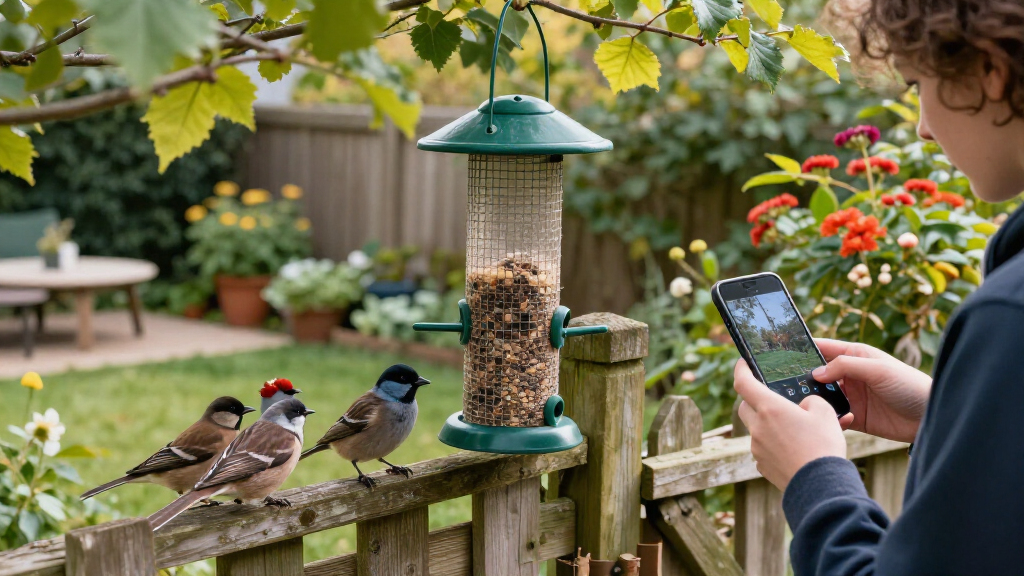
Ricker writes that he mounted the feeder and, within weeks, began receiving AI-generated phone alerts identifying visitors as Great Tits and Eurasian Blue Tits. He enjoyed watching the birds in the feeder’s 4K HDR recordings and using the Kiwibit app to read about their habits, nesting and food preferences.
The situation changed when the app identified a Common Wood Pigeon. Ricker says the bird blocked the camera’s view and continued eating despite his activating the feeder’s Nuisance Animal Alarm, a feature intended for animals such as squirrels. He eventually went outside to shoo it away.
According to Ricker, pigeons returned and stayed for 30 minutes or more, while mice fed on seed that fell below. He took the feeder down and put it in a closet. He says he does not blame Kiwibit and describes the device as enjoyable to use before pigeons became a persistent problem.
Smart Features Do Not Control Visitors
The account highlights a distinction for prospective buyers: an AI camera may identify animals and record activity, but those features do not necessarily prevent larger birds or other animals from taking over a feeder. Ricker’s experience also shows how spilled seed can attract mice beneath a feeder, extending the problem beyond what appears in the camera feed.
His recommendation is cautious rather than a claim that smart feeders generally fail: buyers who are unsure whether they want one could start with a simple, lower-cost feeder before investing in a connected model. The report is a single reviewer’s experience, not evidence that every Kiwibit unit or smart feeder will attract pests.
As an affiliate, we earn on qualifying purchases.
From Small Birds to Pigeons
Ricker’s report focuses on the Kiwibit Bird Feeder 2 Pro, described in the source as a 4K AI camera model with a solar panel and lifetime AI included. The source gives its price as $269, with $350 also appearing in the original wording as a crossed-out price.
The appeal for Ricker was the combination of live viewing, recorded video, automatic species alerts and information in the app. He initially used those features to observe small birds visiting his garden. The same feeder, however, also offered access to seed for pigeons; the account does not describe a device setting or physical modification that successfully kept them away.
“Looks like Great Tit!”
— Kiwibit app alert, as quoted by Thomas Ricker
automatic bird feeder for small birds
As an affiliate, we earn on qualifying purchases.
As an affiliate, we earn on qualifying purchases.
One Garden, Not a Product Test
The report describes one reviewer’s garden. It does not establish how often the feeder attracts pigeons or mice, whether other owners have similar experiences, or whether the outcome depends on placement, seed choice, local wildlife or other conditions. Ricker also says he could not tell whether one pigeon or several were returning.
The source does not report a response from Kiwibit, explain whether the alarm has adjustable settings, or say whether a different feeder setup would have prevented the visits. It also does not provide test results comparing the device with simpler feeders. Those points remain unanswered by the account.
As an affiliate, we earn on qualifying purchases.
A Simpler Feeder as a Starting Point
Ricker does not describe plans to reinstall the Kiwibit feeder or test a revised setup. His stated takeaway for people considering a smart feeder is to start with an inexpensive, non-AI option rather than making a larger purchase immediately.
Whether that advice applies to a particular garden will depend on local conditions; the report offers no follow-up testing or company guidance. For now, the confirmed outcome is limited to Ricker’s account: after pigeons and mice became regular visitors, he removed the feeder.
As an affiliate, we earn on qualifying purchases.
Key Questions
What happened to the Kiwibit feeder?
Thomas Ricker says he took the Kiwibit Bird Feeder 2 Pro down after pigeons repeatedly ate from it and mice gathered below.
Did the feeder initially attract birds?
Yes. Ricker reports that small birds, including birds the app identified as Great Tits and Eurasian Blue Tits, visited within weeks of installation.
Did the nuisance alarm scare the pigeon away?
Not according to Ricker. He says the pigeon reacted to the alarm but continued eating, and he eventually went outside to shoo it away.
Does this show that smart feeders attract pests?
No broad conclusion is established. The report documents one reviewer’s experience; it does not show how common the problem is across smart feeders or gardens.
What does the reviewer recommend to potential buyers?
Ricker suggests starting with a simple, inexpensive feeder without AI before buying a more expensive smart model.
Source: rss
Cold & flu season Picks
humidifiers
As an affiliate, we earn on qualifying purchases.