
TL;DR

Get home appliances delivered free with Prime
- Fast, free delivery on millions of items
- Prime Video, Amazon Music and more included
- Member-only deals all year
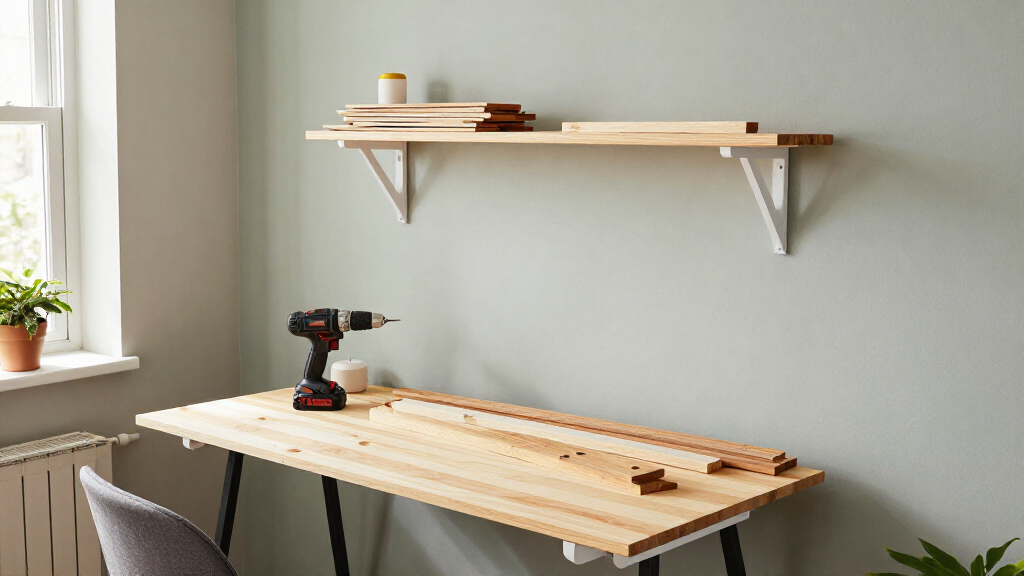
Hunker published a DIY guide to building a compact ladder desk with attached shelves from scrap wood and basic tools. The design can be adapted to a small space, but the report warns that a typical two-leg ladder desk needs to be secured to the wall and that reused outdoor wood should be checked for damage.
Hunker has published a guide to building a compact ladder-style desk with attached shelves from scrap wood, offering a potential workspace for people who lack room for a conventional desk. The design uses two long side supports with a desktop and shelves fixed between them, but the report cautions that a typical two-leg version must be secured to a wall for safety.
The project calls for scrap wood, a drill, screws, cutting tools and brackets, along with patience. Sandpaper or a sander, wood glue and decorative materials may also be useful. Hunker recommends measuring the intended spot before cutting, accounting for the desk’s position against the wall and the sizes of the wood already on hand.
For a simple layout, builders can use boards of a consistent size for the shelves and join several pieces to make a wider desktop. If the desk needs to extend farther than the shelves, the guide suggests constructing two ladder-shaped side units and fitting the desktop between them. It describes marking level lines on the side supports while the frame is positioned as it will be used, then placing and fastening the shelves and desk at those marks.
Once assembled, the wood can be sanded, painted or stained to create a more uniform finish, or left plain for a rustic look. Hunker also suggests adding small items such as plants or organizers. These are design options, not requirements for building the frame.
A Desk Designed for Tight Spaces
The project addresses a practical problem for people who work or make crafts at home but do not have room for a full-size desk. A narrow, vertical footprint can provide a work surface and storage while taking up less floor space than a wider freestanding unit. Using leftover lumber may also reduce the amount of new material needed, although the source gives no cost estimate or environmental measurement.
The trade-off is that saving space does not remove the need for stability. Because the usual design relies on two side supports and leans against a wall, its safe use depends on an appropriate attachment. The construction method and fastening choice need to suit the wall and the materials; the guide does not establish that one mounting method works in every home.
Products Worth Considering

Samsung Galaxy Tab A11 (2026) – 8.7 90Hz Android Tablet, 64GB/4GB Wi‑Fi, Octa-core MediaTek Helio G99, Dual Dolby Speakers, 20W Fast Charger

Apple MacBook Air 15-inch with M5 chip, 24GB RAM, 512GB SSD, Midnight

Bose TV Speaker (2nd Gen) Compact Soundbar
As an affiliate, we earn on qualifying purchases.
How the Ladder Frame Works
In the design described by Hunker, two long boards form the sides and the shelves and desk act like rungs between them. The side-board ends can be cut at an angle so they sit against the wall and floor when the frame leans. The builder sets the frame in its intended position before marking where each horizontal piece will go, which helps account for the angle.
The report also describes alternatives for people who want a different form. A builder can make a wider desk by joining two shelf frames with a desktop, or use paired pieces on each side to create an A-frame-style freestanding version. Shelves can be notched around their supports or given raised edges. Hunker does not provide tested load limits, detailed dimensions or a full materials schedule, so those details must be worked out for the particular build.
““The narrower frame makes this style of desk excellent for small spaces.””
— Hunker
Mounting and Wood Condition
The source does not give dimensions, load ratings or a tested fastening specification. It says screws and brackets can attach the desk to a wall, while warning that mounting may be more difficult for renters or where drilling is hard. It mentions a strong adhesive strip as a possible option but advises caution; it does not confirm that adhesive alone is suitable for every wall, desk or load.
The quality and condition of available scrap wood will also vary. The guide specifically calls for checking outdoor wood for rot or damage, but does not provide a grading process or say how much weight a completed desk can safely hold. Builders will need to assess their own materials, wall and intended use rather than assume the examples establish a universal safe design.
Plan, Assemble and Secure
The next steps for anyone following the guide are to measure the workspace, review the available lumber and settle on a layout before making cuts. After assembling the frame and attaching the shelves and desktop, the builder should choose a suitable way to secure the structure to the wall before using it. Renters may need to check what attachment methods are allowed and whether a non-drilling alternative is appropriate for the specific setup.
Hunker’s report does not announce a product launch, wider rollout or later project milestone; it is a set of DIY instructions. The outcome depends on the builder’s measurements, materials and mounting decisions, details the article does not standardize.
Key Questions
What materials does the project call for?
Hunker lists scrap wood, a drill, screws, cutting tools and brackets. Sandpaper or a sander, wood glue and finishing materials are optional additions mentioned in the guide.
Does the ladder desk need to be attached to a wall?
Hunker says the typical version, which has two legs and leans against the wall, needs to be secured to the wall for safety. The report mentions screws and brackets and urges caution about adhesive strips; it does not provide a universal mounting specification.
Can the design be made freestanding?
The report describes using paired side pieces to form an A-frame on each side as a freestanding variation. It does not provide tested dimensions or load limits for that version.
Can outdoor scrap wood be reused?
Hunker says to check wood that has been outdoors for rot or damage before using it. The source does not offer a detailed inspection checklist or assess individual pieces.
Source: hunker.com