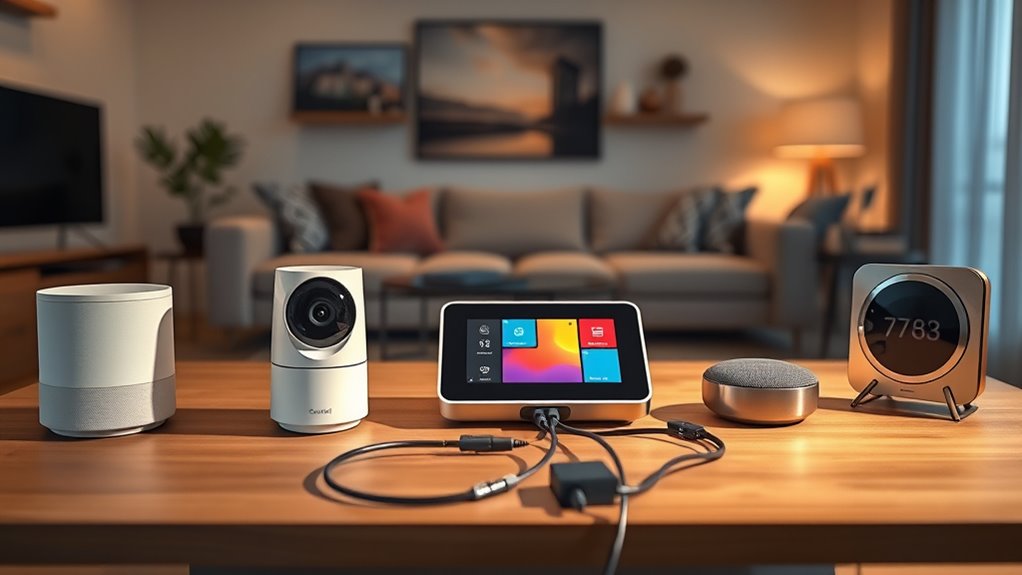

To make incompatible smart devices from different brands work together, use a compatible hub or bridge that supports multiple protocols like Zigbee, Z-Wave, or Wi-Fi. Automations through platforms like IFTTT or Apple HomeKit can also connect various devices seamlessly. Keeping firmware and app updates current helps avoid compatibility issues. By combining these solutions, you can create a unified smart home system. Keep exploring to discover more effective ways to unify your devices effortlessly.

Get home appliances delivered free with Prime
- Fast, free delivery on millions of items
- Prime Video, Amazon Music and more included
- Member-only deals all year
Key Takeaways
- Use a compatible smart hub or bridge that supports multiple protocols to unify device communication.
- Leverage third-party automation platforms like IFTTT or HomeKit for cross-brand device routines.
- Ensure all devices and control apps are updated with the latest firmware to enhance compatibility.
- Opt for devices supporting common protocols like Zigbee or Z-Wave for easier integration.
- Implement custom automations to coordinate actions between incompatible devices across brands.

Ever wondered how mixing different brands in your home can create a unique and personalized space? It’s a common curiosity, especially as smart home technology becomes more diverse. You might have a smart speaker from one brand, smart lights from another, and a security system from a third company. The challenge lies in making all these devices work seamlessly together. The good news is, with the right knowledge, you can turn incompatible smart devices into a synchronized system that enhances your home’s convenience and style.
First, understanding the core of smart home ecosystems is vital. Most devices rely on common communication protocols like Wi-Fi, Zigbee, or Z-Wave. Wi-Fi is the most familiar, used by many smart gadgets because it connects directly to your home network. Zigbee and Z-Wave are specialized protocols designed for smart home devices, offering low power consumption and reliable communication. When you’re mixing brands, it’s essential to check which protocol each device supports. If they share the same protocol, they’re more likely to communicate smoothly without extra hubs.
Understanding communication protocols like Wi-Fi, Zigbee, and Z-Wave is key to seamless smart device integration.
However, many devices support different protocols, which can complicate integration. That’s where a smart hub or bridge comes in. These hubs act as intermediaries, translating signals between incompatible devices. For example, a Zigbee hub can connect your Zigbee-compatible lights with a Z-Wave security system. Some hubs support multiple protocols, making it easier to unify diverse devices under one control system. Brands like Samsung SmartThings or Hubitat Elevation are popular options because they work with a wide range of gadgets.
Another way to make incompatible devices work together is through third-party platforms and automation services. Apps like IFTTT (If This Then That) or Apple’s HomeKit allow you to create custom routines and triggers that link devices from different brands. For instance, you could set a rule so that when your smart doorbell detects someone, your smart lights turn on, and your security cameras start recording—regardless of their brand origins. These platforms act as universal translators, bridging gaps that hardware incompatibilities might create.
Finally, keep your firmware updated. Manufacturers frequently release updates that improve device compatibility and add new features. Regularly check for updates and ensure your apps and hubs are running the latest versions. This proactive step can resolve many integration issues and keep your smart home running smoothly.
As an affiliate, we earn on qualifying purchases.
Frequently Asked Questions
Can I Control Mixed Brand Devices With a Single App?
Yes, you can control mixed brand devices with a single app by using universal smart home platforms like Google Home, Amazon Alexa, or Apple HomeKit. These apps support multiple brands and device types, allowing you to manage everything from one place. Just make certain your devices are compatible with the platform you choose. Download the app, connect your devices, and you’ll be able to control all your smart home gadgets seamlessly.
What Security Risks Are Associated With Mixing Brands?
Mixing brands can expose your smart home to security risks, like vulnerabilities from weaker or outdated firmware. While it might seem convenient, inconsistent security standards across brands can create gaps an attacker could exploit. You might feel confident using diverse devices, but the reality is, compromised devices can serve as entry points into your network. Staying vigilant, updating firmware regularly, and choosing reputable brands helps protect your home from potential threats.
Are There Any Compatibility Limitations I Should Know?
Yes, there are compatibility limitations you should be aware of. Different brands often use varying communication protocols like Zigbee, Z-Wave, or Wi-Fi, which may not always work seamlessly together. You might encounter issues with device pairing, app integration, or feature support. To avoid frustration, research each device’s compatibility with your existing smart hub or ecosystem before purchasing. Sometimes, firmware updates or third-party hubs can help bridge gaps.
How Do I Troubleshoot Connectivity Issues Between Brands?
Sometimes, compatibility hiccups happen. To troubleshoot connectivity issues between brands, start by ensuring all devices are on the same Wi-Fi network and updated with the latest firmware. Restart your devices and router, then re-establish the connection. Check app permissions and settings, and consider resetting devices to factory defaults if problems persist. Patience and a methodical approach often help bridge gaps between incompatible smart devices.
Do I Need Additional Hubs or Bridges for Integration?
You might need additional hubs or bridges if your devices don’t naturally communicate. Check each device’s requirements first; some brands require specific hubs to connect with others. If your current setup doesn’t support seamless integration, adding a compatible hub can bridge the gap. Make sure the hubs you choose support all your devices’ protocols (like Zigbee, Z-Wave, or Wi-Fi) to guarantee smooth interoperability and avoid connectivity issues.
As an affiliate, we earn on qualifying purchases.
Conclusion
Bringing together smart devices from different brands can seem intimidating, but it’s entirely achievable with the right tools and patience. Did you know that over 60% of smart home users struggle with device compatibility? Don’t let that discourage you—by using universal hubs or smart home integrations, you can create a seamless, efficient system. With a little effort, your mixed-brand home will feel more connected and smarter than ever, making everyday life easier and more enjoyable.
As an affiliate, we earn on qualifying purchases.
As an affiliate, we earn on qualifying purchases.
Fall yard work Picks
leaf blowers
As an affiliate, we earn on qualifying purchases.