Understanding Zigbee, Z-Wave, Wi-Fi, and Bluetooth helps you choose the right technology for your smart home. Zigbee and Z-Wave support low power, mesh networks, and connect many devices, making them ideal for scalable systems. Wi-Fi offers high bandwidth for streaming, while Bluetooth is great for short-range, low-energy devices. Each protocol has different security features and compatibility aspects. Explore further to discover how these technologies can create a seamless, secure smart home experience.

Get home appliances delivered free — and shop member deals
- Fast, free delivery on millions of items
- Access to Prime Big Deal Days deals on October 6–7
- Prime Video, Amazon Music and more included
Key Takeaways
- Zigbee and Z-Wave enable low-power, mesh network communication for reliable, scalable smart home device connectivity.
- Wi-Fi provides high bandwidth and long-range coverage, suitable for streaming and large device networks.
- Bluetooth and Bluetooth Low Energy are ideal for short-range, low-power devices like wearables and sensors.
- Compatibility and interoperability depend on standardization efforts, affecting seamless device integration across protocols.
- Security features like encryption and device authentication are vital for protecting smart home networks across all technologies.
As an affiliate, we earn on qualifying purchases.
Understanding Wireless Protocols in Smart Homes

Wireless protocols form the backbone of smart home connectivity, enabling devices to communicate seamlessly. When setting up your smart home, understanding these protocols helps you streamline device setup and improve functionality. For example, protocols like Zigbee and Z-Wave support voice control, allowing you to control devices hands-free through virtual assistants. These protocols establish a reliable mesh network, ensuring your devices stay connected even if one device drops out. During device setup, choosing the right protocol can simplify pairing and reduce latency. You don’t need to worry about complicated wiring or extensive configurations. Instead, focus on selecting the protocol that best fits your needs, ensuring smooth integration, easy voice control, and a hassle-free smart home experience. Additionally, embracing European cloud innovation can enhance the security and sustainability of your smart home infrastructure.
Z-Wave compatible smart switches
As an affiliate, we earn on qualifying purchases.
As an affiliate, we earn on qualifying purchases.
Key Features of Zigbee and Z-Wave

Zigbee and Z-Wave are two of the most popular protocols for smart home communication, each offering distinct features that enhance device connectivity. They excel in low power consumption, which extends battery life for sensors and remote devices. Both use mesh networking, allowing devices to communicate through multiple hops, increasing reliability and range. Zigbee typically supports more devices per network, making it suitable for larger setups. Z-Wave emphasizes simplicity and interoperability within a smaller, dedicated ecosystem. Their key features include secure communication, low latency, and energy efficiency. Here’s a comparison: mesh networking enables flexible and scalable device connections that adapt to various home layouts.
As an affiliate, we earn on qualifying purchases.
Comparing Wi-Fi and Bluetooth for Connected Devices
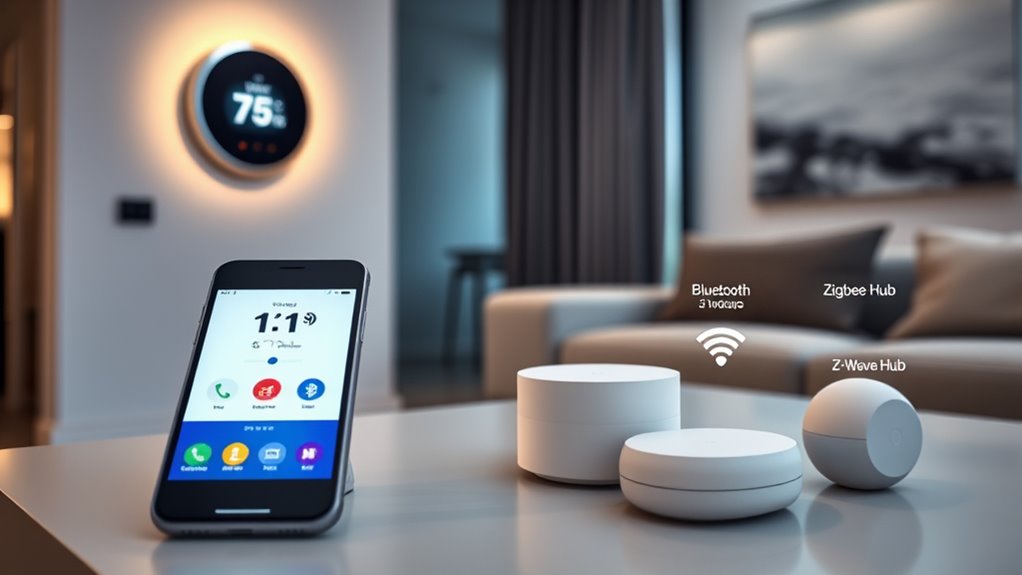
When choosing between Wi-Fi and Bluetooth for your smart devices, consider how far each can connect, as Wi-Fi offers longer range while Bluetooth is more limited. Power consumption also matters, since Bluetooth typically uses less energy, making it better for battery-powered gadgets. Understanding these differences helps you pick the right technology for your home’s needs. Additionally, understanding smart home connectivity protocols can help you make more informed decisions about device compatibility and performance. Recognizing the communication range of each technology can ensure you select the best option for your specific setup and avoid connectivity issues.
Range and Connectivity
While both Wi-Fi and Bluetooth enable your smart home devices to communicate, they differ markedly in their range and connectivity capabilities. Wi-Fi offers a broader coverage area, often reaching up to hundreds of feet, making it suitable for larger spaces or mesh networks that enhance signal strength. Bluetooth, on the other hand, has a limited range, typically 30 feet or less, ideal for close-proximity devices. Mesh networks can extend Bluetooth’s connectivity, improving signal strength across your home. Here’s a quick comparison:
| Feature | Wi-Fi | Bluetooth |
|---|---|---|
| Typical Range | Up to 300 feet | Up to 30 feet |
| Signal Strength | Strong, suitable for large areas | Moderate, optimized for short distances |
| Connectivity Type | Point-to-point, mesh | Point-to-point, mesh |
| Best Use Case | Streaming, high-data devices | Wearables, sensors |
| Network Expansion | Widely supported | Requires mesh or repeaters |
Additionally, choosing between these protocols depends on your specific smart home needs and the reliability of your network setup.
Power Consumption and Efficiency
Both Wi-Fi and Bluetooth are designed to connect devices efficiently, but they differ considerably in how much power they consume during operation. Bluetooth, especially in its Low Energy (BLE) mode, offers superior energy efficiency, which extends battery life for connected devices like sensors and wearables. It uses less power, making it ideal for battery-powered gadgets that need to operate for months or even years without frequent charging. Wi-Fi, on the other hand, consumes more energy because it transmits larger amounts of data at higher speeds. While this makes Wi-Fi suitable for streaming and high-bandwidth applications, it reduces battery life. If conserving energy is a priority, Bluetooth’s low power consumption helps maximize device longevity, making it a better choice for battery-dependent smart home devices. Additionally, understanding Free Floating can help in optimizing network performance and power efficiency in smart home setups. For improved power management, selecting the appropriate connection type based on device needs can significantly enhance overall system efficiency.
As an affiliate, we earn on qualifying purchases.
Compatibility and Interoperability Considerations

When setting up your smart home, you’ll encounter compatibility and interoperability challenges across different devices and platforms. Standardization and protocols play a vital role in ensuring your devices work together seamlessly. Understanding these factors helps you create a more reliable and integrated smart home system. Additionally, being aware of vetted information about device security and privacy can help you make more informed decisions for your smart home setup.
Cross-Platform Compatibility Challenges
Have you ever wondered why your smart home devices sometimes refuse to work together seamlessly? Cross-platform compatibility challenges often stem from differences in device pairing processes and incompatible protocols. When devices use distinct systems like Zigbee, Z-Wave, Wi-Fi, or Bluetooth, they may struggle to communicate unless designed for interoperability. Firmware updates can also create issues, especially if they aren’t synchronized across devices or if an update causes compatibility glitches. These challenges mean you might need to manually manage or reconfigure devices to ensure they work together properly. Without standardized protocols, achieving a truly integrated smart home requires patience and sometimes additional hubs or bridges to connect incompatible devices. Interoperability is crucial for a cohesive smart home experience, and ongoing development in industry standards aims to address these compatibility issues. Overcoming these hurdles is key to creating a smooth, unified smart home experience.
Standardization and Protocols
Standardization and protocols play a crucial role in guaranteeing your smart home devices work together smoothly. They establish common language through protocol standards, enabling devices from different brands to communicate effectively. Many smart home systems use mesh networks, which improve reliability and coverage by connecting devices directly, rather than through a central hub. These mesh networks can enhance network stability and ensure seamless device interactions across your smart home ecosystem. As technology advances, adopting universal standards can further simplify device integration and future-proof your setup. However, incompatible protocols can hinder interoperability, making it harder to create a seamless experience. Detecting passive voice in your writing can help improve clarity and engagement. Choosing devices with compatible protocol standards ensures your smart home functions cohesively.
Security Aspects of Different Wireless Technologies
Wireless technologies in smart homes vary widely, each presenting unique security challenges that you need to understand. Encryption standards protect data as it travels between devices, preventing unauthorized access or eavesdropping. For example, Wi-Fi uses WPA3, while Zigbee and Z-Wave rely on their own encryption protocols. Device authentication ensures that only trusted devices connect to your network, reducing risks of impersonation or malicious entry. Strong authentication methods, like pre-shared keys or certificates, are essential for maintaining security. However, vulnerabilities can still exist if encryption standards are outdated or weak, or if device authentication isn’t properly implemented. By understanding these aspects, you can better assess the security strengths and weaknesses of each wireless technology, helping you make informed choices to safeguard your smart home.
Practical Use Cases and Ideal Scenarios
Smart home connection technologies excel when applied to specific use cases, maximizing convenience, security, and energy efficiency. For example, voice control makes daily routines easier, allowing you to turn on lights or adjust thermostats effortlessly. Devices with simple setup processes benefit newcomers, reducing frustration and speeding up integration. Zigbee and Z-Wave are ideal for securing interconnected systems like door locks and sensors, where reliable communication is essential. Wi-Fi works well for streaming devices and high-bandwidth needs, while Bluetooth suits quick, short-range setups like smart locks or fitness trackers. In practical scenarios, these technologies simplify device setup, enhance automation, and improve user experience. Selecting the appropriate protocol can also maximize network reliability, ensuring your smart home remains responsive and secure at all times. Additionally, understanding wireless communication protocols helps you make informed choices that prevent interference and enhance overall system stability. Recognizing the role of AI in maintaining smart home security can further optimize how your devices work together to protect your environment. When choosing between these technologies, considering interference mitigation can significantly improve your system’s performance and reliability. Moreover, employing mesh networking strategies ensures comprehensive coverage and reduces dead zones, making your smart system more resilient. By choosing the right protocol for your needs, you optimize your smart home’s performance and enjoy seamless control.
Choosing the Right Protocol for Your Smart Home
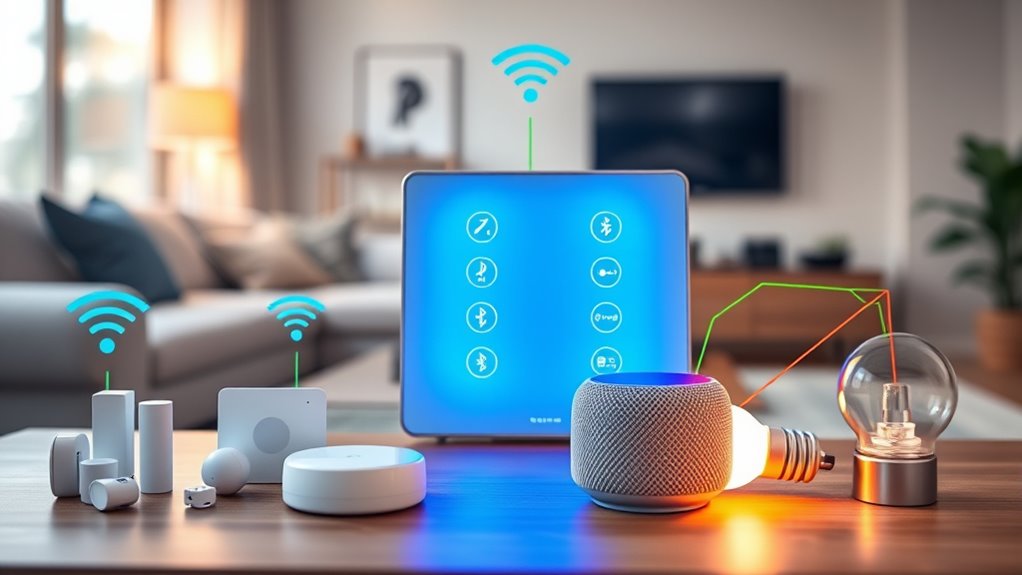
Choosing the right protocol for your smart home starts with understanding your specific needs and how different technologies align with them. Consider how device integration fits into your setup—some protocols work better with certain devices or ecosystems. For example, Wi-Fi offers high bandwidth and easy integration but might drain more power, while Zigbee and Z-Wave excel at low power consumption and reliable mesh networks. User interfaces also matter; ensure the protocol supports seamless control through your preferred apps or voice assistants. Think about your home’s size, the number of devices, and your upgrade plans. By matching your needs with each protocol’s strengths, you’ll create a cohesive, efficient smart home that’s easy to manage and expand. Additionally, understanding the water-related applications of these protocols can help ensure your smart home is not only connected but also optimized for various environments. Furthermore, considering the interoperability between different protocols can enable smoother integration when combining multiple smart home systems. Knowing how each protocol handles device compatibility can help prevent future frustrations and ensure your system remains flexible as new devices emerge, especially as technology standards continue to evolve. Being aware of the security features offered by each protocol can also play a crucial role in protecting your smart home ecosystem from vulnerabilities.
Frequently Asked Questions
How Do Wireless Protocols Affect Smart Home Device Battery Life?
Wireless protocols directly impact your smart home device’s battery efficiency and power consumption. Protocols designed for low power, like Zigbee and Z-Wave, use less energy, helping your devices last longer between charges. In contrast, Wi-Fi and Bluetooth may consume more power, leading to quicker battery drain. So, choosing a protocol suited for low power use can extend your device’s battery life, saving you time and hassle with frequent recharging.
Can Multiple Wireless Protocols Be Used Simultaneously in One Smart Home?
Think of your smart home as a bustling city skyline, where different protocols are like diverse traffic lanes. Yes, you can use multiple protocols simultaneously, but it’s essential to guarantee protocol compatibility and interference mitigation. When you do, your devices communicate smoothly without traffic jams. Integrating protocols lets your smart home operate seamlessly, making your life easier and more connected without chaos or signal clashes.
What Are the Troubleshooting Steps for Connectivity Issues Across Protocols?
If you face connectivity issues across protocols, start by checking for network interference that might disrupt signals. Make certain your devices are within the recommended signal range, as walls or appliances can weaken connections. Restart your hub or router, update firmware, and move devices closer if needed. Verify that there’s no interference from other wireless devices. These steps help restore stable connections across your smart home protocols.
How Do Firmware Updates Impact Device Security and Compatibility?
Suppose you update your smart light’s firmware, and suddenly it’s more resistant to hacking—this shows how firmware security improves. Firmware updates enhance device security by fixing vulnerabilities and strengthen compatibility updates, ensuring your device works smoothly with new systems. You should regularly check for updates because they protect your devices and keep them compatible with the latest smart home ecosystems, reducing risks and enhancing performance.
Are There Emerging Wireless Technologies That Could Replace Zigbee, Z-Wave, Wi-Fi, or Bluetooth?
Future wireless innovations like Thread and Matter aim to substitute current protocols by offering faster, more secure, and more reliable connections. These emerging technologies focus on protocol standardization, making device interoperability seamless across brands and platforms. You’ll likely see smarter home devices adopting these standards soon, simplifying setup and improving security. Staying updated on these innovations ensures your smart home remains compatible, secure, and ready for the next big leap in wireless communication.
Conclusion
With over 10 billion connected smart home devices expected by 2025, choosing the right wireless protocol becomes essential. Zigbee and Z-Wave excel in low-power, secure networks, while Wi-Fi and Bluetooth offer speed and convenience. Understanding their strengths helps you create a seamless, secure smart home. By selecting the best protocol for your needs, you’ll enjoy smarter living and peace of mind, knowing your devices work harmoniously together in your connected space.
NFL season / tailgating Picks
team gear
As an affiliate, we earn on qualifying purchases.