
TL;DR

Get home appliances delivered free with Prime
- Fast, free delivery on millions of items
- Prime Video, Amazon Music and more included
- Member-only deals all year
The actual development is a July 1, 2026 ISR Briefing from Thorsten Meyer AI that frames Ukraine’s Delta as a leading case of software-defined warfare. Public reporting supports Delta’s role as a cloud-backed battlefield management system, while claims about scale and target output remain partly unverified.
A July 1, 2026 ISR Briefing from Thorsten Meyer AI identified Ukraine’s Delta as a leading example of software-defined warfare, arguing that the system shows how battlefield advantage can depend on fusing drones, satellites, sensors and unit reports into one shared digital map.
The briefing describes Delta as a situational-awareness and battlefield-management system developed through an unusual Ukrainian coalition involving Aerorozvidka, the Defense Ministry’s defense-technology innovation center and the Ministry of Digital Transformation associated in public accounts with then-minister Mykhailo Fedorov.
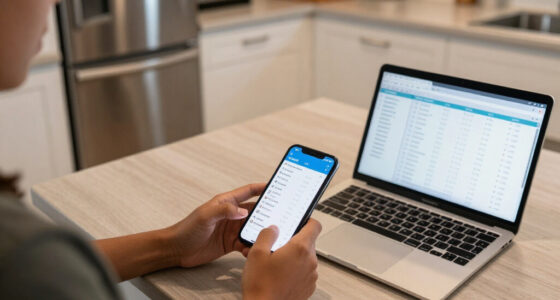
Public descriptions, including Ukraine’s Delta portal and the sources cited by the briefing, say the system uses a cloud-native backend and runs through ordinary browsers on PCs, laptops, tablets and phones. Ukraine’s government approved full deployment in February 2023 and allowed some cloud components to be hosted outside Ukraine to reduce exposure to missile and cyberattacks.
The core claim of the briefing is that the scarce asset is not any single sensor but the fusion layer that makes many inputs usable. Drones, satellite imagery, SAR radar, sensor networks and vetted reports matter most when commanders can see a trusted live picture and share it quickly with frontline units.
Software-defined warfare: how Ukraine’s Delta turned the battlefield into a shared, real-time map
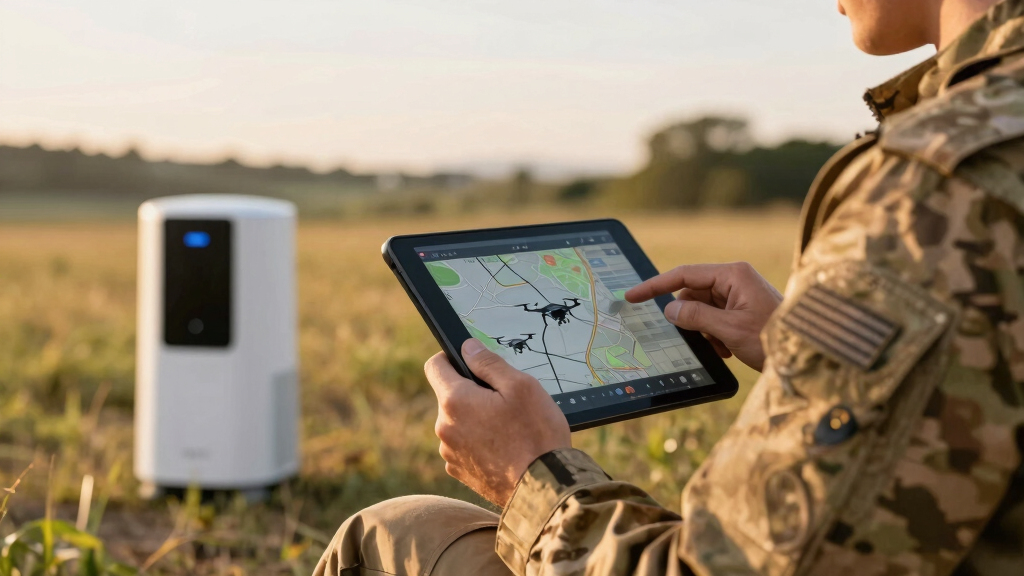
A soldier opens a browser and sees the fused war — drones, satellites, sensors and vetted reports on one live map. The backend is a cloud deliberately hosted abroad so a missile can’t take it down. The clearest case yet of treating warfare as software.
Optical sensors go blind in cloud & dark; an all-weather SAR radar layer — the kind VigilSAR produces — slots into a picture like this as one resilient, sovereign input. vigilsar.com · And note the paradox: to survive missiles & cyberattack, Ukraine hosted its crown-jewel cloud outside its own borders — trading physical sovereignty for operational survivability. Resilience through distribution.
Delta’s lasting lesson isn’t a piece of software — it’s a model of how to build: commodity clients, cloud backend, open standards, relentless iteration, fusion over hardware, and resilience through distribution. It’s why a wartime NGO out-shipped procurement bureaucracies on a fraction of the budget. The platform mattered less than the picture — and the picture is software. Own the fusion layer, own the sovereign feeds into it, and get it to the edge.
Fusion Moves to the Edge
For readers outside Ukraine, the Delta case matters because it challenges the older defense model built around slow procurement, bespoke terminals and isolated data stores. The briefing argues that commodity devices, cloud infrastructure and fast software updates can push a battlefield picture to more users at lower cost than traditional command systems.
The system also exposes a sovereignty tradeoff: Ukraine hosted key cloud components abroad so the service would be harder to destroy from inside the country. That choice places operational survivability ahead of strict physical control, a lesson now relevant for NATO and partner militaries planning for cyberattacks, jamming and strikes on command infrastructure.
Products Worth Considering

Samsung 32-Inch Odyssey OLED G8 (G80SH) 4K Gaming Monitor

Samsung 27-Inch Odyssey QD-OLED G8 4K 240Hz Gaming Monitor

Amazon Kindle Paperwhite (12th Generation, 2024), 16 GB, 7-inch Display, Jade
As an affiliate, we earn on qualifying purchases.
From NATO Trial to Deployment
Delta’s roots trace to a 2017 NATO-linked effort to reduce siloed command information and move Ukrainian forces closer to shared standards. Public summaries say the system became broadly operational in August 2022 and was used during operations against Russia’s Kyiv convoy after the full-scale invasion.
The Ukrainian Defense Ministry has credited Delta with helping identify 1,500 Russian targets per day during that period, but the briefing says the number is not independently verified. Cybersecurity reporting, including from BleepingComputer, also recorded December 2022 phishing and malware activity aimed at Delta users, underscoring that battlefield software becomes a high-value target.
“the clearest working example yet of software-defined warfare”
— Thorsten Meyer AI ISR Briefing, July 1, 2026
Performance Claims Still Need Proof
Several operational details remain unavailable. Public sources do not establish current user counts, wartime uptime under jamming, methods for checking crowdsourced reports or the extent of partner intelligence feeds inside Delta.
The main risks are also the ones flagged by the briefing: phishing, malware, connectivity loss, jamming and data poisoning. A faster command loop can cut delay, but it can also move bad data or mistaken target judgments faster if verification fails.
Allies Watch the Delta Model
The next test is whether Ukraine and its partners can keep improving Delta while protecting credentials, communications links and data quality. Allied militaries will watch how the system adds new sensors, including all-weather radar and AI-assisted video tools, without exposing sources or users.
For defense planners, the near-term question is procurement: whether to keep buying bespoke hardware or fund cloud systems, open standards and update cycles that can reach frontline units quickly.
Key Questions
What is Ukraine’s Delta system?
Delta is a Ukrainian battlefield management and situational-awareness system that fuses drones, satellites, sensors and reports into a real-time map for planning, coordination and secure sharing.
Is Delta confirmed to run on ordinary devices?
Yes. Public descriptions say Delta has a cloud-native backend and a browser-based client that can run on regular phones, tablets, laptops and PCs, rather than only on custom military terminals.
Did Delta identify 1,500 targets per day?
The 1,500 targets per day figure is attributed to the Ukrainian Defense Ministry. The briefing treats it as a claim, because it has not been independently verified.
What makes this software-defined warfare?
The phrase refers to a shift in which data fusion, software updates, cloud hosting and shared operating pictures can shape battlefield speed as much as individual platforms or weapons.
Source: Thorsten Meyer AI