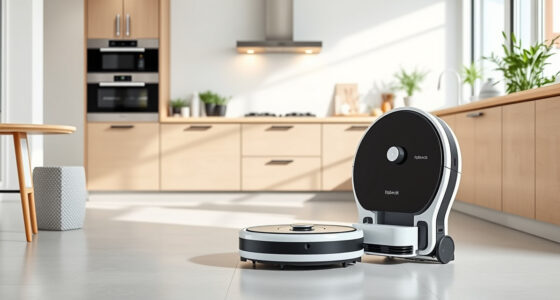
Robot vacuums are great for daily surface cleaning and quick maintenance, but they can’t handle deep cleaning tasks like stain removal, dusting, or detailed upholstery work that a housekeeper provides. While tech can assist with routine chores and save time, it falls short of the thorough, personalized cleaning a housekeeper offers regularly. Want to understand how combining both options can keep your home spotless? Keep exploring to find out more.

Get home appliances delivered free — and shop member deals
- Fast, free delivery on millions of items
- Access to Prime Big Deal Days deals on October 6–7
- Prime Video, Amazon Music and more included
Key Takeaways
- Robot vacuums excel at daily surface cleaning but cannot perform deep cleaning tasks like scrubbing or stain removal.
- Housekeepers are capable of thorough, detailed cleaning, including dusting, mopping, and upholstery, which robots cannot handle.
- Technology enhances vacuum navigation and scheduling but lacks the ability to assess and treat specific deep cleaning needs.
- Combining robot vacuums for routine maintenance with housekeepers for deep cleaning offers optimal home cleanliness.
- Deep cleaning tasks requiring human judgment and manual effort remain beyond the capabilities of current robot vacuum technology.
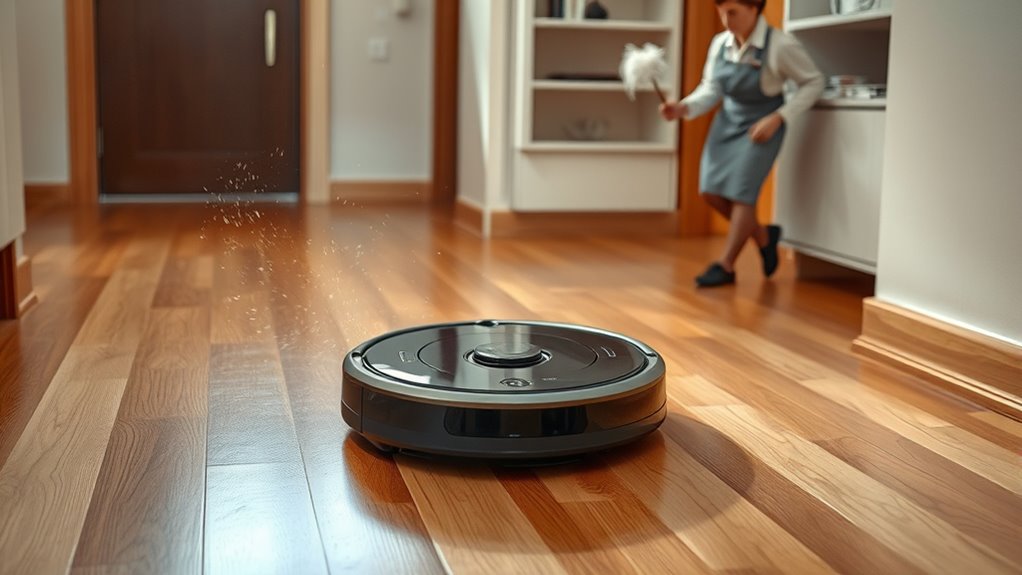
When it comes to keeping your home clean, robot vacuums and housekeepers offer two very different solutions. You might appreciate the convenience of a robot vacuum that whirs around your living space on its own, or you could prefer the personal touch of a dedicated housekeeper who can handle more than just vacuuming. Robot vacuums are designed to automate routine cleaning tasks, so you don’t have to lift a finger during those busy days. They’re compact, smart, and can navigate around furniture, picking up dust, crumbs, and pet hair efficiently. With features like scheduled cleaning and app controls, you can set your robot vacuum to run when you’re not home, making it easy to maintain a tidy environment without much thought.
However, while robot vacuums are excellent for daily surface cleaning, they have limitations when it comes to deep cleaning. They typically focus on visible dust and debris on floors and carpets but aren’t equipped to scrub or sanitize surfaces thoroughly. For example, they can’t clean behind furniture, reach into corners as effectively, or remove stubborn stains and grime. This means that, if you’re seeking a truly deep clean—like removing built-up dirt from rugs, cleaning upholstery, or scrubbing bathroom tiles—robot vacuums fall short. They’re best suited for maintenance rather than extensive cleaning. Conversely, housekeepers bring a human touch that technology can’t replicate. They can assess your home’s unique needs, target problem areas, and perform detailed cleaning tasks that go beyond just vacuuming. They can dust hard-to-reach spots, mop floors, clean windows, and even organize clutter, providing a level of thoroughness that’s hard for robots to match.
You might also find that a housekeeper offers flexibility and personalized service, adapting to your preferences and adjusting their approach based on your home’s specific requirements. They can handle delicate surfaces carefully, treat stains, and perform deep cleans that require judgment and finesse. Additionally, the integration of smart-home technology with cleaning robots can enhance their efficiency and customize cleaning routines to better fit your lifestyle. But, of course, this comes at a higher cost and less convenience compared to a robot vacuum. While robot vacuums excel at maintaining cleanliness with minimal effort, they aren’t a substitute for the detailed cleaning a housekeeper can provide. If deep cleaning is a priority, especially in tricky areas or for specialized tasks, relying solely on tech isn’t enough. Combining both options—using a robot vacuum for everyday upkeep and hiring a housekeeper periodically for deep cleaning—might be the best way to keep your home spotless without sacrificing convenience or thoroughness.
robot vacuum with deep cleaning capabilities
As an affiliate, we earn on qualifying purchases.
As an affiliate, we earn on qualifying purchases.
Frequently Asked Questions
Can Robot Vacuums Replace Professional Deep Cleaning Services?
Robot vacuums can’t fully replace professional deep cleaning services. While they excel at maintaining daily cleanliness and reaching tight spots, they lack the power and thoroughness needed for deep cleaning tasks like scrubbing carpets, cleaning behind appliances, or sanitizing hard-to-reach areas. You’ll still need a housekeeper or professional cleaner periodically to handle those intensive tasks, ensuring your home stays truly spotless and healthy.
How Do Robot Vacuums Handle Delicate or Fragile Items?
Robot vacuums generally avoid delicate or fragile items during cleaning. They use sensors to detect and steer clear of objects like glassware, vases, or jewelry, preventing damage. You can enhance this safety by setting boundary strips or virtual walls to keep the vacuum away from fragile areas. However, always remove or secure fragile items before cleaning to guarantee they stay safe and undisturbed during the process.
Are Robot Vacuums Effective on All Types of Flooring?
You might think robot vacuums work perfectly on all flooring types, but they actually perform best on hard surfaces like hardwood, tile, and laminate. While many models handle carpets well, they can struggle with thick or plush carpets and uneven flooring. To guarantee ideal cleaning, check your vacuum’s specifications and consider the flooring in your home—some models are designed specifically for certain surfaces.
What Are the Maintenance Costs for Robot Vacuums Compared to Housekeepers?
You’ll likely spend less on maintenance with robot vacuums than hiring housekeepers. Robot vacuums require occasional replacement of filters, brushes, or batteries, which can add up over time but are generally affordable. Housekeepers, on the other hand, charge regularly for their services, and costs can vary widely depending on frequency and scope. Overall, robot vacuums tend to be more cost-effective for ongoing maintenance, especially if you prefer a set-it-and-forget-it approach.
Do Robot Vacuums Improve Indoor Air Quality?
Did you know robot vacuums can substantially improve indoor air quality? They reduce dust, pet hair, and allergens by regularly cleaning floors, which minimizes airborne particles. Their HEPA filters trap tiny pollutants, making your home’s air cleaner. If you use a robot vacuum daily, you might notice fewer allergy symptoms and fresher air. So yes, these devices can help create a healthier living environment by maintaining cleaner indoor air.
As an affiliate, we earn on qualifying purchases.
Conclusion
While robot vacuums have come a long way, they still can’t replace the touch of a seasoned housekeeper, especially for deep cleaning tasks. Think of them as your trusty automaton sidekick—helpful but not a complete substitute, much like a trusty steed in a medieval castle. Ultimately, you’ll find the best approach blends tech’s convenience with human expertise. After all, even in this Jetsons age, some chores still benefit from a personal touch.
As an affiliate, we earn on qualifying purchases.
professional housekeeper services
As an affiliate, we earn on qualifying purchases.
As an affiliate, we earn on qualifying purchases.
NFL season / tailgating Picks
team gear
As an affiliate, we earn on qualifying purchases.