
TL;DR

Get home appliances delivered free — and shop member deals
- Fast, free delivery on millions of items
- Access to Prime Big Deal Days deals on October 6–7
- Prime Video, Amazon Music and more included
Nicolas Nielsen has developed Hyve, a self-driving, mobile beehive that traverses urban green spaces to aid pollination. The project aims to address habitat fragmentation and bee decline in cities. It was presented as a finalist for the 2026 Rimowa Design Prize.
Nicolas Nielsen has introduced Hyve, an autonomous, mobile beehive designed to navigate urban green spaces and facilitate pollination across fragmented city environments. The project aims to support bee populations and enhance ecological connectivity in cities, marking a novel approach to urban biodiversity infrastructure.
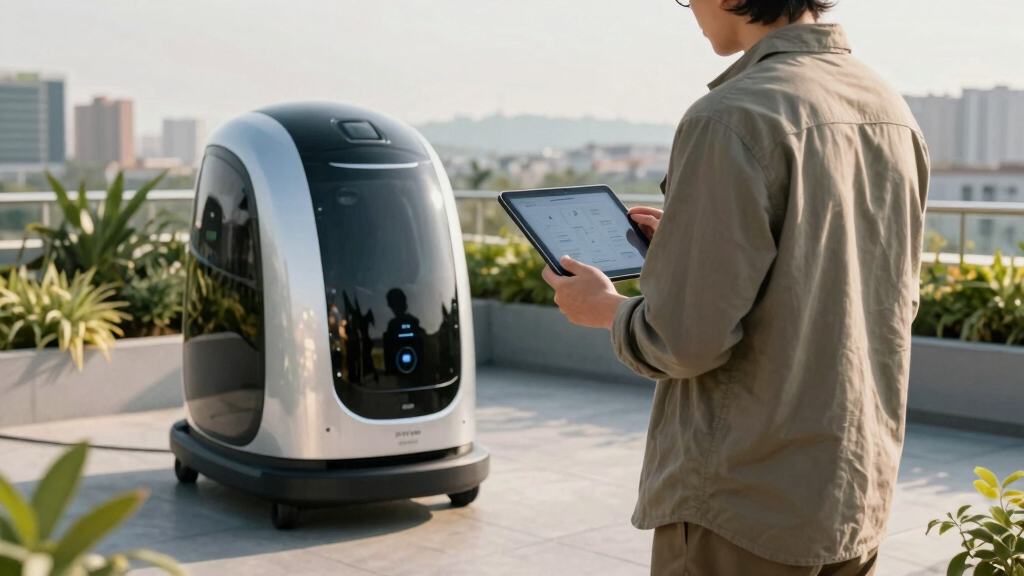
Hyve is a compact, four-wheeled vehicle with a rounded, matte granular silver exterior, built to move across parks, rooftops, and urban corridors. It features a translucent mesh canopy that shelters a living bee colony while allowing visibility and ventilation. The hive is powered by a hydrogen fuel cell, enabling autonomous movement and adaptability to uneven terrain.
The vehicle’s interior includes a layered construction with a habitat tray for the colony, ventilation layers, and mechanical systems, ensuring a safe environment for bees while supporting mobility. Circular bee entry ports emit a warm amber glow, indicating activity inside. The design was developed by Nicolas Nielsen at Bauhaus-Universität Weimar and was a finalist for the 2026 Rimowa Design Prize.
Implications for Urban Biodiversity and Pollination
Hyve introduces a practical solution to habitat fragmentation in cities by enabling bees to travel between isolated green spaces. Its mobility allows for targeted pollination efforts, potentially improving urban plant health and supporting local ecosystems. The project also emphasizes a design approach that integrates ecological functions into everyday urban objects, fostering greater ecological awareness and infrastructure innovation.
urban beehive mobile pollination system
As an affiliate, we earn on qualifying purchases.
As an affiliate, we earn on qualifying purchases.
Urban Habitat Fragmentation and Bee Decline
Urban environments often disrupt natural bee habitats, reducing foraging opportunities and contributing to declines in bee populations. Existing fixed habitats such as green roofs and parks are limited in scope and connectivity. The development of mobile habitats like Hyve responds to these challenges by providing dynamic, transportable ecological infrastructure. The concept aligns with broader efforts to incorporate biodiversity support into city planning and design.
“Hyve acts as both shelter and transporter, addressing habitat fragmentation by moving with the bees through urban green spaces.”
— an anonymous researcher
self-driving beehive for city gardens
As an affiliate, we earn on qualifying purchases.
As an affiliate, we earn on qualifying purchases.
Unconfirmed Details on Deployment and Effectiveness
It is not yet clear how Hyve will be deployed at scale or its long-term impact on urban bee populations. The project remains at the conceptual and prototype stage, with no confirmed plans for commercial or municipal implementation. Further testing and development are needed to assess its practical viability and ecological benefits.
As an affiliate, we earn on qualifying purchases.
Next Steps for Development and Urban Trials
Nielsen and his team are expected to continue refining Hyve, potentially conducting pilot programs in select urban areas to evaluate its performance. Future developments may include integrating additional sensors for environmental monitoring and exploring partnerships with city planners and ecological organizations to facilitate real-world deployment.
As an affiliate, we earn on qualifying purchases.
Key Questions
How does Hyve move through the city?
Hyve is equipped with independently driven four wheels and an autonomous navigation system, allowing it to traverse uneven urban terrain and green spaces without human intervention.
Can Hyve support large bee colonies?
Yes, the design includes a habitat tray that can house a living bee colony, with ventilation and protection features to sustain the bees during movement.
Is Hyve intended for commercial use?
Currently, Hyve is a conceptual project and finalist in a design competition; plans for commercial deployment or city adoption have not been announced.
What are the environmental benefits of Hyve?
Hyve aims to enhance urban pollination, support bee populations, and improve ecological connectivity between fragmented green spaces.
Will Hyve operate autonomously in all urban conditions?
While designed for uneven terrain, its performance in complex urban environments remains to be tested in real-world conditions.
Source: designboom
Halloween Picks
halloween
As an affiliate, we earn on qualifying purchases.