
TL;DR

Get home appliances delivered free with Prime
- Fast, free delivery on millions of items
- Prime Video, Amazon Music and more included
- Member-only deals all year
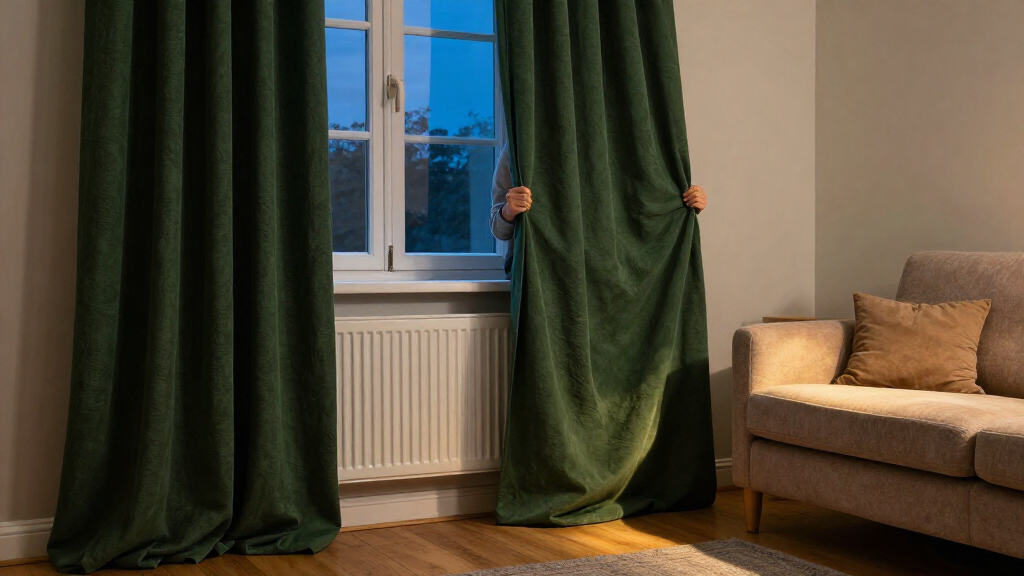
An Ideal Home report found that closing curtains around sunset can help rooms retain heat by adding a layer over windows. The writer measured a 2°C temperature difference across thermal curtains, but the report gives no controlled test or household energy-use figures, so savings will vary.
An Ideal Home report says closing curtains shortly before sunset can help reduce heat loss through windows, with the writer measuring a 2°C difference between the areas in front of and behind thermal curtains after dark. The result suggests the habit may help some households feel warmer in the evening, though the report does not quantify any change in heating use or energy bills.
The writer says they resumed closing curtains before nightfall and found the home felt warmer for longer, reducing the perceived need to turn on central heating for an additional hour. They describe the temperature reading as an observation in their home, not the result of a controlled comparison of household energy consumption. The report does not state how the temperatures were measured or whether the rooms, outdoor conditions and heating settings were held constant.
So Energy consumer energy expert Stuart Middleton says windows can be a source of heat loss and curtains add an insulating layer that can slow it. He says thick, well-fitting or thermally lined curtains may be particularly effective. The report’s writer also found different results among the window coverings tested: around 2°C across thermal curtains and blinds, just under 1°C across wooden blinds, and about 0.5°C across standard curtains. Those readings are specific to the writer’s home.
The recommended timing is just before sunset, rather than after the room has already cooled. Closing curtains then may preserve warmth gained from daylight while reducing heat escaping through glazing at night. The report suggests checking local sunset times or setting a reminder; it also names motorised curtain devices as an option for households that are away at that time.
Curtains May Reduce Evening Heat Loss
The practical appeal is that closing existing curtains costs nothing and may improve comfort without requiring a change to the heating system. If a room feels warmer, occupants may choose to run heating for less time, but the report does not establish that this happened or calculate resulting energy or bill savings. The distinction matters: a warmer-feeling room is not, by itself, proof of a measurable reduction in consumption.
The potential effect also depends on the home. Window type, draughts, curtain fit, fabric and insulation all influence how much heat escapes and how much a covering can slow that process. The measurements reported by Ideal Home should not be treated as a guaranteed result for other rooms or as a forecast of a particular household’s savings.
thermal lined curtains for windows
As an affiliate, we earn on qualifying purchases.
As an affiliate, we earn on qualifying purchases.
Timing and Window Coverings Matter
The report comes as colder weather prompts households to look for ways to manage heating demand. It cites a 4% energy-price rise in October and forecasts of further increases of between 16% and 25% in January, but does not specify the source, tariff, or comparison period for those figures. They provide the report’s price context, not a calculation of how much closing curtains would offset a bill.
The article also refers to advice from Martin Lewis to close curtains as soon as the sun goes down. Its own recommendation is to close them shortly before sunset, using local sunset time as a guide. That timing is intended to retain daylight warmth while limiting heat loss after dark. The report’s product examples include automated curtain devices, but automation is optional; the core suggestion is simply to close suitable coverings at the right time.
“Closing your curtains at dusk is a simple way to help keep your home warm as temperatures drop.”
— Stuart Middleton, So Energy consumer energy expert
energy efficient blackout thermal curtains
As an affiliate, we earn on qualifying purchases.
As an affiliate, we earn on qualifying purchases.
Savings Have Not Been Quantified
The report provides no measured energy-use or bill data showing how much the curtain habit saved, and it does not describe a controlled test. The 2°C reading is a temperature difference across the coverings in one home, not a finding that the entire room warmed by 2°C or that heating demand fell by a set amount. The measurement method and conditions are not detailed.
It is also unclear how much the same approach would help in homes with different glazing, existing draughts, curtain coverage or insulation. Middleton says the savings are difficult to state as a single figure because those factors vary. The cited energy-price forecasts are not accompanied in the source material by enough detail to verify their baseline or scope.
As an affiliate, we earn on qualifying purchases.
Try the Habit, Track Comfort
Households interested in the approach can use their local sunset time as a prompt and close curtains shortly beforehand, then observe whether rooms stay comfortable for longer. The report recommends prioritising curtains that fit well and have thermal lining, while recognising that results depend on the home. A phone reminder can help people who are home at sunset; automated devices are an optional alternative for those who are away.
No follow-up energy-use test or bill comparison is supplied in the report. Any claim of financial savings would require household-specific measurements over a defined period, accounting for weather, heating settings and energy prices. For now, the reported evidence supports a low-cost comfort measure, not a guaranteed amount of energy saved.
curtain draft excluder window seal
As an affiliate, we earn on qualifying purchases.
As an affiliate, we earn on qualifying purchases.
Key Questions
Does closing curtains before sunset save energy?
It may help reduce heat loss through windows, but the report does not provide measured energy-use data or a specific savings figure. The effect depends on the home and its window coverings.
When should I close my curtains?
The report recommends closing them shortly before sunset, so they can help retain warmth after daylight ends. Local sunset times change through the year.
Which curtains worked best in the reported test?
The writer reported the largest temperature difference—about 2°C—in front of and behind thermal curtains and blinds. They reported smaller differences for wooden blinds and standard curtains. These were observations in one home, not a controlled test.
How much could I save on my energy bill?
The report does not quantify bill savings. It says results depend on factors such as the windows, curtain type and fit, and the home’s insulation.
Source: rss
Fall yard work Picks
leaf blowers
As an affiliate, we earn on qualifying purchases.