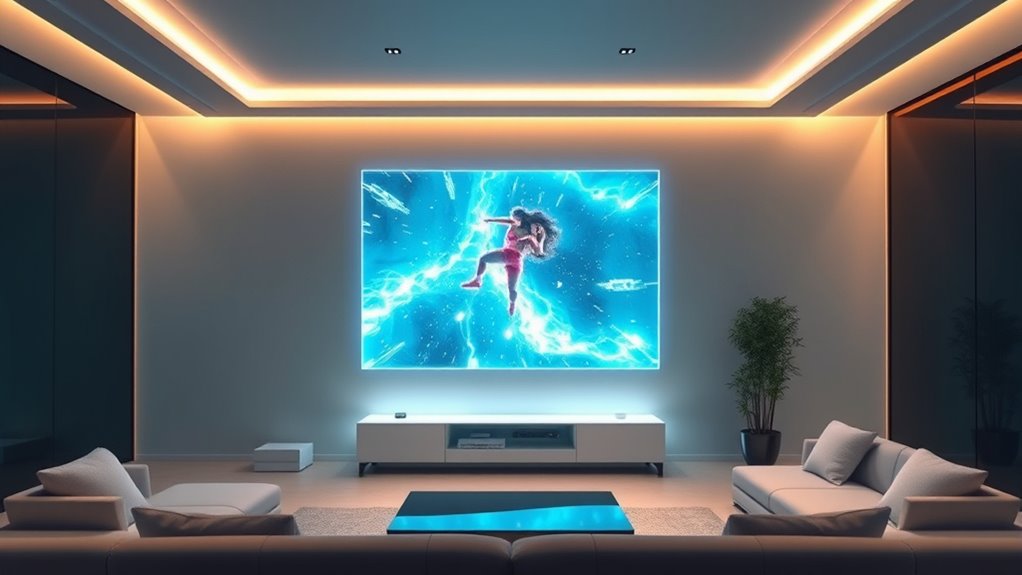

AI holograms are set to transform your entertainment experience, gradually replacing traditional TVs with immersive, lifelike displays that respond to your voice and gestures. These holograms will offer personalized, interactive content like virtual concerts, games, and movies, making everything feel more real and engaging. Over time, holograms could dominate your living space while coexisting with current screens during the progression. If you keep exploring, you’ll discover how these innovations will reshape your entertainment world.

Get home appliances delivered free with Prime
- Fast, free delivery on millions of items
- Prime Video, Amazon Music and more included
- Member-only deals all year
Key Takeaways
- AI holograms offer immersive, lifelike experiences that could surpass traditional TV displays in realism and interactivity.
- Holograms can generate personalized content and adapt to user reactions, enhancing entertainment engagement.
- Over time, holographic displays may dominate living spaces, replacing physical screens like TVs.
- Traditional screens may coexist initially, but holograms are poised to become the primary medium for entertainment.
- Infrastructure advancements, such as European cloud systems, will support seamless, secure holographic streaming, shaping future entertainment.

The future of entertainment promises to transform how you experience stories, music, and games. Imagine a world where traditional screens like TVs become obsolete, replaced by immersive, lifelike holograms that appear right in your living room. Instead of flipping through channels or scrolling apps, you’ll interact with vivid 3D displays that respond to your voice and gestures. AI holograms will become so advanced that they can generate personalized content in real-time, tailoring movies, concerts, or gaming scenarios to your mood and preferences. This shift isn’t just about better visuals; it’s about breaking the boundaries of physical screens and creating a more natural, engaging way to connect with entertainment.
As AI-powered holograms grow more sophisticated, they’ll offer an experience that feels almost tangible. You might find yourself sitting on a virtual couch with a holographic band performing right in front of you, or watching a movie unfold in a 360-degree environment that surrounds you from all angles. These holograms will adapt to your reactions, making the experience more interactive and emotionally resonant. For gaming, you could step into a virtual world where digital characters and environments respond seamlessly to your actions, giving you a feeling of presence that traditional screens can’t match. This technology will blur the line between reality and entertainment, making it feel like you’re part of the story rather than just observing it.
Experience immersive entertainment with holograms that respond to your reactions, making stories and games more vivid and personal.
However, this vision raises questions about how you’ll consume entertainment. Will screens completely vanish, or will they coexist with hologram technology? Many experts believe holograms will complement rather than replace TVs initially, offering a new layer of immersive content. Over time, as the technology becomes more affordable and widespread, your living space might be dominated by these holographic displays. You’ll be able to switch from watching a news broadcast projected onto a wall to enjoying a virtual concert with friends across the globe—all without changing devices or locations. The convenience and personalization will make entertainment more accessible, engaging, and tailored specifically to your tastes.
Furthermore, the integration of European cloud infrastructure will be essential in supporting the data processing and streaming capabilities required for seamless holographic experiences, ensuring high security and energy efficiency. Ultimately, whether AI holograms fully replace TVs or simply redefine what entertainment looks like, one thing’s certain: your experience will become more immersive, interactive, and dynamic. You’ll no longer be confined to a flat screen; instead, you’ll step into a world where stories, music, and games come to life around you, creating a richer, more compelling way to enjoy your favorite moments. The future of entertainment isn’t just about new technology—it’s about transforming how you connect with what you love.
As an affiliate, we earn on qualifying purchases.
Frequently Asked Questions
How Will AI Holograms Impact Traditional TV Manufacturing Industries?
AI holograms will markedly disrupt traditional TV manufacturing by shifting demand towards more advanced, immersive displays. As consumers seek interactive, realistic experiences, you’ll see manufacturers invest in holographic technology, reducing the focus on conventional screens. This shift could lead to job shifts and industry restructuring, requiring you to adapt to new skills and market trends. Ultimately, holograms will redefine entertainment, making traditional TV production less relevant over time.
What Are the Ethical Concerns Surrounding AI Hologram Content Creation?
AI hologram content creation opens a Pandora’s box of ethical concerns. You might worry about deepfakes, privacy breaches, or manipulation, as these lifelike images can deceive or exploit. You should be cautious about consent, intellectual property, and potential misuse. As you navigate this new frontier, remember that boundaries are like fences—necessary to protect both creators and viewers from crossing into harmful territory.
Can AI Holograms Personalize Entertainment Experiences for Individual Viewers?
Yes, AI holograms can personalize your entertainment experience by adapting content to your preferences and viewing habits. You’ll enjoy tailored shows, movies, or concerts that match your mood and interests in real-time. With AI learning your tastes, holograms can create immersive, interactive encounters that feel uniquely yours. This technology offers a dynamic, personalized entertainment experience, making every session more engaging and relevant to what you love.
How Affordable Will Hologram Technology Become for Average Consumers?
Hologram technology is expected to become much more affordable, with costs dropping by up to 80% over the next decade. You’ll likely see these immersive displays in your home for a fraction of today’s prices, making it easier to enjoy realistic 3D visuals without expensive equipment. As prices fall, holograms will become a common, accessible way to experience entertainment, bringing sci-fi to your living room.
Will AI Holograms Be Accessible to People With Disabilities?
Yes, AI holograms will become accessible to people with disabilities. As technology advances, developers focus on making interfaces more inclusive, ensuring features like voice commands, customizable visuals, and tactile feedback are integrated. You’ll find that hologram tech can assist with communication, education, and daily tasks, offering greater independence. With affordability improving, more people with disabilities will enjoy the benefits, making entertainment and interaction more inclusive and personalized for everyone.
As an affiliate, we earn on qualifying purchases.
Conclusion
As you stand on the cusp of this dazzling new era, imagine AI holograms weaving stories right before your eyes, transforming your living room into a portal of endless wonder. The TV’s steady glow might fade into a distant memory, replaced by these luminous, living illusions that breathe life into entertainment. Embrace the future’s shimmering promise—where imagination and technology dance hand in hand, painting your world with vibrant, unforgettable dreams. The stage is set; all that’s missing is your next adventure.
As an affiliate, we earn on qualifying purchases.
As an affiliate, we earn on qualifying purchases.
Cold & flu season Picks
humidifiers
As an affiliate, we earn on qualifying purchases.