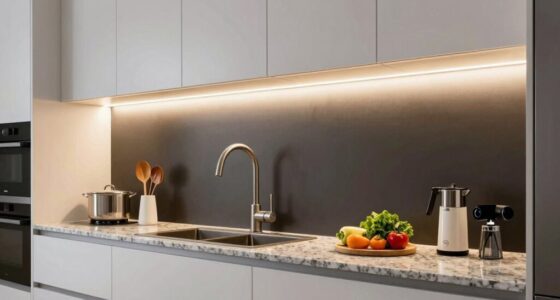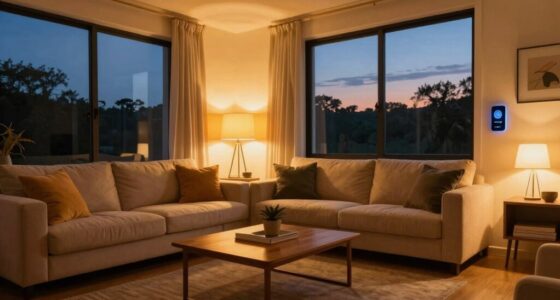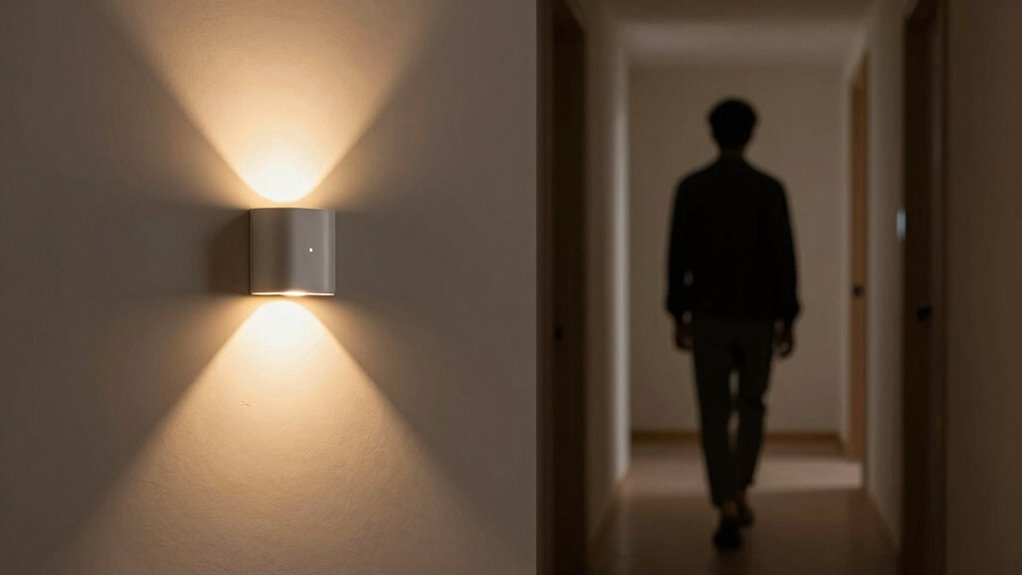

Motion-based lighting improves your home safety by automatically illuminating dark areas, helping you avoid falls and injuries. It instantly lights hallways, stairs, and outdoor paths when you enter, ensuring you see potential obstacles. Plus, it deters intruders, adding a security layer. Proper placement and calibration of sensors maximize these benefits, making your home safer and more energy-efficient. Keep exploring to discover how to optimize your system for maximum safety and convenience.

Get home appliances delivered free with Prime
- Fast, free delivery on millions of items
- Prime Video, Amazon Music and more included
- Member-only deals all year
Key Takeaways
- Automatically illuminates dark areas, reducing the risk of trips and falls.
- Deters intruders, enhancing home security through sudden lighting.
- Ensures outdoor pathways and stairwells are safely lit when needed.
- Prevents accidents by alerting residents to movement in poorly lit spaces.
- Customizable settings improve detection accuracy, maintaining consistent safety.
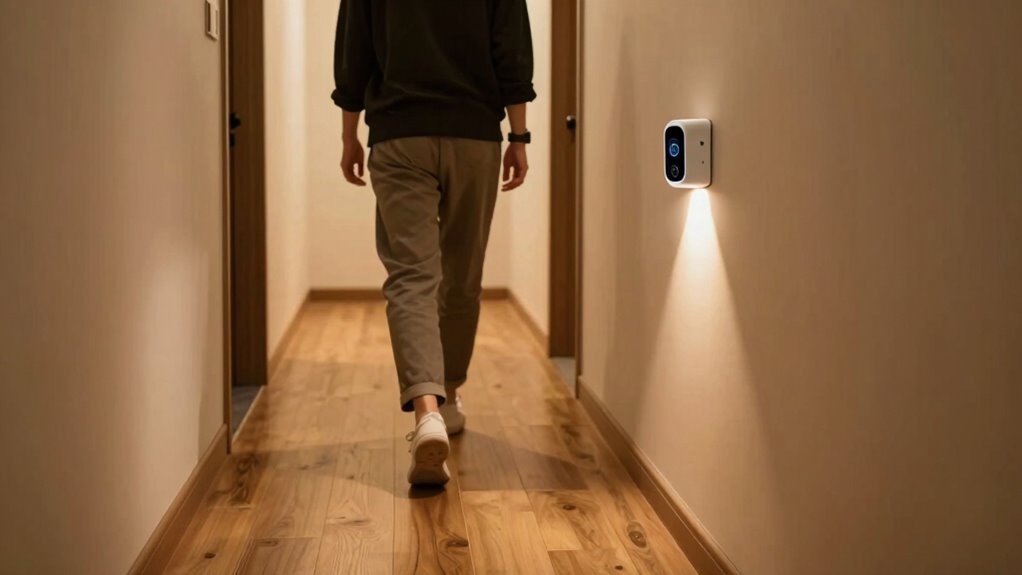
Motion-based lighting enhances safety by automatically illuminating areas whenever movement is detected, reducing the risk of accidents in dark or poorly lit spaces. When you walk into a hallway, stairwell, or outdoor path, the lights turn on instantly, so you don’t have to fumble for switches or stumble over unseen obstacles. This immediate response not only protects you from falls and injuries but also deters intruders, adding an extra layer of security around your home. As you move from room to room or step outside at night, the lights activate seamlessly, ensuring you always have clear visibility.
One of the key advantages of motion-based lighting is its energy efficiency. Unlike traditional lights that stay on for set periods regardless of whether anyone is present, motion sensors only turn on when they detect movement. This targeted illumination means you save energy and reduce electricity bills, especially in areas where lighting isn’t needed constantly, like outdoor walkways, garages, or basements. By installing motion-activated lights strategically, you not only improve safety but also promote environmentally friendly habits and lower your energy consumption over time.
When thinking about installation tips, it’s important to choose the right locations for your motion sensors. Place them at entry points, such as doorways, staircases, or garage entrances, where movement is frequent. Make sure the sensors are positioned at appropriate heights—usually around 6 to 8 feet—to maximize their detection range without causing false triggers from pets or passing cars. Keep in mind that obstacles like furniture or plants can interfere with sensor performance, so clear the area around the sensors for ideal functionality. Also, consider the lighting angle; mounting sensors at a slight downward tilt helps focus detection on walking paths rather than false triggers from passing shadows or wind-blown objects. Proper sensor placement is essential for optimal performance and safety.
Additionally, select the right type of lighting fixtures for your needs. For outdoor spaces, weatherproof motion lights with adjustable sensitivity and timers work best. Indoors, you might prefer discreet fixtures that blend with your décor but still provide ample illumination. Modern motion sensors often come with features like adjustable sensitivity, duration settings, and even remote controls, making it easier to tailor the system to your lifestyle. When installing, follow manufacturer instructions carefully, ensuring sensors are securely mounted and wired correctly for reliable operation. Incorporating smart home technology can further enhance your system by allowing remote control and automation via smartphone apps. Moreover, proper sensor calibration ensures the lights activate accurately without false triggers, optimizing both safety and energy efficiency.
Incorporating motion-based lighting into your home is a simple yet effective way to enhance safety, conserve energy, and create a smarter living environment. With proper placement and thoughtful selection of fixtures, you’ll enjoy a well-lit, secure space that reacts instantly to your movement—making every step safer and more convenient.
motion sensor outdoor security light
As an affiliate, we earn on qualifying purchases.
As an affiliate, we earn on qualifying purchases.
Frequently Asked Questions
Can Motion Sensors Be Easily Installed by Homeowners Themselves?
Yes, you can do DIY installation of motion sensors, but it varies depending on the model. Most sensors come with clear instructions, making it straightforward for homeowners to set up. You’ll need to handle basic wiring and sensor calibration to guarantee proper functioning. Take your time, follow the manufacturer’s guidelines, and double-check connections. If you’re unsure, consulting a professional can help avoid mistakes and ensure your motion-based lighting works seamlessly for safety.
How Does Motion Lighting Affect Energy Consumption?
You’ll find that motion lighting helps cut energy consumption by turning lights off when not needed, leading to energy savings. This smart system minimizes unnecessary electricity use, reducing your environmental impact. By only activating lights when motion is detected, you conserve power and lower your utility bills. It’s a win-win situation, allowing you to do your part for the environment while enjoying a more efficient, cost-effective home.
Are There Any Privacy Concerns With Motion Sensors?
Yes, there are privacy implications with motion sensors, as they can potentially track your movements and gather data. You should be aware that data security is essential to prevent unauthorized access or misuse of this information. To protect your privacy, make sure your motion lighting system has strong security features, such as encryption, and regularly update its firmware. Being cautious helps you enjoy the safety benefits without compromising your privacy.
Do Motion Lights Work During Power Outages?
Motion lights typically don’t work during power outages unless they have an emergency backup or battery power. If your system has one, it will activate when motion is detected, providing safety during blackouts. To guarantee proper operation, you should regularly check sensor calibration and verify the backup battery’s charge. This way, you can rely on your motion-based lighting for safety, even when the power’s out.
Can Motion-Based Lighting Be Integrated With Smart Home Systems?
Absolutely, you can integrate motion-based lighting with your smart home system, turning your house into a fortress of automation! With automated security and endless customization options, you can set lights to respond to your every move, enhance safety, and even create ambiance. Imagine your lights instantly reacting to your commands or detecting motion, making your home smarter, safer, and more personalized than you ever thought possible.
indoor motion-activated LED lights
As an affiliate, we earn on qualifying purchases.
As an affiliate, we earn on qualifying purchases.
Conclusion
By installing motion-based lighting, you enhance your home’s safety effortlessly, especially during late-night trips or unexpected power outages. You might think it’s unnecessary or costly, but the added security and convenience far outweigh the minimal investment. Remember, safety isn’t just about preventing accidents; it’s about creating a space where you feel secure and confident. Don’t wait for an incident to realize the value—take action now and enjoy a safer, smarter home.
weatherproof motion sensor floodlight
As an affiliate, we earn on qualifying purchases.
As an affiliate, we earn on qualifying purchases.
smart motion sensor lighting system
As an affiliate, we earn on qualifying purchases.
As an affiliate, we earn on qualifying purchases.
Fall yard work Picks
leaf blowers
As an affiliate, we earn on qualifying purchases.