
📊 Full opportunity report: Home signal monitor: Mortgage Rates Inch to Another 6-Week Low on IdeaNavigator AI — validation score, market gap, and execution plan.
TL;DR
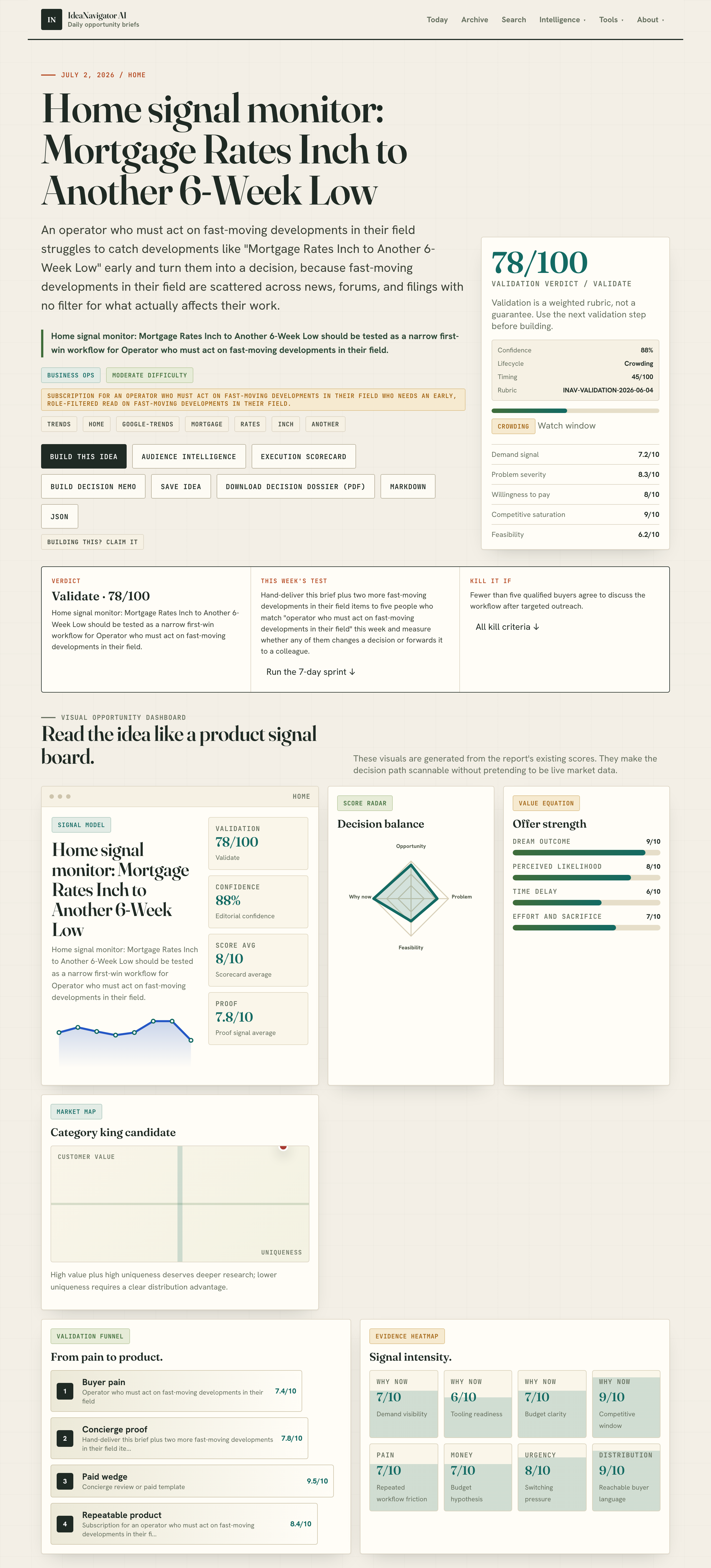
Mortgage rates have decreased to their lowest level in six weeks, signaling a possible shift in the housing market. This development is confirmed by recent data and could influence borrowing costs and home affordability.
Mortgage rates have declined to their lowest point in six weeks, according to recent market data, marking a notable shift in the housing finance landscape. This development matters because it could influence borrowing costs for homebuyers and impact the broader housing market, with potential effects on home sales and refinancing activity.
Data from mortgage industry sources confirm that the average 30-year fixed mortgage rate has edged down to approximately 6.2%, the lowest since early March. Mortgage rates have decreased to their lowest level in six weeks. This decline is attributed to recent movements in bond yields and broader economic signals indicating a possible easing of monetary policy pressures.
Analysts from financial institutions and mortgage lenders have noted that the rate decrease is modest but significant, especially given the recent volatility in the markets. The decline follows a period of rising rates that began earlier this year, driven by inflation concerns and Federal Reserve policy signals.
Experts suggest that if this downward trend continues, it could make borrowing more affordable for prospective homebuyers and potentially stimulate demand in the housing sector. However, some caution that rates could fluctuate further depending on economic data and Federal Reserve decisions.
Implications of the Rate Decline for Housing Market Dynamics
This decline in mortgage rates could lower monthly payments for new borrowers, potentially increasing home affordability and boosting home sales. It also signals market expectations of a possible pause or slowdown in rate hikes by the Federal Reserve, which may influence lending strategies and investor confidence. For homebuyers, this development could mean more favorable borrowing conditions in the near term, though the overall impact will depend on future rate movements and economic conditions.

Entertech Flowtime: Biosensing Meditation Headband – Brain Tracker for Neurofeedback Training at Home – Heart Rate, Breath, HRV, Stress, Flow, Alpha, Theta, Beta, Gamma Wave Breakdowns
VISUALIZE YOUR MEDITATION PERFORMANCE. Supported by the biosensing technology, see how your brain and body are working when…
As an affiliate, we earn on qualifying purchases.
As an affiliate, we earn on qualifying purchases.
Recent Trends and Economic Factors Influencing Mortgage Rates
Over the past several months, mortgage rates have experienced volatility amid inflation concerns, Federal Reserve policy signals, and fluctuations in bond markets. The recent decline to a six-week low follows a period where rates peaked at around 6.5% in late February. Market analysts attribute this to easing inflation fears and a potential shift in Federal Reserve stance, which has signaled a slower pace of rate hikes.
Prior to this decline, mortgage rates had been steadily rising since the start of 2023, impacting affordability and slowing home purchase activity. The current movement suggests a possible stabilization or reversal, but experts caution that rates remain elevated compared to pre-pandemic levels.
“The recent decline in mortgage rates is a positive sign for homebuyers, but the trajectory remains uncertain as economic data continues to evolve.”
— Thorsten Meyer

Refoss Smart Home Energy Monitor, Native Open API & Web UI (No Cloud Required), Real Time Electricity Usage Monitor, Power Consumption Meter Works with Home Assistant & MQTT, Solar Net Metering, ETL
LOCAL CONTROL & DATA PRIVACY: Access your home energy monitor data locally via Built-in Web UI, Open API,…
As an affiliate, we earn on qualifying purchases.
As an affiliate, we earn on qualifying purchases.
Factors That Could Influence Future Mortgage Rate Movements
It is not yet clear whether the current decline will continue or if rates will stabilize at this level or rebound. Economic data releases, Federal Reserve policy decisions, and global market developments could all influence future rate movements. Analysts warn that external shocks or shifts in inflation expectations could reverse the current trend.
housing market signal alert system
As an affiliate, we earn on qualifying purchases.
As an affiliate, we earn on qualifying purchases.
Upcoming Economic Data and Federal Reserve Decisions to Watch
Market participants will closely monitor upcoming economic indicators, such as inflation reports and employment data, as well as Federal Reserve statements, to gauge future rate directions. Any indication of a pause or change in Fed policy could significantly impact mortgage rates in the coming weeks. Lenders and homebuyers should stay alert to these developments for strategic planning.
mortgage rate tracking tool
As an affiliate, we earn on qualifying purchases.
As an affiliate, we earn on qualifying purchases.
Key Questions
Why are mortgage rates decreasing now?
The decline is primarily due to easing inflation concerns and market expectations of a slower pace of Federal Reserve rate hikes, influenced by recent economic data and bond market movements.
How might this affect homebuyers?
Lower mortgage rates could reduce monthly payments, making borrowing more affordable and potentially increasing home purchase activity in the short term.
Will mortgage rates keep falling?
The future direction depends on economic indicators, inflation trends, and Federal Reserve policies. Rates could stabilize, rebound, or continue to decline based on these factors.
Should I consider refinancing now?
Homeowners with existing mortgages should consult with financial advisors to assess if current rates offer a good opportunity for refinancing, considering individual circumstances and market outlooks.
What are the risks of relying on this trend?
Market volatility and unpredictable economic developments could reverse the downward trend, so caution and ongoing monitoring are advised.
Source: IdeaNavigator AI