
Smart home devices can considerably reduce energy use and lower your carbon footprint by automating lighting, heating, and cooling. However, their production involves resource-intensive processes that create e-waste and environmental harm. Frequent upgrades and disposal contribute to global electronic waste issues, especially in regions lacking proper recycling. While the benefits are clear, it is crucial to contemplate responsible use and disposal practices. Explore how you can maximize these benefits while minimizing environmental impact as you continue.
Key Takeaways
- Smart devices reduce energy consumption, lowering carbon footprints and supporting sustainability goals.
- Manufacturing involves resource-intensive processes that contribute significantly to environmental emissions.
- Frequent device upgrades increase e-waste, posing environmental hazards due to hazardous materials.
- Proper recycling and extended device lifespan can mitigate e-waste impact despite initial environmental costs.
- Overall benefits are maximized when users prioritize efficient use, responsible disposal, and eco-friendly product choices.
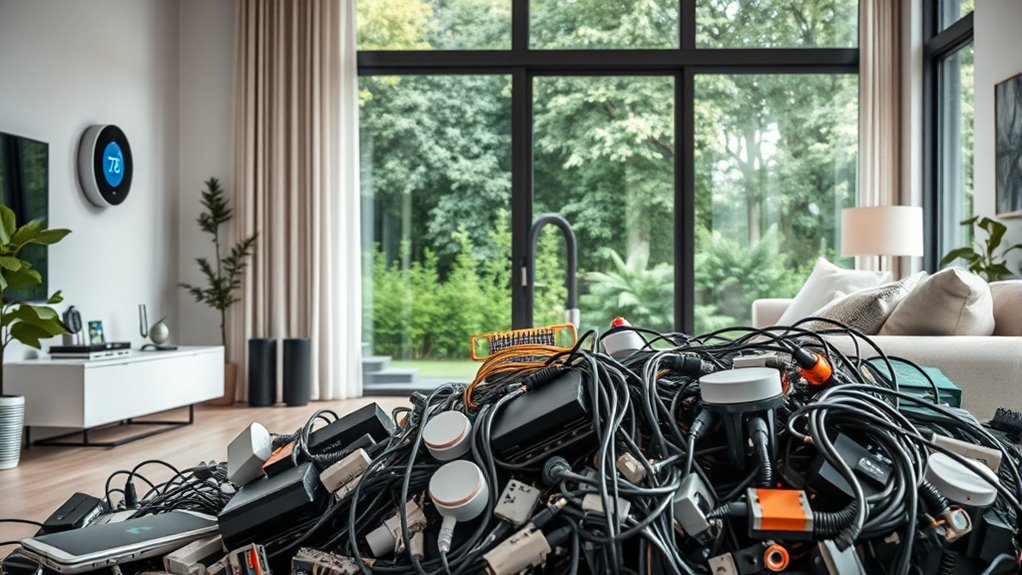
Smart home devices are transforming the way you manage energy and daily tasks, but their environmental impact is a mixed story. On one hand, these gadgets can boost your home’s efficiency, helping you conserve electricity, water, and other resources. By automating lighting, heating, and cooling, you can reduce waste and lower your carbon footprint. For example, smart thermostats learn your schedule and adjust temperatures accordingly, preventing unnecessary energy use. Similarly, smart lighting systems turn off lights when you leave a room, saving electricity without you having to think about it. These benefits are clear and compelling, especially as they help you live more sustainably while also saving money.
Smart home devices boost efficiency and save resources, helping you live more sustainably and reduce your carbon footprint.
However, the flip side involves the environmental costs of manufacturing, deploying, and disposing of these devices. Many smart home gadgets contain rare metals and complex electronic components that require energy-intensive mining and processing. The production process leaves a notably carbon footprint, contributing to greenhouse gas emissions. Once you upgrade or replace your devices—and inevitably, you will—the old equipment often ends up as e-waste. Electronic waste is a growing global problem, with many devices containing hazardous substances that can leach into the environment if not properly recycled. Unfortunately, e-waste recycling isn’t always accessible or properly managed, raising concerns about contamination and resource loss.
You’re also likely to replace your smart devices more frequently as technology advances or as new features become available. This rapid turnover accelerates e-waste accumulation and emphasizes the importance of responsible disposal. While some manufacturers offer recycling programs, participation isn’t universal, and many devices still end up in landfills or informal recycling sites, especially in developing regions. This creates environmental hazards because toxins from electronic components can contaminate soil and water, affecting ecosystems and human health. Additionally, the environmental impact of these devices is intensified by the energy used in manufacturing, which is often high due to complex supply chains and resource extraction.
Despite these challenges, the overall environmental impact of smart home devices depends on how you use and dispose of them. When used to optimize energy consumption, they can notably reduce your carbon footprint. Yet, if you’re not mindful about recycling and upgrading responsibly, their e-waste footprint grows. The key lies in balancing the benefits of smarter energy management with efforts to extend device lifespan, support responsible recycling, and choose environmentally friendly products. In the end, the true environmental impact hinges on your choices—embracing innovation while minimizing waste and pollution.

ecobee Smart Thermostat Essential – WiFi Thermostat, Energy Star Certified
- Energy Savings: Save up to 23% annually on energy costs
- System Compatibility: Compatible with 85% of HVAC systems
- Easy Temperature Control: Adjust temperature via touchscreen or app
As an affiliate, we earn on qualifying purchases.
As an affiliate, we earn on qualifying purchases.
Frequently Asked Questions
How Long Do Smart Home Devices Typically Last Before Becoming E-Waste?
Smart home devices usually last between 3 to 7 years before becoming e-waste. You might find that with regular updates and good maintenance, they can stretch closer to 8 or 9 years. However, technology advances quickly, and manufacturers often stop supporting older models. To reduce waste, consider recycling or donating devices when they reach the end of their life, and opt for products with longer lifespans or upgrade options.
Are There Eco-Friendly Options for Disposing of Outdated Smart Devices?
Sure, there are eco-friendly options for disposing of outdated smart devices. You can recycle through manufacturer programs, local e-waste centers, or charities that refurbish gadgets. Ironically, your “smart” device might live on in someone else’s home or be broken down responsibly, reducing waste. So, instead of tossing it, think twice—your old device can become a resource, not just landfill clutter, if you choose eco-conscious disposal methods.
Do Smart Home Devices Consume More Energy Than Traditional Appliances?
Smart home devices often consume less energy than traditional appliances, especially when they’re set to eco-friendly modes. However, they can use more energy if left on constantly or if multiple devices run simultaneously. To minimize energy use, you should optimize your device settings, unplug unused gadgets, and choose energy-efficient models. Doing so helps you save on power bills and reduces your environmental footprint while enjoying smart technology’s benefits.
What Innovations Are Reducing the Environmental Footprint of Smart Devices?
Innovations like energy-efficient chips and AI-powered optimization are cutting smart device environmental footprints. For example, smart thermostats now save up to 23% on energy use. You can also choose devices made from recyclable materials or with longer lifespans. These advancements help reduce e-waste and lower energy consumption, so you actively contribute to a greener planet while enjoying smarter, more sustainable homes.
How Can Consumers Minimize E-Waste When Upgrading Smart Home Technology?
You can minimize e-waste by recycling or donating your old devices instead of discarding them. When upgrading, choose products with longer lifespans or modular designs that allow repairs. Research brands committed to sustainability, and avoid impulse purchases. Properly dispose of electronics at authorized recycling centers. Keep firmware updated to extend device usability, and consider resale options. These steps help reduce waste and support environmentally responsible smart home upgrades.

Smart Home Starter Kit | Includes Echo Hub, Amazon Smart Plug and 4 Amazon Basics Smart Bulbs, Designed for Alexa+
- Easy smart home setup: Quick guided setup for beginners
- Simple installation: Unbox, plug in, and tap to start
- Versatile Echo Hub: Connects with thousands of smart devices
As an affiliate, we earn on qualifying purchases.
As an affiliate, we earn on qualifying purchases.
Conclusion
While smart home devices offer undeniable convenience and energy savings, their environmental impact can’t be ignored. Many experts believe the e-waste generated may ultimately outweigh the benefits, especially as devices become obsolete quickly. If you’re considering adopting these technologies, it’s wise to weigh the long-term sustainability. Evidence suggests that thoughtful usage and proper disposal can tip the scales back in favor of environmental benefits, proving that with responsible choices, the positives can indeed outweigh the negatives.

As an affiliate, we earn on qualifying purchases.

Amazon Basics Smart A19 LED Light Bulb, Color Changing, 9W (60W Equivalent), 800LM, Works with Alexa Only, WiFi 2.4 GHz, No Hub Required, Mood Lighting, Energy Efficient, 1-Pack
- Voice and App Control: Manage via Alexa for convenience
- Easy Setup: No hubs or third-party apps needed
- Color Changing Options: 16 preset colors for mood lighting
As an affiliate, we earn on qualifying purchases.
As an affiliate, we earn on qualifying purchases.