The best smart home lighting systems pair useful control options with lighting that fits the room, and my best overall pick is the Philips Hue White and Color Ambiance Starter Kit for its bridge-based setup and broad color-lighting role. For a newer cross-brand setup, Linkind Matter Smart LED Bulbs stand out for Matter support, while the TP-Link Tapo L520E four-pack suits buyers who want straightforward dimmable daylight bulbs rather than color effects. The main tradeoff is between a connected ecosystem with more coordinated control and simpler Wi-Fi bulbs that keep setup and hardware lean. Room shape matters too: recessed downlights, track heads, and a floor lamp solve different lighting problems than screw-in bulbs. Read on for the full breakdown and help matching a system to your home.

Get home appliances delivered free with Prime
- Fast, free delivery on millions of items
- Prime Video, Amazon Music and more included
- Member-only deals all year
Complete the kit



Key Takeaways
- Hue is the strongest ecosystem-oriented choice: Its starter kit includes a bridge and four color A19 bulbs, making it a more complete starting point than buying isolated Wi-Fi bulbs.
- Matter support distinguishes Linkind’s six-bulb color set: It may suit households choosing around cross-brand compatibility, while buyers should check that their preferred controller supports the features they want.
- Tapo L520E prioritizes practical white light over effects: Its four dimmable daylight bulbs are a better fit for consistent everyday illumination than color-changing options.
- Lighting type changes the decision: SikSog recessed downlights and the Amped H-track head are installation- or fixture-specific choices; Govee’s floor lamp adds room lighting without replacing ceiling fixtures.
- Pack size and feature labels do not tell the whole story: Compare the room coverage, socket or track compatibility, control method, and whether color or tunable white is useful before choosing among the multi-bulb sets.
| TP-Link Tapo L520E Smart Light Bulbs (4-Pack) – 4000K Daylight, Dimmable, E26/E27 Base, 60W Equivalent, Wi-Fi Connected | 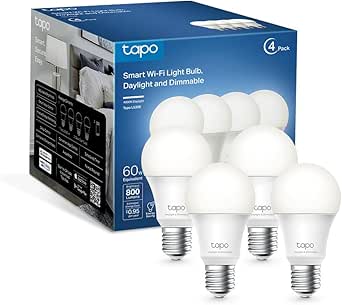 | Best for Focused, No-Hub Lighting | Pack size: 4 bulbs | Brightness: 800 lumens per bulb | Color temperature: 4000K daylight | VIEW LATEST PRICE | See Our Full Breakdown |
| SikSog 4-Inch Smart RGBCW Recessed LED Downlights, 12-Pack | 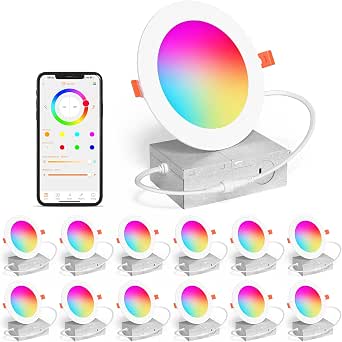 | Best for Whole-Room Recessed Color | Pack size: 12 lights | Brightness: Up to 1000 lumens per light | Power: 12W per light | VIEW LATEST PRICE | See Our Full Breakdown |
| Linkind Matter Smart LED Color-Changing Bulbs, A19 E26, 6-Pack |  | Best for Matter-Compatible Homes | Pack size: 6 bulbs | Bulb shape and base: A19, E26 | Brightness: Up to 800 lumens | VIEW LATEST PRICE | See Our Full Breakdown |
| Philips Hue White and Color Ambiance Smart Light Starter Kit with Bridge and 4 A19 Bulbs |  | Best Premium Starter System | Included: 1 Hue Bridge and 4 A19 bulbs | Bulb base: E26 | Maximum light output: 1100 lumens | VIEW LATEST PRICE | See Our Full Breakdown |
| Lightinginside Smart LED Bulbs, 6-Pack, A19 E26, RGB and Tunable White |  | Best Hub-Free Color Value | Pack size: 6 bulbs | Bulb shape and base: A19, E26 | Brightness: 800 lumens | VIEW LATEST PRICE | See Our Full Breakdown |
| Linkind Smart Wi-Fi LED Bulbs, Color-Changing, Works with Alexa and Google Home | 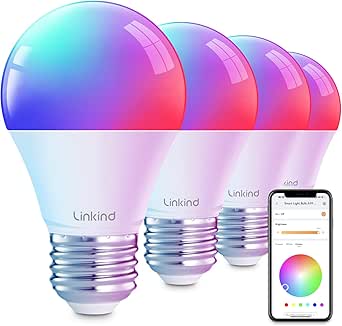 | Best for Tunable White Range | Bulb shape and base: A19, E26 | Power and equivalent: 9W; 60W incandescent equivalent | Brightness: 800 lumens | VIEW LATEST PRICE | See Our Full Breakdown |
| Kasa Multicolor Dimmable Wi‑Fi Smart Bulb – A19 (KL125P4) |  | Best for Away-Mode Automation | Bulb shape and base: A19, E26 | Power and equivalent: 9W; 60W incandescent equivalent | Light output: 800 lumens | VIEW LATEST PRICE | See Our Full Breakdown |
| Amped LED 10W Smart Track Head, CCT Selectable 2700K-6000K, White, H-Track 3-Wire System |  | Best Smart Track-Lighting Upgrade | Power and output: 10W; 808 lumens | Color temperature: 2700K–6000K, selectable | Color rendering: CRI 90 | VIEW LATEST PRICE | See Our Full Breakdown |
| Govee RGBIC Floor Lamp Basic, 1000 Lumens, Black | 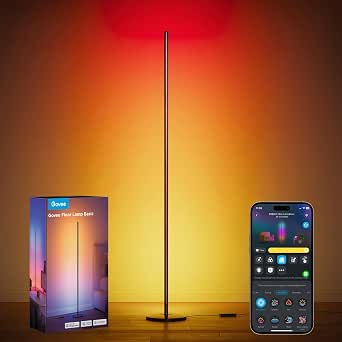 | Best for Dynamic Ambient Effects | Height: 53.7 inches | Maximum brightness: 1,000 lumens | Color and scenes: 16 million colors; 85 dynamic scene modes | VIEW LATEST PRICE | See Our Full Breakdown |
| DAYBETTER A19 E26 Smart Light Bulbs, RGB Color Changing, 9W, 2-Pack Not Specified |  | Best for Everyday App-Controlled Color | Bulb shape and base: A19, E26 | Power and equivalent: 9W; 60W incandescent equivalent | Maximum brightness: 800 lumens | VIEW LATEST PRICE | See Our Full Breakdown |
| smart home lighting system | Connectivity | Brightness | Power | Bulb shape and base |
|---|---|---|---|---|
| TP-Link Tapo L520E Smart Light | 2.4GHz Wi-Fi | 800 lumens per bulb | 9W actual; 60W equivalent | — |
| SikSog 4-Inch Smart RGBCW Rece | Bluetooth 5.0 mesh | Up to 1000 lumens per light | 12W per light | — |
| Linkind Matter Smart LED Color | 2.4GHz Wi-Fi and Matter | Up to 800 lumens | 9W | A19, E26 |
| Philips Hue White and Color Am | Bluetooth and Zigbee | — | — | — |
| Lightinginside Smart LED Bulbs | 2.4GHz Wi-Fi and Bluetooth | 800 lumens | 9W; 60W equivalent | A19, E26 |
| Linkind Smart Wi-Fi LED Bulbs | 2.4GHz Wi-Fi and Bluetooth | 800 lumens | — | A19, E26 |
| Kasa Multicolor Dimmable Wi‑Fi | Wi-Fi | — | — | A19, E26 |
| Amped LED 10W Smart Track Head | — | — | — | — |
| Govee RGBIC Floor Lamp Basic | Bluetooth and 2.4GHz Wi-Fi | — | 24W | — |
| DAYBETTER A19 E26 Smart Light | 2.4GHz Wi-Fi and Bluetooth | — | — | A19, E26 |
More Details on Our Top Picks
TP-Link Tapo L520E Smart Light Bulbs (4-Pack) – 4000K Daylight, Dimmable, E26/E27 Base, 60W Equivalent, Wi-Fi Connected
I’d choose the Tapo L520E for rooms where clear, consistent white light matters more than color effects. Its fixed 4000K daylight output and CRI above 90 suit desks, kitchens, and task areas, while dimming lets you soften the brightness without changing the light’s tone. Unlike the Linkind Matter bulbs, this set does not offer color scenes or Matter support, but it connects directly to 2.4GHz Wi-Fi and works with Alexa, Google Assistant, and SmartThings without a bridge. Energy monitoring adds a practical layer for buyers who want to track lighting use. The tradeoff is a narrow lighting range: these bulbs cannot shift to warm white or colors, and setup plus advanced controls rely on the Tapo app.
Pros:- High CRI above 90 supports clear color appearance for everyday tasks.
- Connects directly to 2.4GHz Wi-Fi without a separate hub.
- Works with Alexa, Google Assistant, and Samsung SmartThings.
- Energy monitoring, schedules, and dimming add useful everyday controls.
Cons:- Fixed 4000K white output offers no warm-white tuning or color effects.
- Supports 2.4GHz Wi-Fi only.
- Initial setup and advanced features require the Tapo app.
Best for: People furnishing a work area or kitchen who want dimmable daylight bulbs, energy-use tracking, and control through a major voice assistant without adding a hub.
Not ideal for: Buyers who want warm-to-cool white adjustment, color scenes, Matter compatibility, or a bulb that can join a 5GHz-only network.
- Pack size:4 bulbs
- Brightness:800 lumens per bulb
- Color temperature:4000K daylight
- Color rendering index:Greater than 90
- Base:E27 (A60)
- Power:9W actual; 60W equivalent
- Connectivity:2.4GHz Wi-Fi
- Compatibility:Amazon Alexa, Google Assistant, Samsung SmartThings
Our verdict“Choose the Tapo L520E if you want straightforward, high-CRI daylight lighting and energy tracking rather than color-changing flexibility.”
SikSog 4-Inch Smart RGBCW Recessed LED Downlights, 12-Pack
The SikSog 12-pack is the lineup’s specialist for buyers outfitting multiple recessed fixtures at once. Each downlight offers RGB colors plus 2700K–6000K white, so a room can shift from warm everyday lighting to brighter task light or coordinated color scenes. Its Bluetooth 5.0 mesh and Alexa control work without a hub or internet connection, unlike the Philips Hue starter kit, which relies on a Bridge for its full feature set. That makes SikSog appealing where a local connection matters, though the BRmesh app is the main control route and there is no physical switch or remote included. These fixtures also require compatible ceiling cutouts and are indoor-only; they are not a drop-in choice for standard screw-in bulb sockets.
Pros:- Twelve downlights support coordinated lighting across a larger room.
- Offers RGB color and adjustable white from 2700K to 6000K.
- Bluetooth mesh enables group control without a hub or internet connection.
- Alexa voice control and app scenes provide flexible operation.
Cons:- Requires recessed fixtures with compatible cutouts and installation depth.
- Indoor-only and not water resistant.
- No physical switch or remote control is included.
Best for: Homeowners installing several recessed lights in an indoor room who want app-controlled color, adjustable white, and group operation without a hub or internet connection.
Not ideal for: Renters or buyers replacing ordinary bulbs, anyone needing water-resistant fixtures, or households that prefer a physical remote or wall control.
- Pack size:12 lights
- Brightness:Up to 1000 lumens per light
- Power:12W per light
- Light options:RGB and white, 2700K–6000K
- Dimming:1%–100%
- Connectivity:Bluetooth 5.0 mesh
- Controls:BRmesh app and Alexa voice control
- Cutout diameter:3.1–4.7 inches
Our verdict“Pick SikSog for a multi-fixture recessed-light installation where local Bluetooth control and color flexibility matter more than simple bulb replacement.”
Linkind Matter Smart LED Color-Changing Bulbs, A19 E26, 6-Pack
I’d give the Linkind Matter bulbs the edge for buyers building around a supported Matter hub and wanting one six-bulb set to serve multiple platforms. They combine 16 million colors, 104 preset scenes, and music synchronization with Apple Home, Alexa, and Google Home compatibility. Compared with the Lightinginside bulbs, Linkind’s standout distinction is Matter support, which can make integration with a compatible smart-home system more flexible; Lightinginside instead lists Wi-Fi and Bluetooth with no hub required. Both offer 800 lumens and color-changing light, so the choice turns on ecosystem fit more than brightness. Linkind needs 2.4GHz Wi-Fi and a compatible Matter hub for Matter control, and it is generally unsuitable for traditional dimmer switches. It is an indoor bulb, not a whole-fixture lighting system.
Pros:- Matter support works with compatible hubs and several major smart-home platforms.
- Six bulbs provide a consistent set for multiple rooms or fixtures.
- 16 million colors, 104 preset scenes, and music synchronization add entertainment options.
- 800-lumen output and 9W power draw suit ordinary A19 bulb replacements.
Cons:- Matter control requires a compatible hub.
- Uses 2.4GHz Wi-Fi and is generally incompatible with traditional dimmer switches.
- Indoor use only.
Best for: Households with a compatible Matter hub that use Apple Home, Alexa, or Google Home and want a coordinated set of color bulbs with app scenes.
Not ideal for: People without a Matter hub who want hub-free setup, homes with traditional wall dimmers, or buyers who only need fixed white task lighting.
- Pack size:6 bulbs
- Bulb shape and base:A19, E26
- Brightness:Up to 800 lumens
- Color range:16 million colors; white up to 6500K
- Power:9W
- Connectivity:2.4GHz Wi-Fi and Matter
- Compatibility:Apple Home, Alexa, Google Home
- Operating life:25,000 hours
Our verdict“Choose Linkind if Matter integration across a compatible smart home is your priority and you want color scenes across six standard A19 bulbs.”
Philips Hue White and Color Ambiance Smart Light Starter Kit with Bridge and 4 A19 Bulbs
The Philips Hue starter kit is the strongest fit here for someone who wants a defined system rather than a group of standalone Wi-Fi bulbs. The included Hue Bridge and four bulbs create a central control point for routines, app operation, voice assistants, and compatible Matter connections. Its 1100-lumen maximum output is higher than the 800-lumen Linkind and Lightinginside bulbs, which can help in rooms that need more headroom before dimming. The cost in convenience is physical hardware and a Bridge-dependent full feature set; the Tapo L520E connects directly to Wi-Fi and is simpler if all you need is steady white light. Hue adds color and white lighting, but this indoor kit is less suited to buyers who want a hub-free setup or just a few basic bulbs.
Pros:- Includes a Hue Bridge and four A19 bulbs for a coordinated starting system.
- White and color lighting support routines and dynamic effects.
- Up to 1100 lumens per bulb provides more listed maximum output than the 800-lumen bulb sets.
- Works with Alexa, Apple HomeKit, Google Assistant, and compatible Matter devices.
Cons:- Full feature set depends on the included Bridge, adding hardware and setup.
- Designed for indoor use only.
- More system than buyers need if they only want simple dimmable white lighting.
Best for: Buyers setting up a dedicated indoor smart-lighting system who want a Bridge, four color-capable bulbs, routines, and broad voice-assistant support.
Not ideal for: People who want the fewest setup components, need outdoor lighting, or only want inexpensive fixed-white bulbs with direct Wi-Fi control.
- Included:1 Hue Bridge and 4 A19 bulbs
- Bulb base:E26
- Maximum light output:1100 lumens
- Lighting:Dimmable white and color
- Connectivity:Bluetooth and Zigbee
- Controls:App, remote, and voice
- Compatible assistants:Amazon Alexa, Apple HomeKit, Google Assistant
- Usage:Indoor
Our verdict“Choose Philips Hue if you want a Bridge-based, expandable indoor lighting system with color control and higher listed bulb output.”
Lightinginside Smart LED Bulbs, 6-Pack, A19 E26, RGB and Tunable White
For a six-bulb color setup without a dedicated hub, the Lightinginside set keeps the basics broad: RGB effects, tunable white from 2700K to 6500K, dimming, schedules, scenes, and group control. It connects through 2.4GHz Wi-Fi and Bluetooth, making it a straightforward alternative to the Linkind Matter bulbs for buyers who do not have a Matter hub. Linkind is the better fit for Matter-centered homes; Lightinginside puts the emphasis on hub-free setup and SmartLife control. Both provide 800 lumens per bulb, so neither is the pick for maximum output over the Philips Hue kit. Setup has a small catch: Wi-Fi and Bluetooth are both required initially. These are indoor bulbs, and their 2.4GHz network requirement may not suit every home network.
Pros:- Six bulbs offer RGB colors and tunable white from 2700K to 6500K.
- Works with Alexa, Google Assistant, and the SmartLife app without a hub.
- Schedules, scenes, group control, and music sync cover common smart-lighting needs.
- Bluetooth support is available alongside 2.4GHz Wi-Fi.
Cons:- Initial Wi-Fi setup requires both 2.4GHz Wi-Fi and Bluetooth.
- No Matter support is listed, unlike the Linkind set.
- Indoor use only.
Best for: People replacing several indoor A19 bulbs who want adjustable white and color, Alexa or Google control, and no separate hub.
Not ideal for: Matter-focused households, users who need outdoor-rated bulbs, or anyone whose network lacks 2.4GHz Wi-Fi.
- Pack size:6 bulbs
- Bulb shape and base:A19, E26
- Brightness:800 lumens
- Color temperature:2700K–6500K
- Power:9W; 60W equivalent
- Connectivity:2.4GHz Wi-Fi and Bluetooth
- Voice assistants:Amazon Alexa, Google Assistant
- Lifespan:25,000 hours
Our verdict“Pick Lightinginside if you want six hub-free color bulbs with tunable white and voice control, and do not need Matter integration.”
Linkind Smart Wi-Fi LED Bulbs, Color-Changing, Works with Alexa and Google Home
I’d choose the Linkind when adjustable white light matters as much as color. Its 1800K–6500K range reaches warmer tones than the Kasa KL125P4, which starts at 2500K, while still offering cool daylight settings and 16 million colors. No hub is required, and schedules, group control, scenes, and music sync cover the common ways to automate a room through the AiDot app or voice assistants. The tradeoff is a setup process that calls for both 2.4GHz Wi-Fi and Bluetooth; this is less appealing if you want a straightforward network-only setup. It also needs a standard, non-dimmer switch and is intended for indoor use. Compared with the DAYBETTER A19, Linkind offers a wider white range, but both are 800-lumen bulbs with similar smart-home basics.
Pros:- Wide 1800K–6500K tunable-white range plus 16 million colors
- Works with Alexa and Google Home without a hub
- Schedules, group control, preset scenes, and music sync
- Rated lifespan of 25,000 hours
Cons:- Setup requires 2.4GHz Wi-Fi and Bluetooth
- Not compatible with traditional dimmer switches
- Designed for indoor use only
Best for: People who want one bulb for extra-warm evening light, cool task lighting, and color scenes without adding a hub.
Not ideal for: Buyers with physical dimmer switches, outdoor fixtures, or a preference for bulbs that avoid Bluetooth during setup.
- Bulb shape and base:A19, E26
- Power and equivalent:9W; 60W incandescent equivalent
- Brightness:800 lumens
- Light range:16 million RGB colors; 1800K–6500K tunable white
- Connectivity:2.4GHz Wi-Fi and Bluetooth
- Voice assistants:Amazon Alexa and Google Home
- Use and voltage:Indoor; 120V
Our verdict“Choose Linkind if you want a hub-free color bulb with a particularly broad white-light range and can use a standard switch.”
Kasa Multicolor Dimmable Wi‑Fi Smart Bulb – A19 (KL125P4)
The Kasa KL125P4 earns its place for buyers who want remote control with an away mode, not just color effects. Its app can randomly switch the bulb on and off while you’re out, giving it a security-oriented use that the Linkind Smart Wi-Fi LED Bulbs and DAYBETTER A19 don’t list. It also offers 16 million colors, tunable white, voice control, and Wi-Fi setup without a hub. The tradeoff is a 2500K–6500K white range, which is less warm than Linkind’s 1800K minimum, and a CRI of 80 rather than the higher color-rendering figure listed for Linkind. Kasa also depends on a stable Wi-Fi connection for remote features. I’d pick it for practical app-based routines; for richer color rendering or a broader warm-white range, another bulb in this lineup fits better.
Pros:- Away mode randomly switches the bulb on and off
- 16 million colors and 2500K–6500K tunable white
- Remote control through the Kasa app
- Works with Alexa and Google Assistant without a separate hub
Cons:- CRI 80 is lower than the 90 listed for Linkind and Amped LED
- Remote features depend on a stable Wi-Fi connection
- White range does not reach Linkind’s extra-warm 1800K setting
Best for: People who want app-based remote access and randomized away lighting alongside color and voice control.
Not ideal for: Buyers who prioritize high color accuracy, very warm white light, or lighting that remains dependable without Wi-Fi.
- Bulb shape and base:A19, E26
- Power and equivalent:9W; 60W incandescent equivalent
- Light output:800 lumens
- Color and white range:Up to 16 million colors; 2500K–6500K
- Color rendering:CRI 80
- Connectivity:Wi-Fi
- Controls:Kasa app, Alexa, and Google Assistant
- Listed lifespan:730 days
Our verdict“Choose the Kasa KL125P4 if away-mode scheduling and remote app control matter more than high color accuracy or extra-warm white.”
Amped LED 10W Smart Track Head, CCT Selectable 2700K-6000K, White, H-Track 3-Wire System
Unlike the A19 bulbs elsewhere in this roundup, this Amped LED is a smart track head for focused, aimable lighting. Its H-Track compatibility and broad adjustment—350 degrees horizontally and 90 vertically—make it a better fit for directing light at art, counters, or display areas than the Govee RGBIC Floor Lamp Basic, which is designed for ambient room effects. The CRI 90 rating helps colors look more accurate, and app or voice control adds smart operation without giving up dimming through compatible ELV or TRIAC dimmers. That flexibility comes with a firm limitation: you need an existing compatible H-Track system, so it isn’t a plug-in solution for a room without track. Its 2700K–6000K range is tunable white, not RGB color, making it less suited to colorful scenes than the Linkind or Kasa bulbs.
Pros:- Works with compatible H-Track systems
- CRI 90 supports more accurate color appearance
- Aims 350° horizontally and 90° vertically
- Dimming from 5% to 100% through app or compatible ELV/TRIAC dimmers
Cons:- Requires a compatible H-Track 3-wire system
- Offers tunable white rather than RGB color
- Smart features rely on Wi-Fi connectivity
Best for: Homeowners with H-Track already installed who want app- and voice-controlled accent or task lighting with accurate color rendering.
Not ideal for: Renters or buyers without compatible H-Track, and anyone seeking RGB effects or a freestanding lamp.
- Power and output:10W; 808 lumens
- Color temperature:2700K–6000K, selectable
- Color rendering:CRI 90
- Track compatibility:H-Track, 3-wire
- Aiming:350° horizontal; 90° vertical
- Dimming:5%–100% via app, ELV, or TRIAC
- Connectivity and control:Wi-Fi, iOS/Android app, Alexa, and Google Assistant
- Construction and finish:Die-cast aluminum; white
- Voltage:120V
Our verdict“Choose this Amped LED head when you already have H-Track and want adjustable, high-CRI smart accent lighting rather than a color bulb.”
Govee RGBIC Floor Lamp Basic, 1000 Lumens, Black
The Govee RGBIC Floor Lamp Basic is the lineup’s dedicated freestanding effects light, rather than a replacement bulb or built-in track fixture. Its 85 scene modes, color effects, and music synchronization make it a stronger choice for adding changing ambient light to a gaming or entertainment area than the DAYBETTER A19, which puts those effects into a standard socket but doesn’t provide a floor-lamp format. At 53.7 inches tall and 1,000 lumens, it can add color to a corner without needing a lamp shade, though its brightness may not suit buyers looking for broad, primary room illumination. App and voice control are available, but the lamp relies on 2.4GHz Wi-Fi and Bluetooth; there’s no included remote for quick control. Its corded, indoor-only design also limits where it can go.
Pros:- 85 dynamic scene modes and customizable multicolor effects
- Music and gaming audio synchronization
- App control and Alexa or Google Assistant support
- Freestanding design can be moved between indoor rooms
Cons:- 1,000-lumen output may be better suited to accent lighting than full-room illumination
- No remote control is included
- Supports 2.4GHz Wi-Fi only and is not water resistant
Best for: Gamers and entertainment-room owners who want a movable floor lamp with app-controlled scenes and music-reactive color.
Not ideal for: People seeking a main room light, a remote-controlled lamp, or lighting for outdoor spaces.
- Height:53.7 inches
- Maximum brightness:1,000 lumens
- Color and scenes:16 million colors; 85 dynamic scene modes
- Power:24W
- Connectivity:Bluetooth and 2.4GHz Wi-Fi
- Voice assistants:Alexa and Google Assistant
- Mounting and power:Freestanding floor mount; corded electric
- Indoor protection:Indoor use; not water resistant
Our verdict“Choose the Govee floor lamp for expressive, music-reactive ambient lighting in an indoor corner rather than as your room’s main light source.”
DAYBETTER A19 E26 Smart Light Bulbs, RGB Color Changing, 9W, 2-Pack Not Specified
The DAYBETTER A19 is a practical choice for buyers who want color and adjustable white light in a standard socket, with routines and group control for everyday use. Its 2700K–6500K range covers warm-to-cool settings, while RGB colors, preset scenes, and music sync give it more than basic dimming. Like the Linkind Smart Wi-Fi LED Bulbs, it works with Alexa and Google Assistant and doesn’t require a hub. Linkind is the better pick if very warm light is a priority: its range begins at 1800K, compared with DAYBETTER’s 2700K. This bulb also relies on the DAYBETTER app and 2.4GHz Wi-Fi, and it won’t work with physical dimmer switches. The supplied data lists no Matter or Home Assistant support, so buyers building around those platforms should look at other options.
Pros:- RGB colors plus adjustable 2700K–6500K white light
- Works with Alexa and Google Assistant without a hub
- Scheduling, group control, preset scenes, and music sync
- Bluetooth support is available alongside 2.4GHz Wi-Fi
Cons:- Requires the DAYBETTER app and 2.4GHz Wi-Fi
- Not compatible with physical dimmer switches
- No Matter or Home Assistant support is listed
Best for: Households that want app- or voice-controlled RGB bulbs with schedules and group control for standard E26 fixtures.
Not ideal for: Smart-home users who require Matter or Home Assistant support, have physical dimmer switches, or want extra-warm white below 2700K.
- Bulb shape and base:A19, E26
- Power and equivalent:9W; 60W incandescent equivalent
- Maximum brightness:800 lumens
- Light options:RGB colors and 2700K–6500K adjustable white
- Connectivity:2.4GHz Wi-Fi and Bluetooth
- Control:DAYBETTER app, Alexa, and Google Assistant
- Automation features:Scheduling, group control, preset scenes, and music synchronization
- Voltage:120V AC
Our verdict“Choose DAYBETTER for routine-friendly RGB lighting in standard sockets if you don’t need Matter, Home Assistant, or physical dimmer compatibility.”
How We Picked
I ranked these smart home lighting systems by how well each option matches a real lighting job, not by treating every bulb or fixture as interchangeable. I weighed the type and scope of lighting, control and connectivity claims, included hardware, stated brightness or color-temperature range, and practical fit with common fixtures. I also considered how much a buyer must plan around a hub, app, socket, recessed opening, or track standard before the product can be useful.
The Hue Starter Kit ranks first because it offers a coordinated entry point with a bridge and four color bulbs. Linkind’s Matter kit follows for buyers who value cross-brand compatibility, while Tapo earns a place for straightforward dimmable daylight lighting. The remaining products rank by their narrower strengths—such as a larger recessed-light pack, color effects, or fixture-specific use—and by the limitations a buyer should check before committing. Product descriptions alone do not establish performance in every home, so I avoid treating compatibility as universal and call out where room, platform, or fixture requirements matter.
Factors to Consider When Choosing Smart Home Lighting Systems
Before choosing among these picks, decide what kind of lighting problem you are solving. A collection of smart bulbs may offer app and voice control, but it is not automatically a complete lighting system: room coverage, physical controls, platform compatibility, and fixture fit shape how well it works day to day.
Start With the Fixture, Not the App
List the fixtures you want to control before comparing apps or color effects. Screw-in bulbs such as A19 models fit only where the socket and bulb shape are compatible, while recessed downlights and track heads require the matching opening or track system. A smart bulb can be a poor choice in a fixture controlled by a wall switch that people regularly turn off, since cutting power also cuts smart control. For shared rooms, think about how guests and household members will operate lights without opening an app. Match the product to the fixture first, then decide which connected features add value.
Choose a Control Plan for the Whole Household
Wi-Fi, a bridge-based ecosystem, and Matter are not interchangeable promises of an identical experience. A bridge can add a dedicated coordination layer, while direct Wi-Fi bulbs may avoid extra hardware; Matter can help connect devices across supported platforms, but feature support still depends on the controller and product. Check the exact functions you care about—such as dimming, color adjustment, schedules, or scenes—rather than assuming every feature appears in every app. Think about what happens when the internet is down and whether local controls remain available. A system that everyone can operate is often more useful than one with the longest feature list.
Separate Everyday White Light From Color Effects
Color-changing bulbs can add scenes and accent lighting, but many rooms mainly need comfortable, consistent white light. Tunable white lets you adjust the character of white illumination, while a fixed daylight bulb favors one particular tone and may not suit every room or time of day. RGB and RGBIC effects are more useful for entertainment or decorative use than for replacing focused task lighting. Avoid buying a large color set for spaces where you rarely change the light; spend that budget on the rooms where scenes matter. Check whether the product specifies a useful white-light range, not just a long list of colors.
Plan Brightness and Coverage Room by Room
A multi-pack count does not reveal how much light a room will receive. Room size, ceiling height, shade design, fixture placement, and the number of active lights all affect the result. Compare stated lumens where available, and treat watt-equivalent language as a reference rather than a direct measure of smart features or room coverage. Recessed lights can spread illumination across a ceiling, while a floor lamp provides light from one location and may work better as an accent or supplemental source. Map each fixture to a purpose—ambient, task, or accent—before deciding how many connected lights to buy.
Check Installation and Compatibility Before Ordering
Fixture-specific lighting can require more planning than replacing a bulb. Confirm a recessed downlight’s size and installation conditions, or verify that a track head matches the exact track standard and wiring system in the room. For smart bulbs, check base type, voltage and regional socket standards, dimmer compatibility, and the product’s stated wireless requirements. A smart bulb paired with a conventional dimmer may behave unpredictably, so check the manufacturer’s guidance rather than assuming they work together. When a setup involves wiring or ceiling work, factor in the skill and time needed, not just the connected features.
Decide How Much System Hardware You Want
Buying a starter kit with a bridge can simplify the first step into one lighting ecosystem, but it adds a device to place and maintain. Individual Wi-Fi bulbs can be easier to add one at a time, though a large number of connected devices may make setup and account management less tidy. Matter support can widen platform choices, but it does not remove the need to check current compatibility and feature limits. Consider whether you want coordinated scenes across rooms or only remote control for a few lights. Pay for a more structured setup when shared control and expansion matter; keep the system simple when the goal is a handful of convenient bulbs.
Frequently Asked Questions
Should I choose the Philips Hue starter kit or Matter-compatible Linkind bulbs?
Choose the Hue kit if you want a bundle centered on its included bridge and four color bulbs, particularly when coordinated lighting is a priority. The Linkind Matter set is a better match if cross-brand platform compatibility is central to your setup. Matter does not mean every controller exposes every feature, so confirm support for the controls you plan to use. Also compare the cost and placement of extra hardware against your preference for a direct-bulb setup. The right pick depends on the smart-home platform and room plan you already have, not just the protocol label.
Can I mix smart bulbs from different brands in one home?
Yes, but mixing brands can mean managing more than one app or a less consistent set of controls. Before combining products, check whether your chosen voice assistant or smart-home controller supports each model and the features you need. Matter can help with cross-brand integration when both the product and controller support the relevant functions, but it does not guarantee identical scenes or settings. A single ecosystem may be simpler for household members who want one routine for every room. Mixed brands make the most sense when each product fills a distinct need, such as white-only bulbs in one area and color lighting elsewhere.
Are smart bulbs a good replacement for recessed or track lighting?
Not always: a screw-in bulb only works when the fixture accepts its base and shape, and it cannot replace the physical format of a recessed downlight or track head. The SikSog downlight set is aimed at recessed fixtures, while the Amped head is specifically for an H-track three-wire system. Confirm the existing fixture dimensions and track standard before ordering either type. If the installation requires electrical work or a fixture change, include that effort in your decision. For a room with ordinary sockets, smart bulbs are usually the less involved route.
Do I need color-changing bulbs throughout the house?
No. Many households benefit more from consistent white illumination in everyday spaces and reserve color effects for a lounge, bedroom, or entertainment area. The Tapo L520E set is focused on dimmable daylight white, while color-changing picks give more scene options but may add features you rarely use. Tunable white and RGB color also serve different purposes, so check which adjustment the product actually offers. A room-by-room plan can prevent paying for color in fixtures used mainly for routine tasks. Keep accent lighting separate from the main light source where possible.
What should I check before choosing a smart floor lamp instead of smart bulbs?
Compare the lamp’s stated brightness and placement with the role you need it to fill. The Govee RGBIC Floor Lamp Basic is a standalone floor-light option, while bulbs can use fixtures you already own and spread light across multiple sockets. A floor lamp may be easier to add without changing ceiling fixtures, but it occupies floor space and lights from one position. Check whether its control features fit your smart-home platform and whether its light output suits reading or is better treated as accent lighting. Choose bulbs when fixture coverage matters more; choose a lamp when you want a separate lighting point without installation work.
Conclusion
For most buyers seeking a more coordinated starting point, I recommend the Philips Hue White and Color Ambiance Starter Kit as best overall, with its included bridge and four color bulbs. My best value for straightforward white lighting is the TP-Link Tapo L520E four-pack, while the Linkind Matter set is my best pick for buyers prioritizing cross-brand compatibility. For a premium, ecosystem-centered setup, Hue is the strongest fit in this lineup; for beginners, Tapo offers a simpler white-light starting point if color scenes are not a priority. Choose the SikSog downlights for compatible recessed fixtures, the Amped head for a matching H-track system, or the Govee lamp when you need a standalone accent light. Match the hardware to your room and platform before choosing by pack size alone.