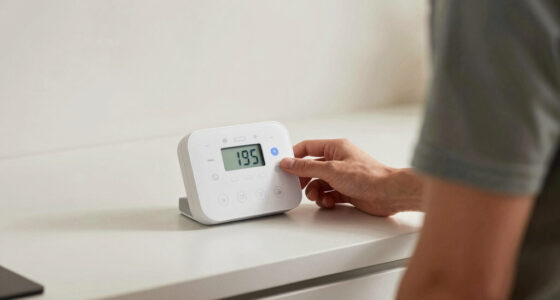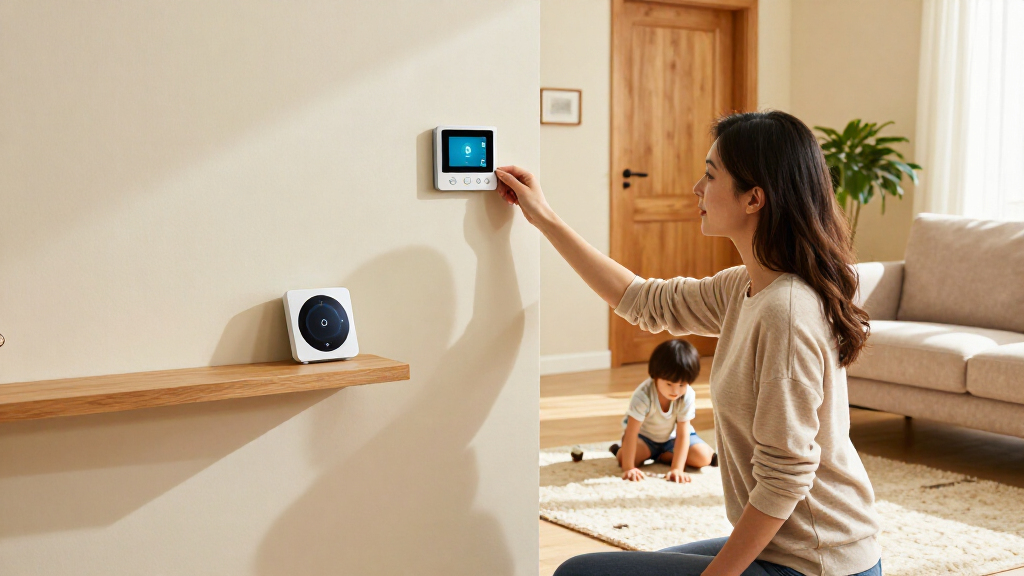
Ecobee Smart Thermostat Premium is my best overall pick among smart thermostats with room sensors, pairing room-focused comfort features with built-in voice control. The Google Nest Learning Thermostat (4th gen) with Nest Temperature Sensor stands out for buyers who want a learning-focused system, while the Sensi Touch 2 offers a simpler route to room-sensor scheduling. The main tradeoffs are sensor compatibility, HVAC wiring needs, and how much control you want over which rooms guide heating and cooling. Some models include or bundle a sensor, while others require a separate compatible sensor. Read on for the full breakdown and help matching a thermostat to your home.

Get home appliances delivered free with Prime
- Fast, free delivery on millions of items
- Prime Video, Amazon Music and more included
- Member-only deals all year
Complete the kit



Key Takeaways
- Ecobee Smart Thermostat Premium earns the strongest all-around position by combining room-sensor support with a broad set of connected features; buyers who want a more basic Ecobee option can compare the Enhanced and Essential models.
- Nest Learning Thermostat (4th gen) with a Nest Temperature Sensor is the clearest choice for buyers drawn to learning features and the Nest sensor ecosystem, while the standard Google Nest Thermostat is a simpler alternative.
- The Sensi lineup splits by control style: Sensi Touch 2 provides a touchscreen interface, while the ST55 is a more pared-back DIY option. Verify sensor compatibility and package contents before choosing either.
- Three Honeywell listings appear in this roundup, including two ElitePRO S1200 entries with different naming or finish details. Check the exact model and included sensor rather than treating the duplicate listings as distinct thermostat platforms.
- The lineup shows that room-sensor support alone does not settle the choice: HVAC compatibility, sensor placement, app preferences, and wiring can matter more than a longer feature list.
| Sensi Touch 2 Smart Thermostat Wi‑Fi, Alexa, Energy Star Certified |  | Best for Privacy-Minded DIY Buyers | Connectivity: Wi-Fi | Room sensor: Optional; sold separately | Power: 24 V; common wire required | VIEW LATEST PRICE | See Our Full Breakdown |
| Ecobee Smart Thermostat Premium – Wi‑Fi, Siri & Alexa Built‑In, Smart Sensor |  | Best Overall for Included Room Sensing | Room sensor: One SmartSensor included | HVAC compatibility: Listed as compatible with 95% of HVAC systems | Connectivity: Wi-Fi | VIEW LATEST PRICE | See Our Full Breakdown |
| Honeywell Home ElitePRO S1200 Smart Programmable Thermostat with Room Sensor |  | Best for Broad Smart-Home Connectivity | Model: YTHX1200B6/U | Room sensor: Wireless sensor included | Display: 5-inch capacitive touchscreen, 800 × 400 | VIEW LATEST PRICE | See Our Full Breakdown |
| Google Nest Smart Thermostat, Programmable Wi-Fi, Charcoal | 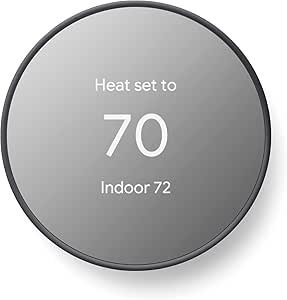 | Best for Simple Scheduling, Not Room Sensing | Room sensor: Not listed in supplied product details | Connectivity: Wi-Fi 2.4 GHz and 5 GHz; Bluetooth Low Energy | Temperature control: Heating and cooling | VIEW LATEST PRICE | See Our Full Breakdown |
| Ecobee Smart Thermostat Enhanced – Programmable Wi‑Fi Thermostat |  | Best Value for Expanding Room Sensing | Room sensor: Optional SmartSensors; sold separately | Connectivity: Wi-Fi | Voice and smart-home support: Amazon Alexa, Google Assistant, Apple HomeKit, Android, and iOS | VIEW LATEST PRICE | See Our Full Breakdown |
| Google Nest Learning Thermostat (4th gen) + Nest Temperature Sensor (2nd gen) – Silver |  | Best Overall | HVAC compatibility: Most 24V systems, including gas, electric, oil, forced air, heat pump, and radiant | C-wire: Not required for most homes | Connectivity: Wi-Fi | VIEW LATEST PRICE | See Our Full Breakdown |
| ecobee4 Smart Thermostat with Built-In Alexa and Room Sensor |  | Best for Built-In Voice Control | Included component: Room Sensor | Connectivity: Wi-Fi | Power: Hardwired, 24 volts | VIEW LATEST PRICE | See Our Full Breakdown |
| ecobee Smart Thermostat Essential Wi-Fi Thermostat |  | Best for Simple App-Based Scheduling | Connectivity: Wi-Fi | Display: 3.74-inch LCD touchscreen | Power: Battery powered | VIEW LATEST PRICE | See Our Full Breakdown |
| Sensi Smart Thermostat (ST55) – Wi‑Fi, DIY, Alexa, Energy Star Certified |  | Best for DIY Installation | Connectivity: Wi-Fi | Power: 24 V AC corded electric; two AA batteries included | Display: 5-inch LED screen | VIEW LATEST PRICE | See Our Full Breakdown |
| Aqara Smart Thermostat W200 with Apple Adaptive Temperature |  | Best for Smart-Home Hub Integration | HVAC compatibility: About 85% of HVAC systems | Display: 4-inch full-color touchscreen | Connectivity: Dual-band Wi-Fi, 2.4 GHz and 5 GHz, and Matter 1.4 | VIEW LATEST PRICE | See Our Full Breakdown |
| Honeywell Home ElitePRO S1200 Smart Thermostat with Room Sensor, White |  | Best for Complex HVAC Systems | Model: YTHX1200W5/U | Display: 5-inch capacitive touchscreen, 800 x 400 | Included sensor: C7189R3010 wireless RedLINK 3.0 sensor | VIEW LATEST PRICE | See Our Full Breakdown |
| Honeywell Home X8S Premium Smart Wi-Fi Thermostat with Room Sensor, Black |  | Best for Matter-Connected Homes | Display: 5-inch customizable display | Included sensor: Wireless room sensor | Sensor range: Up to 200 ft | VIEW LATEST PRICE | See Our Full Breakdown |
| smart thermostats with room sensor | Connectivity | Display | Power | Room sensor |
|---|---|---|---|---|
| Sensi Touch 2 Smart Thermostat | Wi-Fi | LCD touchscreen | 24 V; common wire required | Optional; sold separately |
| Ecobee Smart Thermostat Premiu | Wi-Fi | — | — | One SmartSensor included |
| Honeywell Home ElitePRO S1200 | Dual-band Wi-Fi, Bluetooth BLE, RedLINK 3.0, and Matter | 5-inch capacitive touchscreen, 800 × 400 | 24 VAC, 60 Hz, 0.11 A; C-wire required | Wireless sensor included |
| Google Nest Smart Thermostat | Wi-Fi 2.4 GHz and 5 GHz; Bluetooth Low Energy | 2-inch LCD | Battery powered; some systems may need a C-wire or compatible accessory | Not listed in supplied product details |
| Ecobee Smart Thermostat Enhanc | Wi-Fi | 4-inch LCD | 24 volts; corded electric | Optional SmartSensors; sold separately |
| Google Nest Learning Thermosta | Wi-Fi | 3.5-inch touchscreen | — | — |
| ecobee4 Smart Thermostat with | Wi-Fi | — | Hardwired, 24 volts | — |
| ecobee Smart Thermostat Essent | Wi-Fi | 3.74-inch LCD touchscreen | Battery powered | SmartSensor sold separately |
| Sensi Smart Thermostat | Wi-Fi | 5-inch LED screen | 24 V AC corded electric; two AA batteries included | — |
| Aqara Smart Thermostat W200 wi | Dual-band Wi-Fi, 2.4 GHz and 5 GHz, and Matter 1.4 | 4-inch full-color touchscreen | — | — |
| Honeywell Home ElitePRO S1200 | Dual-band Wi-Fi, Bluetooth, Matter | 5-inch capacitive touchscreen, 800 x 400 | — | — |
| Honeywell Home X8S Premium Sma | — | 5-inch customizable display | — | — |
More Details on Our Top Picks
Sensi Touch 2 Smart Thermostat Wi‑Fi, Alexa, Energy Star Certified
The Sensi Touch 2 makes sense for buyers who want room-sensor support without handing more home data to a platform than necessary. It works with optional Sensi room sensors, so you can target comfort toward rooms the thermostat’s wall location may not represent; unlike the Ecobee Smart Thermostat Premium, though, you must buy those sensors separately. Its touchscreen, app, voice controls, scheduling, and usage reports cover the everyday essentials, while the stated data privacy policy is a useful distinction for privacy-conscious households. Bluetooth-guided setup is designed for DIY installation, but the thermostat requires a C-wire, which can complicate an older system. I’d choose it over the Google Nest Smart Thermostat when sensor-based room balancing matters more than automatic away adjustments, provided the wiring and separate sensor purchase suit your setup.
Pros:- Supports optional room sensors to help address temperature differences between rooms.
- Bluetooth-guided app setup is designed to make DIY installation easier.
- Works with Alexa, Google Assistant, and SmartThings.
- Energy Star certified, with scheduling, remote control, and usage reports.
Cons:- Requires a C-wire, which may be absent in older homes.
- Room sensors are sold separately, adding a separate purchase for room-level sensing.
Best for: DIY-minded homeowners who want optional room sensing, app and voice control, and a stated commitment not to sell personal information.
Not ideal for: Owners of systems without a C-wire who want to avoid wiring work, or buyers who expect a room sensor to come in the box.
- Connectivity:Wi-Fi
- Room sensor:Optional; sold separately
- Power:24 V; common wire required
- Controls:App, touchscreen, and voice
- Voice and platform support:Amazon Alexa, Google Assistant, and SmartThings
- Display:LCD touchscreen
- HVAC uses:Air conditioner, boiler, furnace, and heat pump
- Dimensions:5.6 × 3.25 × 0.77 inches
Our verdict“Choose the Sensi Touch 2 if you value privacy and flexible room sensing and already have compatible wiring; skip it if you want an included sensor or lack a C-wire.”
Ecobee Smart Thermostat Premium – Wi‑Fi, Siri & Alexa Built‑In, Smart Sensor
For a buyer who wants room sensing ready out of the box, the Ecobee Smart Thermostat Premium is the strongest all-around fit in this group. Its included SmartSensor can help the system account for conditions beyond the thermostat’s location, while the radar occupancy sensor can inform comfort adjustments when rooms are occupied. The Sensi Touch 2 and Ecobee Smart Thermostat Enhanced also support room-level sensing, but their sensors are optional purchases, making this Ecobee the more complete starting package. A built-in air quality monitor adds information beyond temperature, and the included Power Extender Kit helps with some homes lacking a C-wire. The tradeoffs are platform-specific: Siri requires an Apple Home hub, and security features require a subscription. Complex HVAC configurations may still call for professional installation.
Pros:- Includes a SmartSensor for room-aware temperature control.
- Built-in air quality monitor adds indoor air information.
- Radar occupancy sensing can help adjust comfort based on room use.
- Power Extender Kit is included, and the listed warranty is three years.
Cons:- Siri functionality requires an Apple Home hub.
- Security features require an additional subscription.
- Some complex HVAC installations may need professional help.
Best for: Households that want an included room sensor, occupancy-aware comfort, and air-quality information in one thermostat.
Not ideal for: Buyers who want every feature without a subscription, lack an Apple Home hub but specifically want Siri, or have complex HVAC wiring they plan to install themselves.
- Room sensor:One SmartSensor included
- HVAC compatibility:Listed as compatible with 95% of HVAC systems
- Connectivity:Wi-Fi
- Voice assistants:Siri and Alexa
- Air quality:Built-in monitor
- Occupancy sensing:Radar sensor
- Installation accessory:Power Extender Kit included
- Warranty:Three years
Our verdict“Choose the Ecobee Premium if you want an included room sensor plus occupancy and air-quality features, and are comfortable with its platform and subscription limits.”
Honeywell Home ElitePRO S1200 Smart Programmable Thermostat with Room Sensor
The Honeywell Home ElitePRO S1200 stands out for buyers who want an included room sensor and a broad mix of connectivity options. Its 5-inch capacitive touchscreen gives more space for at-wall controls than the compact Google Nest Smart Thermostat, while support for dual-band Wi-Fi, Bluetooth, RedLINK 3.0, and Matter offers more connection paths than the simpler Sensi Touch 2. The wireless room sensor is included, so room-aware comfort does not begin with a separate sensor purchase. Matter support and compatibility with Alexa, Google Home, and Apple Home through the First Alert app make it a more flexible smart-home choice on paper. The tradeoffs are practical: it requires a C-wire, and its doorbell video feature depends on compatible hardware sold separately. Buyers who only need basic remote scheduling may find this feature set more involved than necessary.
Pros:- Includes a wireless room sensor for room-aware comfort.
- Large 5-inch, 800 × 400 capacitive touchscreen.
- Supports Matter, dual-band Wi-Fi, Bluetooth, and RedLINK 3.0.
- Can stream video from compatible First Alert and Ring doorbells.
Cons:- Requires a C-wire for power.
- Doorbell video depends on compatible doorbell hardware sold separately.
Best for: Smart-home households that want an included wireless room sensor, a large touchscreen, and Matter alongside major voice assistant options.
Not ideal for: Owners without a C-wire, or buyers seeking a simple thermostat who will not use Matter, RedLINK, or compatible doorbell video.
- Model:YTHX1200B6/U
- Room sensor:Wireless sensor included
- Display:5-inch capacitive touchscreen, 800 × 400
- Connectivity:Dual-band Wi-Fi, Bluetooth BLE, RedLINK 3.0, and Matter
- Voice assistant compatibility:Amazon Alexa, Google Home, and Apple Home via the First Alert app
- Power:24 VAC, 60 Hz, 0.11 A; C-wire required
- Mounting:Hardwired; UWP wall plate
- Dimensions:0.96 × 5.24 × 3.54 inches
Our verdict“Pick the ElitePRO S1200 if connectivity breadth and an included room sensor matter more than simple setup or avoiding a C-wire requirement.”
Google Nest Smart Thermostat, Programmable Wi-Fi, Charcoal
The Google Nest Smart Thermostat is the straightforward pick for buyers who mainly want app-based scheduling and automatic adjustments when they leave. Its DIY-focused installation, programmable schedules, and Google Home remote control make it less involved than the room-sensor-oriented Ecobee Smart Thermostat Premium. But that simplicity comes with a clear compromise for this roundup: the supplied product details list no included room sensor or room-sensor support. Buyers seeking room-by-room temperature balancing should look instead at the Ecobee Premium, which includes a SmartSensor, or the Sensi Touch 2, which supports optional sensors. Nest can still suit a home where one central temperature reading is enough, and its battery-powered design may ease installation for some systems. Check system power needs first: some HVAC setups require a C-wire or compatible accessory.
Pros:- Programmable schedules and automatic adjustments when you leave.
- Remote control through the Google Home app.
- Designed for DIY installation.
- Battery-powered design and support for compatible voice assistants.
Cons:- Product details do not list a room sensor or room-sensor support.
- Some HVAC systems require a C-wire or compatible power accessory.
- Remote features and notifications depend on working internet and Wi-Fi.
Best for: Google Home users who want a compact, programmable thermostat with automatic away adjustments and do not need room-by-room sensing.
Not ideal for: Buyers who chose this roundup specifically to balance hot or cold rooms with remote sensors, or whose HVAC system needs a C-wire accessory they do not plan to add.
- Room sensor:Not listed in supplied product details
- Connectivity:Wi-Fi 2.4 GHz and 5 GHz; Bluetooth Low Energy
- Temperature control:Heating and cooling
- Power:Battery powered; some systems may need a C-wire or compatible accessory
- Display:2-inch LCD
- Voice assistant compatibility:Google Assistant and Matter-certified voice assistants
- Mounting:Wall mount
- Certification:ENERGY STAR
Our verdict“Choose the Nest for simple Google Home scheduling and away adjustments, but select the Ecobee Premium or Sensi Touch 2 if room sensing is a must.”
Ecobee Smart Thermostat Enhanced – Programmable Wi‑Fi Thermostat
The Ecobee Smart Thermostat Enhanced is a good fit for buyers who want occupancy-aware temperature adjustments now and the option to add room sensors later. It supports optional SmartSensors for room-by-room comfort, but unlike the Ecobee Smart Thermostat Premium, it does not include a sensor or the listed built-in air quality monitor. That makes the Premium the more complete choice for buyers who want room sensing immediately; the Enhanced makes more sense when you already know which rooms need attention or prefer to add sensors over time. Occupancy, schedule, and humidity inform its automatic adjustments, and its Power Extender Kit can help with installation in homes without a C-wire. It works with Alexa, Google Assistant, and Apple HomeKit. Its room-level benefits still depend on buying optional sensors, and reliable remote access needs Wi-Fi.
Pros:- Supports optional SmartSensors for room-by-room comfort.
- Occupancy, schedule, and humidity inform automatic adjustments.
- Works with Alexa, Google Assistant, and Apple HomeKit.
- Includes a Power Extender Kit for homes without a C-wire.
Cons:- SmartSensors are sold separately.
- Remote app control depends on a stable Wi-Fi connection.
- Does not list the Premium model’s built-in air quality monitor.
Best for: Homeowners who want a capable smart thermostat with occupancy and humidity adjustments, and plan to add room sensors only where needed.
Not ideal for: Buyers who want room sensing ready on installation day or want the Premium model’s built-in air quality monitor.
- Room sensor:Optional SmartSensors; sold separately
- Connectivity:Wi-Fi
- Voice and smart-home support:Amazon Alexa, Google Assistant, Apple HomeKit, Android, and iOS
- Control:App control
- Display:4-inch LCD
- Power:24 volts; corded electric
- Installation accessory:Power Extender Kit included
- HVAC uses:Air conditioner, boiler, furnace, heat pump, and humidifier
Our verdict“Choose the Ecobee Enhanced if you want to add room sensing selectively and can forgo an included sensor and the Premium model’s air-quality feature.”
Google Nest Learning Thermostat (4th gen) + Nest Temperature Sensor (2nd gen) – Silver
I’d put this bundle first for buyers who want a room sensor and a thermostat that can adapt to household routines. The included second-generation Nest Temperature Sensor gives the system another room’s temperature to work with, helping address hot or cold spots rather than relying only on the wall thermostat’s reading. The Learning Thermostat adds automatic scheduling and broad voice-assistant support, while compatibility with most 24V systems without a C-wire can simplify installation in many homes.
Compared with the ecobee4, this Nest package emphasizes learning schedules and includes the sensor in the box; ecobee4’s distinguishing advantage is its built-in Alexa voice service. The tradeoff is that full app and connected control depend on Wi-Fi and a compatible smartphone, and the sensor uses a replaceable CR2 battery. I’d choose it for a sensor-ready, adaptive setup, not for a home that avoids connected services.
Pros:- Includes a separate temperature sensor for addressing hot and cold spots.
- Learns schedules and supports automatic adjustments.
- Works with most 24V HVAC systems without a C-wire, according to the product data.
- Supports Alexa, Siri, and Google Assistant through the Google Home app.
Cons:- Full connected functionality depends on Wi-Fi and a compatible smartphone.
- The included sensor requires a CR2 battery that may need replacement.
Best for: Households with uneven room temperatures that want an included sensor, adaptive scheduling, and compatibility with major voice assistants.
Not ideal for: Buyers who want thermostat and sensor controls to work without Wi-Fi or a compatible smartphone, or who prefer not to maintain a battery-powered sensor.
- HVAC compatibility:Most 24V systems, including gas, electric, oil, forced air, heat pump, and radiant
- C-wire:Not required for most homes
- Connectivity:Wi-Fi
- Display:3.5-inch touchscreen
- Included sensor:Nest Temperature Sensor (2nd gen)
- Sensor battery:One CR2 battery included
- Smart assistants:Alexa, Siri, and Google Assistant
- Mounting:Wall mount
Our verdict“Choose this bundle if you want an included room sensor paired with an adaptive thermostat and broad smart-assistant support.”
ecobee4 Smart Thermostat with Built-In Alexa and Room Sensor
The ecobee4 is the clearest choice here for someone who wants Alexa voice service built into the thermostat and a room sensor included. That combination can make it easier to adjust comfort or use voice commands without adding a separate smart speaker nearby. It also works with Apple HomeKit, Google Assistant, IFTTT, and SmartThings, giving it broader platform options than a thermostat tied to one app ecosystem.
Against the Google Nest Learning Thermostat, the ecobee4 trades Nest’s schedule-learning emphasis for built-in Alexa and a button-control interface. The room sensor makes it more relevant to this roundup than the ecobee Smart Thermostat Essential, which lists its SmartSensor as a separate purchase. The main limitation is installation: this model is hardwired, and the supplied product details don’t fully spell out HVAC compatibility. I’d check system requirements before choosing it.
Pros:- Built-in Alexa voice service reduces dependence on a separate nearby speaker.
- Includes a room sensor for temperature readings beyond the thermostat location.
- Supports Apple HomeKit, Google Assistant, IFTTT, and SmartThings as well as Alexa.
- Offers Wi-Fi app control and programmable temperature settings.
Cons:- Requires hardwired power.
- The available product details provide limited HVAC compatibility and installation guidance.
Best for: Alexa households that want voice control at the thermostat itself, an included room sensor, and support for several smart-home platforms.
Not ideal for: Renters or homeowners seeking a battery-powered or clearly documented DIY installation, and buyers who have not confirmed compatibility with their HVAC system.
- Included component:Room Sensor
- Connectivity:Wi-Fi
- Power:Hardwired, 24 volts
- Supported systems:Heat pump and humidifier listed
- Voice service:Built-in Alexa
- Other smart-home platforms:Apple HomeKit, Google Assistant, IFTTT, and SmartThings
- Display and controls:Digital display with button control
- Mounting:Wall mount
Our verdict“Pick the ecobee4 if built-in Alexa and an included room sensor matter more to you than Nest-style schedule learning.”
ecobee Smart Thermostat Essential Wi-Fi Thermostat
The ecobee Smart Thermostat Essential suits buyers who want touchscreen and app control with scheduling and eco+ features, but don’t need a room sensor included. Its 3.74-inch color touchscreen gives local controls a more modern feel than the button-based Sensi ST55, while support for Alexa, Google Assistant, and Apple HomeKit keeps it flexible in mixed-device homes. Auto-away and fan control add ways to manage heating and cooling without constantly adjusting the setpoint.
Its biggest distinction in this sensor-focused roundup is also its main drawback: the SmartSensor is sold separately. That makes the Essential a reasonable starting point for shoppers who may add room sensing later, but a less complete out-of-box choice than the Nest bundle or ecobee4. It is designed for DIY installation and works with many 24 VAC systems, yet compatibility still depends on the home’s wiring and equipment. I’d shortlist it for straightforward app-led control, not for buyers who expect immediate room-by-room sensing.
Pros:- Provides both touchscreen and mobile-app control.
- Scheduling, auto-away, and eco+ features support automated temperature management.
- Works with Alexa, Google Assistant, and Apple HomeKit.
- Designed for DIY installation and compatible with many 24 VAC systems.
Cons:- SmartSensor is sold separately, so room sensing is not included in the package.
- Compatibility depends on the home’s HVAC equipment and wiring.
Best for: DIY-minded households seeking touchscreen scheduling and major smart-home support, with the option to add an ecobee SmartSensor later.
Not ideal for: Buyers who want a room sensor included from the start or need verified compatibility with a specific HVAC setup before purchase.
- Connectivity:Wi-Fi
- Display:3.74-inch LCD touchscreen
- Power:Battery powered
- Compatible systems:Most 24 VAC HVAC equipment
- Smart-home compatibility:Apple HomeKit, Google Assistant, and Amazon Alexa
- Automation features:Auto-away, auto-scheduling, fan control, and programmable temperature control
- Room sensor:SmartSensor sold separately
- Mounting:Wall mount
Our verdict“Choose the Essential for app-led scheduling and a touchscreen if you’re comfortable buying a room sensor separately or going without one.”
Sensi Smart Thermostat (ST55) – Wi‑Fi, DIY, Alexa, Energy Star Certified
I’d choose the Sensi ST55 for an owner who prioritizes a manageable installation over an included room sensor. Its built-in level and step-by-step app guidance address common DIY frustrations, while the standard thermostat form and filter-change alerts keep the setup practical. It supports Alexa, Apple HomeKit, Google Assistant, SmartThings, and Vera, so it can fit several existing smart-home systems.
The important limitation for this roundup is that the ST55’s product details do not list a room sensor. Compared with the Nest bundle and ecobee4, it is less suited to balancing rooms with different temperatures; its strength is straightforward control and scheduling, not room-by-room sensing. The 5-inch LED screen and button controls are also more basic than the color touchscreen on the ecobee Smart Thermostat Essential. Wi-Fi enables remote access, but full connected features rely on it, and some installations may need a C-wire.
Pros:- Built-in level and app instructions support DIY installation.
- Works with Alexa, Apple HomeKit, Google Assistant, SmartThings, and Vera.
- Includes scheduling, remote access, and filter-change alerts.
- Product data lists Energy Star certification and a focus on data privacy.
Cons:- A room sensor is not listed among the included features, limiting its fit for room-by-room temperature management.
- Some HVAC installations may require a C-wire.
- Full remote functionality depends on Wi-Fi.
Best for: Homeowners comfortable with basic DIY who want app-guided installation, scheduling, filter reminders, and broad smart-assistant compatibility.
Not ideal for: Households specifically seeking an included room sensor to address temperature differences between bedrooms or other areas.
- Connectivity:Wi-Fi
- Power:24 V AC corded electric; two AA batteries included
- Display:5-inch LED screen
- Controls:Button control, with app and voice control
- Supported equipment:Air conditioner, boiler, furnace, and heat pump
- Smart-home compatibility:Alexa, Apple HomeKit, Google Assistant, SmartThings, and Vera
- Installation features:Built-in level and app guidance
- Additional feature:Filter-change indicator
Our verdict“Pick the Sensi ST55 for guided DIY installation and everyday scheduling, but choose Nest or ecobee4 if an included room sensor is a must.”
Aqara Smart Thermostat W200 with Apple Adaptive Temperature
The Aqara W200 is the standout for buyers who want a thermostat to act as part of a wider smart-home system, rather than focusing only on room temperature. Its mmWave presence detection can support occupancy-based automations, while built-in Zigbee, Matter, and Thread functions give it a broader hub role than the Google Nest Learning Thermostat. Matter 1.4 support connects it with Apple Home, Google Home, Alexa, SmartThings, and Home Assistant, offering flexibility across platforms.
This is not the most straightforward sensor-led choice: the product data describes presence detection, but does not list a separate room temperature sensor in the box. Compared with the Nest and ecobee4 bundles, the W200’s appeal is its integration and occupancy features, not a clearly specified remote temperature sensor. HVAC compatibility is listed at about 85%, and systems without a C-wire need an adapter sold separately. Some Apple features also require compatible hardware and software, narrowing their appeal.
Pros:- Supports Apple Home, Google Home, Alexa, SmartThings, and Home Assistant through Matter 1.4.
- Built-in Zigbee hub, Matter controller, and Thread border router expand smart-home use.
- mmWave presence detection can support occupancy-based automations.
- Has a 4-inch full-color touchscreen and dual-band Wi-Fi.
Cons:- The product details do not specify an included separate room temperature sensor.
- C-wire adapter is sold separately for systems that need one.
- Some Apple features require compatible devices and software version 26 or later; Clean Energy Guidance is limited to the contiguous U.S.
Best for: Smart-home enthusiasts who want Matter-based platform flexibility, presence-driven automations, and built-in Zigbee, Matter, and Thread capabilities.
Not ideal for: Buyers whose main requirement is an included remote temperature sensor, or households that need a C-wire adapter and want it included.
- HVAC compatibility:About 85% of HVAC systems
- Display:4-inch full-color touchscreen
- Connectivity:Dual-band Wi-Fi, 2.4 GHz and 5 GHz, and Matter 1.4
- Built-in hubs:Zigbee hub, Matter controller, and Thread border router
- Presence detection:mmWave radar
- Supported platforms:Apple Home, Google Home, Amazon Alexa, Samsung SmartThings, and Home Assistant
- C-wire:Adapter sold separately for systems without a C-wire
- Clean Energy Guidance:Available in the contiguous U.S. only
Our verdict“Choose the W200 for presence-based automation and broad smart-home integration, not if your priority is a bundled remote temperature sensor.”
Honeywell Home ElitePRO S1200 Smart Thermostat with Room Sensor, White
The ElitePRO S1200 is the stronger fit for buyers with a more involved heating setup: it supports up to 4 heat / 2 cool stages on heat pumps and up to 3 heat / 3 cool on conventional systems. Its included RedLINK sensor tracks temperature, humidity, and motion, helping the thermostat respond to conditions in a room rather than relying only on its wall location. Compared with the Honeywell Home X8S, this model supports more system stages and adds dual-band Wi-Fi alongside Bluetooth and Matter. It also monitors VOCs and estimated CO2, with control for up to two indoor-air-quality devices. The tradeoff is a more demanding installation: it requires a C-wire, and compatible air-quality accessories and doorbell video hardware are separate purchases. I’d choose it for broad HVAC capability, not for the simplest setup.
Pros:- Supports a broad range of residential and light commercial HVAC configurations.
- Includes a wireless sensor that measures temperature, humidity, and motion.
- Monitors humidity, VOCs, and estimated CO2, and can control up to two IAQ devices.
- Offers dual-band Wi-Fi, Bluetooth, Matter, and compatibility with major smart-home platforms.
Cons:- Requires 24 VAC power and a C-wire.
- Compatible doorbell and some indoor-air-quality accessories are sold separately.
Best for: Homeowners with multi-stage heat pumps or conventional HVAC systems who want a room sensor and indoor-air-quality monitoring.
Not ideal for: Renters or DIY installers without an available C-wire, and buyers who want doorbell or air-quality accessories included.
- Model:YTHX1200W5/U
- Display:5-inch capacitive touchscreen, 800 x 400
- Included sensor:C7189R3010 wireless RedLINK 3.0 sensor
- Heat pump capability:Up to 4 heat / 2 cool
- Conventional system capability:Up to 3 heat / 3 cool
- Connectivity:Dual-band Wi-Fi, Bluetooth, Matter
- Power and wiring:24 VAC, 60 Hz, 0.11 A; C-wire required
- Air-quality monitoring:Humidity, VOCs, and estimated CO2
- Dimensions:5.24 x 3.54 x 0.96 in
Our verdict“Choose the ElitePRO S1200 if your HVAC system needs broad stage support and you want room sensing plus air-quality monitoring; skip it if you need a simpler, C-wire-free installation.”
Honeywell Home X8S Premium Smart Wi-Fi Thermostat with Room Sensor, Black
The Honeywell Home X8S pairs a customizable 5-inch display with an included wireless room sensor and occupancy detection, making it a practical choice for households that want room-aware comfort without moving to a more complex control setup. Its sensor range reaches up to 200 feet, while Matter support connects it with Alexa, Google Assistant, and Apple Home. Compared with the ElitePRO S1200, the X8S supports fewer HVAC stages, but its listed compatibility and included C-wire adapter voucher may suit a more typical household installation. It also offers indoor-air-quality controls and remote adjustments through the First Alert app. The main limits are firm ones: it requires a C-wire, does not work with 120–240V electric baseboard heat, and compatible doorbell cameras are not included. Check your heating system before choosing it.
Pros:- Includes a wireless room sensor with a stated range of up to 200 feet.
- Occupancy detection can help adjust settings when the home is empty.
- Supports Matter, Alexa, Google Assistant, and Apple Home, with remote app control.
- Includes customizable display and indoor-air-quality controls.
Cons:- Requires a C-wire, although a C-wire adapter voucher is included if needed.
- Not compatible with 120–240V electric baseboard heat.
- Compatible First Alert and Ring doorbell cameras are sold separately.
Best for: Homeowners with compatible forced-air or hot-water HVAC who want a room sensor, Matter support, and voice-assistant control.
Not ideal for: People with electric baseboard heating or homes needing support beyond the listed heat-pump and conventional system configurations.
- Display:5-inch customizable display
- Included sensor:Wireless room sensor
- Sensor range:Up to 200 ft
- Heat pump capability:Up to 3 heat / 2 cool with electric backup
- Conventional system capability:Up to 2 heat / 2 cool
- Supported heating:Hot water and forced air (gas, oil, or electric)
- Wi-Fi:2.4 or 5.0 GHz; 802.11ax/ac/a/b/g/n
- Wiring:C-wire required; C-wire adapter voucher included if needed
- Smart-home compatibility:Matter, Amazon Alexa, Google Assistant, Apple Home
Our verdict“Pick the X8S for Matter-connected homes with compatible HVAC and a need for occupancy-aware room sensing, but rule it out if you have electric baseboard heat.”
How We Picked
I ranked these thermostats around the job implied by the search: using room sensors to make comfort more responsive to where people spend time. The main criteria were how clearly each product is positioned for room-sensor use, the thermostat and sensor ecosystem, day-to-day controls, smart-home compatibility, and how much setup or system checking a buyer may need. I also considered whether the product listing identifies a room sensor, whether a sensor may be separate, and whether the product appears to serve a distinct need such as learning, touchscreen control, or a simpler DIY setup.
Ranking reflects practical fit, not feature count. Ecobee Premium leads as a well-rounded sensor-focused option; the Nest Learning bundle follows for buyers who prefer Nest’s learning approach. Sensi Touch 2 and the Honeywell and Ecobee alternatives address different interface, ecosystem, and complexity preferences. Lower placement does not mean a thermostat cannot suit a particular home: it reflects narrower differentiation in this lineup, uncertainty around sensor inclusion or compatibility, or a simpler feature set. Since HVAC wiring and supported systems vary, I would confirm the exact model’s compatibility and package contents before buying.
| smart thermostats with room sensor | Connectivity | Room sensor |
|---|---|---|
| Sensi Touch 2 Smart Thermostat | Wi-Fi | Optional; sold separately |
| Ecobee Smart Thermostat Premiu | Wi-Fi | One SmartSensor included |
| Honeywell Home ElitePRO S1200 | Dual-band Wi-Fi, Bluetooth BLE, RedLINK 3.0, and Matter | Wireless sensor included |
| Google Nest Smart Thermostat | Wi-Fi 2.4 GHz and 5 GHz; Bluetooth Low Energy | Not listed in supplied product details |
| Ecobee Smart Thermostat Enhanc | Wi-Fi | Optional SmartSensors; sold separately |
| Google Nest Learning Thermosta | Wi-Fi | — |
| ecobee4 Smart Thermostat with | Wi-Fi | — |
| ecobee Smart Thermostat Essent | Wi-Fi | SmartSensor sold separately |
| Sensi Smart Thermostat | Wi-Fi | — |
| Aqara Smart Thermostat W200 wi | Dual-band Wi-Fi, 2.4 GHz and 5 GHz, and Matter 1.4 | — |
| Honeywell Home ElitePRO S1200 | Dual-band Wi-Fi, Bluetooth, Matter | — |
| Honeywell Home X8S Premium Sma | — | — |
Factors to Consider When Choosing Smart Thermostats With Room Sensors
Room sensors can help a thermostat respond to comfort in more than one spot, but they do not make every room independently heated or cooled. I would choose based on how the sensors work with your HVAC system, household routines, and existing smart-home setup—not on the sensor count alone.
Match the Sensor System to Your Rooms
Start by identifying the rooms that are consistently too warm or too cold, rather than placing sensors everywhere. A sensor can report conditions from its location, but the central HVAC system still heats or cools the home as a whole. Check how the thermostat uses readings: some systems let you prioritize occupied rooms or schedule sensor participation, while others may offer different controls. A bedroom sensor is useful if night-time comfort is the problem; it may be less helpful if daytime living areas are your priority. Avoid putting sensors in direct sun, near vents, or beside heat-producing electronics, since those spots can distort readings. If you need separate temperatures in different parts of the home, ask an HVAC professional whether zoning—not another sensor—is the right solution.
Confirm HVAC and Wiring Compatibility Before You Choose
Smart thermostats are not universally compatible with every heating and cooling system. Check the manufacturer’s compatibility tool using your existing thermostat wiring and HVAC type before selecting a model. Some homes lack a common wire, while others use equipment such as heat pumps, multi-stage systems, or proprietary controls that need special handling. Do not assume that a thermostat’s Wi-Fi or room-sensor features mean it will support your specific system. If the wiring is unclear, take a photo of the existing terminals and consult the product’s installation instructions or an HVAC technician. This check can prevent buying a sensor-capable thermostat that cannot control the equipment you have.
Check Whether the Sensor Is Included and What It Can Do
A product name that mentions a room sensor does not always tell you how many sensors are in the box or whether a sensor is sold separately. Read the exact listing and model documentation, especially when comparing bundles such as the Nest Learning package with a sensor against standalone thermostats. Also distinguish temperature sensing from occupancy sensing: a sensor may report room conditions, detect presence, or do both, depending on the product. That difference affects how well scheduling can follow your household’s routine. If you plan to cover several rooms, find out the supported sensor limit and whether each additional sensor needs to be purchased separately. Buying a thermostat first and checking sensor costs or compatibility later can change the value of the setup.
Choose an App and Smart-Home Ecosystem You Will Keep Using
Room-sensor benefits depend on how easily you can set schedules and change which rooms matter, so app usability is part of the comfort decision. If your household already relies on Alexa, Google Home, Apple Home, or another platform, check the exact integrations for the thermostat model rather than assuming all features work across platforms. Built-in voice assistants can reduce the need for another device, but may add little if you already control your home another way. Some buyers will prefer a learning-oriented thermostat; others may want direct scheduling and fewer automated adjustments. Consider who else in the home will change settings and whether they can do so without relying on your phone. A familiar, usable control system often matters more than an extra connected feature.
Decide How Much Automation You Want
Room sensors can support more targeted schedules, but they do not guarantee that the thermostat will behave the way you expect without setup. Think about whether your household has predictable routines or changing occupancy, and whether you want to adjust schedules yourself or let the thermostat learn patterns. Automated behavior can be convenient, but it may take time to match an unusual work schedule or rooms used only occasionally. A simpler thermostat can be a better fit if you prefer explicit control over a system that adapts. Before enabling automation, review what the thermostat treats as an occupied room and how that setting interacts with the main schedule. The best choice is the one whose control style you will actually maintain.
Compare the Whole Setup, Not Just the Thermostat
For a sensor-based system, the thermostat is only one part of the purchase and installation decision. Include any separate sensors, potential wiring accessories, installation help, and the time needed to configure schedules. A lower-complexity thermostat may be a better fit than a feature-rich model if it works with your equipment and covers the rooms you care about. Conversely, paying for a more connected model can make sense if you will use its room controls, voice features, or learning functions. Think about future needs too: adding rooms or changing smart-home platforms can affect which ecosystem remains convenient. Compare the complete setup and its day-to-day controls rather than treating the thermostat’s feature list as the whole value.
Frequently Asked Questions
Do room sensors make every room a different temperature?
No. Room sensors typically give the thermostat information about conditions in selected rooms, helping it decide when or how to run the central heating or cooling system. They do not usually create separate temperature control for each room. If you need different rooms held at distinct temperatures at the same time, ask an HVAC professional about zoning and whether your ductwork and equipment support it. For many homes, sensors are most useful for prioritizing a bedroom at night or a living area during the day. Check the specific thermostat’s sensor settings to understand how it uses those readings.
Should I buy a thermostat bundle that includes a sensor?
A bundle can simplify setup if the included sensor is compatible with the thermostat and you already know which room you want to prioritize. It also lets you begin using room-based controls without sourcing a separate accessory. Still, confirm how many sensors are included and whether the thermostat supports adding more later. A sensor bundle may not be the best fit if you need to cover several rooms or prefer another smart-home ecosystem. Compare the full package contents and sensor features, not just the product title.
Can I use a room-sensor thermostat if my home does not have a C-wire?
Possibly, but the answer depends on the thermostat model and your HVAC wiring. Some products support installation without a C-wire or offer an approved power accessory, while others may need a common wire for reliable operation. Check the manufacturer’s compatibility tool and installation guide against your actual terminal labels before buying. Do not rely only on the appearance of your current thermostat, since wiring can be hidden or connected differently at the equipment. If the wiring or system type is uncertain, ask an HVAC technician to check it.
Is a learning thermostat better than one with manual room schedules?
Neither approach is automatically better; the right fit depends on how predictable your routine is and how much you want to adjust settings yourself. A learning model may suit a household with regular patterns that wants more automation, while manual scheduling can be easier to understand when routines vary or several people share control. Room sensors add another layer: check whether the thermostat learns from sensor activity or follows the sensor schedule you configure. Look at how easily you can override an automatic setting if a room is occupied unexpectedly. If you prefer to know exactly why the system is running, a more direct schedule may feel easier to manage.
What should I verify before choosing between the Ecobee, Nest, Sensi, and Honeywell options?
Check four things first: HVAC compatibility, whether a room sensor is included, how the thermostat lets you use sensor readings, and whether it works with the smart-home platform you already use. The Ecobee, Nest, Sensi, and Honeywell entries differ in product tiers and control styles, so brand name alone does not establish that two models have the same features. The Nest Learning bundle explicitly pairs a thermostat with a sensor, while other listings may need closer checking for package contents. Also compare touchscreen or app controls with your household’s comfort using schedules and automation. Those checks are more useful than choosing by a feature label alone.
Conclusion
For most buyers, I recommend the Ecobee Smart Thermostat Premium as the best overall starting point in this roundup, especially if room-based comfort and connected controls are both priorities. Choose the Ecobee Smart Thermostat Essential or Sensi Smart Thermostat ST55 as best-value directions if you want a simpler setup and have confirmed sensor support and package details. The Google Nest Learning Thermostat (4th gen) with Nest Temperature Sensor is my premium pick for buyers who prefer Nest’s learning approach and want a sensor included in the listed bundle. For beginners, the Sensi Touch 2 is a sensible option to compare if you want a touchscreen and a more direct control experience. For specific needs, look at Honeywell’s ElitePRO or X8S listings when their system compatibility and controls fit your setup, and consider the Aqara W200 if its Apple-focused features match your home. Whichever model you choose, verify HVAC wiring, sensor compatibility, and included accessories before ordering.
Halloween Picks
halloween
As an affiliate, we earn on qualifying purchases.