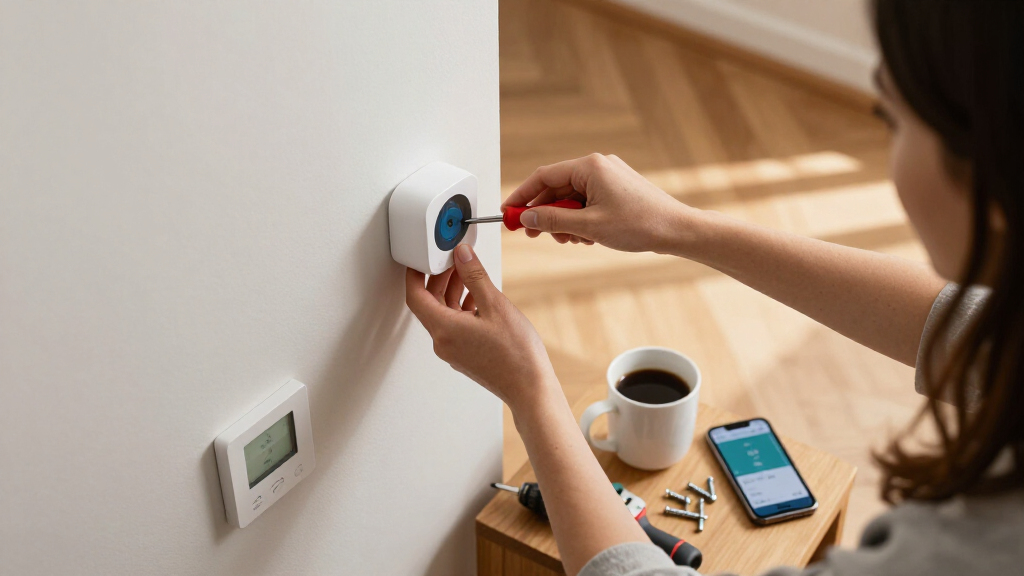

If you’re shopping for smart thermostats with room sensors, the core promise is simple: instead of heating and cooling your whole home based on one thermostat’s location, remote sensors let the system respond to the rooms you actually live in. The ecobee Smart Thermostat Essential earns my best overall pick for doing this with the cleanest setup and most reliable multi-room averaging in the lineup. The Google Nest Learning Thermostat (4th Gen) is the strongest premium alternative thanks to its self-programming schedule and polished second-gen sensors, while the Honeywell Home ElitePRO S1200 offers serious sensor-driven control for less. The main tradeoff you’ll face is ecosystem lock-in versus flexibility: some models tie you to Google Home or Apple Home, others stay platform-agnostic but feel clunkier. Read on for the full breakdown, including budget picks and a few models I’d skip.

Get home appliances delivered free — and shop member deals
- Fast, free delivery on millions of items
- Access to Prime Big Deal Days deals on October 6–7
- Prime Video, Amazon Music and more included
Complete the kit


![[Genuine] Waterdrop PF-01A Water Filter Replacement for W...](https://m.media-amazon.com/images/I/41+5tl9EiKL._SX342_SY445_QL70_FMwebp_.jpg)
Key Takeaways
- Sensor quantity and placement flexibility mattered more than thermostat hardware: the ecobee Essential and Honeywell X8S with Room Sensor handled uneven temperatures better than single-sensor rivals.
- The lineup splits sharply by ecosystem: three of the thirteen are Nest devices that work best inside Google Home, while Matter-compatible options like the TQX offer cross-platform freedom at the cost of polish.
- The GoveeLife 2.0 with six mini sensors is a monitoring-and-automation play, not a true thermostat — it excels at climate data but requires pairing with a compatible HVAC controller.
- Several near-identical models (the Sensi ST55, Sensi Lite ST25W, and the two Honeywell X8S variants) differ mainly in sensor inclusion and finish, so paying attention to the exact SKU prevents overpaying for a bundle you don’t need.
- Occupancy detection, available only on the TQX and ecobee-adjacent configurations here, is the biggest differentiator for homes with rooms that sit empty most of the day.
| GoveeLife 2.0 Wi-Fi Hygrometer Thermometer with Gateway and Six Mini Sensors |  | Best for Multi-Room Climate Monitoring on a Budget | Sensor quantity: 6 mini sensors | Gateway compatibility: H5151 or H5042 | Wi-Fi: 2.4 GHz only | VIEW LATEST PRICE | See Our Full Breakdown |
| ecobee Smart Thermostat Essential Wi-Fi Thermostat |  | Best for Smart Home Beginners | Connectivity: Wi-Fi | Certification: Energy Star | System compatibility: Most 24 VAC systems (~85%) | VIEW LATEST PRICE | See Our Full Breakdown |
| Google Nest Learning Thermostat (4th Gen) with Nest Temperature Sensor (2nd Gen), Obsidian |  | Best Overall | Generation: 4th gen | Included sensor: Nest Temperature Sensor, 2nd gen | Color: Obsidian | VIEW LATEST PRICE | See Our Full Breakdown |
| Sensi Touch 2 Smart Wi-Fi Thermostat (ST76) |  | Best Touchscreen Mid-Range Pick | Model: ST76 | Connectivity: Wi-Fi, Bluetooth | Voice assistant compatibility: Alexa | VIEW LATEST PRICE | See Our Full Breakdown |
| Sensi Smart Wi-Fi Thermostat ST55 |  | Best Value for Basic Smart Upgrades | Model: ST55 | Connectivity: Wi-Fi | Voice assistant compatibility: Alexa | VIEW LATEST PRICE | See Our Full Breakdown |
| Google Nest Smart Thermostat, Charcoal |  | Best Budget-Friendly Entry Into the Nest Ecosystem | Color: Charcoal | Wi-Fi: 802.11b/g/n 2.4 GHz and 802.11a/n 5 GHz | Wireless interconnect: Bluetooth Low Energy | VIEW LATEST PRICE | See Our Full Breakdown |
| Google Nest Smart Thermostat, Programmable Wi-Fi, Fog |  | Best for Quick DIY Installation | Color: Fog | Connectivity: Wi-Fi | Voice assistant compatibility: Google Assistant, Alexa, and Matter-certified voice assistants | VIEW LATEST PRICE | See Our Full Breakdown |
| Honeywell Home ElitePRO S1200 Smart Thermostat with Room Sensor, White |  | Best Pro-Grade Multi-Sensor Setup | Model: YTHX1200W5/U | Included room sensor: C7189R3010, one | Display: 5-inch color touchscreen | VIEW LATEST PRICE | See Our Full Breakdown |
| Honeywell Home X8S Premium Smart Wi-Fi Thermostat |  | Best Smart-Home Hub Replacement | Display: 5-inch customizable color display | Connectivity: 2.4 or 5 GHz Wi-Fi; 802.11ax/ac/a/b/g/n | Smart home compatibility: Matter, Amazon Alexa, Google Assistant, Apple Home | VIEW LATEST PRICE | See Our Full Breakdown |
| Honeywell Home X8S Premium Smart Wi-Fi Thermostat with Room Sensor, Black |  | Best Premium All-in-One With Sensor Included | Display: 5-inch touchscreen | Included accessory: Wireless room sensor with range up to 200 ft | Smart home compatibility: Matter, Amazon Alexa, Google Assistant, Apple Home | VIEW LATEST PRICE | See Our Full Breakdown |
| TQX Matter Wi-Fi Thermostat with Occupancy Detection and Remote Sensor Support |  | Best for Occupancy-Based Automation | Connectivity: Matter via a compatible smart-home speaker | Occupancy Detection: Millimeter-wave sensor with occupancy learning | Display: Light sensor adjusts brightness; turns on/off based on occupancy | VIEW LATEST PRICE | See Our Full Breakdown |
| Sensi Lite Smart Thermostat ST25W |  | Best Budget Entry Point | Model: ST25W | Connectivity: Wi-Fi | Voice Assistant Compatibility: Amazon Alexa | VIEW LATEST PRICE | See Our Full Breakdown |
| Honeywell Home X7B Smart Wi-Fi Programmable Thermostat |  | Best Cross-Platform Display Pick | Display: 4.3-inch customizable display | Connectivity: 2.4 or 5 GHz Wi-Fi; 802.11ax/ac/a/b/g/n | Smart Home Compatibility: Matter, Amazon Alexa, Google Assistant, Apple Home | VIEW LATEST PRICE | See Our Full Breakdown |
| smart thermostats with room sensor | Connectivity | Display |
|---|---|---|
| GoveeLife 2.0 Wi-Fi Hygrometer | — | — |
| ecobee Smart Thermostat Essent | Wi-Fi | — |
| Google Nest Learning Thermosta | — | 60% larger than previous generation |
| Sensi Touch 2 Smart Wi-Fi Ther | Wi-Fi, Bluetooth | Color touchscreen |
| Sensi Smart Wi-Fi Thermostat S | Wi-Fi | — |
| Google Nest Smart Thermostat | — | — |
| Google Nest Smart Thermostat | Wi-Fi | — |
| Honeywell Home ElitePRO S1200 | Dual-band Wi-Fi, Bluetooth, and Matter | 5-inch color touchscreen |
| Honeywell Home X8S Premium Sma | 2.4 or 5 GHz Wi-Fi; 802.11ax/ac/a/b/g/n | 5-inch customizable color display |
| Honeywell Home X8S Premium Sma | — | 5-inch touchscreen |
| TQX Matter Wi-Fi Thermostat wi | Matter via a compatible smart-home speaker | Light sensor adjusts brightness; turns on/off based on occupancy |
| Sensi Lite Smart Thermostat ST | Wi-Fi | — |
| Honeywell Home X7B Smart Wi-Fi | 2.4 or 5 GHz Wi-Fi; 802.11ax/ac/a/b/g/n | 4.3-inch customizable display |
More Details on Our Top Picks
GoveeLife 2.0 Wi-Fi Hygrometer Thermometer with Gateway and Six Mini Sensors
GoveeLife’s kit takes a different approach than a thermostat like the Nest Learning Thermostat: instead of controlling HVAC, it obsesses over measurement. With six mini sensors feeding a single gateway, I can see which rooms actually run hot or cold before spending money on a full smart thermostat ecosystem. Readings refresh every two seconds, which matters if I’m troubleshooting humidity spikes near a nursery or guitar room. Compared with the ecobee Smart Thermostat Essential — where every room sensor is an extra purchase — this bundles the whole monitoring layer upfront. The tradeoff is real, though: it doesn’t control anything, supports only 2.4 GHz Wi-Fi, and the gateway is a hard requirement. This option makes the most sense as a diagnostic first step or companion to a simpler thermostat.
Pros:- Six sensors included in one kit for whole-home coverage
- Readings refresh every two seconds with ±0.54°F accuracy
- App and email alerts catch temperature and humidity swings remotely
- Two-year sensor battery life and up to two years of exportable data
Cons:- Requires a compatible GoveeLife gateway to access Wi-Fi features
- Only works on 2.4 GHz networks, which can frustrate mesh-router households
Best for: Homeowners who want to map hot and cold spots across multiple rooms before investing in a full smart thermostat system
Not ideal for: Buyers who want actual temperature control — this monitors conditions but never operates the HVAC
- Sensor quantity:6 mini sensors
- Gateway compatibility:H5151 or H5042
- Wi-Fi:2.4 GHz only
- Battery life:2 years
- Temperature accuracy:±0.54°F / ±0.3°C
- Humidity accuracy:±3% RH
- Reading refresh:Every 2 seconds
- Maximum sensors per gateway:10
- Data export:Up to 2 years
Our verdict“A smart buy for mapping room-by-room climate problems cheaply, but it’s a monitoring tool, not a thermostat.”
ecobee Smart Thermostat Essential Wi-Fi Thermostat
The ecobee Essential earns its spot as the friendliest entry point into sensor-based comfort. Where the Nest Learning Thermostat (4th Gen) leans on autonomous learning, ecobee keeps things approachable: a color touchscreen, a schedule assistant that adapts to your routine, and support across Apple HomeKit, Alexa, and Google Assistant — a wider ecosystem spread than the Alexa-focused Sensi Touch 2. Indoor humidity detection is built in, which the Sensi ST55 lacks. My main hesitation is the pricing structure around accessories: the SmartSensor is sold separately, and homes without a C-wire need a Power Extender Kit that also costs extra. Compared with the Nest, the Essential trades self-programming intelligence for straightforward manual and scheduled control. For someone who wants clear, predictable behavior over an algorithm, this pick makes sense.
Pros:- Works with Apple HomeKit, Google Assistant, and Alexa
- Energy Star certified with time-of-use energy management
- Built-in indoor humidity detection
- Compatible with about 85% of 24 VAC HVAC systems
Cons:- SmartSensor room sensors are sold separately
- Power Extender Kit for C-wire-less homes costs extra
- No self-learning — schedules require more setup than the Nest
Best for: First-time smart thermostat buyers in multi-assistant households who want simple schedule-based control
Not ideal for: Homes without a C-wire and buyers wanting a bundled sensor — both add extra purchases
- Connectivity:Wi-Fi
- Certification:Energy Star
- System compatibility:Most 24 VAC systems (~85%)
- Smart home compatibility:Apple HomeKit, Google Assistant, Alexa
- Controls:Color touchscreen and ecobee app
- Features:Indoor humidity detection, schedule assistant, time-of-use energy management
- C-wire:Power Extender Kit sold separately if needed
- Optional accessory:SmartSensor sold separately
Our verdict“The easiest on-ramp to sensor-driven comfort, provided you budget for the separately sold sensor.”
Google Nest Learning Thermostat (4th Gen) with Nest Temperature Sensor (2nd Gen), Obsidian
This is the pick I’d point most households toward, because it’s the only option in this lineup that bundles a room sensor and learns your routine automatically. The Sensi Touch 2 and ecobee Essential both treat sensors as add-ons; Nest includes its second-generation Temperature Sensor in the box, so hot and cold spots get addressed from day one. The 4th-gen display is 60% larger than the previous generation, and Matter support means it plays nicely beyond the Google ecosystem. Compared with the Honeywell Home ElitePRO S1200, the Nest’s self-programming removes the schedule-building chore entirely. Tradeoffs exist: deep control lives in the Google Home app, so anyone resistant to app dependence may chafe, and HVAC compatibility should be verified before ordering. Still, for set-it-and-forget-it comfort with sensor smarts, this model stands out.
Pros:- Room sensor included in the box, unlike most competitors
- Learns temperature preferences and adapts to routine changes
- Matter support plus Google Assistant, Alexa, and Siri compatibility
- C-wire not required in most homes
Cons:- Advanced controls and schedule edits depend on the Google Home app
- HVAC compatibility should be verified for specific systems before purchase
Best for: Homeowners who want a thermostat that programs itself and prioritizes a specific room’s comfort out of the box
Not ideal for: Buyers outside the Google ecosystem who prefer full on-device scheduling without app reliance
- Generation:4th gen
- Included sensor:Nest Temperature Sensor, 2nd gen
- Color:Obsidian
- System compatibility:Most 24V systems: gas, electric, oil, forced air, heat pump, radiant
- C-wire:Not required in most homes
- Smart home compatibility:Matter, Google Assistant, Alexa, Siri
- Display:60% larger than previous generation
- Control:Google Home app and voice assistants
Our verdict“The most complete package here — learning automation plus a bundled sensor — for anyone comfortable managing comfort through Google’s app.”
Sensi Touch 2 Smart Wi-Fi Thermostat (ST76)
The Sensi Touch 2 sits in a sensible middle ground: more capable than its sibling the Sensi ST55 thanks to its touchscreen interface and room sensor support, yet less autonomous than the Nest Learning Thermostat. Sensor compatibility is the headline — pairing Sensi Room Sensors (sold separately) lets the thermostat average readings or prioritize specific rooms, putting it closer to ecobee’s capabilities at a friendlier complexity level. I also like the practical intelligence: HVAC performance alerts and maintenance reminders can flag a struggling furnace before it fails mid-winter. The hard requirement for a C-wire is the biggest filter here — older homes without one should look at the ST55 or Nest instead. Alexa-only voice support also narrows its appeal versus Matter-equipped rivals. This model suits hands-on users who want scheduling they control.
Pros:- Color touchscreen for direct control without the app
- Compatible with Sensi Room Sensors for multi-room comfort
- HVAC performance alerts and maintenance reminders
- App-guided installation simplifies DIY setup
Cons:- C-wire is required — a dealbreaker for many older homes
- Room sensors sold separately
- Voice control limited to Alexa
Best for: Hands-on homeowners with a C-wire who want touchscreen control and optional room sensor averaging
Not ideal for: Older homes without a C-wire, and households using Google or Apple assistants
- Model:ST76
- Connectivity:Wi-Fi, Bluetooth
- Voice assistant compatibility:Alexa
- Certification:ENERGY STAR
- C-wire:Required
- Room sensor compatibility:Sensi Room Sensors (sold separately)
- Display:Color touchscreen
- Features:Remote access, flexible scheduling, usage reports, maintenance reminders
Our verdict“A solid middle-tier choice for C-wire-equipped homes that want sensor readiness without paying for learning algorithms.”
Sensi Smart Wi-Fi Thermostat ST55
For straightforward smart control without frills, the Sensi ST55 is the value anchor of this roundup. Unlike the Sensi Touch 2, it skips the touchscreen and room sensor support, but it keeps the features that matter day to day: remote access, flexible scheduling, usage reports, and maintenance reminders. Installation is where it quietly wins — the built-in level and app-guided instructions, plus no common wire in most applications, make it the easiest swap-in here for older homes that the Touch 2’s C-wire requirement would exclude. Compared with the GoveeLife kit, it actually controls the HVAC rather than just measuring it. The honest limitation: no room sensors means no room-by-room balancing, so stubborn hot spots stay stubborn. Alexa-only voice support also trails the Nest’s Matter compatibility. As a dependable, low-drama upgrade from a dumb thermostat, this pick holds up well.
Pros:- No common wire required in most installations
- App-guided DIY install with built-in level
- Usage reports and equipment alerts included
- Remote access and flexible scheduling from anywhere
Cons:- No room sensor support for addressing hot and cold spots
- Voice control limited to Alexa
- Energy savings depend heavily on user-set schedules
Best for: Budget-conscious buyers upgrading from a basic thermostat, especially in homes without a C-wire
Not ideal for: Anyone specifically seeking room sensors and multi-room temperature balancing
- Model:ST55
- Connectivity:Wi-Fi
- Voice assistant compatibility:Alexa
- Certification:ENERGY STAR
- Installation:DIY with app instructions and built-in level
- Common wire:Not required in most applications
- Features:Flexible scheduling, remote access, usage reports, equipment alerts, maintenance reminders
Our verdict“The smartest low-cost entry point for reliable app control, as long as room sensors aren’t on your wishlist.”
Google Nest Smart Thermostat, Charcoal
For buyers who want the Nest experience without the Learning Thermostat’s price tag, this charcoal model covers the fundamentals well. It handles schedules, remote control through the Google Home app, and automatic setback when the house empties — the same software foundation as its pricier sibling, minus the auto-learning and bundled temperature sensor. That last omission matters in a room-sensor roundup: unlike the Google Nest Learning Thermostat (4th Gen), sensors are sold separately here, so targeted room-by-room comfort costs extra and requires a newer ecosystem setup. Compared with the Sensi Smart Wi-Fi Thermostat ST55, this model offers tighter Google Assistant and Matter integration but a less polished compatibility story. HVAC monitoring with maintenance alerts adds genuine value for homeowners who forget filter changes. The tradeoff is simplicity over depth — no air quality data, no occupancy sensing, and a plainer display than the Honeywell ElitePRO S1200.
Pros:- Remote temperature control and scheduling through the Google Home app
- Automatically reduces heating and cooling when the home is empty
- HVAC monitoring with alerts and maintenance reminders
- Works with Google Assistant and Matter-certified voice assistants
Cons:- Some HVAC systems require a C wire or a compatible power accessory
- No room sensor included, unlike premium Nest and Honeywell models
- Voice control requires a separate compatible smart speaker or display
Best for: Google-centric households that want reliable scheduling and app control at a lower cost than the Learning Thermostat
Not ideal for: Buyers who want a room sensor in the box — you’ll need to buy sensors separately or step up to the Learning Thermostat 4th Gen
- Color:Charcoal
- Wi-Fi:802.11b/g/n 2.4 GHz and 802.11a/n 5 GHz
- Wireless interconnect:Bluetooth Low Energy
- Energy certification:ENERGY STAR
- Smart home compatibility:Google Assistant and Matter-certified voice assistants
- C wire requirement:Not required in most homes; required for some systems
Our verdict“A sensible pick for Google households that prioritize app control and energy savings over bundled room-sensing hardware.”
Google Nest Smart Thermostat, Programmable Wi-Fi, Fog
Functionally, this Fog-colored model mirrors the charcoal Nest Thermostat almost exactly — same app, same scheduling, same energy-saving departure detection. What sets it apart is the install story: typically 30 minutes or less, with compatibility across roughly 85% of heating and cooling systems and no C wire needed in most homes. That makes it a stronger fit for renters and first-time installers than the Honeywell Home ElitePRO S1200, which demands 24 VAC power and a C-wire outright. Like its charcoal twin, though, it sits awkwardly in a room-sensor guide: no sensor ships in the box, and its whole-home averaging capabilities trail dedicated sensor platforms like the ecobee Smart Thermostat Essential. Alexa support here is a genuine advantage over the charcoal variant’s Google-first stance, giving multi-assistant households more flexibility. The compromise is a small display and no advanced features like humidity control or occupancy detection.
Pros:- Installation typically takes 30 minutes or less
- Works with Google Assistant, Alexa, and Matter-certified assistants
- Automatically adjusts when you leave to help save energy
- HVAC monitoring with maintenance alerts
Cons:- No room sensor included, limiting targeted comfort out of the box
- Compatible with only about 85% of heating and cooling systems
- Some systems still require a C wire or power accessory
Best for: DIYers and renters who want a fast, no-hassle install and voice control flexibility across assistants
Not ideal for: Households with unusual HVAC setups — the roughly 15% of systems it doesn’t support, or those needing a C wire
- Color:Fog
- Connectivity:Wi-Fi
- Voice assistant compatibility:Google Assistant, Alexa, and Matter-certified voice assistants
- App compatibility:Google Home app for Android and iPhone
- C wire:Not required in most homes; may be required for some systems
- System compatibility:Compatible with 85% of heating and cooling systems
- Installation time:Typically 30 minutes or less
- Certification:ENERGY STAR
Our verdict“The easiest path into smart climate control if you value a fast self-install over room-sensing sophistication.”
Honeywell Home ElitePRO S1200 Smart Thermostat with Room Sensor, White
This is the option for buyers whose priority is granular, whole-home temperature management. The included C7189R sensor tracks temperature, humidity, and motion, and the system scales to up to 20 sensors — far beyond what the Nest Thermostat line or the GoveeLife sensor kit can coordinate directly with an HVAC system. Unlike the Honeywell X8S models, the ElitePRO S1200 handles heavier system loads (up to 4 heat/2 cool heat pumps, 3 heat/3 cool conventional), making it the go-to for zoned homes and light commercial spaces. Indoor air quality monitoring for humidity, VOCs, and estimated CO2 pushes it closer to a building-management device than a consumer gadget, and streaming Ring or First Alert doorbell video to the 5-inch touchscreen is a unique party trick. The costs of that ambition: a mandatory C-wire (adapter sold separately), and accessories like doorbells that inflate the real price quickly.
Pros:- Includes a wireless room sensor with temperature, humidity, and motion detection
- Supports up to 20 room sensors for large or zoned properties
- Monitors indoor air quality including humidity, VOCs, and estimated CO2
- Handles heavy multi-stage systems up to 4 heat/2 cool heat pump
Cons:- Requires a C-wire, and the adapter is sold separately
- Doorbells and some indoor air quality accessories are not included
- Overkill in cost and complexity for a modest single-zone home
Best for: Owners of large, zoned, or multi-system homes who want dozens of sensor points and air quality data
Not ideal for: Budget-conscious buyers or those without a C-wire — the required adapter and separate accessories add up fast
- Model:YTHX1200W5/U
- Included room sensor:C7189R3010, one
- Display:5-inch color touchscreen
- Room sensor support:Up to 20 sensors
- Heat pump capacity:Up to 4 heat / 2 cool
- Conventional system capacity:Up to 3 heat / 3 cool
- Power:24 VAC, C-wire required
- Indoor air quality monitoring:Humidity, VOCs, and estimated CO2
- Connectivity:Dual-band Wi-Fi, Bluetooth, and Matter
Our verdict“The most capable multi-sensor platform here, aimed at large or complex homes where simpler thermostats run out of capacity.”
Honeywell Home X8S Premium Smart Wi-Fi Thermostat
The sensor-free X8S earns its spot as the command-center option: a customizable 5-inch display that doubles as a smart home panel, with Matter certification across Alexa, Google, and Apple Home, plus doorbell viewing and intercom through compatible First Alert VX1 and Ring devices. Compared with the Honeywell Home X8S with Room Sensor, this version trades the bundled sensor for a lower entry point — reasonable if your priority is the big touchscreen and doorbell integration rather than targeted room comfort. It still offers occupancy detection built into the wall unit, so empty-room setbacks work without remote sensors, an approach the Nest Thermostat achieves only through phone-based location. The catches are real: a C-wire is mandatory (though an adapter voucher helps), and 120–240V electric baseboard heat is flatly unsupported, which rules out plenty of older apartments. HVAC capacity also trails the ElitePRO S1200 for multi-stage systems.
Pros:- Customizable 5-inch display doubles as a smart home interface
- Works with Matter, Alexa, Google Assistant, and Apple Home
- Built-in occupancy detection adjusts settings to help save energy
- Supports humidity and ventilation control
Cons:- Not compatible with 120–240V electric baseboard heat
- Requires a C-wire, though an adapter voucher is included
- No room sensor in the box, and doorbell cameras are sold separately
Best for: Smart-home enthusiasts who want a wall-mounted control panel with doorbell video, intercom, and whole-platform Matter support
Not ideal for: Homes with electric baseboard heat, or buyers specifically wanting a bundled room sensor — choose the X8S sensor bundle instead
- Display:5-inch customizable color display
- Connectivity:2.4 or 5 GHz Wi-Fi; 802.11ax/ac/a/b/g/n
- Smart home compatibility:Matter, Amazon Alexa, Google Assistant, Apple Home
- Doorbell compatibility:First Alert VX1 and Ring streaming doorbells (not included)
- HVAC compatibility:Up to 3 heat/2 cool heat pump or 2 heat/2 cool conventional; hot water and forced air
- Wiring requirement:C-wire required; adapter voucher included
- Certification:ENERGY STAR
Our verdict“Choose this over the sensor-bundled X8S if a big display and doorbell integration matter more to you than out-of-the-box room sensing.”
Honeywell Home X8S Premium Smart Wi-Fi Thermostat with Room Sensor, Black
This black X8S variant is the most complete package in the Honeywell X8S line: everything the sensor-free model offers, plus a wireless room sensor with a 200-foot range in the box. That single addition changes the ownership experience — instead of relying only on the thermostat’s hallway location, it reads the room you actually live in, the same advantage that makes the ecobee Smart Thermostat Essential and Nest Learning Thermostat 4th Gen appealing. Add indoor air quality controls, a customizable 5-inch touchscreen, and Matter support across all major platforms, and this pick makes the most sense for buyers who want one purchase to cover comfort, monitoring, and smart-home control. Compared with the ElitePRO S1200, it scales less far (one sensor ecosystem versus twenty) and handles lighter HVAC loads, but it’s friendlier to set up. Note the shared limitations: no electric baseboard support, a C-wire requirement (adapter voucher included), and air quality features that may need extra HVAC equipment.
Pros:- Includes a wireless room sensor with range up to 200 ft for targeted comfort
- Customizable 5-inch touchscreen doubles as a smart home display
- Works with Matter, Alexa, Google Assistant, and Apple Home
- Offers indoor air quality monitoring and ventilation control
Cons:- Not compatible with 120–240V electric baseboard heat
- Requires a C-wire, though an adapter voucher is included if needed
- Some air quality features may require additional HVAC equipment or accessories
Best for: Buyers who want a premium thermostat with a room sensor, air quality control, and full smart-home compatibility in a single purchase
Not ideal for: Baseboard-heated homes and buyers with very large multi-zone systems, who should look at the ElitePRO S1200 instead
- Display:5-inch touchscreen
- Included accessory:Wireless room sensor with range up to 200 ft
- Smart home compatibility:Matter, Amazon Alexa, Google Assistant, Apple Home
- Doorbell compatibility:First Alert VX1 and Ring streaming doorbells
- Supported HVAC systems:Up to 3 heat/2 cool heat pump, or 2 heat/2 cool conventional
- Wi-Fi:2.4 or 5 GHz; 802.11ax/ac/a/b/g/n
- Wiring:C-wire required; adapter voucher included if needed
- Color:Black
Our verdict“The strongest one-box value in Honeywell’s premium line if you want a bundled room sensor and a touchscreen hub without pro-grade complexity.”
TQX Matter Wi-Fi Thermostat with Occupancy Detection and Remote Sensor Support
This option stands out for something most rivals in this roundup don’t attempt: millimeter-wave occupancy detection that feeds presence data into your broader smart-home setup, not just the thermostat. Where the ecobee Smart Thermostat Essential uses sensors mainly for temperature averaging, the TQX lets occupancy triggers influence lighting and security scenes through your Matter-enabled speaker hub. Support for up to five QSZ remote sensors is generous for the price bracket, though the tradeoff is blunt: sensors blend into one whole-home temperature picture rather than regulating individual rooms, so a chronically cold bedroom won’t get its own fix. Compared with the Honeywell Home X7B, it trades a big colorful display for deeper automation logic. Buyers without a Matter speaker, or with line-voltage baseboard heat, should look elsewhere entirely.
Pros:- Millimeter-wave occupancy detection with learning that feeds the whole smart-home ecosystem
- Supports up to five QSZ remote sensors for whole-home temperature averaging
- Works with conventional, heat pump, PTAC, and fan coil systems up to 4 heat/2 cool
- Auxiliary outputs for humidification, dehumidification, or mechanical ventilation
- Display brightness and on/off state respond to occupancy and ambient light
Cons:- Requires a Matter-enabled smart-home speaker for internet connectivity
- Remote sensors cannot regulate individual rooms independently
- Not compatible with 120V or 240V line-voltage heating systems
Best for: Smart-home tinkerers already running a Matter hub who want presence detection to drive comfort, lighting, and security together
Not ideal for: Renters or homeowners with 120V/240V line-voltage systems, or anyone without a Matter-enabled speaker, since it can’t get online without one
- Connectivity:Matter via a compatible smart-home speaker
- Occupancy Detection:Millimeter-wave sensor with occupancy learning
- Display:Light sensor adjusts brightness; turns on/off based on occupancy
- Remote Sensor Support:Up to 5 QSZ Remote Sensors
- Heat Pump Compatibility:Up to 4 heat and 2 cool stages
- Conventional Compatibility:Up to 2 heat and 2 cool stages
- Auxiliary Outputs:Up to 2 for humidification, dehumidification, or ventilation
- Room Control:Sensors combine data for overall temperature; no independent room control
Our verdict“This pick makes the most sense for Matter-hub households that want occupancy data powering more than just temperature, not for anyone expecting room-by-room zoning.”
Sensi Lite Smart Thermostat ST25W
Of all the Sensi models in this lineup — the Sensi Touch 2 and Sensi Smart ST55 included — the Lite is the one built for people who want smart savings without a shopping spree or a complicated install. The built-in level and guided app instructions make DIY installation genuinely approachable, and the geofencing plus flexible scheduling combination delivers the same energy-saving playbook as pricier units. The honest tradeoff: this is the only Sensi here with Alexa-only voice support, and unlike the ecobee or Nest entries, there’s no remote room sensor ecosystem at all, so it reads temperature only where it’s mounted. That matters in homes with uneven rooms. Still, for straightforward single-zone systems where the thermostat sits in a representative spot, this model covers the basics with less fuss and fewer compatibility headaches than the Honeywell Home X7B, which demands a C-wire outright.
Pros:- Easy DIY installation with built-in level and step-by-step app instructions
- ENERGY STAR certified with about 23% HVAC energy savings via scheduling and geofencing
- C-wire not required on most conventional systems
- Privacy-focused — no selling of personal data for advertising
Cons:- Alexa-only voice assistant compatibility; no Google or Apple Home support
- No remote room sensor support, limiting whole-home comfort in uneven houses
- C-wire still required for heat pump and heat-only/cool-only systems
Best for: Budget-conscious homeowners with standard single-zone HVAC who want scheduling and geofencing savings without paying for sensors or a touchscreen
Not ideal for: Google Home or Apple Home users, and homes with hot or cold rooms, since it has no remote sensors and Alexa-only voice support
- Model:ST25W
- Connectivity:Wi-Fi
- Voice Assistant Compatibility:Amazon Alexa
- Certification:ENERGY STAR Certified
- C-Wire Requirement:Required for heat pump and heat/cool only systems; not required on most systems
- Smart Features:Flexible scheduling, geofencing, remote access, usage reports
- App Support:Android and iOS
Our verdict“This is the pick for a low-cost, low-friction first smart thermostat — provided your thermostat location represents your whole home and you live in an Alexa household.”
Honeywell Home X7B Smart Wi-Fi Programmable Thermostat
Where the Sensi Lite locks you into Alexa, this model spreads its bets across Matter, Alexa, Google Assistant, and Apple Home, which makes it the easiest mid-range option to drop into a mixed-device household. The 4.3-inch customizable display is larger and more readable than anything Sensi offers short of the Touch 2, and humidity monitoring gives it a comfort dimension the Sensi Lite lacks entirely. Compared with its sibling, the Honeywell Home X8S Premium, the X7B gives up room-sensor support and premium styling but keeps the core smart experience at a friendlier level. The tradeoffs are real: a C-wire is required (though a voucher for an adapter softens the blow), electric baseboard heat is off the table, and some HVAC configurations will need extra accessories — so verify your wiring before committing.
Pros:- Works with Matter, Alexa, Google Assistant, and Apple Home — rare cross-platform flexibility
- Large 4.3-inch customizable display that’s easy to read across a room
- Humidity monitoring adds a comfort dimension basic thermostats miss
- ENERGY STAR certified with remote control via the First Alert app
Cons:- C-wire required, though an adapter voucher is included if needed
- Incompatible with 120–240V electric baseboard heating systems
- Some HVAC setups may require additional equipment or accessories
Best for: Multi-platform households who want a large readable display, humidity insight, and Matter flexibility without paying for the X8S’s premium sensor bundle
Not ideal for: Homes with 120–240V electric baseboard heat, and anyone unwilling to deal with a mandatory C-wire or possible extra accessories
- Display:4.3-inch customizable display
- Connectivity:2.4 or 5 GHz Wi-Fi; 802.11ax/ac/a/b/g/n
- Smart Home Compatibility:Matter, Amazon Alexa, Google Assistant, Apple Home
- HVAC Compatibility:Up to 3 heat/2 cool heat pump with electric backup, or 2 heat/2 cool conventional
- Additional Features:Humidity monitoring; ENERGY STAR certified
- C-Wire:Required; adapter voucher included if needed
- Incompatible Systems:120–240V electric baseboard heat
Our verdict“This model suits smart-home households that refuse to pick one ecosystem and want a big, clear screen — just confirm your wiring and system type before buying.”
How We Picked
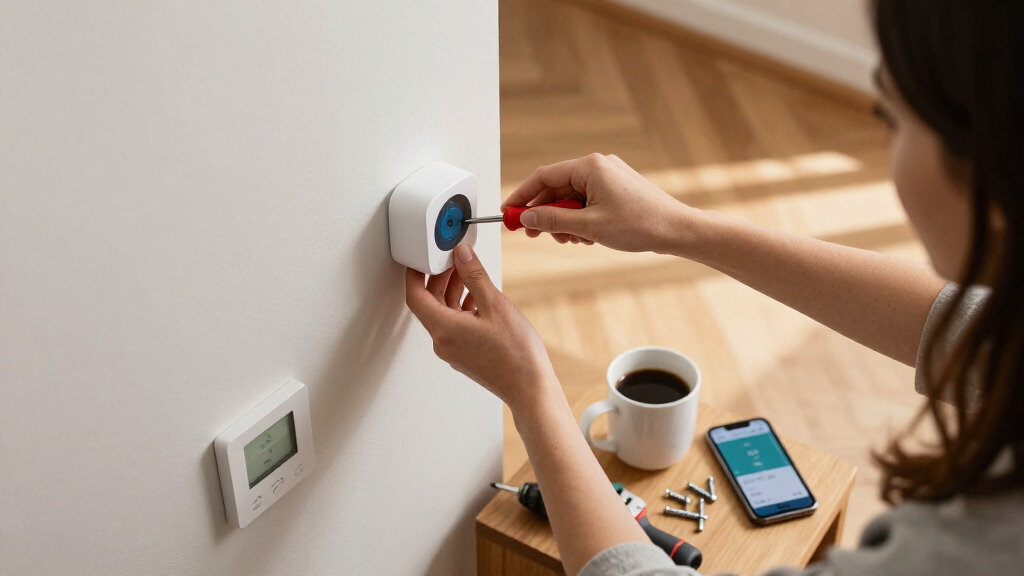
My ranking logic centers on what actually drives satisfaction with sensor-based climate control: how well the system reads multiple rooms, how gracefully it averages or prioritizes those readings, and how much friction stands between unboxing and a working multi-room setup. I weighed sensor range and connectivity (a remote sensor is useless if it drops off the network), the intelligence of the scheduling logic, and compatibility with C-wire-free installations, since many buyers discover their wiring only after purchase. App quality and ecosystem support — Google Home, Apple Home, Alexa, and Matter — factored heavily, because a thermostat you fight with ends up running on manual anyway.
I also penalized duplicated SKUs and confusing bundles, which run rampant in this category: the same Honeywell X8S hardware appears multiple times with and without sensors, and the Sensi line splits features across three tiers that look nearly identical in listings. Build quality, display usability, and long-term platform support rounded out the evaluation. Products that deliver genuine multi-room comfort at their price point rank highest; those that bolt on sensor support as an afterthought sit lower, no matter how strong the base thermostat is.
Factors to Consider When Choosing Smart Thermostats With Room Sensors
Before clicking buy, step back and think about your home’s layout, your existing smart home platform, and your wiring. These are the factors that most often make or break a sensor-based thermostat purchase.Sensor Coverage Should Match Your Home’s Problem Rooms
The whole point of room sensors is fixing temperature imbalance, so start by counting the rooms that actually cause complaints — usually an upstairs bedroom that bakes in summer or a basement office that never warms up. A starter bundle with one or two sensors covers a small ranch or condo, but a two-story home with a finished basement typically needs three to six sensors placed where people spend time, not in hallways. Cheaper systems limit you to a small number of paired sensors, which quietly caps how large a home they can serve. Also check whether the system averages all sensors or prioritizes occupied rooms; averaging alone can still leave the coldest bedroom uncomfortable. Buyers who skip this math end up with a thermostat that’s smarter but not actually more comfortable.
Ecosystem Compatibility Is a One-Way Door
Once you commit to a Nest thermostat, you’re investing in Google Home; once you go ecobee or Honeywell, you’re choosing between Alexa, Apple Home, and Google with varying depth of support. Matter-compatible models like the TQX soften this lock-in, but Matter support for advanced thermostat features is still uneven — basic control travels well, while occupancy routines and sensor configurations may not. If your household already runs Google speakers and cameras, a Nest will feel seamless where a third-party thermostat feels bolted on, and the reverse holds for Apple Home households. The common mistake is buying on thermostat features alone and discovering the voice assistant you actually use treats it as a second-class citizen. Decide on your platform before comparing spec sheets.
Wiring and HVAC Compatibility Can Sink an Otherwise Perfect Pick
More sensor thermostats get returned over wiring than over features. Many models need a C-wire (common wire) for continuous power, and while several in this category advertise C-wire-free operation using power-stealing, that approach can fail with older furnaces, heat pumps, or two-stage systems. Before ordering, photograph your existing thermostat’s wiring and check the manufacturer’s online compatibility checker. Heat pump owners should specifically verify auxiliary heat handling, since a thermostat that mishandles aux heat can send bills soaring. If your home lacks a C-wire, budget for a power-extender kit — some manufacturers include one, others don’t, and that hidden cost changes the value comparison between models.
Occupancy Sensing: Genuinely Useful or Gimmick?
Occupancy detection is the feature that separates true comfort systems from glorified thermometers. A thermostat that knows a room is empty can deprioritize it, focusing heating and cooling where people actually are instead of conditioning a guest bedroom nobody has entered since Thanksgiving. This matters most in homes with sporadic room usage — home offices, basements, guest rooms. However, occupancy sensing requires line of sight or passive infrared placement, and pets routinely trigger it, so results vary by household. If your home has one or two constantly used rooms, occupancy adds little and a simple sensor-averaging system delivers nearly the same comfort for less money. Match the feature to your actual living pattern rather than paying for capability you won’t exercise.
Watch for SKU Confusion and Sensor Bundling Traps
This category is notorious for near-identical listings: the same thermostat sold in multiple colors, with and without sensors, and in older and newer hardware revisions with nearly unchanged names. The Honeywell X8S appears in this lineup twice with different bundles, the Sensi family spans three confusingly similar tiers, and Nest sells two distinct thermostat lines that shoppers constantly mix up. The practical rule: verify the exact model number, confirm the sensor count in the box, and check that add-on sensors for your chosen brand are still manufactured and reasonably available. A thermostat is a 5–10 year purchase, so sensor ecosystem longevity matters — buying into a discontinued sensor line means replacing everything down the road.
Monitoring Versus Control: Know Which Product You’re Buying
Not everything marketed alongside room sensors actually controls your HVAC. Hygrometer-thermometer systems like the GoveeLife sensor kit measure conditions and trigger automations, but they don’t replace your thermostat — they work alongside one. This distinction trips up buyers searching for sensor keywords who end up with a monitoring kit when they needed a controller, or vice versa. A monitoring-plus-smart-plug setup can genuinely help with a window AC unit or space heater in one problem room, and it costs far less than a full thermostat swap. But if your goal is whole-home, sensor-driven HVAC control, no monitoring kit will get you there. Know which problem you’re solving before the product arrives at your door.
Frequently Asked Questions
How many room sensors do I actually need for my home?
A useful rule of thumb is one sensor per regularly occupied room, plus the thermostat’s own reading for its floor. In practice, a one-bedroom apartment needs one remote sensor, a three-bedroom single-story home needs two to three, and a two-story home with a basement often justifies four to six. Placement beats quantity: a sensor in a hallway nobody uses adds noise to the average without adding comfort. If your chosen system supports occupancy-based prioritization, you can run fewer sensors since the system focuses on occupied rooms automatically. Start with the sensors included in the box, live with the setup for a few weeks, and only add sensors where you still notice hot or cold spots.
Can a room sensor thermostat actually lower my energy bill, or is that marketing?
The savings are real but modest and depend on your starting point. If you currently run a single setpoint around the clock, a smart thermostat’s scheduling alone typically trims usage, and room sensors help by preventing the system from over-conditioning to satisfy one bad sensor location — like a thermostat in a sun-baked hallway. The bigger savings come from occupancy-aware setbacks and geofencing, which stop conditioning an empty house. Homes with severe room imbalances see the most benefit, because the system stops overshooting to fix one cold room. If you already run a disciplined manual schedule, expect smaller gains, mostly from finer control rather than behavioral changes.
What’s the difference between the two Nest thermostats, and does it matter for sensors?
The Nest Learning Thermostat (4th Gen) is the premium model: it builds its own schedule from your habits, has a sharper display, and pairs with the second-generation Nest Temperature Sensors for multi-room averaging. The standard Nest Smart Thermostat is simpler, cheaper, relies on you setting a schedule, and historically has weaker or more limited sensor integration depending on the revision you buy. If room sensors are the reason you’re upgrading, the Learning model is the one that takes full advantage of them — its software treats remote readings as first-class inputs. The standard model makes sense for smaller homes where one location’s temperature represents the whole space. Check the exact sensor compatibility for the specific revision before adding remotes later.
Do I need a hub or gateway for the room sensors to work?
It varies by brand, and it changes both cost and reliability. Some systems connect sensors directly to the thermostat over a proprietary radio, which is simple and keeps everything local even if Wi-Fi drops. Others, like GoveeLife’s sensor kit, route through a Wi-Fi gateway, which adds a device to manage but enables many more sensors and longer range. Hub-based systems tend to scale better for large homes but add a failure point and setup step. If you value a dead-simple installation, direct-pairing thermostats win; if you want granular monitoring across many rooms, a gateway architecture gives you more flexibility. Either way, confirm the gateway or hub is included in the box rather than sold separately.
Is Matter support worth prioriting when buying a thermostat with room sensors?
Matter support matters most if you’re platform-agnostic or worried about long-term lock-in — it lets the thermostat join Google Home, Apple Home, and Alexa without brand-specific integration. The catch is that Matter’s thermostat support still covers the basics well (setpoints, modes, schedules) while advanced features like occupancy routines and detailed sensor configuration can remain locked inside the manufacturer’s own app. In this lineup, the TQX leans on Matter for cross-platform appeal, whereas ecobee and Nest deliver deeper native integrations with their chosen ecosystems. My guidance: pick Matter if you genuinely switch platforms or resent vendor lock-in, but pick the best comfort system if you already know your ecosystem and plan to stay. For most buyers today, native integration depth still beats open-standard breadth.
Conclusion
Matching the right thermostat to your situation comes down to home size, platform, and how much automation you want. For most buyers, the ecobee Smart Thermostat Essential is the best overall choice — it pairs reliable multi-room sensor control with a straightforward app and broad platform support, hitting the sweet spot of comfort and usability.
Best premium goes to the Google Nest Learning Thermostat (4th Gen), whose self-programming schedule and second-gen sensors reward buyers who want maximum automation and live in the Google ecosystem. On value, the Honeywell Home ElitePRO S1200 and the bundled Honeywell X8S with Room Sensor deliver genuine sensor-driven comfort without premium pricing — just verify which bundle includes the sensors. Beginners and renters should start with the Sensi Touch 2 or Sensi Lite ST25W, which trade flashy features for painless installation and honest, simple controls.
For specific needs: the TQX Matter thermostat suits multi-platform households that refuse ecosystem lock-in, its occupancy detection also making it the pick for homes with rooms that sit empty most days. And if your goal is monitoring a greenhouse, wine room, or nursery rather than controlling HVAC, the GoveeLife 2.0 with six mini sensors solves that problem for a fraction of a thermostat’s cost. Whatever you choose, buy the system whose sensors cover the rooms you actually live in — that, not the thermostat on the wall, is what determines whether you feel the difference.
NFL season / tailgating Picks
team gear
As an affiliate, we earn on qualifying purchases.