The best auto-tracking security cameras pair reliable subject-following with the power, connection, and storage setup that suits your property. My best overall pick is the REOLINK TrackMix PoE, whose dual-lens design and wired connection make it a strong fit for buyers prioritizing detailed, dependable coverage. For flexible outdoor coverage, the eufyCam C37 adds solar power and 360-degree pan and tilt, while the VOOPEAK 4G LTE suits locations where Wi-Fi is unavailable. The main tradeoffs are tracking detail versus coverage, wired reliability versus installation freedom, and local storage versus network-dependent features. Read on for the full breakdown and help matching a camera to your setup.

Get home appliances delivered free with Prime
- Fast, free delivery on millions of items
- Prime Video, Amazon Music and more included
- Member-only deals all year
Complete the kit



Key Takeaways
- REOLINK TrackMix PoE is my best overall choice for buyers who can run Ethernet and want dual-lens tracking with hybrid zoom; its wired installation is less flexible than solar or Wi-Fi models.
- REOLINK RLC-823S2 stands apart for 16× optical zoom, making it a better match for identifying distant activity than cameras that depend on digital enlargement.
- Solar models dominate the outdoor options, but their performance still depends on sunlight, placement, and local weather; a solar panel does not remove the need to plan for power.
- The VOOPEAK 4G LTE fills a distinct gap for sites beyond Wi-Fi range, while cellular coverage and data service become part of ownership.
- Multi-camera systems solve a different problem from single PTZ cameras: the aosu D1 Max four-camera kit spreads coverage across viewpoints, while a rotating camera can follow one subject but may turn away from another area.
| aosu D1 Max 4K 8MP Solar-Powered Outdoor Security Camera, 2-Pack |  | Best Solar Two-Camera Pick | Camera count: 2 | Resolution: 4K UHD, 8MP | Coverage: 360° pan and tilt | VIEW LATEST PRICE | See Our Full Breakdown |
| ARCCTV 4K Solar-Powered Wireless Outdoor Security Cameras with Auto Tracking, 2-Pack |  | Best for Dual-Band Wi-Fi | Camera count: 2 | Resolution: 4K (3840 × 2160), 8MP | Pan and tilt: 355° horizontal; 90° vertical | VIEW LATEST PRICE | See Our Full Breakdown |
| aosu D1 Max 4-Camera 4K Solar Wireless Outdoor Security System |  | Best Multi-Camera System | Camera count: 4 | Resolution and frame rate: 4K UHD, 8MP; 15 fps | Coverage and zoom: 360° pan and tilt; 6× digital zoom | VIEW LATEST PRICE | See Our Full Breakdown |
| REOLINK RLC-823S2 4K Outdoor PoE PTZ Security Camera with 16× Optical Zoom |  | Best Wired Long-Range Tracking | Resolution: 4K UHD, 8MP | Optical zoom: 16× | Pan and tilt: 360° pan; 90° tilt | VIEW LATEST PRICE | See Our Full Breakdown |
| Anona 4K UHD Indoor Security Camera, 2-Pack |  | Best Indoor Auto-Tracking Pair | Camera count: 2 | Resolution and frame rate: 4K UHD, 8MP; 15 fps | Pan and tilt: 355° pan; 110° tilt | VIEW LATEST PRICE | See Our Full Breakdown |
| REOLINK TrackMix PoE Dual-Lens PTZ Security Camera with 6× Hybrid Zoom |  | Best for Detailed Wired Tracking | Camera type: Dual-lens PTZ security camera | Lenses: 2.8 mm wide-angle and 8 mm telephoto | Zoom: 6× hybrid zoom | VIEW LATEST PRICE | See Our Full Breakdown |
| Cinnado B6 2K Solar Wireless Outdoor Security Cameras, 2-Pack, White |  | Best Two-Camera Solar Starter Set | Quantity: 2 cameras | Resolution: Up to 2304 × 1296 pixels (2K) | Pan, tilt, and zoom: 360° PTZ | VIEW LATEST PRICE | See Our Full Breakdown |
| Tutoview 4K Solar Outdoor Security Camera with Four-Lens Coverage and 360° PTZ |  | Best for Broad Solar-Powered Coverage | Video capture resolution: 4K (3840 × 2160) | Lens configuration: Four lenses | PTZ rotation: 360° horizontal; 90° vertical | VIEW LATEST PRICE | See Our Full Breakdown |
| aosu 3K 5MP Solar-Powered Outdoor PTZ Security Camera |  | Best for Solar Tracking with Active Deterrence | Resolution: 3K (5MP) | Field of view: 360-degree pan-and-tilt coverage | Zoom: 8× digital zoom | VIEW LATEST PRICE | See Our Full Breakdown |
| eufy Security eufyCam C37 4K Solar Outdoor Camera with 360° Pan and Tilt |  | Best for Local-Storage 4K Tracking | Video resolution: 4K | Pan and tilt: 360° | Detection and tracking: AI tracking for people, vehicles, and pets | VIEW LATEST PRICE | See Our Full Breakdown |
| 4MP Wireless Solar Security Camera System with 4 Cameras, 128GB Local Storage, PTZ Tracking, and Color Night Vision |  | Best for Subscription-Free Multi-Camera Coverage | Camera count: 4 | Resolution: 4MP | Storage: 128GB encrypted local storage in hub | VIEW LATEST PRICE | See Our Full Breakdown |
| VOOPEAK 4G LTE Dual-Lens 2K Security Camera with 360° PTZ and Human Auto Tracking |  | Best for Off-Grid Cellular Monitoring | Connectivity: 4G LTE; no Wi-Fi required | Resolution: 2K | Lens configuration: Fixed wide-angle lens and PTZ lens | VIEW LATEST PRICE | See Our Full Breakdown |
| REOLINK TrackMix WiFi 4K Outdoor PTZ Security Camera, 8MP Dual-Lens with Auto Tracking and 6× Hybrid Zoom |  | Best for High-Detail Wired Tracking | Resolution: 8MP (4K UHD) | Lens: Dual wide-angle and telephoto | Zoom: 6× hybrid | VIEW LATEST PRICE | See Our Full Breakdown |
| 2.5K Outdoor Wi-Fi Security Camera with 360° PTZ and Auto Tracking |  | Best for Straightforward Plug-In Tracking | Resolution: 2.5K, 5MP | Connectivity: 2.4GHz and 5GHz Wi-Fi | Power: Plug-in | VIEW LATEST PRICE | See Our Full Breakdown |
| aosu D1 Classic 4-Camera Wireless Outdoor Security System with Solar Charging | 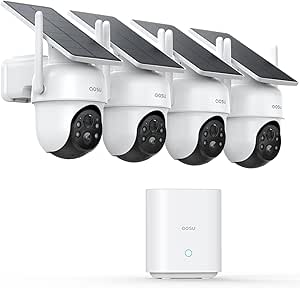 | Best for Simple Solar Multi-Camera Setup | Camera count: 4 | Resolution: 2K (3MP) | Storage: 32GB local storage in aosuBase | VIEW LATEST PRICE | See Our Full Breakdown |
| auto-tracking security camera | Night vision | Storage | Resolution | Connectivity |
|---|---|---|---|---|
| aosu D1 Max 4K 8MP Solar-Power | — | microSD up to 256GB (card not included); optional cloud storage | 4K UHD, 8MP | 2.4GHz Wi-Fi |
| ARCCTV 4K Solar-Powered Wirele | Color night vision; stated range up to 33 feet | microSD up to 256GB (card not included); optional subscription cloud storage | 4K (3840 × 2160), 8MP | — |
| aosu D1 Max 4-Camera 4K Solar | Full color and infrared black-and-white; stated range 33 ft | 32GB included; expandable up to 1TB | — | Wireless cameras; Ethernet base station |
| REOLINK RLC-823S2 4K Outdoor P | Color with spotlights and infrared | — | 4K UHD, 8MP | — |
| Anona 4K UHD Indoor Security C | — | microSD up to 512GB (card not included) or cloud storage | — | Dual-band 2.4GHz and 5GHz Wi-Fi 6 |
| REOLINK TrackMix PoE Dual-Lens | Color and infrared; range up to 30 meters | — | — | — |
| Cinnado B6 2K Solar Wireless O | — | MicroSD up to 128 GB or optional cloud storage | Up to 2304 × 1296 pixels (2K) | 2.4 GHz Wi-Fi; 5 GHz Wi-Fi not supported |
| Tutoview 4K Solar Outdoor Secu | Color night vision up to 65 ft | — | — | Wi-Fi; 2.4 GHz and 5 GHz |
| aosu 3K 5MP Solar-Powered Outd | Full-color; infrared and LED light sources | — | 3K (5MP) | 2.4 GHz Wi-Fi via Bluetooth |
| eufy Security eufyCam C37 4K S | Color night vision with built-in spotlight | MicroSD up to 256 GB or compatible HomeBase; cloud storage not supported | — | 2.4 GHz Wi-Fi |
| 4MP Wireless Solar Security Ca | Color, up to 65 ft | 128GB encrypted local storage in hub | 4MP | — |
| VOOPEAK 4G LTE Dual-Lens 2K Se | Full-color and infrared, up to 65 ft | Memory card not included or optional paid cloud storage | 2K | 4G LTE; no Wi-Fi required |
| REOLINK TrackMix WiFi 4K Outdo | Full color with built-in spotlights; up to 100 ft | Up to 512GB microSD, FTP, or compatible Reolink NVR | 8MP (4K UHD) | — |
| 2.5K Outdoor Wi-Fi Security Ca | Color and infrared, up to 33 ft | MicroSD up to 128GB, not included, or cloud storage | 2.5K, 5MP | 2.4GHz and 5GHz Wi-Fi |
| aosu D1 Classic 4-Camera Wirel | Full color with spotlights and infrared black-and-white | 32GB local storage in aosuBase | 2K (3MP) | — |
More Details on Our Top Picks
aosu D1 Max 4K 8MP Solar-Powered Outdoor Security Camera, 2-Pack
The aosu D1 Max 2-Pack suits buyers who want active tracking across two outdoor areas without running power cables to each camera. Its 360° pan-and-tilt movement, AI person and vehicle detection, and 4K video give it a stronger detail-and-coverage combination than the indoor Anona 4K 2-Pack, while solar panels reduce routine charging. The separate panels connect over 10-foot cables, making it easier to place each panel in sunlight without putting the camera there too. Footage can stay on a microSD card, so cloud service is optional. The tradeoffs are that the card is not included, Wi-Fi is limited to 2.4GHz, and adding multi-camera features requires aosuBase 2.0. Compared with the four-camera aosu D1 Max system, this pack covers fewer areas and does not include its base station or expandable storage.
Pros:- 4K video, 6× digital zoom, and full-color night vision provide useful detail for identifying activity.
- 360° pan-and-tilt coverage with automatic tracking follows moving subjects across a broad area.
- Solar panels with 10-foot cables allow more flexible placement in sunlight.
- Supports local microSD storage up to 256GB without requiring a subscription.
Cons:- A microSD card is not included, so local recording requires a separate purchase.
- Connects only to 2.4GHz Wi-Fi.
- Multi-camera features require aosuBase 2.0, which is not compatible with aosuBase 1.0.
Best for: Homeowners who want solar-powered, actively tracking cameras for two outdoor zones and prefer local storage over a required subscription.
Not ideal for: Buyers who need a four-camera system with included central storage, 5GHz Wi-Fi, or an indoor camera; the D1 Max 4-Camera system offers broader coverage and included storage.
- Camera count:2
- Resolution:4K UHD, 8MP
- Coverage:360° pan and tilt
- Digital zoom:6×
- Detection and tracking:AI human and vehicle detection with PIR sensor; automatic smart tracking
- Storage:microSD up to 256GB (card not included); optional cloud storage
- Connectivity:2.4GHz Wi-Fi
- Power and weather resistance:Solar panel with 10 ft cable; IP65
Our verdict“Choose this two-camera aosu kit for solar-powered 4K tracking in two outdoor areas, but pick the four-camera D1 Max system if included expandable storage matters more.”
ARCCTV 4K Solar-Powered Wireless Outdoor Security Cameras with Auto Tracking, 2-Pack
The ARCCTV 4K 2-Pack is a fit for buyers whose outdoor network uses 5GHz Wi-Fi as well as 2.4GHz. Like the aosu D1 Max two-camera kit, it pairs solar-assisted power with 4K video, pan-and-tilt coverage, and local microSD recording; its distinguishing benefit is dual-band Wi-Fi. It also adds two-way audio and a spotlight, useful when a motion alert calls for a live response. Auto tracking is supported but disabled by default, so buyers need to switch it on—and account for its effect on battery life—rather than assuming tracking is active out of the box. The stated pan range is 355° with 90° tilt, not full 360° movement. A card is not included, and cloud storage requires a subscription. Compared with the four-camera aosu system, this is a smaller, simpler kit without included base-station storage.
Pros:- Supports both 2.4GHz and 5GHz Wi-Fi.
- 4K video, pan-and-tilt movement, and optional automatic tracking cover a wide range of monitoring needs.
- Solar-assisted battery power supports wire-free outdoor installation.
- Two-way audio and a spotlight add ways to respond to activity.
Cons:- Auto tracking is disabled by default and may reduce battery life when enabled.
- The microSD card is not included, and cloud storage requires a subscription.
- Pan range is 355°, short of full 360° coverage.
Best for: Households with a dual-band outdoor Wi-Fi network that want two wire-free cameras, two-way audio, and the option to enable motion tracking.
Not ideal for: Buyers who want tracking active by default, dependable operation without solar charging, or included local storage; the four-camera aosu D1 Max includes 32GB in its base station.
- Camera count:2
- Resolution:4K (3840 × 2160), 8MP
- Pan and tilt:355° horizontal; 90° vertical
- Auto tracking:Supported; disabled by default
- Power:Rechargeable lithium-ion battery with detachable solar panel
- Wi-Fi:2.4GHz and 5GHz
- Storage:microSD up to 256GB (card not included); optional subscription cloud storage
- Night vision:Color night vision; stated range up to 33 feet
Our verdict“Pick ARCCTV if dual-band Wi-Fi and two-way audio matter most, but choose the aosu D1 Max kit if you want tracking ready to use and a separate solar-panel cable for flexible placement.”
aosu D1 Max 4-Camera 4K Solar Wireless Outdoor Security System
For buyers who want one coordinated system across several outdoor zones, the aosu D1 Max 4-Camera system offers more than simply doubling the camera count. It combines cross-camera tracking with AI person and vehicle detection, so coverage can follow activity between monitored areas rather than stopping at one camera’s view. Each camera records 4K, pans and tilts through 360°, and runs on solar power. The included base station starts with 32GB of local storage and supports expansion up to 1TB, giving this setup a more self-contained recording plan than the two-camera aosu D1 Max or ARCCTV kits, both of which require a separate microSD card for local storage. The main compromises are its 15 fps video and reliance on daily sunlight for maintenance-free charging. Choose it for broad property coverage, not for smoother high-motion footage.
Pros:- Four cameras provide broad outdoor coverage from one system.
- Automatic and cross-camera tracking pair with AI person and vehicle detection.
- Includes 32GB of local storage, expandable up to 1TB, with no subscription required.
- Solar-powered, wire-free cameras simplify installation where sunlight is available.
Cons:- Video is limited to 15 fps, which may look less fluid during fast movement.
- Maintenance-free solar charging depends on daily sunlight.
- The base station connects by Ethernet, so it needs a wired network connection.
Best for: Homeowners monitoring several outdoor zones who want cross-camera tracking, included local storage, and solar-powered cameras without a required subscription.
Not ideal for: Buyers who need smoother footage for fast-moving activity or whose camera locations get little daily sunlight; the REOLINK RLC-823S2 records at 25 fps and uses wired PoE power.
- Camera count:4
- Resolution and frame rate:4K UHD, 8MP; 15 fps
- Coverage and zoom:360° pan and tilt; 6× digital zoom
- Detection and tracking:AI person and vehicle detection; automatic and cross-camera tracking
- Night vision:Full color and infrared black-and-white; stated range 33 ft
- Storage:32GB included; expandable up to 1TB
- Power and weather resistance:Solar-powered; IP65
- Connectivity:Wireless cameras; Ethernet base station
Our verdict“Choose this system for multi-zone solar coverage with cross-camera tracking and included storage, but favor the REOLINK RLC-823S2 if higher frame rate and wired reliability take priority.”
REOLINK RLC-823S2 4K Outdoor PoE PTZ Security Camera with 16× Optical Zoom
The REOLINK RLC-823S2 is the wired alternative for buyers who prioritize zoom and smoother capture over solar flexibility. Its 16× optical zoom can enlarge distant subjects without relying on digital enlargement, a meaningful advantage over the 6× digital zoom on either aosu D1 Max system. It also records at 25 fps, compared with the four-camera aosu system’s 15 fps, and detects people, vehicles, and animals. A single PoE Ethernet cable carries power and video, reducing the number of runs needed, though it still requires a network cable and does not support Wi-Fi. That makes installation less flexible than the solar-powered aosu and ARCCTV kits, but better suited to a fixed location with wired infrastructure. It is one camera, not a multi-camera kit, and optimal performance calls for an IEEE 802.3at PoE switch.
Pros:- 16× optical zoom provides more useful detail on distant subjects than digital zoom alone.
- 360° pan, 90° tilt, and auto tracking cover a wide area.
- 25 fps capture is smoother than the 15 fps video offered by the four-camera aosu system.
- PoE carries power and video over one Ethernet cable.
Cons:- Requires Ethernet PoE and does not support Wi-Fi.
- An IEEE 802.3at PoE switch is recommended for optimal performance.
- The package includes one camera, unlike the two- and four-camera systems in this lineup.
Best for: Property owners with Ethernet access who need close views of distant areas, smooth 25 fps footage, and tracking from a fixed outdoor installation.
Not ideal for: Renters or homeowners who cannot run Ethernet, want solar power, or need multiple cameras in one purchase; either two-camera solar kit offers more flexible placement.
- Resolution:4K UHD, 8MP
- Optical zoom:16×
- Pan and tilt:360° pan; 90° tilt
- Frame rate:25 fps
- Detection:Person, vehicle, and animal detection
- Night vision:Color with spotlights and infrared
- Connectivity and power:Ethernet PoE; no Wi-Fi
- Audio and mounting:Two-way talk; ceiling mount
Our verdict“Choose the RLC-823S2 for wired, long-range tracking and optical zoom, but choose a solar kit if you cannot run Ethernet or need coverage from multiple cameras.”
Anona 4K UHD Indoor Security Camera, 2-Pack
The Anona 4K 2-Pack brings auto-tracking to indoor monitoring, where its person, pet, and baby-cry detection can make alerts more relevant than the outdoor-focused human and vehicle detection on the aosu D1 Max cameras. Its 8× digital zoom exceeds the 6× digital zoom on the aosu outdoor systems, while dual-band Wi-Fi 6 offers more network flexibility than those models’ 2.4GHz-only connection. Pan-and-tilt movement helps follow activity around a room, and microSD or encrypted cloud storage gives buyers a choice of recording method. This is not an outdoor substitute: it is tabletop-mounted and corded, so placement depends on an outlet. Video runs at 15 fps, matching the four-camera aosu system but falling below the 25 fps REOLINK. Choose Anona for indoor family monitoring, not weather-exposed coverage.
Pros:- 4K video and 8× digital zoom help inspect activity around a room.
- Pan-and-tilt movement with auto-tracking follows activity across a wide indoor area.
- Detects people, pets, and baby crying for more varied household monitoring.
- Supports dual-band Wi-Fi 6 and microSD cards up to 512GB.
Cons:- Corded power limits camera placement to locations near an outlet.
- 15 fps video is less fluid than the REOLINK RLC-823S2’s 25 fps capture.
- The microSD card is not included, and tabletop mounting is less flexible than outdoor wall mounting.
Best for: Families who want two indoor cameras to follow people or pets and detect baby crying, with dual-band Wi-Fi and local storage options.
Not ideal for: Buyers needing weather-resistant outdoor tracking, battery or solar power, or smoother footage; the outdoor aosu D1 Max systems are built for exposed locations, while the REOLINK records at 25 fps.
- Camera count:2
- Resolution and frame rate:4K UHD, 8MP; 15 fps
- Pan and tilt:355° pan; 110° tilt
- Zoom:8× digital
- Detection:Person, pet, and baby-cry detection
- Connectivity:Dual-band 2.4GHz and 5GHz Wi-Fi 6
- Storage:microSD up to 512GB (card not included) or cloud storage
- Power and mounting:Corded electric; tabletop mount
Our verdict“Choose Anona for indoor tracking and family-focused alerts, but select an outdoor solar system such as the aosu D1 Max if you need weather-resistant perimeter coverage.”
REOLINK TrackMix PoE Dual-Lens PTZ Security Camera with 6× Hybrid Zoom
The TrackMix PoE is the strongest fit here for buyers who want a moving subject tracked without losing the wider scene. Its dual-lens view pairs a panoramic image with a telephoto close-up, while selectable tracking can follow people, vehicles, and pets. Compared with the solar-powered eufyCam C37, this Reolink favors a dependable wired connection and gives you a clearer wide-and-close view at once; the C37 is easier to place where cabling is impractical. PoE also carries power and network data over one cable, but you must supply a compatible PoE switch, injector, or NVR. Night vision, spotlights, and a siren add options for after-dark alerts, though dual-lens display on a compatible NVR monitor depends on current firmware.
Pros:- Dual lenses show a wide scene and a tracked close-up together.
- Tracks people, vehicles, and pets with selectable modes.
- Single-cable PoE connection carries power and network data.
- Color and infrared night vision, spotlight, and siren provide varied night-alert options.
Cons:- A compatible PoE switch, injector, or Reolink PoE NVR is required and not included.
- Compatible NVR monitor display of both lens views requires the latest firmware.
Best for: Homeowners with existing PoE equipment who want detailed tracking across a driveway, yard, or other fixed outdoor area.
Not ideal for: Renters or anyone without a practical Ethernet route and compatible PoE equipment, since the required power and network hardware is not included.
- Camera type:Dual-lens PTZ security camera
- Lenses:2.8 mm wide-angle and 8 mm telephoto
- Zoom:6× hybrid zoom
- Pan and tilt:355° pan; 90° tilt
- Detection:People, vehicles, and pets
- Night vision:Color and infrared; range up to 30 meters
- Weather resistance:IP65
- Power:PoE; compatible IEEE 802.3af switch, injector, or Reolink PoE NVR required
Our verdict“Choose the TrackMix PoE if you have compatible PoE equipment and value simultaneous wide and close tracking over wireless installation.”
Cinnado B6 2K Solar Wireless Outdoor Security Cameras, 2-Pack, White
The Cinnado B6 two-pack suits buyers who would rather cover two separate spots than pay for one camera with more elaborate optics. Solar charging and 5000 mAh backup batteries reduce dependence on nearby power, while remote pan, tilt, and zoom let you adjust the view from the app. That makes it easier to position than the wired REOLINK TrackMix PoE, which offers a dedicated wide-and-telephoto view but needs PoE hardware and an Ethernet run. Cinnado’s 2K capture, adjustable human detection, two-way audio, and local microSD option cover everyday monitoring needs. The tradeoff is recording: it does not support continuous 24/7 capture, and the cameras rely on 2.4 GHz Wi-Fi. A microSD card is also a separate purchase.
Pros:- Two cameras cover separate areas in one system.
- Solar power and backup batteries reduce routine charging and wiring.
- Remote 360° pan, tilt, and zoom help reposition each view.
- Supports microSD storage and optional cloud storage, plus two-way audio.
Cons:- Does not provide continuous 24/7 recording.
- Connects to 2.4 GHz Wi-Fi only.
- MicroSD card is not included.
Best for: Households that want solar-powered app-controlled coverage at two outdoor locations and are comfortable with event-based recording.
Not ideal for: Buyers who need continuous recording, 5 GHz Wi-Fi, or a wired, always-connected camera system.
- Quantity:2 cameras
- Resolution:Up to 2304 × 1296 pixels (2K)
- Pan, tilt, and zoom:360° PTZ
- Power:Solar and battery; 5000 mAh battery capacity
- Connectivity:2.4 GHz Wi-Fi; 5 GHz Wi-Fi not supported
- Detection:PIR and AI human detection with three sensitivity levels
- Storage:MicroSD up to 128 GB or optional cloud storage
- Weather resistance:IP65
Our verdict“Pick the Cinnado B6 if two solar-powered cameras and flexible event monitoring matter more than continuous recording.”
Tutoview 4K Solar Outdoor Security Camera with Four-Lens Coverage and 360° PTZ
The Tutoview four-lens camera prioritizes coverage: its multi-lens views, 360° pan, and motion tracking are designed to give a single camera a broad watch over an outdoor area. It also stands apart from the aosu 3K 5MP Solar PTZ with listed 4K capture and 24/7 AOV recording, rather than relying only on the aosu’s 3K specification and motion-tracking feature set. Solar power avoids a dedicated power cable, while custom detection zones can help limit alerts from parts of the scene you do not need monitored. That wider feature mix comes with a basic requirement: this remains a Wi-Fi camera, not an independent cellular system. Its mounting dimensions are listed unusually small, so I would verify the actual space and mounting fit before installation.
Pros:- Four-lens views and PTZ rotation provide broad coverage from one camera.
- Lists 4K video capture and continuous AOV recording.
- Solar power supports outdoor installation without a dedicated power connection.
- Custom detection zones, two-way audio, and multi-user sharing add monitoring flexibility.
Cons:- Requires a Wi-Fi connection.
- Listed dimensions are unusually small, so mounting fit should be checked before installation.
Best for: Property owners seeking broad, solar-powered outdoor coverage with 4K capture, continuous AOV recording, and app sharing.
Not ideal for: Buyers who need a wired or cellular connection, or who cannot confirm the camera’s physical mounting dimensions before purchase.
- Video capture resolution:4K (3840 × 2160)
- Lens configuration:Four lenses
- PTZ rotation:360° horizontal; 90° vertical
- Recording:24/7 AOV recording
- Motion features:Auto tracking, motion alerts, and custom detection zones
- Night vision:Color night vision up to 65 ft
- Connectivity:Wi-Fi; 2.4 GHz and 5 GHz
- Weather resistance:IP66; operating range -4°F to 122°F
Our verdict“Choose Tutoview for broad multi-lens solar coverage and listed continuous AOV recording, provided Wi-Fi and mounting fit work for your site.”
aosu 3K 5MP Solar-Powered Outdoor PTZ Security Camera
The aosu 3K 5MP PTZ is a practical match for buyers who want solar-powered tracking with a more active response to motion. It follows people and vehicles, and its full-color night vision, spotlight, alarm, and noise-reduced two-way talk give you several ways to check or respond to an alert. Compared with the Cinnado B6, aosu adds vehicle tracking and an alarm, while Cinnado gives you two cameras and local microSD or optional cloud storage. The aosu’s 360-degree coverage and quick patrol help scan a broad outdoor area, but its 8× zoom is digital, not optical or hybrid zoom like the REOLINK TrackMix PoE. Expect 2.4 GHz Wi-Fi only, and note that the listed compatibility is Alexa and Google Assistant.
Pros:- Tracks human and vehicle motion across 360-degree coverage.
- Solar-powered design supports outdoor placement without a standard power cable.
- Full-color night vision, spotlight, and alarm provide active night-time response options.
- Two-way talk includes AI noise reduction.
Cons:- 8× zoom is digital rather than optical.
- Supports 2.4 GHz Wi-Fi only.
- Single-camera package offers less immediate coverage than the Cinnado B6 two-pack.
Best for: Homeowners who want a single solar-powered camera to track people and vehicles and use a spotlight, alarm, or two-way talk in response.
Not ideal for: Buyers who need optical zoom, 5 GHz Wi-Fi, or a multi-camera system in one package.
- Resolution:3K (5MP)
- Field of view:360-degree pan-and-tilt coverage
- Zoom:8× digital zoom
- Power:Solar-powered
- Tracking:Human and vehicle motion tracking
- Night vision:Full-color; infrared and LED light sources
- Connectivity:2.4 GHz Wi-Fi via Bluetooth
- Weather resistance:IP65
Our verdict“Choose the aosu if solar-powered human and vehicle tracking with light, alarm, and talkback matters more than optical zoom or multi-camera coverage.”
eufy Security eufyCam C37 4K Solar Outdoor Camera with 360° Pan and Tilt
The eufyCam C37 is a strong option for buyers who want 4K tracking and prefer local recording over cloud storage. Its AI tracking follows people, vehicles, and pets, while detachable solar panels let you place the panel for sunlight without being tied to the camera’s exact mounting position. That flexibility contrasts with the REOLINK TrackMix PoE: Reolink’s dual-lens design shows wide and close views together, but it needs wired PoE equipment; the C37 is wireless and simpler to position. The tradeoff is storage choice. You need to supply a microSD card or use a compatible HomeBase, and cloud storage is not supported. Its listed 15 fps video rate and 2.4 GHz Wi-Fi also make it less suited to buyers who prioritize smoother footage or 5 GHz networking.
Pros:- 4K video with AI tracking for people, vehicles, and pets.
- 360° pan and tilt help follow motion across a broad outdoor view.
- Detachable solar panels allow more flexible panel placement.
- Local microSD or compatible HomeBase storage avoids cloud dependence.
Cons:- Cloud storage is not supported.
- MicroSD card is sold separately, and a compatible HomeBase is another storage route rather than a bundled requirement-free option.
- Uses 2.4 GHz Wi-Fi and records at a listed 15 fps.
Best for: Homeowners seeking a solar-assisted 4K outdoor tracker with local storage and no cloud-storage requirement.
Not ideal for: Buyers who want cloud recording, a card included, 5 GHz Wi-Fi, or simultaneous wide and telephoto views.
- Video resolution:4K
- Pan and tilt:360°
- Detection and tracking:AI tracking for people, vehicles, and pets
- Power:Detachable 3W solar panels
- Night vision:Color night vision with built-in spotlight
- Storage:MicroSD up to 256 GB or compatible HomeBase; cloud storage not supported
- Connectivity:2.4 GHz Wi-Fi
- Video frame rate:15 fps
Our verdict“Pick the eufyCam C37 if you want solar-assisted 4K tracking with local storage, and can accept no cloud option and a separately supplied storage device.”
4MP Wireless Solar Security Camera System with 4 Cameras, 128GB Local Storage, PTZ Tracking, and Color Night Vision
For buyers who want auto-tracking across several outdoor viewpoints without a cloud subscription, this four-camera kit offers a strong mix of coverage and local recording. Its encrypted 128GB hub stores footage locally, while solar panels and 8,000mAh batteries avoid running power cables to each camera. Compared with the aosu D1 Classic, it provides more listed hub storage and dual-band Wi-Fi; the aosu instead has integrated solar panels and a simpler base-centered setup. The cameras also add 4MP video, color night vision, and two-way audio, but tracking must be enabled in the app, and human-only recording is the default. Buyers should check the Wi-Fi signal at each mounting point, particularly when using 5GHz, which may not carry as far as 2.4GHz.
Pros:- Four cameras and pan-and-tilt tracking cover multiple outdoor areas.
- Encrypted 128GB hub storage supports local recording without a subscription.
- Solar panels and 8,000mAh batteries support wire-free placement.
- Hub can connect by Ethernet or Wi-Fi.
Cons:- Auto-tracking needs to be enabled manually in the app.
- Human-only recording is on by default, so other motion types require a settings change.
- 5GHz Wi-Fi may have a weaker signal over longer distances.
Best for: Homeowners who want four solar-powered camera positions, local encrypted recording, and remote playback without a subscription.
Not ideal for: People who want tracking active by default or need reliable 5GHz coverage at cameras far from the router.
- Camera count:4
- Resolution:4MP
- Storage:128GB encrypted local storage in hub
- Power:8,000mAh battery and 5W solar panel
- Wi-Fi:2.4GHz and 5GHz
- Night vision:Color, up to 65 ft
- Weather resistance:IP66
- Tracking and detection:Pan and tilt, auto-tracking, AI human detection
Our verdict“Choose this kit for four-camera solar coverage and subscription-free local storage, provided you are comfortable adjusting tracking and detection settings.”
VOOPEAK 4G LTE Dual-Lens 2K Security Camera with 360° PTZ and Human Auto Tracking
The VOOPEAK is the clearest fit here for a gate, outbuilding, or remote property without Wi-Fi: it uses 4G LTE and pairs a fixed wide-angle lens with a tracking PTZ lens. That dual-view arrangement keeps a broad overview while the moving lens follows a person or animal, a different approach from the single-camera pan-and-tilt coverage of the 2.5K Outdoor Wi-Fi Security Camera. Solar charging and a 7,800mAh battery also suit locations without nearby power. The tradeoff is ongoing cellular service: each camera needs its own data plan after the included seven-day trial, and use is limited to the United States. Local storage requires a separately supplied memory card; cloud storage is optional and paid. I would choose it for connectivity flexibility, not for the lowest-maintenance recording setup.
Pros:- 4G LTE supports remote monitoring where Wi-Fi is unavailable.
- Fixed wide-angle and PTZ lenses provide a broad view plus active tracking.
- Solar charging and a 7,800mAh battery suit off-grid placement.
- AI detection covers people, vehicles, pets, and wild animals.
Cons:- Requires a separate cellular data plan for each camera after the seven-day trial.
- Memory card is not included, and cloud storage requires an optional paid plan.
- Cellular service is limited to the United States.
Best for: US property owners monitoring barns, gates, cabins, or other locations without Wi-Fi or convenient mains power.
Not ideal for: Buyers who have dependable Wi-Fi, want to avoid recurring cellular data costs, or need included local storage.
- Connectivity:4G LTE; no Wi-Fi required
- Resolution:2K
- Lens configuration:Fixed wide-angle lens and PTZ lens
- Pan and tilt:360° PTZ
- Tracking:Automatic human and animal tracking
- Night vision:Full-color and infrared, up to 65 ft
- Power:7,800mAh battery with solar charging
- Storage:Memory card not included or optional paid cloud storage
Our verdict“Pick the VOOPEAK for solar-powered tracking at a US site without Wi-Fi, but skip it if cellular plan costs or separate storage are deal-breakers.”
REOLINK TrackMix WiFi 4K Outdoor PTZ Security Camera, 8MP Dual-Lens with Auto Tracking and 6× Hybrid Zoom
When identifying detail matters more than avoiding cables, the TrackMix WiFi is the strongest fit in this group. Its 4K dual-lens system combines a wide overview with a telephoto view, while 6× hybrid zoom and auto-tracking help keep a moving subject visible without relying on a single cropped image. Compared with the VOOPEAK 4G LTE Dual-Lens, it offers higher resolution and several storage routes, but it needs continuous power and Wi-Fi rather than cellular connectivity. Person, vehicle, and pet detection, plus spotlights for color night vision, make it more adaptable than the simpler 2.5K plug-in camera. The aluminum-style metal enclosure and IP65 rating suit outdoor mounting, though buyers must provide a microSD card or use FTP or a compatible Reolink NVR. It is not a solar or off-grid pick.
Pros:- Dual lenses pair a wide view with a telephoto tracking view.
- 4K resolution and 6× hybrid zoom capture more detail than the 2K options here.
- Detects people, vehicles, and pets.
- Supports microSD, FTP, or compatible Reolink NVR storage.
Cons:- Requires continuous power from an adapter.
- MicroSD card is not included.
- Does not support PoE, so it still depends on Wi-Fi for network connectivity.
Best for: Homeowners with reliable Wi-Fi and a nearby power outlet who want detailed video, zoom, and tracking for a driveway or yard.
Not ideal for: Buyers seeking solar power, cellular operation, or a fully wireless installation.
- Resolution:8MP (4K UHD)
- Lens:Dual wide-angle and telephoto
- Zoom:6× hybrid
- Pan and tilt:355° pan and 90° tilt
- Detection:Person, vehicle, and pet
- Night vision:Full color with built-in spotlights; up to 100 ft
- Storage:Up to 512GB microSD, FTP, or compatible Reolink NVR
- Power and weather resistance:12W corded electric; IP65
Our verdict“Choose the TrackMix WiFi for detailed, zoom-assisted auto-tracking when you can supply both Wi-Fi and continuous power.”
2.5K Outdoor Wi-Fi Security Camera with 360° PTZ and Auto Tracking
This single-camera option makes sense for buyers who want pan-and-tilt auto-tracking without the extra hub or multi-camera setup of the 4MP Wireless Solar Security Camera System. Its 5MP image, 355° pan and 90° tilt, two-way audio, and customizable alerts provide flexible coverage from one mounting point. It also offers color and infrared night vision, plus a spotlight and siren for deterrence. Unlike the solar system, however, this camera needs plug-in power; that can simplify charging but limits where it can be mounted. Recording goes to a separately purchased microSD card up to 128GB or cloud storage, rather than an included local hub. Its 33-foot night-vision range is also shorter than the longer ranges stated for some competing models, including the REOLINK TrackMix WiFi.
Pros:- 5MP video and 355° pan with 90° tilt cover a broad area from one mount.
- Auto-tracking follows motion across the camera’s view.
- Color and infrared night vision offer two viewing modes.
- Two-way audio, spotlight, siren, and Alexa compatibility add response options.
Cons:- Plug-in power limits placement and requires access to an outlet.
- MicroSD card is not included; cloud storage is another recording route.
- Specified night-vision range is 33 feet.
Best for: Homeowners with an outdoor outlet who need one adjustable camera for a porch, entrance, or small yard.
Not ideal for: People who need wire-free placement, multi-camera coverage, or a longer stated night-vision range.
- Resolution:2.5K, 5MP
- Connectivity:2.4GHz and 5GHz Wi-Fi
- Power:Plug-in
- Pan and tilt:355° pan and 90° tilt
- Night vision:Color and infrared, up to 33 ft
- Storage:MicroSD up to 128GB, not included, or cloud storage
- Audio and alerts:Two-way audio, real-time alerts, spotlight, and siren
- Weather resistance:IP65
Our verdict“Choose this camera for a single outlet-accessible location where adjustable tracking and two-way communication matter more than solar flexibility.”
aosu D1 Classic 4-Camera Wireless Outdoor Security System with Solar Charging
The aosu D1 Classic is a practical multi-camera choice for households that want solar charging and local event recording in one kit. Four 2K cameras can pan and tilt with automatic tracking, and their integrated solar panels avoid the separate panel-and-camera arrangement used by the 4MP Wireless Solar Security Camera System. The tradeoff is that the aosuBase has 32GB of storage, substantially less than that system’s 128GB hub, and connects to the router by Ethernet. Its cameras offer color or infrared night vision and two-way audio, while the base records events without a subscription. This makes the D1 Classic more appealing for a straightforward four-camera installation than for buyers who prioritize storage capacity or flexible hub networking. Solar performance also depends on direct, unobstructed sunlight.
Pros:- Four cameras provide multi-area coverage with automatic tracking.
- Integrated solar panels reduce separate panel and cable requirements.
- 32GB local event storage in the aosuBase does not require a subscription.
- Supports color and infrared night vision and two-way audio.
Cons:- The base requires an Ethernet connection to the router.
- 32GB storage is more limited than the 128GB hub in the other four-camera system here.
- Solar charging works best with unobstructed direct sunlight.
Best for: Households seeking four solar-powered outdoor cameras with subscription-free event recording and a router location available for Ethernet.
Not ideal for: Buyers who need high-capacity local storage, Wi-Fi-only base connectivity, or solar charging in shaded locations.
- Camera count:4
- Resolution:2K (3MP)
- Storage:32GB local storage in aosuBase
- Recording:Event-based loop recording
- Power:Integrated solar panels
- Pan and tilt:360° field of view
- Night vision:Full color with spotlights and infrared black-and-white
- Connectivity and weather resistance:Cameras connect wirelessly to base; base uses Ethernet; IP65
Our verdict“Pick the D1 Classic for a subscription-free, solar-powered four-camera setup if its Ethernet-connected base and 32GB storage fit your needs.”
How We Picked
I compared these 15 models by how well their auto-tracking approach fits real monitoring needs: following a person or moving subject, retaining useful detail, covering the intended area, and staying connected during routine use. I also weighed power and installation choices—PoE, Wi-Fi, solar, battery, and 4G LTE—alongside storage and multi-camera coverage where those details were available. A camera’s headline resolution alone did not determine its position; tracking design, zoom type, and how a buyer must install and maintain it matter just as much.
The ranking favors options with a clear advantage for common security setups and a well-defined tradeoff. The REOLINK TrackMix PoE leads for its combination of dual-lens tracking and wired connectivity, while the RLC-823S2 ranks for buyers who need optical reach. Solar systems and simpler Wi-Fi models earn places for flexible installation or broader property coverage, but sit lower when their specifications reveal less about tracking, connectivity, or recording. Product names and supplied feature details guide this comparison; I do not treat missing specifications as proof of a capability.
Factors to Consider When Choosing Best Auto-tracking Security Cameras
Choosing among these cameras starts with the layout and constraints of the place you need to monitor—not the largest resolution printed on the box. I’d first decide whether the camera needs to follow activity across one view or whether several fixed viewpoints would serve the property better. Then match power, network access, and storage to the installation you can actually maintain.
Decide Whether One Moving View or Several Views Matters More
A PTZ camera can follow a person across a broad area, but it cannot watch every direction at once. If activity moves through a yard with multiple entrances, a camera that turns toward one event may leave another approach outside its view. A multi-camera kit can provide overlapping or separate fixed viewpoints, trading subject-following flexibility for simultaneous coverage. Map doors, gates, driveways, and blind spots before buying, then decide which areas need continuous visibility. Avoid choosing a single 360-degree camera on the assumption that it records every angle at full detail at the same time.
Match Tracking and Zoom to the Distance You Need to Identify
Tracking tells a camera where to point; it does not guarantee a useful identification image. Resolution can help retain detail, but lens design and distance determine how much of that detail reaches the subject. Optical zoom, like the 16× zoom on the REOLINK RLC-823S2, changes the view through the lens, while digital or hybrid zoom may rely partly on cropping or processing. For a nearby porch, broad coverage and dependable alerts may matter more than long-range magnification. For a gate or large lot, check the camera’s zoom approach and place it where a subject is not consistently obscured by trees, walls, or vehicles.
Choose Power Based on Sun, Access, and Maintenance
Solar power can reduce the need to recharge or run a cable, but it depends on panel exposure and the camera’s energy use. Shade, winter daylight, and the angle of the panel can all affect charging, so check the actual mounting location rather than assuming a sunny roof will power a camera beneath an eave. PoE requires a cable run, yet combines power and network connection in one line and can suit a permanent installation. Battery-powered options offer placement freedom but still need an accessible maintenance plan. If you cannot safely reach a camera or provide suitable sun, prioritize a power arrangement that fits the site year-round.
Treat Network Availability as a Purchase Requirement
Wi-Fi cameras rely on a usable signal at the mounting point, not just strong service indoors near the router. Thick exterior walls, detached garages, and long distances can make an otherwise capable camera unreliable. PoE can sidestep weak wireless coverage if Ethernet can be routed, while a 4G LTE model can serve a remote site without household Wi-Fi. Cellular service brings its own dependency: confirm carrier coverage at the camera location and account for the data plan before relying on it. A simple signal check at the intended mount can prevent buying a camera whose tracking works well only when the connection holds.
Plan Storage and Recording Before You Need Footage
Auto-tracking can direct a camera toward an event, but the recording setup determines whether you can review that event later. Check whether the model supports local storage, a hub, or a cloud service, and confirm which features require an account or ongoing service. Multi-camera systems may make centralized local recording attractive, while a standalone camera may suit a smaller installation. Consider how long you want clips retained and whether you need access if the internet connection fails. Do not assume that a camera’s ability to detect and follow movement automatically means it records continuously or saves footage in the way you expect.
Set Expectations for Detection, Privacy, and Placement
Auto-tracking is most useful when the camera can distinguish relevant movement from routine activity and has room to turn without obstruction. Passing traffic, pets, branches, and neighboring properties can create unwanted motion or raise privacy concerns. Use activity zones and sensitivity settings where available, and aim the camera to cover your property rather than public areas or a neighbor’s windows. Check that the camera has enough clearance to pan and tilt without hitting an eave or wall. Before installation, think through night lighting and likely paths of travel; a carefully aimed camera can be more useful than a higher-resolution model pointed at the wrong area.
Frequently Asked Questions
Is a dual-lens tracking camera better than a single-lens 360-degree model?
Not for every setup. A dual-lens design such as the REOLINK TrackMix can combine a broad view with a closer view of a tracked subject, which helps when you want context and detail together. A 360-degree PTZ camera may suit an open area where one camera needs to turn toward activity in different directions. Neither approach replaces multiple cameras when you need simultaneous, continuous views of separate entrances. Choose based on whether following one subject or keeping several locations visible matters more.
Should I choose PoE or solar for an outdoor camera that tracks movement?
Choose PoE if you can route Ethernet and prefer a wired network and power connection at the camera. It is a strong fit for a permanent installation, but cable routing can take more work and limit placement. Solar is easier to place where wiring is difficult, though panel exposure and seasonal sunlight affect charging. Tracking activity can increase power demand, so do not assume any solar position will sustain the camera. Compare the cable route and the panel’s real sun exposure at the exact mounting point before deciding.
Can a 4G LTE security camera replace Wi-Fi at a remote property?
It can provide connectivity where household Wi-Fi is unavailable, which is why a model such as the VOOPEAK is suited to remote sites. It still needs usable cellular coverage at the camera location, so check the network signal outdoors before installation. Cellular data service may add an ongoing cost and can shape how much footage or live viewing you use. Also confirm how the camera records when the mobile connection is weak or interrupted. If the site has reliable Ethernet access, a wired camera may be simpler to maintain.
Do I need a full camera system if one camera can pan and tilt?
A single PTZ camera can follow motion across a wider area, but its view moves with the subject and may stop showing other directions. A multi-camera kit is a better match when separate doors, paths, or building sides need coverage at the same time. The aosu D1 Max four-camera system represents that broader coverage approach, while a PTZ model prioritizes following activity within one camera’s range. Think about the moments when nobody is moving: fixed viewpoints can keep key areas visible. For many properties, a combination of fixed cameras and one PTZ camera offers a more complete view than either approach alone.
Does higher resolution guarantee better auto-tracking footage at night?
No. Resolution affects image detail, but nighttime results also depend on the camera’s sensor, lens, available light, and night-vision design. A high-resolution camera may still produce a difficult-to-identify image if the subject is distant, moving quickly, or poorly lit. Color night vision can help in suitable lighting, while infrared illumination may be more useful in darkness; check the camera’s specific night features rather than relying on the resolution label. Placement and the distance to likely activity often make as much difference as the pixel count.
Conclusion
For the broadest balance of tracking detail and connection reliability, I recommend the REOLINK TrackMix PoE as best overall, provided you can run Ethernet. Buyers seeking a more installation-friendly outdoor setup should compare the eufyCam C37 and the solar-powered aosu options; the ARCCTV 4K solar pair is a value-oriented candidate, though buyers should verify storage and recording details for their needs. For a best premium, long-range pick, the REOLINK RLC-823S2’s 16× optical zoom is the standout. For beginners, I’d favor a solar or Wi-Fi camera when wiring is a concern and the app and recording requirements fit the household. For remote properties without Wi-Fi, choose the VOOPEAK 4G LTE; for several separate viewpoints, choose a four-camera system such as the aosu D1 Max kit. The right choice depends on whether your first priority is following a subject, watching multiple areas, or keeping installation simple.