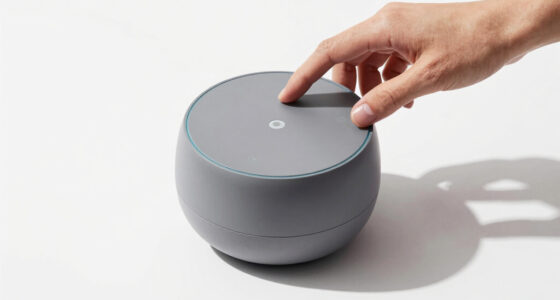
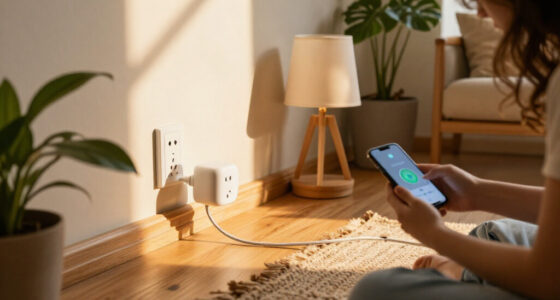
The best motion sensors for offices depend on whether you need to control lighting, detect presence at a desk, or add activity monitoring without rewiring. I’d put the Lithonia Lighting CM PDT 10 R first for offices that need broad ceiling coverage and dual-technology detection, while the Leviton Decora ODS06-IDW stands out for a straightforward wall-switch lighting upgrade. For small zones where people sit still, the SwitchBot Smart mmWave Radar Presence Sensor offers a different approach to presence detection. The main tradeoffs are detection reliability versus installation complexity, and room-wide coverage versus precise zone control. Read on for how the eight options differ and which office setup each suits best.

Get home appliances delivered free with Prime
- Fast, free delivery on millions of items
- Prime Video, Amazon Music and more included
- Member-only deals all year
Complete the kit


Key Takeaways
- Dual-technology ceiling sensors lead for shared rooms: The Lithonia and ENERLITES combine detection approaches, making them stronger candidates for spaces where a single sensing method may miss occupants or react to unwanted movement.
- Lighting controls and presence monitors solve different problems: Leviton and AH Lighting are oriented toward hardwired lighting control, while SwitchBot is a smart presence option for smaller zones and flexible placement.
- Still occupants change the buying decision: A PIR-only sensor may suit walkways and rooms with regular movement, but desk areas can benefit from presence-oriented or dual-technology detection.
- Installation can outweigh feature count: The Leviton wall-switch format and AH Lighting five-pack can fit familiar wiring projects, while ceiling-mounted and low-voltage models may call for more planning or compatible controls.
- One sensor type rarely fits every office: The roundup spans standalone monitoring, wall-switch replacement, ceiling occupancy control, and multi-sensor presence detection, so matching the device to the room matters more than choosing by coverage alone.
| Ring Motion Detector with Pet-Friendly Mode |  | Best for Ring Offices | Motion detection range: 30 ft. | Field of view: 90° | Connectivity: Amazon Sidewalk or Z-Wave; Z-Wave requires an alarm base station | VIEW LATEST PRICE | See Our Full Breakdown |
| Leviton Decora PIR Wall Switch Occupancy Sensor, ODS06-IDW, White |  | Best Wall-Switch Replacement | Sensor type: Passive infrared (PIR) | Field of view: 180 degrees | Coverage: Approximately 1,600 sq. ft. | VIEW LATEST PRICE | See Our Full Breakdown |
| Lithonia Lighting CM PDT 10 R Ceiling Mount 360-Degree Motion Sensor with Dual Technology |  | Best for Obstructed Office Layouts | Sensing technology: Passive infrared (PIR) and microphonics | Detection range: Up to 28 feet | Detection angle: 360 degrees | VIEW LATEST PRICE | See Our Full Breakdown |
| ENERLITES Dual Technology Ceiling Occupancy Sensor, MDC-50V-W | 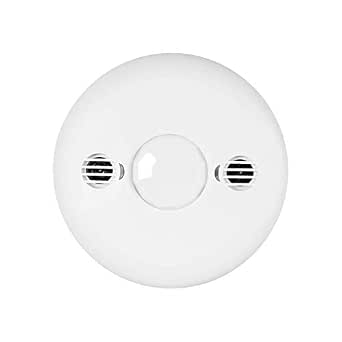 | Best for Desk-Level Stillness | Sensing technologies: Passive infrared (PIR) and ultrasonic | Maximum range: 10 feet | PIR coverage: Up to 1,600 sq. ft. | VIEW LATEST PRICE | See Our Full Breakdown |
| Akamatis HPS v4PL Dual-Sensor Presence and Motion Detector with Ambient Light Sensor |  | Best for Home Assistant Offices | Sensors: 24 GHz mmWave radar, quad-element PIR, and LTR329 ambient-light sensor | Maximum range: 20 ft (6 m) | PIR field of view: 120° | VIEW LATEST PRICE | See Our Full Breakdown |
| AH Lighting 360° Ceiling Occupancy Motion Sensor, Hardwired PIR Switch, White, 5-Pack |  | Best for Multi-Room Lighting | Pack quantity: 5 | Sensing technology: PIR | Coverage: 360° | VIEW LATEST PRICE | See Our Full Breakdown |
| OMNI Low Voltage Ultrasonic and PIR Ceiling Sensor |  | Best for Large Open Offices | Sensing technology: Ultrasonic and passive infrared (PIR) | Coverage: 360°; up to 2,000 square feet | Maximum range: 8 feet | VIEW LATEST PRICE | See Our Full Breakdown |
| SwitchBot Smart mmWave Radar Presence Sensor (2-Pack) |  | Best for Desk-Level Presence Automations | Pack quantity: 2 | Detection technology: 60 GHz mmWave radar, light sensor, and PIR | Detection angle: 120° | VIEW LATEST PRICE | See Our Full Breakdown |
| motion sensors for office | Power | Mounting | Maximum range |
|---|---|---|---|
| Ring Motion Detector with Pet- | 2 AA alkaline batteries, included | — | — |
| Leviton Decora PIR Wall Switch | — | Wall; fits a standard wallbox | — |
| Lithonia Lighting CM PDT 10 R | — | Ceiling mount | — |
| ENERLITES Dual Technology Ceil | — | — | 10 feet |
| Akamatis HPS v4PL Dual-Sensor | 5 V USB-C, continuous power required | Wall mount with adjustable two-axis mount | 20 ft (6 m) |
| AH Lighting 360° Ceiling Occup | — | — | 15 feet |
| OMNI Low Voltage Ultrasonic an | DC; universal voltage power pack required (UVPP or UVPPM) | — | 8 feet |
| SwitchBot Smart mmWave Radar P | 2 AAA batteries | Wall mount; magnetic base supports flat placement and angle adjustment | — |
More Details on Our Top Picks
Ring Motion Detector with Pet-Friendly Mode
The Ring Motion Detector is the most straightforward fit for a small office already using Ring, particularly when pet activity could trigger unwanted alerts. Its 30-foot range and pet-friendly settings for animals under 50 pounds suit a typical enclosed room, while Amazon Sidewalk connectivity can avoid the need for a separate base station where coverage is available. Compared with the wired Leviton Decora PIR Wall Switch, this is easier to place without replacing an office light switch, but it does not directly offer Leviton’s wall-control integration. Sidewalk availability varies, and using Z-Wave does require an alarm base station. The included batteries are rated for up to two years, though professional monitoring depends on a compatible Ring subscription.
Pros:- 30-foot detection range and 90-degree field of view suit many enclosed office rooms.
- Pet-friendly settings can reduce alerts from pets under 50 pounds.
- Amazon Sidewalk connectivity can work without a base station where coverage is available.
- Two included AA batteries are rated for up to two years of use.
Cons:- Amazon Sidewalk availability varies by location.
- Z-Wave connectivity requires an alarm base station.
- Professional monitoring requires a compatible Ring subscription.
Best for: Small offices already using Ring that want app-managed motion alerts and settings to reduce alerts from pets under 50 pounds.
Not ideal for: Offices without Amazon Sidewalk coverage or a Ring alarm base station, and buyers who want a hardwired occupancy switch or professional monitoring without a compatible subscription.
- Motion detection range:30 ft.
- Field of view:90°
- Connectivity:Amazon Sidewalk or Z-Wave; Z-Wave requires an alarm base station
- Power:2 AA alkaline batteries, included
- Approximate battery life:Up to 2 years
- Dimensions:2.60 x 2.60 x 1.57 inches
- Operating temperature:32°F to 120°F
- Warranty:One-year limited warranty
Our verdict“Choose this for a Ring-equipped small office that needs battery-powered motion alerts and pet-aware settings, but check Sidewalk coverage or base-station compatibility first.”
Leviton Decora PIR Wall Switch Occupancy Sensor, ODS06-IDW, White
For offices where motion-controlled lighting matters more than app alerts, the Leviton Decora ODS06-IDW offers the most direct, built-in approach in this group: it replaces a single-pole wall switch and combines occupancy sensing with a manual pushbutton. Its 180-degree view and stated coverage of about 1,600 square feet can suit an open work area, while an adjustable 30-second-to-30-minute delay lets facilities teams tune how soon lights switch off. Compared with the battery-powered Ring Motion Detector, Leviton controls the lighting circuit rather than sending app-based motion alerts. It is also less flexible to install: this is a wallbox replacement, not a portable sensor, and its IP20 rating makes it a poor match for damp or exposed locations. Check electrical compatibility before installation.
Pros:- 180-degree PIR coverage is specified for approximately 1,600 square feet.
- Manual pushbutton control allows occupants to switch lights independently of sensor activation.
- Adjustable delay ranges from 30 seconds to 30 minutes.
- High-inrush stability circuitry is designed to support LED loads.
Cons:- Designed to replace a single-pole wall switch, so it is not a flexible wireless placement option.
- IP20 protection limits suitability for damp or exposed areas.
- Installation involves the office lighting circuit and may require an electrician.
Best for: Office managers and electricians replacing a single-pole light switch who want occupancy-based lighting, manual control, and an adjustable shutoff delay.
Not ideal for: Renters, offices needing wireless app alerts, or locations exposed to moisture; it requires a compatible wallbox and has an IP20 protection rating.
- Sensor type:Passive infrared (PIR)
- Field of view:180 degrees
- Coverage:Approximately 1,600 sq. ft.
- Switch type:Single-pole
- Operating voltage:277 V AC
- Wattage:600 W
- Adjustable delay:30 seconds to 30 minutes
- Mounting:Wall; fits a standard wallbox
- Warranty:Five-year limited warranty
Our verdict“Pick the Leviton when you want a hardwired occupancy switch with manual override, and skip it if you need a portable sensor or app-based monitoring.”
Lithonia Lighting CM PDT 10 R Ceiling Mount 360-Degree Motion Sensor with Dual Technology
The Lithonia Lighting CM PDT 10 R is the better ceiling option when desks, partitions, or other obstacles make a basic line-of-sight sensor less dependable. It combines PIR and microphonics, so sound can help detect activity that PIR alone may miss behind obstructions. Its 360-degree ceiling view and detection range up to 28 feet suit a room that needs broad overhead coverage, while the isolated low-voltage relay supports lighting-control integration. Compared with the ENERLITES MDC-50V-W, Lithonia’s listed range is longer, but ENERLITES specifies more trigger modes and an adjustable time delay. The Lithonia description does not provide that level of timing detail, and its plastic construction may be less robust than a metal-bodied alternative. It is intended for low-ceiling spaces.
Pros:- PIR and microphonics can help detect activity behind obstructions that may challenge PIR alone.
- 360-degree ceiling coverage reaches up to 28 feet.
- An isolated low-voltage relay supports integration with lighting controls.
- Designed for energy-efficient automatic lighting control in low-ceiling spaces.
Cons:- Plastic construction may be less durable than metal alternatives.
- PIR performance still relies on suitable line of sight.
- The supplied product data does not state an adjustable time delay.
Best for: Facilities teams covering classrooms or partitioned, low-ceiling office rooms where a ceiling sensor may benefit from both motion and sound detection.
Not ideal for: Buyers seeking a wireless, battery-powered sensor, a documented adjustable time delay, or equipment for temperatures outside its stated operating conditions.
- Sensing technology:Passive infrared (PIR) and microphonics
- Detection range:Up to 28 feet
- Detection angle:360 degrees
- Mounting:Ceiling mount
- Power source:Corded electric
- Relay:Isolated low-voltage relay
- Dimensions:4.55 in. diameter x 1.55 in. high
- Material:Plastic
Our verdict“Choose the Lithonia for a low-ceiling office with partitions where dual sensing and broad overhead coverage matter more than detailed timing controls.”
ENERLITES Dual Technology Ceiling Occupancy Sensor, MDC-50V-W
In a quiet office, a sensor that only reacts to larger movement can switch lights off while someone is reading or typing. The ENERLITES MDC-50V-W pairs PIR with ultrasonic sensing to pick up smaller movements, and its six trigger modes give installers options for how the two technologies work together. Its 360-degree coverage and adjustable 5-second-to-30-minute delay make it more configurable than the Lithonia CM PDT 10 R, whose supplied details do not specify a delay range or trigger modes. The tradeoff is a shorter stated maximum range of 10 feet, plus a recommended mounting height of 8–10 feet, so it is better suited to a defined room than a large, open floor. Compatibility is limited to certain lights and a specified momentary switch.
Pros:- PIR and ultrasonic sensing can detect small movements such as typing or turning pages.
- Six trigger modes allow different combinations of the sensing technologies.
- Adjustable time delay spans 5 seconds to 30 minutes.
- 360-degree sensing supports overhead coverage of a room.
Cons:- Maximum range is 10 feet, limiting its fit in larger open areas.
- Designed for ceiling installation at a recommended height of 8–10 feet.
- Compatibility is limited to certain lights and the ENERLITES 91245 momentary switch.
Best for: Teams outfitting individual offices or compact work areas where occupants remain still at desks and lighting should respond to small movements.
Not ideal for: Buyers covering large open offices, installing outside the recommended 8–10-foot ceiling height, or needing broad compatibility with lighting and switches.
- Sensing technologies:Passive infrared (PIR) and ultrasonic
- Maximum range:10 feet
- PIR coverage:Up to 1,600 sq. ft.
- Ultrasonic coverage:Up to 1,000 sq. ft.
- Field of view:360 degrees
- Recommended mounting height:8–10 feet
- Trigger modes:6
- Adjustable time delay:5 seconds to 30 minutes
- Power supply:120/277 VAC
Our verdict“Choose this for a compact office where desk-level movement needs detection and installers can meet its mounting and compatibility requirements.”
Akamatis HPS v4PL Dual-Sensor Presence and Motion Detector with Ambient Light Sensor
The Akamatis HPS v4PL is the most capable choice here for an office built around Home Assistant automations. Its 24 GHz mmWave radar can detect stationary presence as well as movement, while a quad-element PIR sensor adds motion sensing and an ambient-light sensor can inform lighting routines. That presence detection can suit desk work better than the ENERLITES MDC-50V-W, whose PIR-and-ultrasonic design targets small movements but does not list stationary-presence detection. The Akamatis has a 20-foot maximum range, adjustable sensitivity, and a two-axis mount for aiming. The cost of that flexibility is setup: it requires an existing Home Assistant installation and continuous 5 V USB-C power, with the cable not included. It is not a standalone office alarm or plug-and-play lighting switch.
Pros:- 24 GHz mmWave radar detects stationary presence as well as moving activity.
- Quad-element PIR provides a second motion-sensing technology.
- Adjustable radar and PIR sensitivity support customized detection behavior.
- Two-axis mount helps aim the sensor, and ambient-light sensing can inform automations.
Cons:- Requires an existing Home Assistant installation.
- A 5 V USB-C cable is not included.
- Needs continuous USB-C power rather than battery operation.
Best for: Home Assistant users who want desk-level stationary-presence detection and ambient-light data for custom office automations.
Not ideal for: Office teams seeking a standalone sensor, users without Home Assistant, or anyone needing a battery-powered device or included USB-C power cable.
- Sensors:24 GHz mmWave radar, quad-element PIR, and LTR329 ambient-light sensor
- Maximum range:20 ft (6 m)
- PIR field of view:120°
- Power:5 V USB-C, continuous power required
- Mounting:Wall mount with adjustable two-axis mount
- Compatible platform:Home Assistant
- Firmware:Pre-flashed Akamatis ESPHome
- Dimensions:0.71 × 1.26 × 2.32 in
Our verdict“Choose the Akamatis for a Home Assistant office where stationary-presence detection and custom automations justify the setup and continuous power requirements.”
AH Lighting 360° Ceiling Occupancy Motion Sensor, Hardwired PIR Switch, White, 5-Pack
I’d choose this five-pack for an office that needs straightforward occupancy-controlled lighting in several rooms. Each ceiling-mounted PIR sensor covers 360 degrees, with a listed range of 15 feet, and adjustable sensitivity, light-level activation, and shut-off delay let installers tune how the lights behave. Compared with the OMNI Low Voltage Ultrasonic and PIR Ceiling Sensor, the AH Lighting unit is a simpler single-technology option and does not require a separate power pack. Its five-sensor bundle suits repeated installations, while the OMNI’s dual sensing and larger stated coverage may fit broader spaces better. The tradeoff is installation: these units are hardwired and require a neutral wire, so they are not a quick plug-in upgrade. The recommended 10–15-foot mounting height also narrows where they fit best.
Pros:- Five sensors support consistent coverage across multiple rooms.
- 360-degree ceiling coverage and a listed 15-foot maximum range.
- Adjustable sensitivity, light-level activation, and shut-off delay allow practical tuning.
- Controls connected lights or fans; UL/cUL listed and California Title 24 compliant.
Cons:- Hardwired installation requires a neutral wire and may call for an electrician.
- Recommended mounting height is limited to approximately 10–15 feet.
- PIR-only sensing may be less suitable than dual-technology options for spaces where occupants sit very still.
Best for: Office managers or electricians outfitting several standard-height rooms with automatic lighting or fan control.
Not ideal for: Renters and offices without a neutral wire at the installation point, or spaces whose ceilings fall outside the recommended 10–15-foot mounting height.
- Pack quantity:5
- Sensing technology:PIR
- Coverage:360°
- Maximum range:15 feet
- Recommended mounting height:10–15 feet
- Mounting and wiring:Ceiling mount; hardwired; neutral wire required
- Adjustments:Sensitivity, light level, and time delay
- Compatible devices:Lights and fans
- Compliance:UL/cUL listed; California Title 24 compliant
Our verdict“Choose this five-pack for hardwired, repeatable lighting control across several offices, provided the wiring and ceiling height fit.”
OMNI Low Voltage Ultrasonic and PIR Ceiling Sensor
For a large office where desks, partitions, or quiet work can make occupancy harder to detect, I’d favor the OMNI’s ultrasonic and PIR combination over the simpler PIR-only AH Lighting five-pack. Its stated 360-degree coverage reaches up to 2,000 square feet, and self-adjusting technology is intended to help reduce false triggers. Timer modes, motion indicator LEDs, and optional relay and photocell control give installers more ways to tailor operation than the basic ceiling sensor. The five-year limited warranty is another point in its favor for a fixed commercial installation. There are real setup costs, though: it needs a separate universal voltage power pack, and the listed maximum range is only 8 feet, so the broad coverage figure should not be read as a promise that every corner or seated occupant will be detected. It is indoor-only and best installed to the specified height.
Pros:- Combines ultrasonic and PIR sensing with self-adjusting technology.
- Listed 360-degree coverage across up to 2,000 square feet.
- Timer modes, motion indicator LEDs, and optional relay and photocell control support tailored installations.
- UL/cUL listed, California Title 24 compliant, and backed by a five-year limited warranty.
Cons:- Requires a separate universal voltage power pack.
- The listed maximum range is 8 feet, which may constrain placement despite the large stated coverage area.
- Designed for indoor use only and requires installation at 8–12 feet.
Best for: Facilities teams fitting a large indoor office with partitions or work areas where combined ultrasonic and PIR sensing may help maintain occupancy detection.
Not ideal for: Small offices seeking a self-contained installation, or buyers who do not want to source and install the required universal voltage power pack.
- Sensing technology:Ultrasonic and passive infrared (PIR)
- Coverage:360°; up to 2,000 square feet
- Maximum range:8 feet
- Recommended mounting height:8–12 feet
- Mounting type:Ceiling mount
- Power:DC; universal voltage power pack required (UVPP or UVPPM)
- Controls:Timer modes, motion indicator LEDs, optional relay and photocell control
- Compatible devices:Light, air conditioning, and fire alarm
- Warranty and compliance:5-year limited warranty; UL/cUL listed; California Title 24 compliant
Our verdict“Pick the OMNI for a larger indoor office needing dual-technology sensing and installer controls, if you can accommodate its separate power pack.”
SwitchBot Smart mmWave Radar Presence Sensor (2-Pack)
I’d consider the SwitchBot pair for offices where people work quietly at desks and ordinary motion sensing may switch lights off while someone is still present. Its 60 GHz mmWave radar is specified to detect stationary people up to 5 metres away, alongside PIR and light sensing; that makes it a different fit from the ceiling-mounted AH Lighting PIR sensors, which are more directly suited to hardwired room lighting. Battery power and a magnetic base also make placement easier to adjust without ceiling wiring, and up to five local automations are available without a hub. The compromise is a 120-degree detection angle, not the 360-degree coverage of the AH Lighting or OMNI sensors. Apple Home and more complex integrations require a SwitchBot Hub, and the supplied information gives conflicting battery-life estimates, so I wouldn’t plan around a precise replacement interval.
Pros:- mmWave radar is specified to detect stationary people, supporting desk-based presence automations.
- Battery-powered design and magnetic base allow flexible placement and angle adjustment.
- AI interference filtering is designed to reduce triggers from fans and air conditioners.
- Supports up to five local automations without a hub and comes as a two-pack.
Cons:- The 120-degree detection angle is narrower than the 360-degree coverage of the ceiling-mounted options.
- Apple Home integration and more complex automations require a SwitchBot Hub.
- Battery-life information conflicts, listing estimates of up to two years and three years.
Best for: Small-office owners or hybrid workers who want flexible, smart-platform automations that keep track of people sitting relatively still at a desk.
Not ideal for: Facilities teams seeking a hardwired, 360-degree ceiling sensor to control lights across a large room, or buyers who need Apple Home features without a hub.
- Pack quantity:2
- Detection technology:60 GHz mmWave radar, light sensor, and PIR
- Detection angle:120°
- Detection range:Up to 8 m for moving humans; up to 5 m for stationary humans
- Power:2 AAA batteries
- Mounting:Wall mount; magnetic base supports flat placement and angle adjustment
- Compatible platforms:SwitchBot devices, Apple Home, Home Assistant, Alexa, and Google Home
- Local automation capacity:Up to 5 automations without a hub
- Battery life:Conflicting estimates in product information: up to 2 years and 3 years
Our verdict“Choose the SwitchBot pair for adjustable, smart presence sensing at desks, not as a direct replacement for broad-coverage hardwired ceiling controls.”

How We Picked
I ranked these options around the needs that most affect an office: how reliably they can detect people in their intended zone, whether their sensing approach fits moving or mostly seated occupants, and how directly they support lighting control or presence monitoring. I also weighed installation format, the practical value of features such as ambient-light sensing, and whether a product makes sense for one room or several. A sensor with more detection technologies did not automatically rank higher; its advantage matters only when it fits the space and the installation.
The top position goes to the Lithonia CM PDT 10 R because its ceiling-mounted, 360-degree, dual-technology design is well matched to shared office coverage. The ENERLITES MDC-50V-W follows as another dual-technology ceiling choice, while the Leviton ODS06-IDW ranks well for a simpler wall-switch lighting project. The remaining picks serve narrower needs, from bulk hardwired coverage to low-voltage integration and smart presence sensing; their ranking reflects those tradeoffs rather than treating every motion sensor as interchangeable.
| motion sensors for office | Mounting |
|---|---|
| Ring Motion Detector with Pet- | — |
| Leviton Decora PIR Wall Switch | Wall; fits a standard wallbox |
| Lithonia Lighting CM PDT 10 R | Ceiling mount |
| ENERLITES Dual Technology Ceil | — |
| Akamatis HPS v4PL Dual-Sensor | Wall mount with adjustable two-axis mount |
| AH Lighting 360° Ceiling Occup | — |
| OMNI Low Voltage Ultrasonic an | — |
| SwitchBot Smart mmWave Radar P | Wall mount; magnetic base supports flat placement and angle adjustment |
Factors to Consider When Choosing Best Motion Sensors For Offices
Before choosing a model, I’d start with the job the sensor must do and the way the office is used. A device that works well in a corridor may frustrate staff at desks, and a sensor that can detect presence may not directly control the lights you want to automate.
Match the Sensing Method to How People Use the Room
PIR sensing responds to movement and heat changes, which often makes it a practical fit for walkways, storage rooms, and spaces where occupants move regularly. A person sitting nearly motionless at a desk can be harder for a motion-focused sensor to register, so false shutoffs may become a concern in quiet rooms. Dual-technology designs add another sensing method, which can help when the room’s activity pattern makes one method less dependable. Ultrasonic sensing can be useful where small movements matter, though room layout and sources of unwanted motion can affect performance. Presence-oriented mmWave devices target a different use case: detecting relatively still occupants in a defined area. I’d choose based on the least active person who needs the lights to stay on, not the person walking through the room.
Plan Coverage Around Furniture and Room Shape
A wide stated coverage pattern does not guarantee coverage at every desk. Partitions, tall storage, doorways, and furniture can block or reshape the area a ceiling sensor can detect. A central ceiling position may suit open offices, while private offices or divided spaces may call for more than one sensor or a different mounting point. Before buying, sketch the room and mark seated work areas, entrances, and likely obstructions. Avoid aiming a sensor at busy hallways or movement outside the intended zone, since that can keep lighting active when the office is empty. A smaller, well-placed sensor can be more useful than broad coverage that triggers in the wrong places.
Separate Lighting Control from Presence Monitoring
Some sensors are designed to switch lights; others are meant to report presence, and those jobs can require different equipment. A wall-switch occupancy sensor may be the most direct path when replacing a compatible lighting switch. Ceiling sensors can suit shared rooms, but buyers should confirm what control wiring and lighting load the installation requires. A smart presence sensor may add flexible detection or app-based behavior without being a drop-in replacement for a hardwired switch. If lights must turn on and off automatically, confirm that the sensor can operate the specific fixture or control system rather than assuming detection alone is enough. For larger offices, check whether the intended setup needs a compatible controller, hub, relay, or low-voltage connection.
Check Wiring and Installation Before Ordering
Installation format can decide whether a sensor is a practical office upgrade. Wall-switch replacements, hardwired ceiling sensors, low-voltage devices, and smart sensors have different requirements, so compare the product’s wiring and control needs with the existing setup. A low-voltage sensor may be a good fit in a building already equipped for that control system, but it may add parts and coordination to a simple retrofit. Multi-packs can help standardize several rooms, though they only offer value when the sensors suit the same use case and wiring arrangement. For leased offices, a non-invasive smart option may be easier to place than a permanent electrical modification. When wiring or code requirements are unclear, have a qualified electrician confirm compatibility before installation.
Set Timeout and Daylight Behavior for the Workday
Timeout and ambient-light behavior shape daily comfort as much as detection does. A short timeout can save energy in spaces that empty often, but it may frustrate people who read, attend quiet meetings, or work at a desk with little movement. Longer delays reduce unexpected shutoffs but can leave lights on after people leave. Ambient-light sensing can prevent artificial lighting from activating when daylight is already sufficient, though changing daylight across the day may call for careful adjustment. Decide whether the priority is reducing wasted lighting, avoiding interruptions, or balancing both. Test settings in the actual room during normal work hours before applying the same configuration across an entire office.
Choose for the Whole Office, Not Just the First Room
Different office zones often need different sensor types. A conference room with frequent movement, a quiet focus room, a corridor, and an open desk area do not share the same detection needs. Buying one model for every location can simplify procurement, but it may produce missed detections or unwanted activation in particular rooms. A mixed approach can pair ceiling occupancy controls in shared areas with presence sensing where workers remain still. Think about how facilities staff will identify, adjust, and maintain each type after installation. I’d favor a consistent setup only where room use, wiring, and control needs are genuinely similar.
Frequently Asked Questions
Which type of office sensor is less likely to turn lights off while someone is sitting at a desk?
Presence-focused or dual-technology sensors are better starting points for quiet desk work than a basic motion-only approach. The SwitchBot mmWave model is aimed at presence detection, while the Lithonia and ENERLITES options combine sensing technologies for ceiling coverage. Room layout, sensor placement, and settings still affect results, so no type removes the need to match the sensor to the work area. Before outfitting a whole floor, try the chosen approach in a representative office with seated occupants. Check that it can control the lights or system you intend to use, since detection and lighting control are separate capabilities.
Can I replace an office light switch with a motion sensor without changing the wiring?
Do not assume a sensor is a wiring-free switch replacement. A wall-switch model such as the Leviton ODS06-IDW is designed for a switch-location installation, but compatibility depends on the existing wiring, electrical setup, and lighting load. Ceiling-mounted hardwired sensors and low-voltage sensors have different requirements and may need additional control components. Smart sensors can offer more flexible placement, but they may not directly switch a hardwired fixture on their own. Check the product installation instructions and your building’s setup before ordering; consult an electrician if the wiring is unfamiliar.
Should I use one ceiling sensor for an open office with partitions?
One ceiling sensor may leave blind spots in a partitioned office, even if its coverage pattern appears broad. Partitions and furniture can obstruct detection, while movement in nearby circulation areas can trigger lighting unnecessarily. Map desk locations, entrances, and barriers before choosing the mounting point. If staff sit still for long stretches, prioritize detection suited to presence rather than relying only on movement across the room. For a divided layout, multiple well-positioned sensors may provide more reliable control than one device placed centrally.
Is a multi-pack a good choice for standardizing sensors across several rooms?
A multi-pack makes sense when the rooms share similar use and installation requirements, not simply because several sensors are needed. The AH Lighting five-pack is aimed at repeated hardwired ceiling installations, while offices with a mix of quiet rooms and corridors may need different sensing approaches. Confirm that each room has compatible wiring and that the sensor’s detection style suits its occupants. Standard settings can simplify maintenance, but identical settings may not suit rooms with different daylight or occupancy patterns. Pilot the model in one representative room before using it throughout the office.
When is it worth choosing a smart presence sensor instead of a hardwired occupancy switch?
A smart presence sensor is a better fit when flexible placement or still-occupant detection matters more than direct switch replacement. It can suit a desk zone or small room where people remain seated and a conventional motion sensor may miss them. A hardwired occupancy switch is often more direct when the goal is automatic lighting control at an existing switch location. Smart models may depend on an app, hub, network, or compatible automation setup, so check those needs before buying. If you only need lights to switch automatically and want a simple electrical installation, a purpose-built switch sensor may be the clearer choice.
Conclusion
For a shared room that needs broad ceiling coverage, I’d choose the Lithonia CM PDT 10 R as the best overall, with the ENERLITES MDC-50V-W as a strong alternative for buyers who want dual-technology ceiling sensing. The Leviton Decora ODS06-IDW is my best pick for a familiar wall-switch lighting upgrade, while the AH Lighting five-pack suits buyers outfitting several compatible rooms with hardwired ceiling sensors. For more flexible, presence-oriented detection in a smaller area, the SwitchBot Smart mmWave is the premium-style choice in this lineup; beginners should start by matching a simple wall-switch sensor to a compatible existing setup. Choose the OMNI low-voltage model when your office already supports that control approach, the Akamatis HPS v4PL when ambient-light sensing and presence detection fit the project, and the Ring Motion Detector when the priority is pet-friendly activity monitoring rather than direct office lighting control.