If you’re searching for the best smart compost bin, you’re likely after a solution that combines convenience, odor control, and tech-savvy features. The GEME Smart 19L Electric Kitchen Composter stands out as the best overall for its spacious capacity and odorless operation. For those prioritizing compact size, the TOPZEE Electric Compost Bin offers a smart, auto-cleaning 3L option that fits easily on countertops. Conversely, the GoveeLife Upgraded Electric Composter provides a feature-rich experience with LED displays and quiet operation. The main tradeoffs involve size versus features, with larger models offering more capacity but often at higher costs or bulkier designs. Keep reading to see how these options compare in detail and find the best fit for your needs.
Key Takeaways
- Most top-performing smart compost bins balance odor control with auto-cleaning features, reducing kitchen mess and smell.
- Capacity varies widely—from compact 3L models to larger 19L options—so consider your typical waste volume when choosing.
- WiFi and app connectivity are common in premium models, but simpler units still offer effective odor management without smart tech.
- Auto-cleaning significantly reduces maintenance effort but can add to the initial cost and complexity.
- Size and noise levels are important—compact and quiet models suit small kitchens or open-plan spaces best.



More Details on Our Top Picks
GEME Smart 19L Electric Kitchen Composter with Odorless Operation
The GEME Smart 19L Composter stands out for its ability to convert food waste into nutrient-rich compost rapidly, in just 6-8 hours, making it ideal for busy families with high waste volumes. Unlike smaller models like the TOPZEE 3L, it offers a significantly larger capacity, reducing the frequency of emptying. Its microbial degradation technology is highly effective, providing authentic compost without unpleasant odors, a common issue in traditional bins. The quiet operation and permanent filter mean minimal maintenance and disruption. However, the need for an electrical outlet and the higher price point might deter those with limited kitchen space or budget constraints. Compared to smaller, simpler options, this model’s tradeoff is its reliance on power and cost, but it delivers unmatched efficiency for large households.
Pros:- Fast composting process (6-8 hours) producing rich soil
- Large 19L capacity suits frequent waste producers
- Odorless, quiet operation with no maintenance of filters
Cons:- High initial cost compared to manual compost bins
- Requires electrical power, limiting placement options
- Designed strictly for indoor use; not portable
Best for: Families or individuals with high daily waste who want fast, odorless composting without frequent emptying
Not ideal for: Small kitchens or renters who prefer low-cost, manual options, as it requires an outlet and is relatively expensive
- Capacity:19L
- Processing Time:6-8 hours
- Daily Capacity:11 lbs
- Reduction Rate:95%
- Operation:Automatic, continuous
- Filter:Built-in, permanent
- Noise Level:Whisper-quiet
Bottom line: This model suits busy households seeking quick, odorless composting with minimal fuss and high capacity.
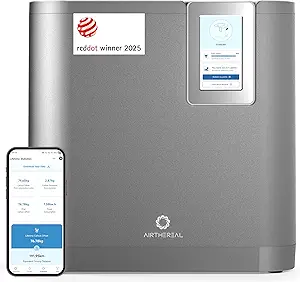
Airthereal Revive R800 5L Smart WiFi Electric Kitchen Composter
The Airthereal Revive R800 offers a compact, feature-rich solution for tech-minded users who want to monitor and control their composting remotely. Its 5L capacity makes it less suitable for large households, but it excels in providing multiple composting modes like ECO Pre-Compost and Bio Compost, which optimize waste processing based on user needs. The WiFi connectivity and real-time app monitoring set it apart from simpler models like the TOPZEE 3L, giving users greater control and insights. The self-cleaning function simplifies maintenance, but the reliance on WiFi may be a drawback for those with spotty internet or who prefer offline devices. While pricier than basic composters, this model’s smart features justify the cost for tech enthusiasts who value convenience and data feedback.
Pros:- WiFi-enabled for real-time monitoring and control
- Multiple composting modes for tailored waste processing
- Self-cleaning reduces maintenance effort
- Reduces waste by up to 90%
Cons:- Limited capacity (5L) may not suit large families
- Higher price point due to smart features
- Requires WiFi, which could be unreliable in some homes
Best for: Urban dwellers or busy individuals who want to track composting progress via smartphone and have limited space
Not ideal for: Households without reliable WiFi or those preferring manual operation, due to its dependence on app connectivity
- Capacity:5L
- Modes:ECO Pre-Compost, Bio Compost, Self-Clean
- Connectivity:WiFi
- Warranty:3 years
- Awards:Red Dot Award 2025
Bottom line: This model appeals to tech-savvy users seeking detailed control and monitoring in a compact form factor.
TOPZEE Electric Compost Bin for Kitchen, 3L Smart Countertop Composter with Odorless Auto-Cleaning
The TOPZEE 3L Electric Composter is an excellent choice for those new to kitchen composting or with limited space. Its compact size fits easily on countertops or in small kitchens, and its quick 4-6 hour processing time produces fertilizer efficiently. The odorless operation relies on activated charcoal filters, making it suitable for indoor use without offensive smells. Auto-cleaning simplifies upkeep, but the need for filter replacements every few months adds ongoing costs and maintenance. Compared to larger models like the GEME 19L, this unit sacrifices capacity for portability and simplicity. It’s less ideal for large households or those who generate significant waste daily, but perfect for beginners or apartment dwellers seeking an easy, mess-free solution.
Pros:- Compact, space-saving design
- Fast processing in 4-6 hours
- Odorless operation with activated charcoal filters
- Auto-cleaning for hassle-free maintenance
Cons:- Limited capacity for heavy or frequent waste
- Ongoing cost for filter replacements
- Requires electricity and regular filter updates
Best for: Beginners, singles, or small households wanting a simple, space-saving composting device
Not ideal for: Large families or heavy waste producers, as its 3L capacity may require frequent emptying
- Capacity:3L
- Dimensions:9.05″ x 9.05″ x 10.62″
- Operation Noise:Below 40 decibels
- Energy Consumption:0.51 kWh per use
- Modes:Fast (4H), Standard (6H)
Bottom line: This pick makes the most sense for small households or apartment dwellers seeking an easy, odorless composting solution.
Homfan 3.5L Electric Composter Countertop with 3 Modes and Auto Cleaning
The Homfan 3.5L Electric Composter offers a quiet, versatile option for compact indoor environments. Its 3.5L capacity makes it suitable for small households or individual use, especially with its three different composting modes that adapt to various types of waste. The auto-clean feature reduces daily maintenance, and its low noise level of 48 dB ensures it won’t disturb the household. However, the small capacity means frequent emptying and a limited ability to handle large amounts of waste. The processing time varies widely, from 2.5 to 20 hours, depending on mode and waste type, which could be inconvenient for users expecting quick results. Compared to the TOPZEE 3L, Homfan’s multiple modes add flexibility but at the cost of longer processing times in some cases.
Pros:- Quiet operation at 48 dB
- Multiple composting modes for different waste types
- Auto self-cleaning reduces effort
- Compact size fits easily on countertops
Cons:- Limited capacity requires frequent emptying
- Processing time can be unpredictable
- Requires electricity for operation
Best for: Single users or small households seeking a quiet, flexible countertop compost bin
Not ideal for: Families or those with high waste volume who need a larger or faster solution
- Capacity:3.5L
- Modes:3 modes
- Noise Level:48 dB
- Energy Consumption:0.28 kWh
- Cleaning:Auto self-cleaning
Bottom line: This device suits those prioritizing quiet operation and simple, flexible composting in small spaces.
4L Electric Composter for Kitchen, Smart Countertop Compost Bin, Odorless, Auto-Cleaning
This compact electric composter stands out as the most versatile choice for those seeking fast, odorless waste reduction. It processes food scraps into compost within 3 hours, significantly reducing waste volume while maintaining a fresh kitchen environment thanks to its effective carbon filter. Compared to the GoveeLife model, it offers quicker processing and auto-cleaning, but its smaller 4L capacity makes it less suitable for larger households. The multiple modes—crush, ferment, clean—add convenience, though the noise level and filter replacement after 1000 hours are minor tradeoffs. Overall, this pick is ideal for busy individuals or small families wanting efficient composting without odors or messes.
Pros:- Reduces food waste by up to 90% within hours
- Odor-free operation with effective carbon filter
- Compact, sleek design fits on standard kitchen countertops
- Easy to operate with multiple modes and auto-cleaning
Cons:- Limited capacity for larger households
- Filter needs replacement after 1000 hours
- Processing noise may be noticeable
Best for: Small households or busy professionals who want quick, odorless composting with minimal maintenance
Not ideal for: Large families or those with high waste volumes, due to its limited capacity
- Capacity:4L
- Noise Level:Below 40dba
- Processing Time:Up to 3 hours
- Modes:Crush, Ferment, Clean
- Filter Life:1000 hours
Bottom line: This model suits small households seeking quick, odorless composting with minimal fuss.
4L Electric Composter for Kitchen, Smart Countertop Compost Bin, Odorless, Low Noise, Auto-Cleaning, Indoor Food Waste Compost Machine
Compared with the B0F8V92K5R, this 4L composter emphasizes quieter operation and longer-lasting filters, making it ideal for those sensitive to noise or seeking low-maintenance use. It transforms food waste efficiently, reducing up to 90%, and its long-lasting filter lasts around five months, which means fewer replacements. However, it’s still limited in capacity for larger families and requires regular emptying to prevent clumping. Its sleek design and quiet operation make it appealing for indoor use, especially in noise-sensitive environments, but the higher frequency of filter replacement and slightly higher initial cost are tradeoffs. This makes it particularly well-suited for individuals or small families prioritizing quiet, odorless composting with less frequent filter changes.
Pros:- Efficient waste reduction up to 90%
- Long-lasting filter lasts about five months
- Quiet operation suitable for indoor environments
- Sleek, modern design fits well on countertops
Cons:- Limited capacity for larger households
- Requires regular emptying to prevent clumping
- Higher initial cost compared to manual options
Best for: Individuals or small families needing quiet, low-maintenance composting solutions
Not ideal for: Large households or those with high waste outputs, due to capacity constraints
- Capacity:4L
- Noise Level:Below 40dba
- Modes:Crush, Ferment, Clean
- Filter Life:Up to 5 months
- Material:Plastic
Bottom line: This model is ideal for quiet, low-maintenance composting in small living spaces.
Electric Composter for Kitchen, Smart Compost Bin with Viewing Window, Odorless, Auto-Cleaning, Indoor/Outdoor
This electric composter distinguishes itself with a generous capacity suitable for households of 5-10 people, making it a good choice for busy families or community gardens. The viewing window allows users to monitor progress easily, unlike smaller models without visual cues. Its odor control features use dual filters to keep smells at bay, and the self-cleaning function adds convenience. While the processing time of 3-6 hours is comparable to others like the B0F8V92K5R, the larger capacity means it’s bulkier and requires more power and maintenance. Its versatility for indoor and outdoor use broadens potential placement options, though the higher cost might deter casual users. This product is best for those needing larger waste capacity and a visual indicator of composting status.
Pros:- Large capacity for multiple users
- Viewing window for easy monitoring
- Effective odor control with dual filters
- Suitable for indoor and outdoor use
Cons:- Bulkier and heavier than smaller models
- Requires more electricity and maintenance
- Initial cost is relatively high
Best for: Families or community gardeners who need higher capacity and visual progress tracking
Not ideal for: Small kitchens or individuals with limited space, due to its size and weight
- Capacity:5-10 people
- Dimensions:Not specified
- Noise Level:< 40dB
- Processing Time:3-6 hours
- Waste Reduction:90%
Bottom line: Ideal for larger households or outdoor setups needing high capacity and visual composting cues.
GoveeLife Upgraded Electric Composter for Kitchen, Smart Indoor Countertop Compost Bin, Odorless, Low Noise, Auto-Cleaning with LED Display
The GoveeLife model emphasizes smart technology, making it a standout for tech-savvy users. Its app control, voice commands, and LED display set it apart from simpler models like the B0F8V92K5R or B0DJVJRP13, automating waste management and providing real-time updates. It reduces waste by up to 90% quietly, with large dual filters offering extended odor control of up to 2160 hours. However, its 3L capacity limits its usefulness for larger families, and the app setup adds an extra step for users unfamiliar with smart devices. The higher initial cost and need for ongoing app maintenance are tradeoffs, but this model is best for users who want seamless integration with their smart home ecosystem and detailed monitoring of their composting process.
Pros:- Automates composting with app and voice control
- Reduces kitchen waste by up to 90%
- Large dual filters provide extended odor control
- LED display for real-time status updates
Cons:- High initial purchase price
- Limited capacity for large households
- Requires app setup and ongoing maintenance
Best for: Smart home enthusiasts or tech-forward families who prioritize automation and monitoring
Not ideal for: Users who prefer simple, manual composting or have larger waste needs
- Product Dimensions:15.59 x 13.66 x 19.88 inches
- Item Weight:29.6 pounds
- Capacity:3L
- Noise Level:40dB
- Odor Control:Dual large carbon filters, up to 2160 hours
- Smart Features:App tracking, voice control, auto-cleaning
Bottom line: Best suited for users valuing smart features and integrated monitoring over capacity.
1 Gallon Electric Kitchen Composter with Touch Screen and Auto-Cleaning
This 1-gallon model offers a highly compact, tech-equipped option for small kitchens or individual use. Its touch screen simplifies operation, and the auto-cleaning feature reduces mess and maintenance. While the small capacity limits it to light waste generation, its efficient grinding blades and sensors ensure that odor remains minimal and composting quick. Compared to larger models like the B0DWM9VHCN, it’s less suitable for big families but shines in environments where space and energy efficiency are priorities. The setup can be somewhat complex, and regular maintenance is needed, but overall, this product suits environmentally conscious individuals who want a smart, space-saving compost bin.
Pros:- Efficient, odorless composting with advanced blades and sensors
- Energy-efficient, costing about $15.6 annually
- Quiet operation with a child safety lock
- Compact and suitable for small kitchens
Cons:- Limited capacity for larger households
- Setup may be complex for some users
- Requires regular maintenance and electricity
Best for: Single users or small households seeking a space-efficient, high-tech composting solution
Not ideal for: Families with higher waste volume or larger spaces, due to capacity and complexity
- Capacity:1 gallon (3L)
- Power Consumption:0.5 kWh per cycle
- Noise Level:42 dB
- Features:Touch LED display, auto-cleaning, child safety lock
Bottom line: This model suits small households or individuals needing a smart, space-saving composting device.

How We Picked
To select the best smart compost bins, I focused on a combination of key factors that matter most to users: performance in odor control, ease of use, build quality, and maintenance convenience. Durability and reliability were prioritized, along with features like auto-cleaning and smart connectivity. I also considered value for money, ensuring each pick offers a meaningful benefit relative to its price. The ranking reflects a balance between these aspects, favoring models that deliver consistent performance without unnecessary complexity or expense.Factors to Consider When Choosing Best Smart Compost Bin
Choosing the right smart compost bin involves understanding how features like capacity, odor control, and smart technology align with your kitchen habits. Beyond just picking a model, it’s worth considering how the bin fits your space, how much maintenance you’re prepared for, and whether smart features truly benefit your routine. Here are key factors to guide your decision:Capacity and Size
Start by assessing how much food waste your household generates. Larger capacities, like 19L models, are better for frequent composting or larger families, but they can take up more space. Smaller units, around 3-4L, fit conveniently on countertops but require more frequent emptying. Consider your available kitchen space and waste volume to find a balance between convenience and practicality.
Odor Control and Ventilation
Effective odor management is essential in enclosed kitchens. Many smart compost bins feature sealed lids, odor filters, or active ventilation to minimize smells. Investing in models with replaceable filters or activated carbon can greatly reduce odors, but these add ongoing maintenance costs. Be cautious of units with poor sealing, which may lead to unpleasant kitchen environments.
Auto-Cleaning and Maintenance
Auto-cleaning functions simplify upkeep by reducing manual scrubbing, often involving UV sterilization or automated rinsing. However, these features tend to increase initial price and complexity. Consider whether you prefer a hands-off approach or don’t mind occasional manual cleaning, especially if auto-cleaning units require frequent filter replacements or maintenance.
Smart Connectivity and Features
WiFi-enabled models allow remote monitoring and notifications via apps, appealing to tech enthusiasts. However, this added connectivity can introduce potential points of failure and increase costs. Non-smart units still effectively manage odor and cleaning but lack remote features. Decide if smart features align with your lifestyle or if simplicity suffices.
Build Quality and Noise Levels
Durability matters—look for appliances with quality materials that withstand kitchen conditions. Noise levels vary, with some models operating quietly and others emitting noticeable sounds during operation. If your kitchen opens into living spaces, opting for quieter models can prevent disruptions. Check user reviews for insights on real-world noise performance.
Frequently Asked Questions
How often do I need to replace filters in a smart compost bin?
Most auto-odor filters in smart compost bins need replacement every 3 to 6 months, depending on usage and model. Some units feature filters that last longer with proper maintenance, while others may require more frequent changes. Regularly checking the filter indicator or user manual helps maintain odor control and ensures the bin functions effectively. Budgeting for replacements is advisable, especially if you plan to use the bin daily.
Can I use any food waste in a smart compost bin?
While most smart compost bins are designed to handle typical kitchen scraps like vegetable peels and coffee grounds, it’s best to avoid meat, dairy, or oily foods unless specified by the manufacturer. These items can cause odors or attract pests, even with advanced odor control. Always check the product guidelines to prevent issues and prolong the lifespan of your device.
Are smart compost bins suitable for outdoor use?
Many models are designed for indoor use due to their electrical components and ventilation systems. However, some, like those with weather-resistant features, can be used outdoors. It’s important to verify each product’s specifications, as exposure to rain or extreme temperatures can damage electronic parts. For outdoor composting, traditional compost bins may be more appropriate, or look for units explicitly rated for outdoor use.
Does auto-cleaning mean less manual effort overall?
Auto-cleaning features do reduce the frequency and effort of manual cleaning, but they often come with higher upfront costs and ongoing maintenance like filter replacements. They are especially beneficial for those who dislike routine scrubbing or want a cleaner kitchen environment. However, manual cleaning might still be necessary periodically to keep the unit functioning optimally, especially if auto-cleaning components fail or filters wear out.
Is WiFi connectivity worth paying extra for?
WiFi connectivity offers the convenience of remote monitoring, notifications, and usage tracking, which can be valuable for tech-savvy users or busy households. However, it also introduces potential points of failure and may increase the initial purchase price. If you prefer a straightforward, low-maintenance unit, non-smart models often provide excellent performance without the added costs or complexity. Consider whether the benefits of remote control align with your daily routines.
Conclusion
For most users, the GEME Smart 19L Electric Kitchen Composter offers the best overall balance of capacity, odor control, and smart features, making it a versatile choice for families or frequent composters. Those seeking affordability and simplicity might favor the TOPZEE Electric Compost Bin, which provides effective auto-cleaning in a compact size. If premium features like LED displays and advanced connectivity appeal, the GoveeLife Upgraded Electric Composter stands out as the best for tech enthusiasts.
Beginners or small households should prioritize models with straightforward operation and effective odor management, while larger families or dedicated composters might want bigger capacities and auto-cleaning. Overall, select based on your space, waste volume, and desired level of automation to make the most satisfying choice.