For most homes, I’d start with the Reolink Battery Video Doorbell (2nd Gen) 2K 4MP, which pairs detailed video with a wireless setup. The Arlo Video Doorbell 2K (2nd Gen) stands out for buyers who want the option of wired power, while the Tapo D210 brings a chime and wide viewing angle into the box. The main tradeoffs are video detail versus battery upkeep, and convenient cloud features versus local or subscription-free storage. I compare all 10 options by coverage, power flexibility, setup, and recording choices below.

Get home appliances delivered free with Prime
- Fast, free delivery on millions of items
- Prime Video, Amazon Music and more included
- Member-only deals all year
Complete the kit


Key Takeaways
- Reolink’s two listings represent the same 2nd Gen 2K family in different finishes, so choose by appearance and verify the exact package rather than treating them as distinct feature tiers.
- Arlo is the clearest fit for power flexibility because it can run wirelessly or wired, while most picks here are presented as battery-first options.
- Included accessories change the setup decision: Anona and Tapo list a chime, and both Blink 2K+ listings include a Sync Module Core.
- Resolution alone does not settle the choice. Tapo’s 160° view and Anona’s dual-camera design point to different coverage priorities than a single high-resolution camera.
- Blink has two distinct paths in this lineup: the HD model emphasizes long battery life and easy setup, while the 2K+ versions prioritize sharper video and include a Sync Module Core.
| Reolink Battery Video Doorbell (2nd Gen) 2K 4MP Wireless Outdoor Camera |  | Best Overall for Local Storage | Resolution: 4MP (2048 x 2048) | Field of view: 150° x 150° x 180° | Connectivity: Dual-band Wi-Fi (2.4/5GHz) | VIEW ON AMAZON | See Our Full Breakdown |
| Arlo Video Doorbell 2K (2nd Gen), Wireless or Wired, 1 Camera |  | Best for Broad Smart-Home Compatibility | Video resolution: 2K | Power options: Rechargeable battery or wired installation | Weather resistance: IP65 | VIEW ON AMAZON | See Our Full Breakdown |
| Blink Battery Doorbell 2K+ (3rd Generation) with Sync Module Core |  | Best for Blink Households | Video resolution: 2K (1920 x 1920) | Field of view: 140° horizontal, 140° vertical | Frame rate: Up to 24/25 FPS | VIEW ON AMAZON | See Our Full Breakdown |
| Wyze Battery Video Doorbell Wireless Camera with 1536×1536 HD+ Color Night Vision |  | Best for Subscription-Free Local Recording | Resolution: 1536 x 1536 HD+ | Field of view: 150° x 150° (1:1 head-to-toe) | Battery life: Up to 6 months wirelessly | VIEW ON AMAZON | See Our Full Breakdown |
| Google Nest Doorbell Battery – Snow |  | Best for Google Home Users | Power: Battery-powered or wired | Video: Live HD with HDR | Night vision: Yes | VIEW ON AMAZON | See Our Full Breakdown |
| Anona 3K Dual Camera Wireless Video Doorbell with Chime, No Subscription |  | Best for Package Coverage Without a Subscription | Resolution: 3K; 5MP main camera and 2MP secondary camera | Battery capacity: 5200mAh | Claimed battery life: Up to 100 days | VIEW ON AMAZON | See Our Full Breakdown |
| Blink Video Doorbell – HD View, Two-Year Battery Life, Easy Setup (Black) | 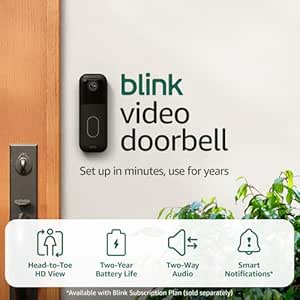 | Best for Long Battery Life | Video resolution: 1440 x 1440p | Field of view: 150° | Aspect ratio: 1:1 | VIEW ON AMAZON | See Our Full Breakdown |
| Reolink Battery Video Doorbell (2nd Gen) 2K Wireless Camera – White |  | Best for Subscription-Free Local Storage | Resolution: 4MP, 2048 x 2048, 2K | Field of view: 150° x 150° x 180° | Claimed battery life: Up to 10 months | VIEW ON AMAZON | See Our Full Breakdown |
| Blink Battery Doorbell 2K+ Wireless Video Doorbell with Sync Module Core (White) |  | Best Blink Bundle for 2K Detail | Resolution: 2K | Power source: 3 AA Energizer lithium batteries | Night vision: True-color low light; automatic switch to black and white in darkness | VIEW ON AMAZON | See Our Full Breakdown |
| Tapo D210 2K Wireless Smart Video Doorbell with Chime, 160° Ultra-Wide View |  | Best for a Wide View and Built-In Spotlight | Resolution: 2K | Field of view: 160° diagonal | Wi-Fi band: 2.4GHz | VIEW ON AMAZON | See Our Full Breakdown |
| battery video doorbell | Resolution | Field of view | Connectivity | Power |
|---|---|---|---|---|
| Reolink Battery Video Doorbell | 4MP (2048 x 2048) | 150° x 150° x 180° | Dual-band Wi-Fi (2.4/5GHz) | Battery or 8–24VAC wiring |
| Arlo Video Doorbell 2K | — | — | — | — |
| Blink Battery Doorbell 2K+ | — | 140° horizontal, 140° vertical | 2.4GHz Wi-Fi | Three AA 1.5V lithium batteries |
| Wyze Battery Video Doorbell Wi | 1536 x 1536 HD+ | 150° x 150° (1:1 head-to-toe) | — | — |
| Google Nest Doorbell Battery | — | — | — | Battery-powered or wired |
| Anona 3K Dual Camera Wireless | 3K; 5MP main camera and 2MP secondary camera | — | Wi-Fi 6, 2.4GHz | — |
| Blink Video Doorbell | — | 150° | 2.4GHz Wi-Fi, 802.11b/g/n | 3 AA 1.5V lithium batteries |
| Reolink Battery Video Doorbell | 4MP, 2048 x 2048, 2K | 150° x 150° x 180° | 2.4GHz and 5GHz Wi-Fi | Battery or 8–24VAC wiring |
| Blink Battery Doorbell 2K+ Wir | 2K | — | — | — |
| Tapo D210 2K Wireless Smart Vi | 2K | 160° diagonal | — | — |
More Details on Our Top Picks
Reolink Battery Video Doorbell (2nd Gen) 2K 4MP Wireless Outdoor Camera
I’d put the Reolink first for buyers who want a detailed view and control over recorded footage without relying on a paid plan. Its 4MP, square head-to-toe image is higher resolution than the Google Nest Doorbell Battery’s live HD video, while local recording to microSD or a Home Hub gives it a clearer subscription-free advantage over the Arlo Video Doorbell 2K. Battery life is rated up to 10 months, and the option to connect it to 8–24VAC wiring gives households a way to reduce charging interruptions. The tradeoff is a less plug-and-play chime setup: it won’t work with the original Reolink Chime or third-party mechanical chimes. Also, Home Assistant support requires the Home Hub, and the free plan limits notifications to 25 per day. I’d choose it for flexible storage, not for seamless compatibility with every chime or smart-home setup.
Pros:- 4MP square view captures visitors and packages from head to toe.
- Supports local storage on microSD, Home Hub, NVR, or FTP.
- Rated for up to 10 months of battery life.
- Can run on battery or 8–24VAC wiring.
Cons:- Incompatible with the original Reolink Chime and third-party mechanical chimes.
- Free plan limits notifications to 25 per day.
- Home Assistant integration requires a Reolink Home Hub.
Best for: Homeowners who want a high-resolution battery doorbell, local video storage, and the option to avoid a recurring subscription.
Not ideal for: People who depend on the original Reolink Chime, a third-party mechanical chime, or Home Assistant without buying a Reolink Home Hub.
- Resolution:4MP (2048 x 2048)
- Field of view:150° x 150° x 180°
- Connectivity:Dual-band Wi-Fi (2.4/5GHz)
- Storage:microSD up to 512GB, Reolink Home Hub, NVR, FTP, or cloud
- Power:Battery or 8–24VAC wiring
- Smart-home compatibility:Google Assistant, IFTTT, and Home Assistant with Home Hub
Our verdict“Choose the Reolink if local storage and a detailed square image matter more than broad chime compatibility.”
Arlo Video Doorbell 2K (2nd Gen), Wireless or Wired, 1 Camera
The Arlo is the strongest fit here for households that use more than one smart-home platform. It supports Alexa, Apple Home, Google Home, SmartThings, and IFTTT, a broader listed range than the Wyze Battery Video Doorbell or Google Nest Doorbell Battery. Its 2K head-to-toe video, two-way audio, and detection for people, packages, pets, and vehicles cover the core doorbell tasks, while wired installation offers an alternative to battery recharging. The main compromise is its dependence on Arlo Secure for advanced features: after the trial, video history and AI detection require a paid plan. Without that plan, live streaming and basic alerts remain available, but the experience is more limited than Reolink’s local-storage approach. I’d pick Arlo for platform flexibility, not for subscription-free recording.
Pros:- Works with Alexa, Apple Home, Google Home, SmartThings, and IFTTT.
- 2K video includes a head-to-toe view.
- Can be installed wirelessly or connected to existing wiring.
- Includes two-way audio, night vision, and remote siren control.
Cons:- Video history and AI detection require a paid Arlo Secure plan after the trial.
- Wireless installation means recharging the doorbell.
- Advanced features depend on Arlo’s subscription service rather than the local-storage option offered by Reolink.
Best for: Households using a mix of Alexa, Apple Home, Google Home, or SmartThings devices that want a doorbell compatible with several platforms.
Not ideal for: Buyers who want ongoing video history and AI detection without a paid subscription.
- Video resolution:2K
- Power options:Rechargeable battery or wired installation
- Weather resistance:IP65
- Audio:Two-way audio
- Detection:People, packages, pets, and vehicles
- Smart-home compatibility:Alexa, Apple Home, Google Home, Samsung SmartThings, and IFTTT
- Subscription:Paid plan required after trial for advanced features
Our verdict“Choose the Arlo if cross-platform smart-home support matters more than subscription-free access to advanced detection and video history.”
Blink Battery Doorbell 2K+ (3rd Generation) with Sync Module Core
This Blink makes sense for shoppers already building around Blink, especially if they prefer a battery-powered install and want the included Sync Module Core for setup. Its 2K square video and person detection help show who is at the door while cutting down alerts triggered by other motion. Compared with the Google Nest Doorbell Battery, Blink specifies its video resolution and person filtering more directly; compared with the Reolink, it is less appealing for buyers focused on rechargeable power or multiple storage choices. This model runs on three AA lithium batteries, so battery replacement is part of ownership rather than a USB-C recharge routine. It also supports only 2.4GHz Wi-Fi, and full functionality requires a compatible Blink subscription. I’d choose it for an existing Blink setup, not as the most flexible standalone option.
Pros:- 2K square image provides a head-to-toe view.
- Person detection can reduce alerts from non-human motion.
- Includes a Sync Module Core and mounting accessories.
- IP65 weather resistance suits outdoor installation.
Cons:- Uses three non-rechargeable AA lithium batteries that need replacement.
- Works only on 2.4GHz Wi-Fi.
- A compatible Blink subscription is required for full functionality.
Best for: Current Blink users who want a wire-free 2K doorbell with person detection and an included Sync Module Core.
Not ideal for: Buyers who want rechargeable batteries, 5GHz Wi-Fi, or full functionality without a compatible subscription.
- Video resolution:2K (1920 x 1920)
- Field of view:140° horizontal, 140° vertical
- Frame rate:Up to 24/25 FPS
- Power:Three AA 1.5V lithium batteries
- Connectivity:2.4GHz Wi-Fi
- Weather resistance:IP65
- Dimensions:5.19 x 1.89 x 1.34 inches
- Weight:4 oz (113 g)
Our verdict“Choose this Blink if you already use Blink devices and accept replaceable batteries and subscription limits.”
Wyze Battery Video Doorbell Wireless Camera with 1536×1536 HD+ Color Night Vision
The Wyze stands out for buyers who want color night vision and local recording without making a subscription the center of the setup. Its 150° square field of view is similar in shape to the Reolink’s, though Reolink offers higher 4MP resolution and a larger stated microSD capacity. Wyze counters with a USB-C rechargeable battery rated for up to six months and the option to hardwire it for continuous power. That gives it more power flexibility than the battery-only installation many shoppers expect, but the local recording setup needs a microSD card purchased separately. Setup is limited to Bluetooth, and the package does not include a wired mounting screw. I’d favor Wyze over Google Nest when local storage and color night vision matter more than Google’s familiar app and free event history.
Pros:- 150° square view is designed to show visitors and packages head to toe.
- Color night vision uses a starlight sensor.
- USB-C rechargeable battery is rated for up to six months, with hardwired power as an option.
- Supports local microSD recording without a mandatory subscription.
Cons:- microSD card for local recording is sold separately.
- Setup is limited to Bluetooth.
- No wired mounting screw is included.
Best for: Buyers seeking a rechargeable battery doorbell with color night vision, microSD recording, and no mandatory subscription.
Not ideal for: Shoppers who want the highest resolution in this group, Wi-Fi-based setup, or a complete wired-mounting kit in the box.
- Resolution:1536 x 1536 HD+
- Field of view:150° x 150° (1:1 head-to-toe)
- Battery life:Up to 6 months wirelessly
- Charging:USB-C rechargeable battery
- Power options:Battery or hardwired continuous power
- Local storage:microSD up to 256GB
- Night vision:Color night vision with starlight sensor
- Smart-home compatibility:Alexa, Google Assistant, and IFTTT
Our verdict“Choose Wyze if color night vision and subscription-free microSD recording outweigh setup and included-hardware limitations.”
Google Nest Doorbell Battery – Snow
For a household centered on Google Home, the Nest is the straightforward choice: it sends person, package, animal, and vehicle alerts through the Google Home app and includes three hours of event history without a subscription. That free history is useful for checking recent activity, but it falls short of the Reolink’s local-storage options and the Wyze’s microSD recording support. Nest offers live HD video with HDR and night vision, plus battery or wired installation, though it cannot record continuously—even with Nest Aware. A subscription can extend event history up to 60 days, so buyers who want longer playback should account for that ongoing requirement. I’d choose this over Arlo for a Google-focused setup with basic free history, but not for extensive recording or a platform-neutral smart home.
Pros:- Distinguishes people, packages, animals, and vehicles for alerts.
- Includes three hours of free event history.
- Can run on battery or connect to existing doorbell wiring.
- Live HD video includes HDR and night vision.
Cons:- Longer event history requires a Nest Aware subscription.
- Does not support continuous 24/7 recording, even with Nest Aware.
- Offline event storage is limited to up to one hour.
Best for: Google Home households that want intelligent visitor and package alerts, flexible installation, and a short window of event history without a subscription.
Not ideal for: Buyers who need continuous recording, extensive free video history, or local storage independent of a subscription.
- Power:Battery-powered or wired
- Video:Live HD with HDR
- Night vision:Yes
- Free event history:3 hours
- Nest Aware event history:Up to 60 days with subscription
- Offline storage:Up to 1 hour of events if Wi-Fi or power is lost
Our verdict“Choose the Nest if Google Home integration and useful basic alerts matter more than long-term or continuous recording.”
Anona 3K Dual Camera Wireless Video Doorbell with Chime, No Subscription
The Anona puts package visibility ahead of battery simplicity: its 3K main camera and secondary head-to-toe lens give you two angles, while built-in detection for people, pets, and packages does not require a subscription. That makes it a stronger fit for frequent deliveries than the Blink Video Doorbell, which offers a longer stated battery life but relies on Blink plans for motion alerts and cloud storage. Anona also supports local recording to a microSD card, though you have to supply the card yourself; cloud storage is optional and may cost extra. Its 5200mAh battery is rated for up to 100 days, and wired installation is available for continuous recording. The tradeoff is a bulkier 6.3-inch body and 2.4GHz-only Wi-Fi, so it is less suited to buyers seeking a compact, low-maintenance setup.
Pros:- Dual cameras provide a head-to-toe view that helps show parcels near the doorstep.
- Core AI detection and local storage support do not require a subscription.
- 3K main camera and color night vision provide detailed, more informative footage.
- Battery and wired installation options suit either wireless placement or continuous recording.
Cons:- A microSD card is not included, and optional cloud storage may add a cost.
- Wi-Fi support is limited to the 2.4GHz band.
- Its 6.3-inch height may look bulky beside more compact doorbells.
Best for: Households that receive frequent packages and want dual-angle coverage, built-in detection, and local recording without a required subscription.
Not ideal for: Buyers who need a compact doorbell or whose Wi-Fi setup depends on 5GHz, or who want local storage ready to use without buying a microSD card.
- Resolution:3K; 5MP main camera and 2MP secondary camera
- Battery capacity:5200mAh
- Claimed battery life:Up to 100 days
- Connectivity:Wi-Fi 6, 2.4GHz
- Storage:microSD up to 512GB (card not included) or optional cloud
- Weather resistance:IP65
- Smart home compatibility:Alexa and Google Assistant
- Dimensions:6.3 x 2.05 x 1.22 inches
Our verdict“Choose the Anona if package coverage and subscription-free detection matter more than compact size or dual-band Wi-Fi.”
Blink Video Doorbell – HD View, Two-Year Battery Life, Easy Setup (Black)
If changing batteries is your main concern, the Blink Video Doorbell has the clearest advantage in this group: its three included AA lithium batteries are rated to last up to two years. That is a much longer stated interval than the Reolink Battery Video Doorbell (2nd Gen), rated for up to 10 months, though battery life in either case depends on use and conditions. Blink records at 1440 x 1440p with a 150-degree field of view, giving a square image intended to show visitors from head to toe. Wireless or wired installation and Alexa integration keep setup straightforward. The compromises are its subscription-dependent motion alerts and cloud storage, plus a Sync Module sold separately. Choose it for battery longevity and a simple Alexa setup, not for subscription-free recording or richer detail than the 2K and 3K alternatives.
Pros:- Included AA lithium batteries are rated for up to two years of battery life.
- 150-degree field of view and 1440 x 1440p video provide a square head-to-toe view.
- Supports wireless or wired installation.
- Works with Alexa and the Blink app.
Cons:- A Blink subscription is required for motion alerts and cloud storage.
- Sync Module is sold separately.
- Its resolution is lower than the 2K Reolink and Blink 2K+ options.
Best for: Alexa households that want a straightforward battery doorbell and prefer fewer battery changes over higher-resolution video or subscription-free storage.
Not ideal for: Buyers who want motion alerts and cloud storage without a subscription, or who need a Sync Module included and ready to use.
- Video resolution:1440 x 1440p
- Field of view:150°
- Aspect ratio:1:1
- Camera frame rate:30 FPS
- Power:3 AA 1.5V lithium batteries
- Claimed battery life:Up to two years
- Connectivity:2.4GHz Wi-Fi, 802.11b/g/n
- Dimensions:1.85 x 5.12 x 1.44 inches
Our verdict“Pick this Blink when long stated battery life and simple Alexa integration outweigh subscription requirements and more detailed video.”
Reolink Battery Video Doorbell (2nd Gen) 2K Wireless Camera – White
The Reolink is the best match here for buyers who want 2K video, AI detection, and local recording without a required subscription. It supports a microSD card, NVR, or Reolink Home Hub, giving more storage paths than the Tapo D210, which lists microSD storage only. Its dual-band Wi-Fi also offers a 5GHz connection option that the Tapo, Anona, and Blink Video Doorbell lack. The square 2048 x 2048 image and broad head-to-toe view suit doorways where both a visitor and a delivery near the ground need to appear in frame. Battery life is rated for up to 10 months, shorter than Blink’s two-year claim. There are practical limits: some advanced local-storage features need Reolink equipment, notifications are capped at 25 per day on the free plan, and it is not compatible with Reolink Chime or third-party mechanical chimes.
Pros:- AI detection and local storage are available without a required subscription.
- 2K square video and a 150° x 150° x 180° field of view show visitors and doorstep packages.
- Dual-band Wi-Fi supports both 2.4GHz and 5GHz networks.
- Battery or 8–24VAC wired power provides installation flexibility.
Cons:- Some advanced local-storage options require a Reolink Home Hub or NVR.
- The free plan limits notifications to 25 per day.
- It does not work with Reolink Chime or third-party mechanical chimes.
Best for: Privacy-minded households with dual-band Wi-Fi that want 2K coverage, AI detection, and local recording without mandatory subscription fees.
Not ideal for: Buyers who need a compatible mechanical chime, unrestricted free notifications, or advanced local-storage features without adding Reolink equipment.
- Resolution:4MP, 2048 x 2048, 2K
- Field of view:150° x 150° x 180°
- Claimed battery life:Up to 10 months
- Connectivity:2.4GHz and 5GHz Wi-Fi
- Storage:microSD up to 512GB, NVR, FTP; cloud optional
- Power:Battery or 8–24VAC wiring
- Smart home compatibility:Google Assistant; IFTTT and Home Assistant with Home Hub
- Color:White
Our verdict“Choose the Reolink for flexible, subscription-free local recording and dual-band Wi-Fi, provided its chime and notification limits fit your setup.”
Blink Battery Doorbell 2K+ Wireless Video Doorbell with Sync Module Core (White)
This Blink package is a better fit than the standard Blink Video Doorbell for shoppers who want 2K video and a Sync Module Core included. The module removes one separate hardware purchase from the setup, while person detection can help focus alerts on people rather than every movement. It runs on three AA lithium batteries and can also connect to existing doorbell wiring; IP65 weather resistance adds protection for outdoor mounting. Compared with the Reolink Battery Video Doorbell (2nd Gen), however, Blink’s listed features do not offer the same subscription-free local-storage flexibility. A Blink subscription is sold separately for full functionality, and the product data does not state a specific battery-life estimate, so I would not choose it over the standard Blink solely for fewer battery changes. Its best case is a Blink household prioritizing sharper video and an included module.
Pros:- 2K video offers more detail than the standard Blink Video Doorbell’s 1440 x 1440p image.
- Sync Module Core is included with the doorbell.
- Person detection can help reduce alerts triggered by other motion.
- IP65 weather resistance and battery or wired installation support outdoor placement.
Cons:- A Blink subscription is sold separately for full functionality.
- Three AA lithium batteries need eventual replacement, and no battery-life estimate is provided.
- The listed specs do not describe subscription-free local recording.
Best for: Existing or planned Blink households that want 2K video, person detection, and a Sync Module Core in the box.
Not ideal for: Buyers seeking subscription-free storage or a clearly stated long battery-life estimate, or those who prefer not to replace AA batteries.
- Resolution:2K
- Power source:3 AA Energizer lithium batteries
- Night vision:True-color low light; automatic switch to black and white in darkness
- Audio:Two-way audio with noise cancellation
- Weather resistance:IP65
- Included items:Sync Module Core, USB-C cable, indoor power adapter, mounting kit, three AA batteries
- Color:White
Our verdict“Choose this Blink bundle if you want 2K detail and the included Sync Module within the Blink ecosystem, and accept subscription and battery costs.”
Tapo D210 2K Wireless Smart Video Doorbell with Chime, 160° Ultra-Wide View
The Tapo D210 stands out for combining a 160-degree view with full-color night vision from an adjustable spotlight. That pairing can make it easier to see both a visitor and activity across a broad doorstep after dark. Its 6400mAh rechargeable battery avoids the AA replacements used by both Blink models, and the included indoor chime gives the setup an audible alert inside the home. Compared with the Reolink Battery Video Doorbell (2nd Gen), Tapo’s listed storage is simpler: it supports microSD cards up to 512GB, while Reolink also lists NVR and FTP options. Tapo’s card is not included, and its Wi-Fi is limited to 2.4GHz. This is a good fit for buyers who value wide coverage, color night footage, and a rechargeable battery, but less so for households wanting 5GHz networking or broader storage choices.
Pros:- 160° diagonal field of view captures a broad area around the entrance.
- Adjustable spotlight supports full-color night vision.
- 6400mAh rechargeable battery avoids routine AA battery replacement.
- Indoor chime and Alexa and Google Assistant compatibility support convenient alerts.
Cons:- microSD card is not included.
- Wi-Fi support is limited to 2.4GHz.
- Its listed storage options are narrower than Reolink’s microSD, NVR, and FTP support.
Best for: Households that want a wide doorstep view, color night footage, a rechargeable battery, and an indoor chime in the package.
Not ideal for: Buyers who rely on 5GHz Wi-Fi or want local storage ready to use without purchasing a microSD card.
- Resolution:2K
- Field of view:160° diagonal
- Wi-Fi band:2.4GHz
- Battery capacity:6400mAh rechargeable
- Storage:microSD up to 512GB (card not included)
- Night vision:Full color with adjustable spotlight
- Audio:Two-way audio with quick response prompts
- Compatibility and chime:Alexa and Google Assistant; indoor-use chime
Our verdict“Pick the Tapo D210 if wide coverage and spotlight-assisted color night vision matter more than 5GHz Wi-Fi or flexible storage options.”

How We Picked
I compared these doorbells on the factors that most affect daily use: stated video resolution and viewing coverage, battery or wired-power flexibility, included chimes and modules, storage or subscription positioning, and the likely effort involved in setup and upkeep. I also separated options with clearly different use cases, such as a dual-camera design, an ultra-wide view, and a model that can be wired as well as battery-powered. Where the product names identify multiple colors or near-identical variants, I treated those as package choices rather than assuming they perform differently.
The ranking favors a balanced fit for a typical battery-doorbell buyer: useful video detail, practical installation, and a clear value proposition without relying on a single headline feature. Reolink leads for its 2K 4MP specification and straightforward wireless positioning; Arlo follows for its power flexibility. Tapo, Anona, and Blink earn places for distinct coverage, accessory, or setup advantages. I rank the standard-definition Blink lower for buyers who put video detail first, while its stated two-year battery life and easy setup make it a more focused choice for low-maintenance use.
Factors to Consider When Choosing Battery Video Doorbell
Doorbells with batteries can look similar on a spec sheet but behave differently once mounted. Before choosing, I’d match the camera and power setup to the entrance, your home network, and how often you want to manage recordings.
Match the View to Your Doorway
A wide field of view can show more of a porch, but it may also make people and objects appear smaller at the edges. A dual-camera design may give a different angle on packages or the area below the door, while a conventional single camera can be simpler to position. Check the actual viewing direction and mounting height your entry allows; a wide specification cannot fix a camera pointed too high or blocked by a wall. If package visibility matters, look for a view that includes the ground near the threshold rather than choosing by resolution alone. Buyers with a narrow hallway-style entrance may prefer a view that frames visitors clearly over the broadest possible scene.
Plan for Battery Charging and Cold Weather
Battery life figures are estimates tied to conditions, not a guarantee that every household will get the same interval between charges. Frequent motion, repeated live viewing, and cold weather can increase battery drain. A busy sidewalk may trigger more recordings than a quiet private entry, so think about what the camera will see before mounting it. Check whether the battery is removable or whether the unit must come off the wall to recharge, since that affects how much downtime you may face. If charging access is awkward, a wired-capable model such as Arlo may be a better fit, provided your existing doorbell wiring is compatible.
Decide Where Recordings Should Live
Do not assume that a doorbell’s video resolution tells you how much footage you can save or how long you can retrieve it. Review each model’s storage rules, subscription requirements, and included hardware before purchase; those details can affect long-term convenience more than a small difference in image resolution. A subscription-free claim is useful only when the included recording method suits your needs and the footage remains accessible in the way you expect. Local storage can reduce dependence on a monthly service, but may add setup steps or create another device to manage. If you need a reliable history of events rather than occasional live checks, confirm the recording and playback terms for the exact version you plan to buy.
Check Chime and Existing Doorbell Compatibility
A phone alert is not always a substitute for hearing a visitor inside the home. An included chime, such as the one listed with Tapo and Anona, can simplify that part of setup, while other packages may depend on existing equipment or a connected module. Confirm what comes in the box and whether the chime works where you need to hear it. If you have an existing mechanical or digital chime, check compatibility rather than assuming any wireless doorbell can activate it. Also think about household routines: people who keep phones muted or leave them in another room may benefit more from a dedicated indoor alert.
Treat Installation and Wi-Fi as Part of the Purchase
Battery power avoids running new low-voltage wiring, but it does not remove the need for a secure mount and a dependable wireless connection. Before buying, check the Wi-Fi signal at the planned mounting spot, not just near the router; exterior walls and metal doors can weaken it. Look for a package that includes the mounting pieces or modules you need, since missing accessories can add setup time. A doorbell placed too far from the router may deliver delayed alerts or inconsistent video even if its camera specifications look strong. If the signal is marginal, improving network coverage near the entrance may matter more than upgrading to a higher-resolution model.
Pay for the Feature You Will Actually Use
Higher resolution is useful when you need more detail, but it can bring greater demands on storage, bandwidth, and battery use. Long battery-life claims can appeal to buyers who want fewer charging interruptions, though that may mean accepting less detailed video, as with the HD Blink option compared with the 2K+ models. Extra cameras or a broader view are valuable only if they cover a real blind spot at your home. Likewise, a wired option has limited value if you do not have compatible wiring or do not want to connect it. Write down your main priority—detail, fewer charges, package coverage, or simple setup—and let that determine which compromise is acceptable.
Frequently Asked Questions
Which battery video doorbell in this roundup is the best starting point for most homes?
I’d begin with the Reolink Battery Video Doorbell (2nd Gen) 2K 4MP because it combines a detailed stated resolution with a wireless setup and avoids making a specialized feature the main reason to buy. Arlo is a stronger match if you may want wired power later. Tapo or Anona can make more sense if an included chime is a priority. Before ordering, compare the exact package contents and recording terms, since accessories and storage can matter as much as the camera itself.
Is the Reolink black listing different from the white listing?
The two listings name the same Reolink Battery Video Doorbell (2nd Gen) 2K family, with black and white finishes identified in the product titles. I would not assume one color has different core performance based on these listings alone. Check the seller’s exact model number, included accessories, and package details before choosing. If the hardware and contents match, select based on the finish that suits your entrance rather than expecting a feature upgrade.
Do I need a subscription to use a battery video doorbell?
Not every doorbell uses the same recording or playback arrangement, so the product name alone cannot answer this. Anona is specifically presented as no-subscription, but buyers should still confirm what recording features and storage method are included. For the other options, check current plan requirements for saved clips, event history, and advanced alerts before buying. If you only need live viewing and notifications, your needs may differ from someone who wants to review recordings days later. Treat subscription terms as part of the ownership cost and convenience, not as a minor footnote.
Should I choose a 2K model or the Blink HD model with a long battery-life claim?
Choose based on which compromise matters more at your doorway. The 2K models in this roundup are better aligned with buyers who want more stated image detail, while the HD Blink is positioned around a two-year battery-life claim and easy setup. Actual battery intervals depend on activity, weather, and settings, so the headline figure may not reflect a busy entrance. If you often need to identify small details in footage, prioritize resolution and verify storage needs. If fewer charging interruptions matter more, the HD model may suit you better.
When is a wired-capable doorbell worth choosing over a battery-only model?
A wired-capable option such as Arlo is worth a closer look if compatible doorbell wiring is already available and you would rather avoid removing the unit to recharge. Wiring can also make sense at an entry with heavy motion activity, where frequent alerts may shorten battery intervals. It is not automatically the easier choice: existing wiring, chime compatibility, and installation requirements still need checking. If you rent, lack usable wiring, or want a simpler installation, a battery-first model may be the more practical match. Decide based on the power setup your home supports, not just the option listed on the box.
Conclusion
For the best overall balance, I’d choose the Reolink Battery Video Doorbell (2nd Gen) 2K 4MP; its white listing is the same family if that finish suits your doorway better. The best value-oriented fit is the standard Blink HD model for buyers who put easy setup and its stated long battery life ahead of sharper video. For a premium-leaning choice, Arlo is the pick when wired-or-wireless flexibility matters more than a simple battery-only setup. Beginners who want a chime in the package can start by comparing Tapo and Anona, while buyers with a specific need should match Tapo’s 160° view, Anona’s dual-camera layout, or Blink 2K+’s included Sync Module Core to their entry. Check storage terms, compatibility, and package contents before deciding; those details can change which doorbell is the best fit for your home.
Fall Picks
fall essentials
As an affiliate, we earn on qualifying purchases.