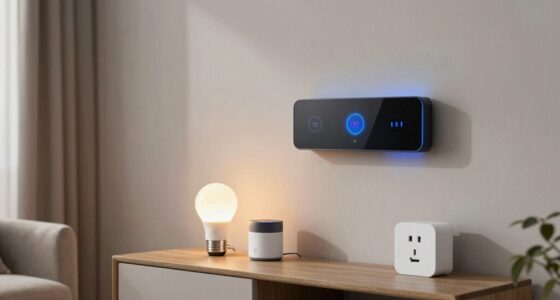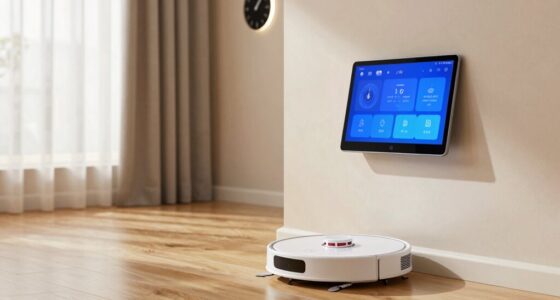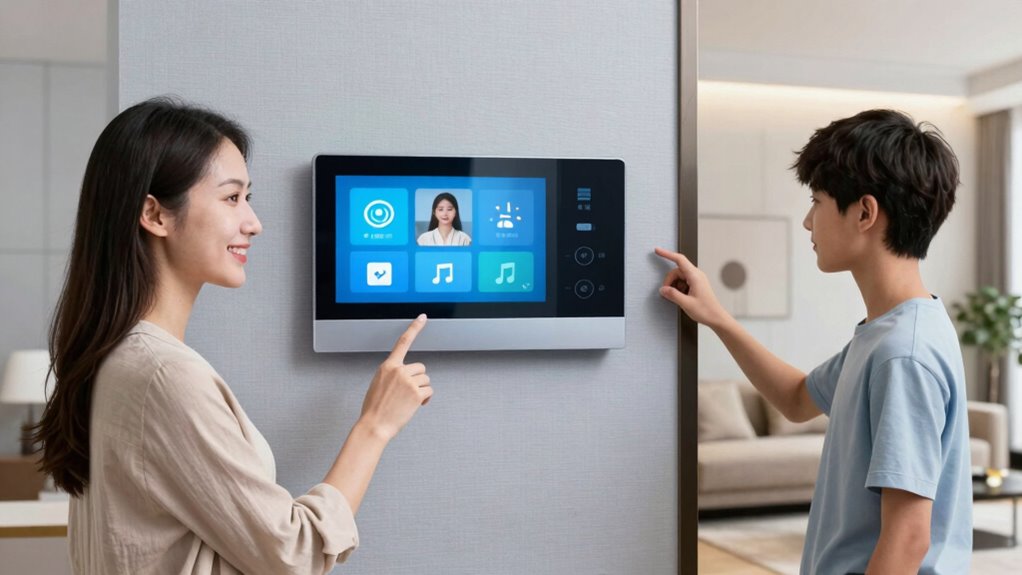

Multi-user recognition personalizes your smart home by automatically adjusting settings like lighting, temperature, and security based on who’s there. It helps you enjoy a more comfortable and intuitive environment without manual changes. This technology also boosts security by identifying residents and alerting you to unfamiliar faces. While it enhances convenience, it raises privacy considerations that are important to understand. If you want to explore how to balance these benefits and concerns, you’ll find helpful insights ahead.

Get home appliances delivered free — and shop member deals
- Fast, free delivery on millions of items
- Access to Prime Big Deal Days deals on October 6–7
- Prime Video, Amazon Music and more included
Key Takeaways
- Personalizes home settings like lighting, temperature, and entertainment based on individual household members.
- Enhances security by accurately identifying residents and detecting intruders or unauthorized visitors.
- Automates adjustments without manual input, making daily routines more seamless and intuitive.
- Balances convenience with privacy, ensuring data security through safeguards and user controls.
- Integrates advanced sensors and recognition technology for reliable, real-time identification and response.
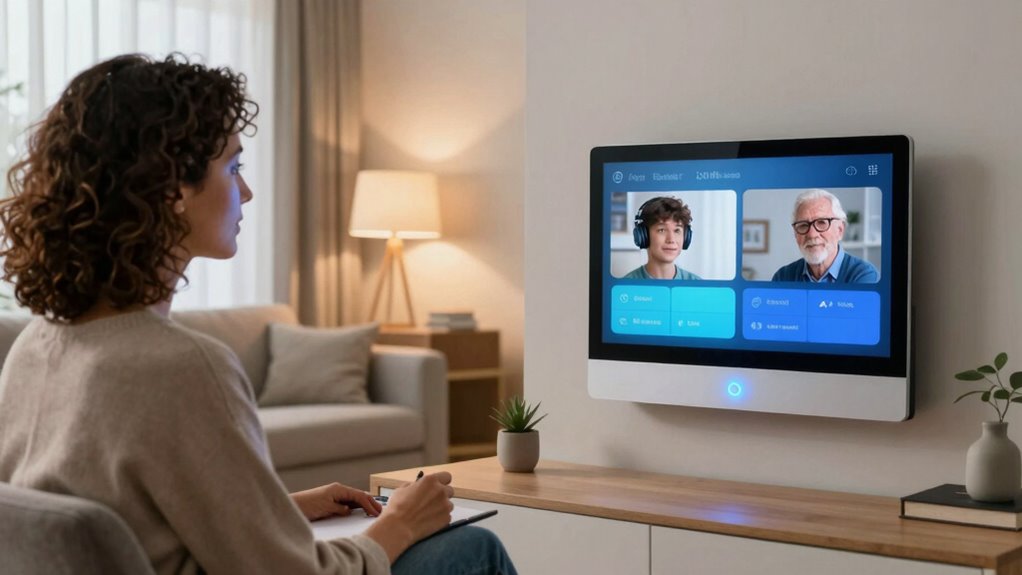
As smart homes become more prevalent, accurately recognizing multiple users within a household has become essential for personalized experiences and enhanced security. You no longer have to manually adjust settings or reconfigure devices each time someone new enters the home. Instead, multi-user recognition systems detect who’s present and automatically tailor everything—from lighting and temperature to entertainment and security preferences. This seamless adaptation makes daily routines smoother and more intuitive, creating a truly personalized environment.
However, implementing this technology isn’t without its challenges. Privacy concerns are at the forefront of many users’ minds. When your smart home continuously identifies and tracks different individuals, questions about data collection and storage naturally arise. You might worry about who has access to this information and how securely it’s protected from potential breaches. To address these concerns, manufacturers are integrating privacy safeguards into their systems, such as anonymizing data and offering clear controls over what information is shared and stored. As a user, it’s important to stay informed about these privacy policies and choose systems that prioritize your data security.
Privacy safeguards and user controls are essential for secure, trustworthy multi-user smart home systems.
Technology integration plays a crucial role in making multi-user recognition effective. It involves combining various sensors, facial recognition, voice identification, and other biometric tools into a cohesive ecosystem. When these technologies work together smoothly, they allow your smart home to identify individuals almost instantly and respond accordingly. For example, the system might automatically unlock your personalized playlist when you enter the living room or adjust the thermostat to your preferred temperature. This integration requires careful calibration to ensure reliability, so that the system recognizes users accurately without frequent false alarms or misidentifications. Additionally, sensor fusion—the process of combining multiple sensing technologies—enhances overall accuracy and robustness. Understanding how biometric identification works can help users appreciate the complexity and importance of these systems. Moreover, as the technology advances, the accuracy of recognition systems continues to improve, making them more dependable over time. Continuous advancements in recognition technology are making these systems more sophisticated and reliable, further increasing their effectiveness. As a result, privacy safeguards are becoming an integral part of these systems to protect user data while maintaining high performance.
The benefits of multi-user recognition extend beyond convenience. Security is significantly enhanced since the system can distinguish between residents and visitors or potential intruders. If it detects an unfamiliar face, it can trigger alerts or activate security cameras, giving you peace of mind. Additionally, multi-user recognition helps prevent accidental access to restricted areas or shared devices, safeguarding your privacy and household belongings. As these systems become more sophisticated, they’re not just about convenience—they’re about creating a secure, tailored living space that adapts to everyone’s needs.
Ultimately, embracing multi-user recognition in your smart home means balancing convenience with privacy. By understanding the technology’s capabilities and limitations, you can enjoy a more personalized, secure environment while protecting your data. As these systems evolve, staying informed and choosing reputable solutions will ensure that your smart home is both smart and safe.
multi-user recognition smart home system
As an affiliate, we earn on qualifying purchases.
As an affiliate, we earn on qualifying purchases.
Frequently Asked Questions
How Accurate Is Multi-User Recognition in Crowded Households?
Multi-user recognition can be quite accurate in crowded households, but facial accuracy and user identification vary depending on the system. High-quality cameras and advanced algorithms improve accuracy, even with multiple faces. However, in very busy environments, some errors might occur, leading to misidentification. To get the best results, make certain your system is regularly updated and calibrated, so it reliably distinguishes each user despite the household’s size or activity level.
Can Multi-User Recognition Adapt to New Users Automatically?
Yes, multi-user recognition can adapt to new users automatically. When you introduce a new person, the system learns their features over time, enhancing user personalization. Device integration allows seamless updates, so smart home devices respond accurately to each user’s preferences. As you interact more, the system refines its recognition, ensuring everyone feels understood and their settings are personalized without manual setup, creating a more intuitive and inclusive smart home experience.
What Privacy Concerns Arise With Multi-User Recognition Systems?
Think of multi-user recognition as a sensitive dance where privacy is the music. You might worry about who listens in, but with data encryption and clear user consent, your information stays protected. The system must respect boundaries, ensuring only authorized access. Without proper safeguards, private details could be exposed or misused, making it essential for users to be fully aware and in control of their data, just like a dance partner respecting your space.
How Does Multi-User Recognition Impact Energy Efficiency?
Multi-user recognition boosts energy efficiency by tailoring device settings to each person’s habits, enhancing personalization benefits. When your smart home detects who’s present, it adjusts lighting, heating, and cooling accordingly, avoiding unnecessary energy use. This seamless device integration guarantees your home responds intelligently, saving energy and reducing costs. As a result, everyone enjoys a comfortable environment while the system optimizes resources based on individual preferences and occupancy patterns.
Is Multi-User Recognition Compatible With Existing Smart Home Devices?
Ironically, your existing smart home devices might not be as compatible as you’d hope. Multi-user recognition often requires specific device compatibility and seamless software integration, which isn’t always guaranteed with older gadgets. You may need new hardware or updates to guarantee smooth functionality. While some systems are designed for easy integration, others demand considerable upgrades, turning your smart home upgrade into a mini tech overhaul.
smart home facial recognition device
As an affiliate, we earn on qualifying purchases.
As an affiliate, we earn on qualifying purchases.
Conclusion
As you embrace multi-user recognition, your smart home becomes a tailored symphony, responding effortlessly to each person’s voice and preferences. It’s like having a personal butler who knows you inside out, making daily routines smoother and more intuitive. This technology transforms your home from a mere space into a responsive, intelligent partner—turning ordinary moments into extraordinary experiences. Get ready to welcome a future where your home truly knows and cares for you.
voice recognition home automation
As an affiliate, we earn on qualifying purchases.
As an affiliate, we earn on qualifying purchases.
personalized smart lighting and thermostat
As an affiliate, we earn on qualifying purchases.
As an affiliate, we earn on qualifying purchases.
Fall yard work Picks
leaf blowers
As an affiliate, we earn on qualifying purchases.