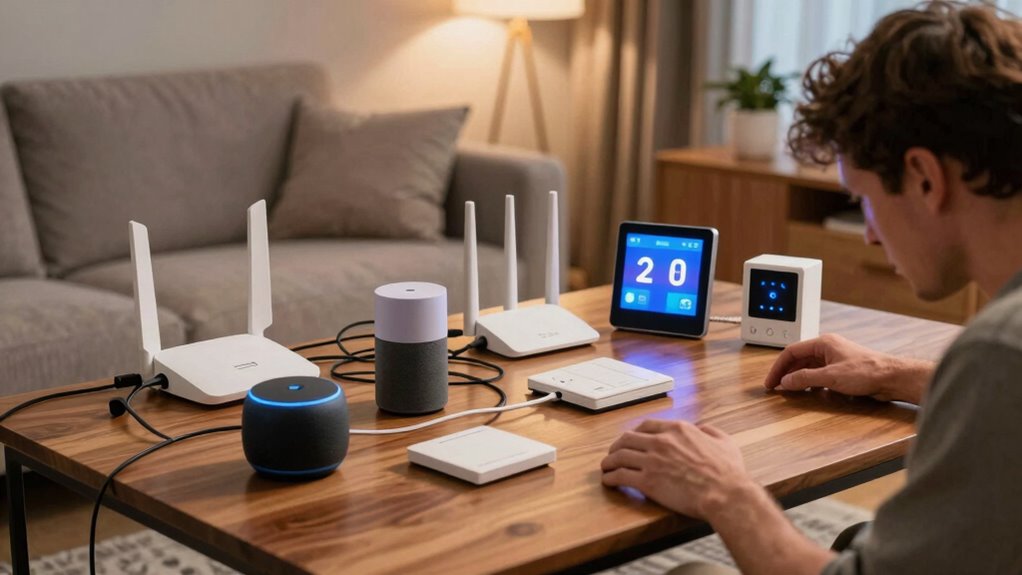

Compatibility problems frustrate you because devices often don’t communicate well, making voice control unreliable and frustrating. When your gadgets can’t work together smoothly, it feels like a step back in automation and energy savings. You may find yourself juggling multiple apps and fixing issues constantly. These disconnects diminish convenience and waste your time and energy. If you want to understand why this happens and how to fix it, there’s more to discover ahead.
Key Takeaways
- Devices from different brands often lack standardization, causing communication failures and control issues.
- Compatibility problems lead to unreliable voice commands and decreased hands-free convenience.
- Poor device integration hampers energy optimization, increasing utility costs and reducing efficiency.
- Fragmented ecosystems require users to manage multiple apps, complicating device management.
- Industry-wide lack of standardization perpetuates ongoing compatibility challenges and user frustration.
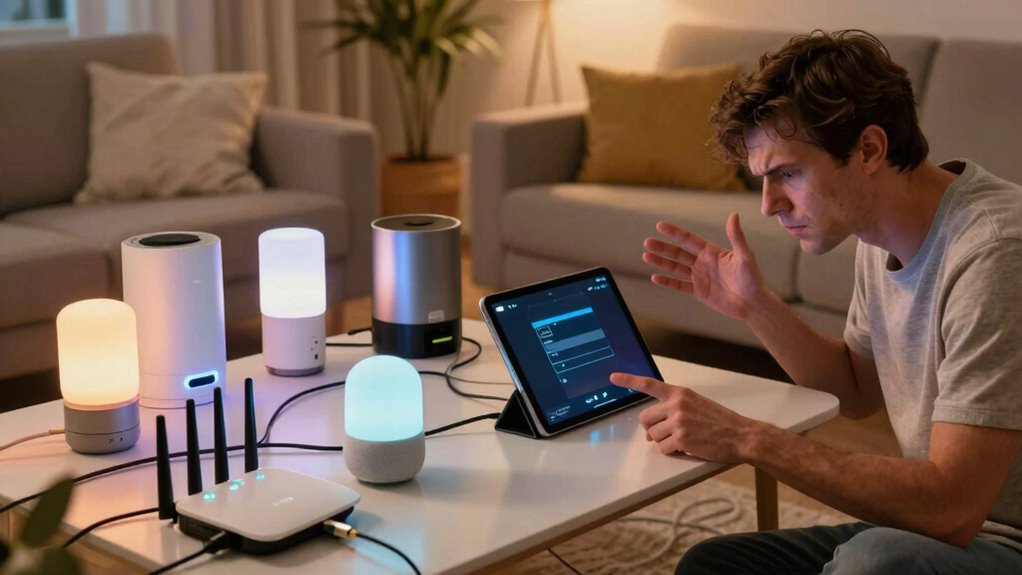
Have you ever struggled to get all your smart home devices to work seamlessly together? It’s a common frustration among homeowners trying to create a connected, efficient space. The core issue often stems from compatibility problems, which can turn what should be a smooth experience into a constant source of irritation. When your devices don’t communicate properly, it impacts everything from voice control to energy efficiency, leaving you feeling powerless and overwhelmed. You may find yourself repeatedly troubleshooting, only to discover that certain gadgets simply won’t integrate with your existing setup. This disconnect can make you question whether the benefits of a smart home are worth the hassle.
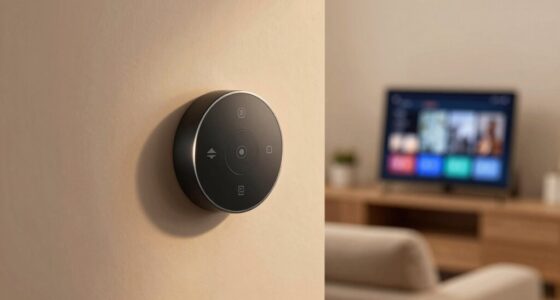
One of the biggest sources of frustration is the lack of standardization across different brands and platforms. You might have a voice assistant like Alexa or Google Assistant, but if your smart thermostat isn’t compatible with that ecosystem, voice commands become unreliable or even impossible. This incompatibility forces you to remember which device works with which app or platform, undermining the convenience that smart technology promises. When voice control doesn’t work smoothly, it’s not just annoying—it’s a barrier to truly hands-free living. You want to simply say what you need, and have your devices respond instantly, but incompatible devices can cause delays, errors, or silent failures. Interoperability remains a significant hurdle in achieving seamless integration. Additionally, software updates can sometimes introduce new compatibility issues, further complicating the landscape. Addressing these problems requires ongoing effort as devices evolve and new standards emerge.
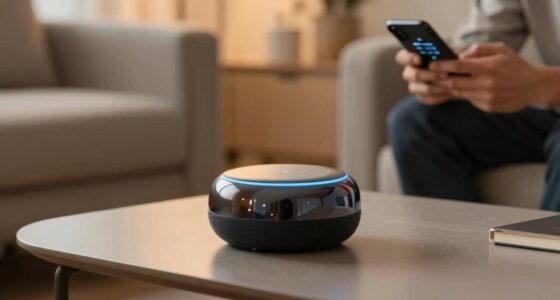
Incompatibility between devices and voice assistants hampers seamless, hands-free smart home control.
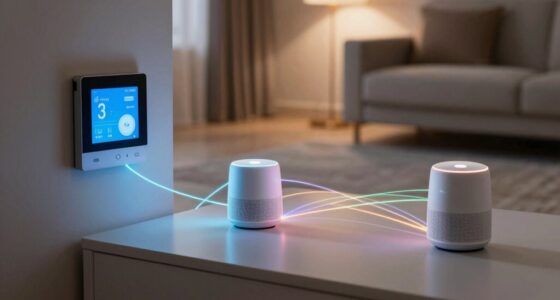
Energy efficiency is another essential aspect affected by compatibility issues. Smart devices are often designed to optimize energy use, whether it’s adjusting lighting, controlling thermostats, or managing appliances. If these devices can’t communicate properly, the system can’t coordinate to save energy effectively. For example, if your smart thermostat isn’t compatible with your smart lighting system, your house might heat unnecessarily when lights are on, or cooling could run longer than needed because the system isn’t synchronized. This lack of coordination results in wasted energy and higher utility bills, which defeats the purpose of investing in a smart home. You want your devices to work together seamlessly so they can learn your habits and adjust accordingly, but compatibility issues can prevent that from happening. Additionally, standardization efforts are crucial for creating a more unified and user-friendly smart home experience. Recognizing and addressing these compatibility issues is vital for maximizing both convenience and energy savings. Improving device compatibility can significantly enhance overall system performance and user satisfaction.
In the end, these compatibility problems stem from the fragmented landscape of smart home technology. Each device seems to speak a different language, making integration a challenge. Without a unified ecosystem, you’re left juggling multiple apps, settings, and devices, which diminishes the convenience and energy-saving benefits you hoped to gain. It’s understandable to feel frustrated—after all, you’re trying to create a smarter, more efficient living space, but technical incompatibilities get in the way. Until the industry moves toward better standardization, these compatibility problems will continue to frustrate many smart home owners like you.
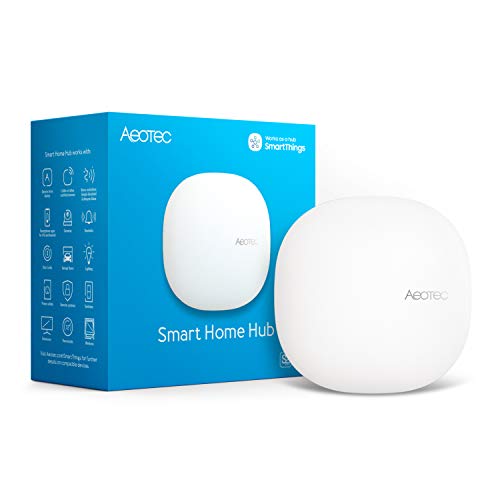
Aeotec Smart Home Hub, Works as a SmartThings Hub, Z-Wave, Zigbee, Matter Gateway, Compatible with Alexa, Google Assistant, WiFi
- Device Compatibility: Supports Z-Wave, Zigbee, Matter, WiFi
- Smart Home Integration: Connects with Alexa, Google Assistant
- Device Control: Manage thousands of compatible devices
As an affiliate, we earn on qualifying purchases.
As an affiliate, we earn on qualifying purchases.
Frequently Asked Questions
How Can I Test if New Devices Will Be Compatible Before Purchasing?
To test if new devices are compatible before buying, check their device standards and ecosystem integration. Research the product specifications to guarantee they support popular standards like Zigbee or Z-Wave. Visit manufacturer websites or forums to confirm compatibility with your existing smart home ecosystem. You can also ask retailers or customer support for compatibility details. Doing this helps you avoid frustration and ensures your new devices work seamlessly with your current setup.
Are There Universal Hubs That Improve Device Compatibility?
Think of universal hubs as the bridge over troubled waters in your device ecosystem. Yes, they can improve compatibility by supporting multiple protocol standards, making diverse devices work seamlessly together. These hubs act as translators, connecting devices that otherwise speak different “languages.” By choosing a reputable universal hub, you streamline setup, reduce frustration, and enjoy a more integrated smart home experience. It’s like giving your devices a common language to communicate effortlessly.
What Are Common Causes of Connectivity Issues in Smart Homes?
Connectivity issues in your smart home often stem from interference issues, like Wi-Fi congestion or overlapping signals that disrupt device communication. Software conflicts also cause problems, especially when devices or apps aren’t updated or compatible. You might find devices disconnecting or responding slowly. To fix this, reduce interference by changing Wi-Fi channels and keep all devices and software current to guarantee smooth, uninterrupted connectivity across your smart home system.
How Often Do Compatibility Updates Fix Existing Problems?
Compatibility updates act like skilled diplomats, resolving conflicts between devices. They often fix existing problems every few months, especially as interoperability standards evolve. Regular updates improve device integration, making your smart home feel seamless. Think of these updates as bridges, connecting different islands of technology. Keep your devices current, and you’ll enjoy smoother operation and fewer frustrations, ensuring your smart home remains a harmonious and efficient sanctuary.
Can I Manually Update Device Firmware for Better Compatibility?
Yes, you can manually update device firmware to improve compatibility. Most smart devices have options in their settings or apps for manual updates. By doing so, you guarantee your device has the latest firmware, which often includes fixes for compatibility issues. Regular manual updates help your smart home devices work seamlessly together, reducing frustration and enhancing overall performance. Just check the manufacturer’s instructions for the specific process.
As an affiliate, we earn on qualifying purchases.
Conclusion
Compatibility problems can turn your smart home dreams into a never-ending maze of frustration. When devices refuse to play nice, it’s like trying to assemble a spaceship with parts from different planets—chaotic and overwhelming. But don’t give up just yet. With a little patience and the right choices, you can tame this tech jungle and create a seamless, harmonious smart home. Keep pushing forward—you’re closer than you think to mastering this digital universe!
smart home ecosystem standardization devices
As an affiliate, we earn on qualifying purchases.
As an affiliate, we earn on qualifying purchases.
best smart home compatibility adapters
As an affiliate, we earn on qualifying purchases.
As an affiliate, we earn on qualifying purchases.