
Smart home standards reduce buyer confusion by ensuring devices from different brands work smoothly together. When manufacturers follow common protocols, setup becomes easier, and devices respond reliably to voice commands. This means you don’t have to learn multiple apps or commands for each device, making the system more intuitive. Enhanced compatibility also prevents frustration and guarantees everything integrates seamlessly. Keep exploring, and you’ll discover more ways these standards make smart home ownership simpler and more reliable.
Key Takeaways
- Standards ensure devices from different brands can communicate, preventing user confusion over compatibility.
- They simplify setup by providing clear guidelines, reducing trial-and-error and troubleshooting efforts.
- Common frameworks allow consistent voice commands, making device operation intuitive across brands.
- Universal protocols reduce the need for multiple apps, streamlining user experience.
- Clear interoperability promotes trust and confidence, encouraging broader adoption of smart home technology.
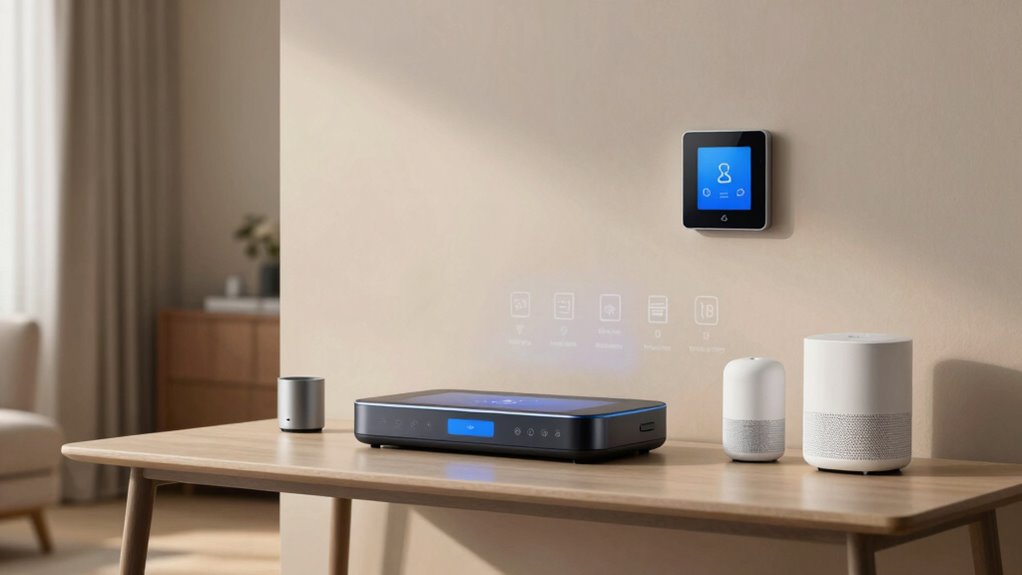
Have you ever wondered how your smart home devices work seamlessly together? It’s impressive how, with just a voice command, your lights turn on, the thermostat adjusts, and your security system arms itself. This smooth interaction isn’t accidental; it’s the result of smart home standards that streamline compatibility across different brands and devices. When manufacturers adhere to common standards, you don’t have to worry about whether your devices will play nicely. Instead, you get a cohesive system that responds reliably, giving you peace of mind and ease of use.
One of the key benefits of these standards is that they simplify the often confusing world of smart home technology. Without a common framework, you might find yourself stuck choosing between incompatible devices or juggling multiple apps. Standards like those for voice recognition ensure that whether you’re using a smart speaker from one brand or a security camera from another, they can understand your commands equally well. This consistency means you don’t have to learn different voice commands for each device, reducing frustration and making your smart home experience more intuitive.
Standards ensure seamless communication across devices, making your smart home more intuitive and frustration-free.
Energy efficiency is another critical aspect influenced by these standards. When devices adhere to common protocols, they can communicate more effectively about their energy use, helping you monitor and reduce consumption. For example, a standardized system could automatically adjust your heating or cooling based on occupancy patterns, resulting in lower energy bills. It also allows devices to share data seamlessly, so you can see detailed insights into your energy habits without dealing with incompatible formats or multiple apps. This interoperability encourages smarter decision-making, ultimately making your home more energy-efficient and environmentally friendly. Additionally, standardized communication ensures that updates and new features can be integrated more smoothly, keeping your system up-to-date and secure.
Furthermore, smart home standards help eliminate the trial-and-error process that often accompanies setup. You won’t need to spend hours troubleshooting or researching which devices work together; instead, you can trust that products compliant with established standards will integrate smoothly. This reduces confusion for buyers, especially those new to smart home technology, who might otherwise feel overwhelmed by a maze of options. When products are designed to meet common standards, the entire system feels more reliable, predictable, and user-friendly. As the industry continues to evolve, universal compatibility plays a vital role in making smart home technology more accessible to everyone.
In addition, interoperability driven by these standards enhances the integration of smart home devices with other systems, such as indoor air quality solutions, making your entire environment more cohesive and efficient. In essence, smart home standards serve as a universal language that allows different devices to communicate effortlessly. They clear up the confusion that can deter people from fully embracing smart technology. By promoting compatibility, supporting voice recognition, and enhancing energy efficiency, these standards make your smart home more accessible, reliable, and efficient—so you can enjoy the convenience without the hassle.
smart home device compatibility standards
As an affiliate, we earn on qualifying purchases.
As an affiliate, we earn on qualifying purchases.
Frequently Asked Questions
How Do Standards Impact Device Compatibility Over Time?
Standards greatly impact device compatibility over time by ensuring device interoperability, so your smart devices work seamlessly together regardless of the brand. As standards evolve, they adapt to new technologies, helping prevent obsolescence and making future upgrades easier. This evolution keeps your smart home ecosystem reliable and flexible, so you can confidently add or replace devices without compatibility issues, saving you time and frustration in the long run.
Are There Costs Associated With Adhering to Smart Home Standards?
Think of adhering to smart home standards as steering through a busy harbor—there are cost implications and compliance challenges to navigate. While following standards might require initial investments or upgrades, it can save you money long-term by avoiding compatibility issues. The key is balancing the upfront costs with the benefits of a seamless, future-proof smart home, making your setup smoother and more reliable over time.
Which Organizations Develop and Maintain These Smart Home Standards?
Organizations like the Connectivity Standards Alliance and the Zigbee Alliance develop and maintain smart home standards. They focus on creating smart home certifications and conducting interoperability testing, ensuring devices work seamlessly together. These groups set the guidelines for manufacturers, helping you avoid confusion when choosing products. By adhering to these standards, they promote compatibility, making your smart home setup easier and more reliable.
How Do Standards Influence Data Privacy and Security?
Your smart home’s security depends on standards that act like an impenetrable fortress. They specify data encryption methods and user authentication protocols to protect your personal info. These standards guarantee devices communicate securely, preventing hackers from hijacking your system. By following these guidelines, manufacturers create safer environments, giving you peace of mind. Ultimately, standards are the backbone that keeps your smart home private and secure amidst a digital world full of threats.
Can Existing Devices Be Upgraded to Meet New Standards?
Yes, existing devices can often be upgraded to meet new standards, but it depends on the device’s design and manufacturer updates. Upgrades usually improve device interoperability and user interface, making them more compatible with other smart home products. You might need firmware updates or new apps, which can enhance functionality and guarantee your devices work seamlessly within the latest standards. Check with your device’s manufacturer for specific upgrade options.
As an affiliate, we earn on qualifying purchases.
Conclusion
By understanding and adopting smart home standards, you simplify your setup and guarantee compatibility across devices. This clarity reduces buyer confusion, making your smart home journey smoother and more enjoyable. Isn’t it worth investing in standards that protect your investment and enhance your experience? As the industry continues to evolve, embracing these standards helps you stay ahead, creating a seamless, efficient, and truly connected home. After all, isn’t a smarter home worth the clarity?

Amazon Basics Smart Plug, Works with Alexa Only, Voice Control, Remote APP Control, Schedule, Compact Design, Versatile, 2.4 GHz Wi-Fi, No Hub Required, 4-Pack, White
- Easy Alexa setup: Quick setup with multiple options
- Remote and scheduled control: Control appliances remotely or schedule
- Compact design: Fits into one socket, leaves others free
As an affiliate, we earn on qualifying purchases.
As an affiliate, we earn on qualifying purchases.
smart home energy monitoring system
As an affiliate, we earn on qualifying purchases.
As an affiliate, we earn on qualifying purchases.